
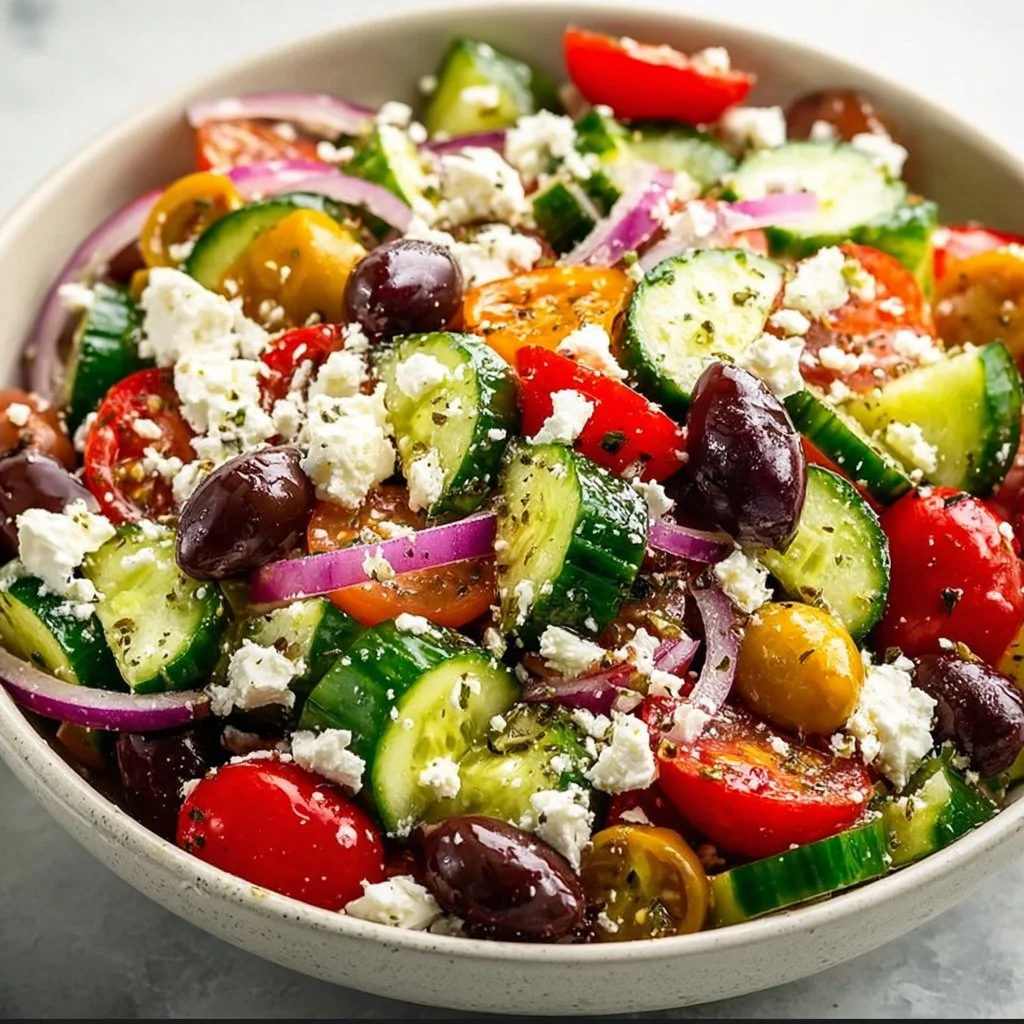
Best Greek Salad Recipe
Greek salad, with its vibrant colors and fresh flavors, is one of the most beloved dishes in Mediterranean cuisine. It showcases a perfect balance of crispy vegetables, tangy feta cheese, and briny olives, making it a delightful treat for the palate. Whether enjoyed as a light lunch, a side dish for dinner, or a refreshing appetizer at a gathering, this salad is versatile enough for any occasion. The textures are just as appealing as the flavors, providing a satisfying crunch with every bite.
What sets this Greek salad apart is its simplicity and the use of fresh, quality ingredients. Each component contributes its own unique taste, making for a colorful and nutritious dish that’s easy to whip up. During the warmer months, when fresh vegetables are abundant, this salad shines as a go-to meal option that requires minimal effort yet delivers maximum satisfaction.
Prep Time: 10 min | Cook Time: 0 min | Total Time: 10 min
How to Make Best Greek Salad
Ingredients
- 1 large cucumber (diced)
- 1 pint grape tomatoes (halved)
- 1 green bell pepper (diced)
- ½ red onion (thinly sliced)
- ½ cup Kalamata olives (halved)
- 4 ounces feta cheese (crumbled)
- ⅓ cup red apple vinegar
- Juice of 1 lemon
- 1 teaspoon Dijon mustard
- 2 garlic cloves (minced)
- ½ teaspoon dried oregano
- ¼ teaspoon salt
- ¼ teaspoon black pepper
- ½ cup olive oil
- Salt and pepper (to taste)
Step-by-Step Instructions
-
In a large mixing bowl, combine diced cucumber, halved grape tomatoes, diced bell pepper, thinly sliced red onion, Kalamata olives, and crumbled feta cheese. Gently toss to mix.
-
In a separate small bowl, whisk together the red apple vinegar, lemon juice, Dijon mustard, minced garlic, oregano, salt, and black pepper until well blended.
-
Gradually add olive oil while whisking continuously until the dressing is emulsified.
-
Drizzle the dressing over the salad mixture and gently stir to combine all ingredients until evenly coated.
Pro Tips
-
Use Fresh Ingredients: Fresh, high-quality vegetables and cheese make a significant difference in taste. When possible, opt for local produce.
-
Emulsifying the Dressing: Whisking the olive oil gradually ensures a well-mixed vinaigrette. If you pour in the oil too quickly, it may separate.
-
Season to Taste: Always taste your salad after dressing it. Different vegetables and feta varieties can result in slightly different salt levels.
-
Chill Before Serving: Letting the salad sit for about 30 minutes allows flavors to meld together, enhancing the overall taste.
-
Customize Your Olives: If Kalamata olives aren’t your favorite, try black or green olives to suit your taste.
-
Garlic Alternatives: If you’re looking for a milder flavor, roasted garlic or even garlic powder can be a good substitute.
Why You’ll Love This Recipe
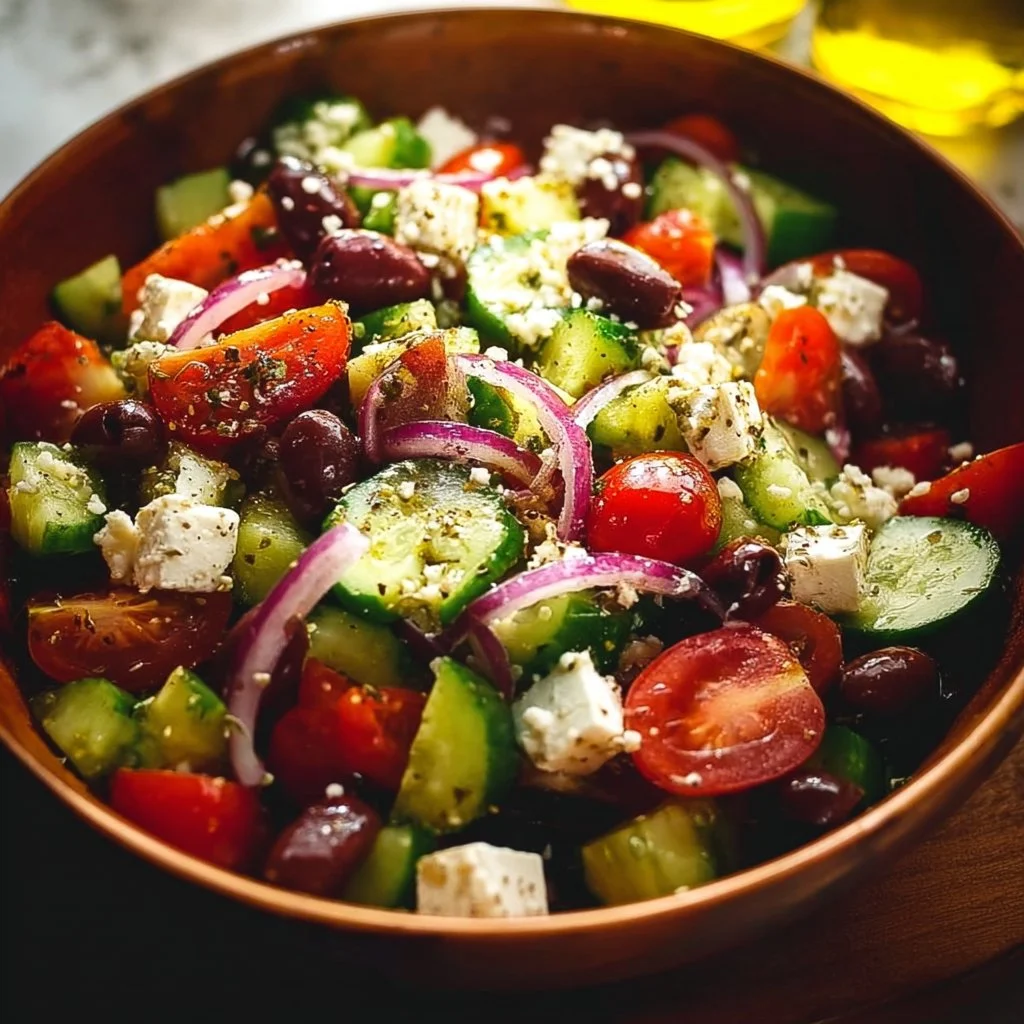
This Greek salad bursts with flavor and freshness, making it an instant favorite for any meal. It’s a rainbow of colors and textures, from crunchy cucumbers to juicy tomatoes and savory feta. Plus, it’s incredibly simple to prepare—perfect for those busy weeknights or gatherings when you want to impress without a lot of fuss.
Ideal for various dietary preferences, Greek salad is vegetarian, can be made gluten-free, and is packed with nutrients. It’s low in calories but high in vitamins, making it a delicious choice for health-conscious eaters. Whether you serve it alongside grilled meats or enjoy it as a meal on its own, it’s a crowd-pleaser that everyone can enjoy.
How to Serve Greek Salad
Presentation can elevate your Greek salad experience! Try serving it in a large, rustic bowl to showcase the colorful ingredients. Alternatively, individual portions in mason jars make for an appealing and practical serving option, especially for picnics.
For a complete meal, consider pairing the salad with grilled chicken, lamb, or fish. It complements these proteins beautifully while adding a refreshing touch. A chilled glass of white wine or sparkling water with lemon are great drink options that enhance the flavors of the salad.
How to Store Greek Salad
To keep your Greek salad fresh, storing it properly is key. If there’s leftover salad, it’s best to keep the dressing separate until ready to eat. The vegetables will stay crispy and vibrant longer this way. Store the salad in an airtight container in the fridge for up to 3 days.
You can freeze the salad ingredients, excluding the dressing, but it’s not recommended due to potential changes in texture. Most vegetables, especially cucumbers and tomatoes, can become mushy when thawed.
Tips to Make Greek Salad
To ensure you create the best Greek salad each time, consider these tips:
-
Choose Ripe Vegetables: Select vegetables that are in-season and perfectly ripe for the best flavor.
-
Experiment with Herbs: While dried oregano is classic, adding fresh herbs like parsley or dill can elevate the flavor profile.
-
Balancing Flavors: If the salad is too tart, a dash of sugar can help balance the acidity from the vinegar and lemon juice.
-
Texture Considerations: Adding nuts, like toasted pine nuts or walnuts, can bring an extra layer of crunch.
Variation
- Vegan: For a vegan version, simply omit the feta or use a plant-based feta alternative.
- Spicy: Add some diced jalapeños or crushed red pepper flakes for a spicy kick.
- Low-Carb: Substitute cucumbers for traditional lettuce for a low-carb option.
- Gluten-Free: This salad is naturally gluten-free, making it suitable for those with gluten sensitivities.
Nutrition Information
- Serving Size: Approximately 1 cup
- Calories: 220
- Protein: 5g
- Carbs: 14g
- Fat: 18g
- Fiber: 3g
- Sugar: 3g
Greek salad is high in healthy fats from the olive oil and feta cheese, contributing to heart health. It’s also low in sugar and a good source of fiber, helping with digestion.
Storage and Reheating
If you have leftovers, you can enjoy your Greek salad cold straight from the fridge. However, if you prefer it slightly warmed, you might consider a gentle reheating method in the microwave. Place it in a microwave-safe dish, cover it with a damp paper towel to retain moisture, and heat for 30 seconds or until just warm. Avoid using an oven, as it may lead to a loss of texture.
Customization Ideas
Mix up flavors and textures in your Greek salad to suit your preferences. Consider:
-
Adding Fruits: Diced avocados or citrus segments like oranges can introduce a sweet twist.
-
Using Different Cheese: Try goat cheese for a tangy change or a vegan equivalent for non-dairy options.
-
Switching up Veggies: Adding radishes or zucchini can introduce more crunch and variety.
Common Mistakes to Avoid
- Using Old Ingredients: Freshness is key! Avoid wilted or soft vegetables.
- Overdressing: Start with a little dressing—you can always add more if needed.
- Ignoring Texture: Mix ingredients just enough to blend; over-tossing can lead to mushiness.
- Forgetting Salt: Salt brings out the flavors; don’t skip it!
- Not Letting It Rest: Allowing the salad to sit for a few minutes enhances the flavor as it mingles.
Serving Occasions
This Greek salad is perfect for various occasions. Whether you’re hosting a family dinner, throwing a summer barbecue, or preparing a quick lunch for yourself, it’s always a great choice. Serve it at holiday gatherings or as a refreshing side to grilled dishes in the warmer months. It’s even suitable for meal prep, keeping well in the fridge for quick access throughout the week.
Why Make This Recipe
This Greek salad stands out not only for its mouthwatering combination of ingredients but also for its ease of preparation. Unlike more complicated dishes, this salad is quick to whip up while still impressing guests with its flavor and presentation. It captures the essence of Mediterranean cuisine—fresh, healthy, and absolutely delicious. With numerous variations and the flexibility to adjust based on what you have on hand, it’s a recipe that every home cook should have in their repertoire.
FAQs
-
Can I use other types of cheese?
Yes! Feel free to experiment with mozzarella, goat cheese, or a vegan cheese alternative. -
Is there a substitute for Kalamata olives?
Black or green olives can work well as substitutes if you’d prefer something different. -
How can I make it more filling?
Add protein such as grilled chicken, chickpeas, or beans to turn the salad into a more substantial meal. -
What vinegar works best?
Red wine vinegar is a great alternative if you don’t have apple cider vinegar on hand. -
Can I make this ahead of time?
Yes! Just keep the dressing separate until you’re ready to serve to ensure freshness.
Disclaimer
Nutrition information is approximate and may vary based on ingredient brands and measurements. Always verify ingredients based on personal dietary needs.
Best Greek Salad Recipe
- Total Time: 10 minutes
- Yield: 4 servings 1x
- Diet: Vegetarian
Description
A colorful and refreshing Greek salad, perfect as a light lunch or a side dish, featuring crispy vegetables, feta cheese, and olives.
Ingredients
- 1 large cucumber (diced)
- 1 pint grape tomatoes (halved)
- 1 green bell pepper (diced)
- ½ red onion (thinly sliced)
- ½ cup Kalamata olives (halved)
- 4 ounces feta cheese (crumbled)
- ⅓ cup red apple vinegar
- Juice of 1 lemon
- 1 teaspoon Dijon mustard
- 2 garlic cloves (minced)
- ½ teaspoon dried oregano
- ¼ teaspoon salt
- ¼ teaspoon black pepper
- ½ cup olive oil
- Salt and pepper (to taste)
Instructions
- Combine diced cucumber, halved grape tomatoes, diced bell pepper, thinly sliced red onion, Kalamata olives, and crumbled feta cheese in a large mixing bowl. Gently toss to mix.
- Whisk together the red apple vinegar, lemon juice, Dijon mustard, minced garlic, oregano, salt, and black pepper in a separate small bowl until well blended.
- Add olive oil gradually while whisking continuously until the dressing is emulsified.
- Drizzle the dressing over the salad mixture and gently stir to combine all ingredients until evenly coated.
Notes
Use fresh, high-quality vegetables for the best flavor. Store leftover salad with dressing separate to maintain freshness.
- Prep Time: 10 minutes
- Cook Time: 0 minutes
- Category: Salad
- Method: No-Cook
- Cuisine: Mediterranean
Nutrition
- Serving Size: 1 serving
- Calories: 220
- Sugar: 3g
- Sodium: 350mg
- Fat: 18g
- Saturated Fat: 4g
- Unsaturated Fat: 12g
- Trans Fat: 0g
- Carbohydrates: 14g
- Fiber: 3g
- Protein: 5g
- Cholesterol: 15mg