
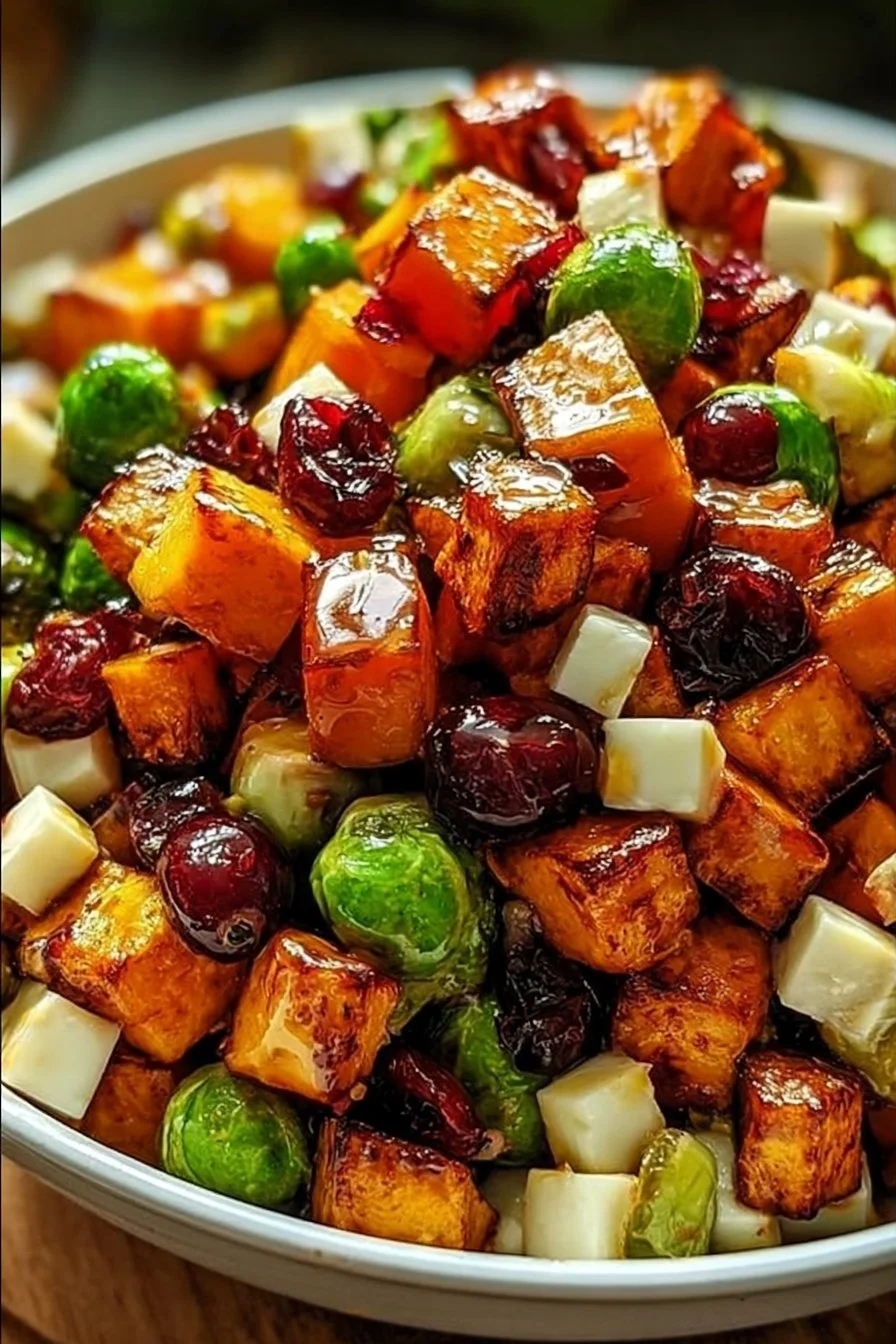
Easy Cranberry Glazed Roosted Butternut Squish Brussels Sprouts and Sweet potato Salad
Bright and vibrant, this dish is not just a feast for the eyes but also a flavorful, satisfying addition to any meal. The combination of roasted butternut squash, caramelized Brussels sprouts, and sweet potatoes brings a depth of flavor and a pleasant texture that positively delights the palate. The cranberry glaze adds a tangy sweetness that is both refreshing and complementary, tying together the earthiness of the vegetables and creating a well-rounded experience. You can expect a medley of sweet, savory, and tangy flavors that will keep you coming back for more.
When plated, the dish boasts a beautiful array of colors—from the rich orange of the squash to the green of the Brussels sprouts and the warm golden tones of the sweet potatoes. Not only does it taste great, it also brings nutritional benefits, making it an excellent choice for health-conscious eaters. Served warm or at room temperature, this salad is suitable for a wide variety of occasions, from a family gathering to a festive holiday meal.
This salad stands out as a wonderful side dish or a hearty main for a vegetarian meal. Whether you’re looking to impress guests at a dinner party, seeking a new staple for your holiday feast, or just wanting to add some vibrant, seasonal flavors to your dinner table, this easy cranberry glazed roasted butternut squash, Brussels sprouts, and sweet potato salad is an excellent option. Each bite offers layers of flavor and texture, ensuring that your meal is not only filling but also memorable.
What Makes This Recipe Special
The delightful charm of this salad stems from its balance of flavors and textures, blending sweetness, tartness, and earthiness seamlessly. The roasting technique brings a natural sweetness out of the butternut squash and sweet potatoes while crisping the Brussels sprouts to perfection. The cranberry glaze elevates the dish, providing a zesty contrast that enhances each bite. It’s an ideal recipe for placing different seasonal ingredients at the forefront while keeping the preparation simple and accessible.
Unlike many salads that can feel light and airy, this dish has a heartiness that makes it satisfying enough to serve as a main course. The sweetness of the butternut squash and sweet potatoes resonates beautifully with the slightly bitter note of the Brussels sprouts, creating a complex yet harmonious flavor profile. The addition of the cranberry glaze not only makes the dish visually appealing but also adds an extra layer of gusto, making it a unique standout compared to more conventional vegetable dishes.
Additionally, this recipe offers versatility. You can easily adjust the sweetness or add other ingredients like nuts or seeds to provide additional texture. It allows for creativity in presentation, as you can choose to mix the components or layer them for a more refined look. The balance of flavors and textures makes it suitable for various occasions, and it pairs well with many different entrees, from savory roasted meats to simple grain bowls.
Ingredient Overview and Helpful Notes
The primary ingredients in this dish each serve a crucial role, contributing to the unique character of the salad. Butternut squash is the star of the dish, providing a rich, sweet base. When roasted, it caramelizes and develops a complex flavor that enhances the overall dish. Make sure to select firm, heavy squash without blemishes for the best quality.
Brussels sprouts lend a delightful crunch. Their slightly bitter taste becomes mellow when roasted, contrasting beautifully with the sweet elements in the salad. Opt for fresh Brussels sprouts that are compact and vibrant in color, indicating freshness. For the best results, cut them in half to ensure even cooking and maximum caramelization.
Sweet potatoes are another essential component, adding a touch of sweetness and richness. Look for smooth-skinned, firm sweet potatoes with no sprouts or dark spots. When prepared, they should be diced into uniform pieces to ensure even cooking and a cohesive texture with the other ingredients.
Lastly, the cranberry glaze is what sets this dish apart. Made with fresh or dried cranberries, it’s important to use high-quality ingredients to enhance the flavor and health benefits of the dish. If using dried cranberries, go for the unsweetened variety to keep the dish from becoming too sweet. When preparing the glaze, consider balancing the acidity with a touch of citrus, such as orange or lemon juice, alongside a bit of maple syrup for extra depth.
Together, these ingredients not only create a delightful salad but also work in harmony to provide a healthy dish packed with vitamins and nutrients. Their complementary flavors and textures ensure that you can enjoy them individually or as a whole.
Nutrition & Recipe Details
Nutritional values may vary based on ingredients, brands, portion sizes, and preparation methods.
| Item | Value |
|---|---|
| Prep time | 15 minutes |
| Cook time | 30 minutes |
| Store time | 3-5 days in the refrigerator |
| Calories | 220 calories per serving |
| Protein | 4g |
| Carbohydrates | 39g |
| Fat | 7g |
How to Make Easy Cranberry Glazed Roosted Butternut Squish Brussels Sprouts and Sweet Potato Salad
The preparations for this salad are straightforward, making it an approachable dish for cooks at all experience levels. The first step is to gather your ingredients and preheat your oven, as roasting the vegetables is a critical aspect of building their flavor. A baking sheet lined with parchment paper or a silicone mat can help prevent sticking and allow for easy cleanup.
Setting the stage involves organizing your ingredients. Ensure you have your butternut squash, Brussels sprouts, sweet potatoes, and any additional ingredients ready to go. Chopping your vegetables uniformly will help them roast evenly, achieving that perfect tenderness and caramelization. Having your cranberries and glaze ingredients handy will also streamline the cooking process.
In essence, the recipe calls for combining beautiful, vibrant vegetables, roasting them until golden and tender, and then finishing them off with a tangy cranberry glaze for that added zing. Ready to dive in? Let’s see what ingredients you’ll need.
Ingredients
| Ingredient | Quantity |
|---|---|
| Butternut squash, peeled and diced | 2 cups |
| Brussels sprouts, trimmed and halved | 2 cups |
| Sweet potatoes, peeled and diced | 1 cup |
| Fresh or dried cranberries | 1 cup |
| Olive oil | 2 tablespoons |
| Maple syrup | 2 tablespoons |
| Salt and pepper | to taste |
| Optional: Chopped nuts (like pecans or walnuts) | ½ cup |
Before you start cooking, gather your peeled and diced butternut squash, sweet potatoes, and halved Brussels sprouts. Toss them with olive oil, salt, and pepper to taste. This simple technique of coating the vegetables will ensure they roast beautifully while enhancing their natural flavors.
Don’t forget to preheat the oven to 400°F (200°C) while prepping your ingredients. A hot oven will promote even caramelization and a lovely roasted flavor in your vegetables. Once everything is prepped and your oven is ready, you’ll be set to start the roasting process.
Step-by-Step Instructions
-
Preheat the Oven: Set your oven to 400°F (200°C) in order to create a hot and optimal roasting environment for your vegetables.
-
Prep the Vegetables: In a large bowl, combine the diced butternut squash, sweet potatoes, and halved Brussels sprouts. Drizzle with olive oil, and then sprinkle with salt and pepper. Toss everything together until evenly coated.
-
Roast the Vegetables: Spread the vegetable mixture onto a baking sheet in a single layer. Ensure they aren’t overcrowded, as this can cause steaming rather than roasting. Roast in the preheated oven for about 25-30 minutes. Halfway through cooking, give the vegetables a stir or shake the pan to ensure even browning. Look for a golden caramel color as an indicator that they’re cooking well.
-
Prepare the Cranberry Glaze: While the vegetables are roasting, you can prepare the cranberry glaze. If using fresh cranberries, simmer them in a saucepan with 2-3 tablespoons of water until they burst and soften. If using dried cranberries, simply warm them over low heat with the maple syrup and a splash of water. Stir until combined and glazed.
-
Combine Everything: Once your roasted vegetables are perfectly caramelized and golden, remove them from the oven and let them cool for a few minutes. In a large serving bowl, combine the roasted vegetables, cranberries, and glaze. Toss gently to coat everything evenly.
-
Optional Additions: If desired, add chopped nuts for texture and crunch. This step enhances the overall flavor and provides a pleasing visual contrast. Finally, taste and adjust seasoning with more salt and pepper if necessary.
-
Serve: Your vibrant, delicious salad is now ready to serve warm or at room temperature. Present it in a beautiful serving dish or plate individually for visual appeal.
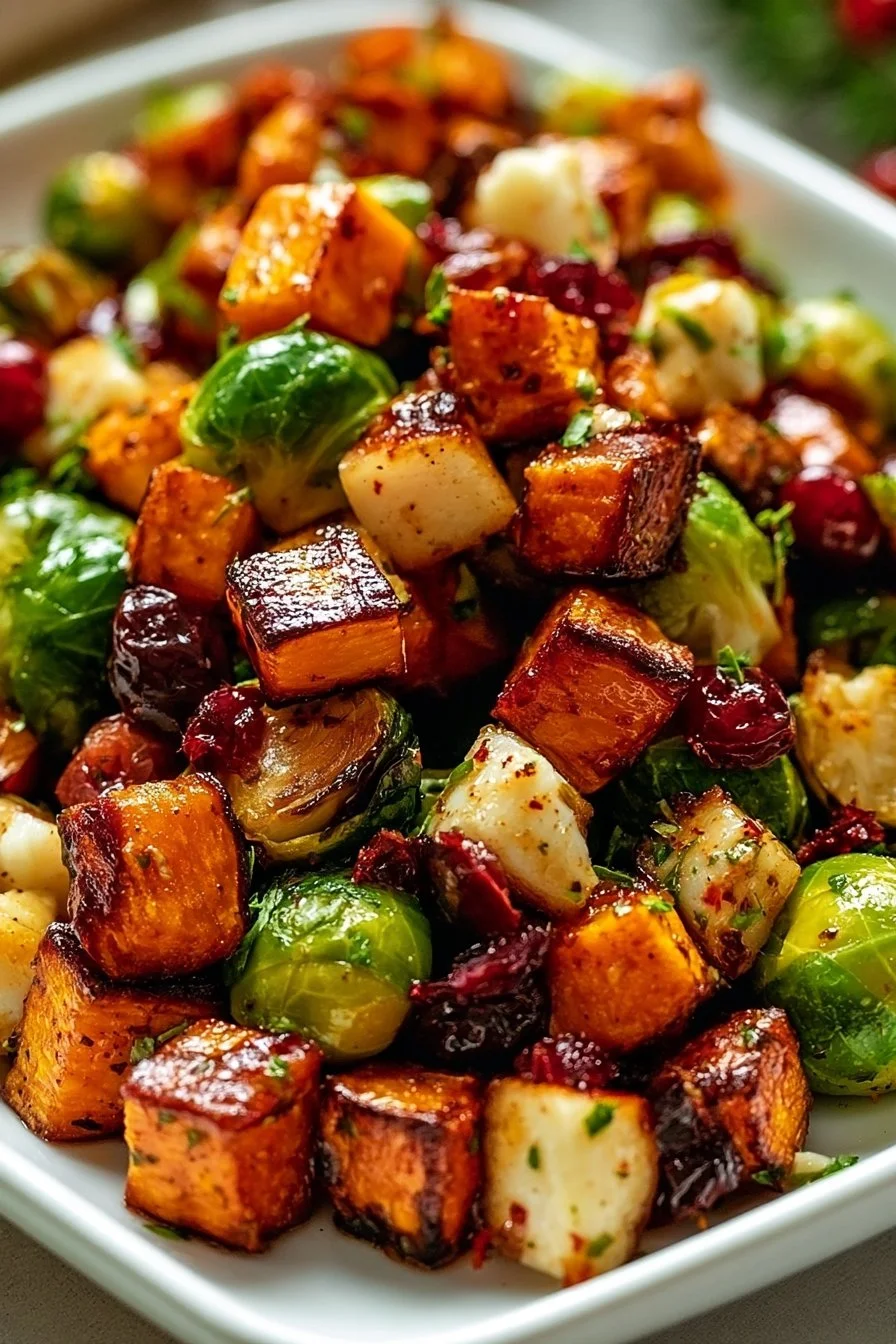
Understanding the Flavor and Texture
The flavor profile of this dish is beautifully intricate, thanks to the interplay of sweet, savory, and tart elements. The butternut squash and sweet potatoes contribute a sweet and nutty depth, while the Brussels sprouts provide a slightly bitter and robust flavor that enhances the dish’s complexity. The cranberry glaze, rich in tartness, cuts through the sweetness of the vegetables, bringing a freshness that balances the richness of the squash and potatoes.
The texture of the completed salad is equally captivating. Roasting the vegetables creates a delightful contrast between the soft, creamy insides of the squash and sweet potatoes and the crispy edges of the Brussels sprouts. The addition of lightly toasted nuts, if included, provides an inviting crunch that elevates the experience even further. The cranberries offer a chewy texture that adds an unexpected element amidst the vegetables.
When enjoying this salad, look for the balance between the caramelized sweetness of the roasted vegetables and the bright acidity from the cranberries. This perfect harmony makes each bite a sensation, allowing for a lovely mouthfeel that is both tender and hearty. With its vibrant colors and varied textures, this dish is sure to win over all palates.
Pro Tips
A few small techniques can significantly elevate the outcome of your dish. Here are some valuable tips to consider:
| Tip | Description |
|---|---|
| Pre-roasting Preparation | Make sure your vegetables are dried thoroughly after washing them; moisture can lead to steaming instead of roasting. This will ensure a beautifully caramelized exterior. |
| Uniform Cutting | Cut vegetables into evenly sized pieces for consistent roasting. This way, all pieces will have the same cooking time and finish uniformly. |
| Flavor Infusion | Allow the glaze to simmer for a few minutes to intensify the flavors. Adding a splash of citrus juice can brighten the glaze, enhancing the dish’s overall freshness. |
| Resting Period | Let the roasted vegetables cool slightly before adding the glaze. This allows them to retain their texture while absorbing flavor without becoming soggy. |
Incorporating these tips will help bring out the best in this recipe while ensuring a delightful dining experience for everyone involved. It’s the little details that often set the stage for remarkable dishes.
Why You’ll Love This Recipe
There are countless reasons to adore this particular dish. First and foremost, the combination of flavors is truly delightful; the medley of sweet, savory, and tart notes work together in a way that is universally appealing. The hearty, wholesome ingredients make this salad satisfying enough to stand alone as a main course, or it can serve as a delightful side.
Additionally, the versatility of this recipe makes it truly invaluable. It can easily be adapted to suit various dietary preferences or occasions, whether served at Thanksgiving, a casual weeknight dinner, or a potluck gathering. The accessible ingredient list makes it easy enough for beginner cooks to take on, while there’s enough depth for more experienced chefs to appreciate and enjoy.
The balance of convenience and excitement also plays a significant role in its appeal. The relatively quick prep and cook time mean you can whip up a stunning side in a matter of minutes. All while knowing it’s loaded with nutrients that lead to a healthy, balanced meal. Whether you’re cooking for a special event or just for yourself, this dish is sure to impress.
How to Serve Easy Cranberry Glazed Roosted Butternut Squash Brussels Sprouts and Sweet Potato Salad
Presentation is crucial for any salad, and this delightful dish is no exception. Consider serving it in a large, shallow bowl to allow the colorful vegetables to shine. For a refined appearance, layer the vegetables visually, ensuring the bright colors stand out against a neutral background. You might also sprinkle toasted nuts on top for additional crunch and visual interest.
This salad can be enjoyed warm, freshly roasted, or at room temperature, making it perfect for gatherings. Pair it with proteins like grilled chicken or savory tofu for a delicious main meal. The flavors complement a variety of mains, including vegetarian options. For a complete feast, consider serving alongside some crusty bread and a simple vinaigrette-dressed green salad.
For a casual lunch, this dish holds up surprisingly well in bento boxes or meal prep containers, so you can have leftovers for days. When it comes to beverages, a refreshing herbal tea or sparkling water with citrus can enhance your dining experience, complementing the fresh flavors of this dish.
Feel free to get creative with additional toppings, like crumbled feta or goat cheese for an added layer of flavor. Optional accompaniments such as a light citrus dressing or simple yogurt drizzle can transform the salad further. The versatile nature of this dish allows you to play around and make it your own.
How to Store Easy Cranberry Glazed Roosted Butternut Squish Brussels Sprouts and Sweet Potato Salad
Proper storage is key to preserving the flavors and textures of your salad. To cool down leftovers effectively, first divide them into smaller portions, which will help them reach room temperature faster. Place the portions into airtight containers to maintain freshness.
This dish can be stored in the refrigerator for 3–5 days. However, for best results, it’s recommended to enjoy it within the first few days, as roasted vegetables can lose their texture over time. Storing the salad separately from any dressing or glaze will help keep the ingredients fresh and prevent them from becoming soggy.
If you’re considering freezing the salad, while you can freeze the roasted vegetables, the texture and flavor may change upon thawing. It’s advisable to freeze only the vegetables, allowing you to prepare the cranberry glaze fresh upon reheating. When you’re ready to enjoy again, reheat gently in the oven or skillet to revive the roasted flavors.
Avoid leaving perishable items at room temperature for extended periods, as this can compromise food safety. Instead, prompt storage ensures the salad remains delicious and inviting for your next meal.
Tips to Make Easy Cranberry Glazed Roosted Butternut Squash Brussels Sprouts and Sweet Potato Salad
Fine-tuning your technique can make a world of difference when preparing this salad. Pay careful attention to each stage of the process, from ingredient prep to final assembly. A few practical pointers can greatly enhance your finished dish.
First, focus on seasoning your vegetables before roasting; a well-balanced sprinkle of salt and pepper can significantly improve flavor. Seasoning throughout the cooking process rather than just at the end allows for deeper flavor penetration.
Next, when you’re roasting, ensure not to overcrowd the baking sheet. Having ample space allows heat to circulate properly, promoting even roasting and caramelization. This step is vital for achieving that perfect golden exterior and tender interior.
While the final glaze is essential, consider drizzling just a little on the vegetables and tossing them together before plating. This method allows the flavors to blend harmoniously without drowning the dish. Retaining some glaze to drizzle on upon serving will keep the dish vibrant and appealing.
Lastly, trust your taste buds to guide you! Each vegetable has unique flavor profiles that should speak for themselves. Sample a piece of each veggie after roasting to gauge if additional seasoning or tweaks to your glaze are necessary. Small adjustments can make a world of difference.
Variations and Substitutions
One of the beauties of this salad is its versatility; there are numerous ways to switch it up while staying true to its essence. If you’re looking for a vegetarian version, you’re already there! But for those vegan preferences, simply ensure any additional produce or toppings align with vegan practices, such as using maple syrup instead of honey.
If you’re in need of a lower-carbohydrate option, consider swapping sweet potatoes with cauliflower or zucchini. These alternatives will provide a similar texture while lowering the overall carb intake. You can still infuse flavor by roasting them until tender with seasonings.
For added protein, a sprinkle of chickpeas or beans can be a delightful inclusion. Roasting them with the vegetables can give an enjoyable crunch, making the salad even heartier. Alternatively, adding firm tofu marinated in a soy sauce or stir-fry sauce adds both flavor and substance.
To enhance the overall flavor experience, you might consider incorporating spices such as cinnamon, nutmeg, or turmeric into the roasting process. These spices would complement the sweetness of the vegetables and lend a warm, fragrant aroma to the dish. Just be mindful of balancing these flavors not to overpower the core essence of the salad.
Storage and Reheating
Reheating leftovers requires gentle care to preserve the texture and flavor of the roasted vegetables. If stored properly in an airtight container in the refrigerator, the salad can typically last up to five days. When you’re ready to indulge in your leftovers, portion them out to streamline the reheating process.
For the microwave, place the salad in a microwave-safe dish. Start by reheating in 30-second intervals to avoid uneven heating—stir the dish between intervals to promote uniform warmth. Be careful not to overcook, as this could lead to a mushy consistency.
When using the oven, preheat it to a low temperature (around 300°F or 150°C). Spread the salad on a baking sheet to allow the vegetables to retain their texture while warming for about 10-15 minutes. This method helps achieve that freshly roasted flavor without compromising integrity.
If you feel like reviving the crispiness, consider using a skillet. Heating a little oil in the pan before adding the salad allows it to become golden again while ensuring each bite has that roasted crunch.
Customization Ideas
Tailoring this salad to fit personal preferences is one of its appealing aspects. Consider tweaking the dressing by incorporating additional elements such as tahini, lemon juice, or even a sprinkle of Parmesan cheese to cater to varied tastes.
For those who enjoy a touch of heat, adding a pinch of red pepper flakes to the glaze can provide an exciting kick without overwhelming the dish. Alternatively, a hint of fresh herbs like thyme or rosemary can elevate the flavor, adding depth and complexity. Just a sprinkle before serving can enhance the freshness of the dish.
Textures can be manipulated as well! Introducing crispy elements like fried onions or even some croutons can create a delightful crunch that contrasts with the softness of roasted vegetables. Similarly, fresh greens like spinach or arugula mixed into the salad or offered on the side can elevate the salad into a more nourishing meal.
Most importantly, embrace your creativity; let the ingredients you have dictate your adjustments. Seasonal produce can easily replace the core components, meaning you can make this dish fit your local harvest throughout the year. The flexibility of flavors ensures that it remains a playful component in your cooking repertoire.
Common Mistakes to Avoid
When it comes to preparing this salad, there are a few common pitfalls that could impact your final result:
-
Overcooking Vegetables: Leaving your vegetables in the oven for too long can result in mushy textures. Aim to check doneness midway, and remove them once they’re tender and golden-brown.
-
Incorrect Temperature: Not preheating your oven or roasting at too low a temperature can lead to unevenly cooked vegetables. Always ensure the oven is fully heated to allow for the proper caramelization process.
-
Neglecting To Season: Omitting proper seasoning can lead to bland results. Ensure every step includes seasoning to enhance flavors. A sprinkle of salt and pepper can elevate taste dramatically.
-
Too Much Glaze: Over-saturating the salad with glaze can result in sogginess. Toss with just enough dressing to enhance flavor without losing the textures of the roasted vegetables.
-
Not Allowing for Cooling Times: Failing to allow the roasted vegetables to cool slightly before glazing may make them soggy. Allowing a moment for the vegetables to breathe will help maintain crispiness.
By keeping these tips in mind, you can navigate the intricacies of this recipe successfully, ensuring a praise-worthy dish at every step.
Serving Occasions
This salad works beautifully for a variety of serving occasions. It’s especially delightful during holidays like Thanksgiving or Christmas, serving as a vibrant centerpiece on any festive table. The colorful medley of vegetables creates a welcoming atmosphere, signaling warmth and hospitality.
For casual gatherings, this salad can shine as a side dish, complementing grilled proteins or hearty winter roasts. Its heartiness is a nice contrast to lighter fare, satisfying guests without being overly heavy.
It also provides an excellent make-ahead option for meal prep. On busy weeknights, you can serve it as a healthy lunch or dinner, offering a satisfying meal that can be enjoyed throughout the week. Pair with a protein source for a complete lunch option that offers a delightful variety of nutrients.
Finally, it’s a fantastic choice for potlucks and family barbecues. Its transportable nature makes it easy to bring along, and the vibrant colors and flavors draw attention, promising to be a beloved addition to any spread.
Why Make This Recipe?
The thoughtful composition of this dish makes it an appealing alternative to other salads and side dishes. Its blend of ingredients brings a unique, hearty quality that is not only flavor-packed but also approachable for home cooks. It’s a perfect demonstration of how simple cooking techniques can yield surprisingly complex results.
Moreover, health-conscious readers will appreciate the balance of flavors without sacrificing enjoyment. Packed with vitamins and minerals from the fresh vegetables and cranberries, this dish promotes a nutritious lifestyle without compromising any appeal to the senses.
The other factor that sets this recipe apart is its adaptability. As it can be customized easily to meet dietary restrictions and preferences, it remains a versatile staple that can be enjoyed year-round. The potential for creativity in both ingredients and serving styles makes it both practical and exciting.
Finally, the straightforward preparation process resonates specifically with those who are looking to simplify their cooking routines, making this dish a worthy addition to anyone’s repertoire.
Make-Ahead Preparation
Preparing components of this dish ahead of time can save precious minutes when it comes time to serve. The roasted vegetables can easily be made in advance and stored in the refrigerator; they maintain their flavor and structure well.
Chop your vegetables the day before and store them in an airtight container. This not only saves time but also simplifies the cooking process. Just be sure to leave off the glaze until you’re ready to serve to ensure the vegetables retain their crispness.
Alternatively, you could prepare the cranberry glaze in advance. Simply store it in a sealed jar in the refrigerator; this will allow the flavors to deepen, and the glaze will come back to life easily when heated.
Combining everything at the final hour is a breeze, as this dish is best enjoyed fresh. You can toss it all together once your roasted vegetables are warmed, preventing any moisture from compromising the texture.
Equipment and Kitchen Preparation
When it comes to preparing this salad, having the right tools makes everything smoother. A large mixing bowl allows you to comfortably toss your vegetables in olive oil and seasonings. For roasting, a sturdy baking sheet is necessary; a half-sheet pan works well for this quantity.
Using a sharp chef’s knife is essential for efficiently cutting your vegetables, while a cutting board provides a safe space for preparation. Parchment paper or silicone mats for lining your baking sheet can prevent sticking and ease cleanup.
An efficient workspace should be kept tidy to help manage the workflow as you prepare your ingredients. Organizing items before cooking—having measuring cups, utensils, or jars ready—will make the overall process smoother and more enjoyable.
The equipment needed is quite standard and doesn’t necessitate any specialized tools, making this recipe available to all home cooks without barriers or stress.
FAQs
-
Can I use frozen vegetables instead of fresh?
- While you can use frozen vegetables, they may not achieve the same crisp-tender texture as fresh when roasted. If you choose frozen, be sure to thaw and drain any excess moisture before roasting.
-
Is there a gluten-free option for the dressing?
- Yes, the base ingredients in the glaze are gluten-free. However, always double-check any packaged items used, like maple syrup or store-bought sauces, to ensure they meet gluten-free requirements.
-
How can I make this salad spicier?
- For a bit of heat, add red pepper flakes to the glaze or toss some chopped jalapeños in with the vegetables before roasting. Adjust the amount based on your heat preference.
-
What is the best way to reheat leftovers?
- To reheat, place leftovers in an oven-friendly dish at 300°F (150°C) for about 10-15 minutes, or gently warm in a skillet over low heat with a splash of oil to revive the crispy texture.
-
Will the salad keep well in the refrigerator?
- Yes! The salad can be stored in the refrigerator for 3-5 days, making it ideal for leftovers. To maintain freshness, store the glaze separately to avoid sogginess.
-
Can I add protein to this salad?
- Absolutely! Grilled chicken, tofu, or chickpeas would all be excellent additions, either roasted along with the vegetables or prepared separately.
-
What type of nuts work best in this salad?
- Pecans or walnuts add a pleasant texture and flavor; they can be toasted before adding for enhanced aroma and taste.
-
Can I prepare the salad without oil?
- Yes, you could try roasting the vegetables with vegetable or chicken broth instead of oil for a lower-fat version, although the texture and flavor may differ slightly.
Disclaimer
Nutritional information is approximate and may vary based on ingredient brands, substitutions, portion sizes, and preparation methods.