
Japanese Katsu Bowls with Tonkatsu Sauce
There’s nothing quite like the delightful crunch of a perfectly fried cutlet paired with fluffy rice and a drizzle of tangy tonkatsu sauce. Japanese katsu bowls offer a delicious combination of flavors and textures that make for a satisfying meal any time of the day. The juicy pork loin cutlets are coated in crispy panko breadcrumbs, creating a golden brown exterior that contrasts beautifully with the tender meat inside.
These bowls are not only tasty but also incredibly versatile, making them perfect for dinner at home or even as a crowd-pleasing dish for gatherings. You can whip them up for a family dinner, serve them at a casual get-together, or even enjoy them as a comforting lunch. Once you try them, you’ll find it hard to resist this delightful Japanese comfort food!
Prep Time: 10 min | Cook Time: 25 min | Total Time: 35 min
How to Make Japanese Katsu Bowls with Tonkatsu Sauce
Ingredients:
- Pork loin cutlets
- Panko breadcrumbs
- All-purpose flour
- Egg
- Cooked rice
- Napa cabbage (shredded)
- Tonkatsu sauce
- Salt
- Pepper
- Oil (for frying)
Step-by-Step Instructions:
- Season the Pork Cutlets: Start by generously seasoning your pork cutlets with salt and pepper. This helps to enhance the flavor of the meat and creates a delicious base for the crispy coating.
- Dredge and Coat: Take each seasoned cutlet and dredge it in flour, making sure to coat it evenly. Then dip it in beaten egg, allowing any excess to drip off. Finally, coat the cutlet thoroughly with panko breadcrumbs, pressing down gently to ensure they stick well. This three-step process builds a beautiful layer of crunch for each cutlet.
- Fry to Perfection: Heat oil in a skillet over medium heat. Once hot, carefully place the coated cutlets in the oil, frying until they turn golden brown on both sides, usually about 3-4 minutes per side. Keep an eye on the temperature to avoid burning.
- Drain and Slice: Once cooked, remove the cutlets from the oil and let them drain on paper towels to absorb excess oil. After they cool slightly, slice them into strips for serving.
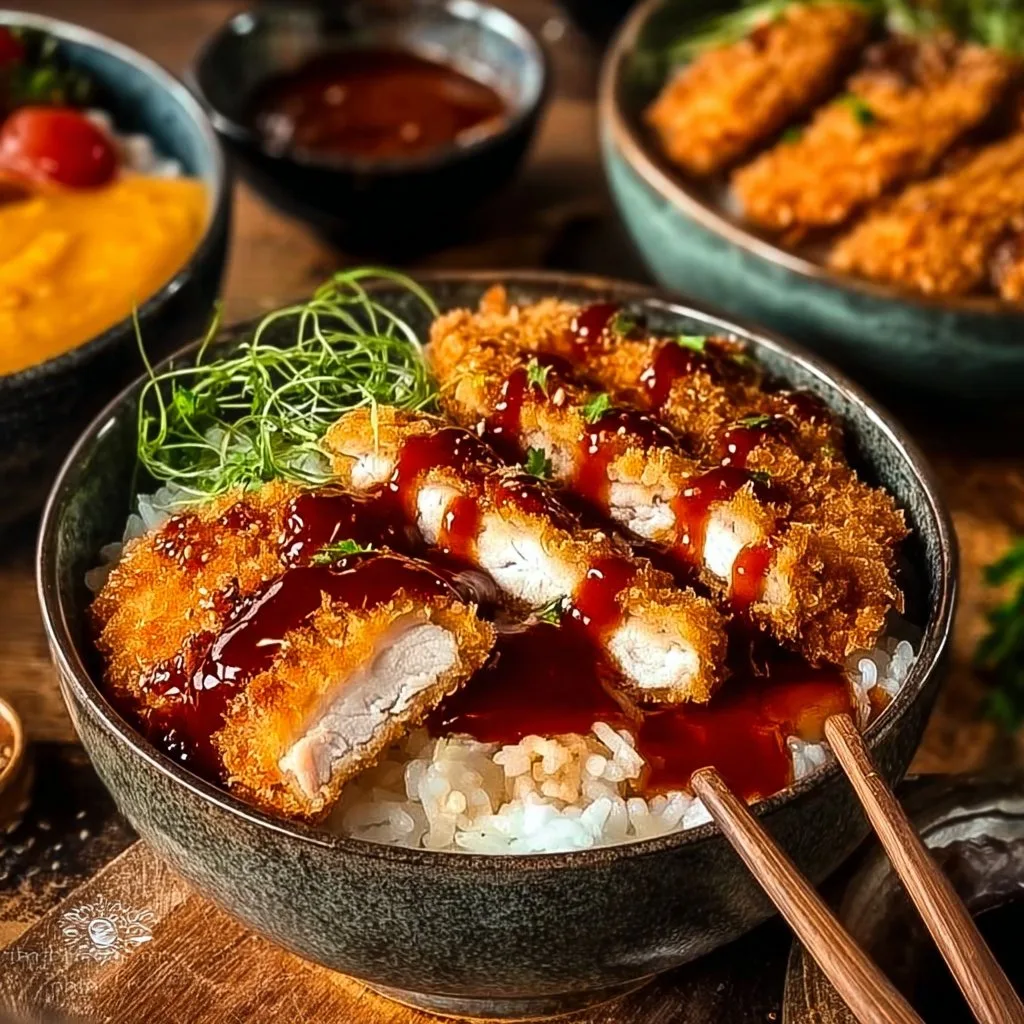
- Assemble the Bowls: Serve the sliced cutlets over fluffy rice and top with shredded napa cabbage. Finish with a generous drizzle of tonkatsu sauce for that signature flavor punch.
Pro Tips
- Quality of Ingredients: Use high-quality pork loin for the best flavor. It’s lean and tender, making it perfect for frying. Always check the freshness of your panko breadcrumbs; stale breadcrumbs won’t give that desired crunch.
- Frying Temperature: Maintain the oil at the right temperature (350°F to 375°F). If the oil is too cool, the cutlets will absorb too much oil and become soggy; too hot will burn the exterior before the inside cooks. A kitchen thermometer can help keep track.
- Double-Dipping for Extra Crunch: For an extra crispy texture, consider double-dipping the cutlets in the egg and panko after the first coating. This creates a thicker crust that locks in moisture.
- Homemade Tonkatsu Sauce: While store-bought tonkatsu sauce is convenient, making your own with ketchup, Worcestershire sauce, and soy sauce can enhance the flavor and fun of cooking.
- Shredded Cabbage: Don’t skip the cabbage! It adds a fresh crunch that balances out the richness of the fried cutlets.
Why You’ll Love This Recipe
Katsu bowls are undeniably delicious; the sandwich of textures created by the crunchy cutlet, soft rice, and crisp cabbage is simply irresistible. They are filling yet not overly heavy, making them a great option for dinner or any meal. Plus, the tonkatsu sauce adds a unique flavor that sets it apart from typical fried dishes.
The simplicity of this recipe makes it accessible for cooks of all experience levels. The process of preparing katsu bowls is straightforward yet rewarding, resulting in a dish that can impress anyone without too much fuss. It’s also adaptable for various diets, as you can substitute ingredients or adjust portions.
How to Serve Japanese Katsu Bowls
Presentation is key when serving Katsu bowls. A shallow bowl or a large plate works well so you can display the layers of the dish. Start with a base of fluffy rice, top it with the sliced katsu, then crown it with a mound of shredded cabbage for a pop of color.
Consider pairing your katsu bowls with a side of miso soup or pickled vegetables for a complete meal. A chilled cup of green tea or a refreshing Japanese beer can complement the crispy flavors perfectly.
How to Store Japanese Katsu Bowls
If you have leftovers, you’ll want to store them properly to maintain the integrity of the dish. Ideally, keep the cutlets and rice separate to prevent the breading from becoming soggy.
- Fridge: Place the cutlets and rice in airtight containers. They should stay fresh for 2-3 days in the refrigerator.
- Freezer: For longer storage, freeze the unbreaded or breaded cutlets (before frying) on a baking sheet. Once frozen, transfer to a freezer-safe bag and use within 2-3 months.
- Shelf Storage: Cooked rice can be stored separately but should be consumed within the same time frame.
Tips to Make Japanese Katsu Bowls
To ensure your katsu bowls are a hit every time, remember to keep your cutlets as dry as possible before breading. Excess moisture can prevent the coating from sticking. Use a paper towel to pat them down after seasoning, but before dredging.
Also, experiment with seasoning the flour with spices or garlic powder for an added layer of flavor. Timing is essential; make sure you don’t overcook the cutlets, as they can dry out quickly. A meat thermometer can help you achieve the perfect doneness (145°F for pork).
Variation
- Vegan Option: Swap the pork for eggplant or tofu, and use a plant-based egg substitute to coat. Ensure the panko breadcrumbs are vegan-friendly.
- Spicy Katsu: Add chili flakes to the panko mix or serve with a spicy mayo sauce for a kick.
- Gluten-Free: Use gluten-free breadcrumbs instead of panko and substitute almond flour for the all-purpose flour.
- Low-Carb: Swap rice for cauliflower rice and use chicken or zucchini for the cutlets for a healthier alternative.
Nutrition Information
(Serving Size: 1 bowl | Calories: 550 | Protein: 30g | Carbs: 65g | Fat: 20g | Fiber: 3g | Sugar: 5g)
This dish is high in protein thanks to the pork and moderate in carbohydrates, primarily from the rice. The fat is mostly from oil but provides a lovely richness.
Storage and Reheating
To reheat leftovers, you have several options:
- Microwave: Place the rice and katsu in a microwave-safe dish, cover with a damp paper towel to retain moisture, and microwave in 30-second intervals until warmed through.
- Oven: Preheat the oven to 350°F (175°C), place the cutlets on a baking sheet, and heat for about 10-15 minutes, keeping the rice wrapped in foil to warm gently.
- Skillet: Heat a small amount of oil in a skillet and reintroduce the cutlets over medium heat, flipping occasionally until heated thoroughly.
Customization Ideas
Feel free to adjust the flavors in your katsu bowls. You might want to top them with sliced green onions, sesame seeds, or pickled ginger. For a richer flavor profile, drizzle a bit of mayonnaise alongside the tonkatsu sauce. Experimenting with different types of cabbage or leafy greens can also provide various textures and tastes.
Common Mistakes to Avoid
- Sogginess in Cutlets: Make sure the oil is hot enough before you fry the cutlets. Also, don’t overcrowd the pan.
- Underseasoning: Season the cutlets generously with salt and pepper before frying for the best flavor.
- Cutting Before Cooling: Let fried cutlets rest before slicing to keep them juicy and avoid losing moisture.
- Not Using Enough Oil: Ensure there’s adequate oil in the skillet for even frying. A shallow fry can prevent proper cooking, especially for thicker cutlets.
Serving Occasions
These Japanese katsu bowls are versatile and can be enjoyed on various occasions. They make a comforting family dinner, can serve as a fun lunch during the week, or even be featured at casual dinner parties where friends gather.
Why Make This Recipe
Making katsu bowls at home allows you to enjoy fresh, crispy cutlets without getting takeout. Unlike some restaurant versions, you can adjust everything from the portion size to the type of meat and sauces—making it a flexible dish that can meet any preference. Plus, nothing surpasses the satisfaction of crafting your own meal, seeing and tasting your success in the kitchen.
FAQs
- Can I use chicken instead of pork? Yes, chicken cutlets are a great alternative and will work in the same way.
- What can I use instead of tonkatsu sauce? A mix of ketchup and Worcestershire sauce can mimic the flavor, or you can use a homemade barbecue sauce.
- Can I prepare the cutlets in advance? Absolutely! You can bread the cutlets ahead of time and store them in the fridge until ready to fry.
- How do I know when the cutlets are done? They should be golden brown on the outside and reach the internal temperature of 145°F.
- Is this recipe kid-friendly? Definitely! Children love the crispy texture, and you can adjust the sauce sweetness to taste.
Disclaimer: Nutrition information is approximate and may vary based on ingredient substitutions and cooking methods. Always adjust to your specific dietary needs.
Print
Japanese Katsu Bowls with Tonkatsu Sauce
- Total Time: 35 minutes
- Yield: 4 servings
- Diet: Non-Vegetarian
Description
Delightful Japanese katsu bowls featuring crispy fried pork cutlets, fluffy rice, and tangy tonkatsu sauce.
Ingredients
- Pork loin cutlets
- Panko breadcrumbs
- All-purpose flour
- Egg
- Cooked rice
- Napa cabbage (shredded)
- Tonkatsu sauce
- Salt
- Pepper
- Oil (for frying)
Instructions
- Season the pork cutlets with salt and pepper.
- Dredge each cutlet in flour, dip in beaten egg, then coat with panko breadcrumbs.
- Heat oil in a skillet over medium heat and fry the cutlets until golden brown, about 3-4 minutes per side.
- Drain the cooked cutlets on paper towels and slice them into strips.
- Assemble the bowls by placing cutlet strips over rice, topped with shredded napa cabbage and tonkatsu sauce.
Notes
For extra crunch, consider double-dipping the cutlets before frying. Use high-quality pork for the best flavor.
- Prep Time: 10 minutes
- Cook Time: 25 minutes
- Category: Main Course
- Method: Frying
- Cuisine: Japanese
Nutrition
- Serving Size: 1 serving
- Calories: 550
- Sugar: 5g
- Sodium: 600mg
- Fat: 20g
- Saturated Fat: 5g
- Unsaturated Fat: 10g
- Trans Fat: 0g
- Carbohydrates: 65g
- Fiber: 3g
- Protein: 30g
- Cholesterol: 90mg