
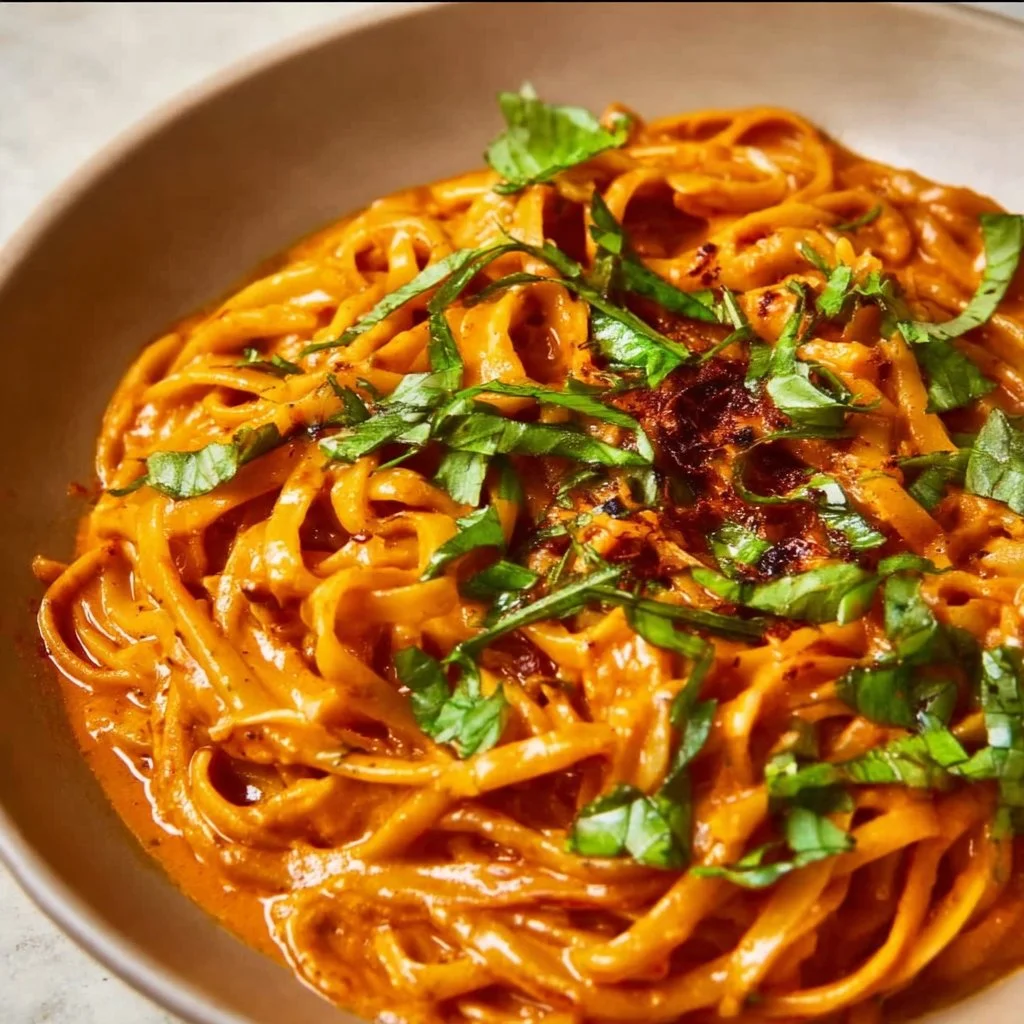
Thai Red Curry Noodles
If you’re craving a dish that’s creamy, spicy, and bursting with flavor, look no further than Thai Red Curry Noodles. This recipe combines the rich, smooth taste of coconut milk with aromatic red curry paste, creating a beautiful harmony that tantalizes the taste buds. The addition of fresh vegetables and your choice of protein keeps the dish colorful and nutritious.
The texture is equally delightful. The noodles are tender yet slightly chewy, perfectly complementing the creamy sauce. This dish is not only satisfying for dinner but also a fun option for casual gatherings or even a cozy meal for one. It’s an excellent way to spice up your weeknight cooking routine!
Prep Time: 10 min | Cook Time: 25 min | Total Time: 35 min
How to Make Thai Red Curry Noodles
Ingredients
- 200g rice noodles
- 1 tbsp red curry paste
- 400ml coconut milk
- 2 tbsp soy sauce
- 1 tbsp lime juice
- 1 cup mixed vegetables (e.g., bell pepper, broccoli, carrots)
- Your choice of protein (tofu, chicken, shrimp)
- Fresh cilantro (for garnish)
Step-by-Step Instructions
-
Cook the rice noodles: Begin by cooking the rice noodles according to the package instructions. Once cooked, drain them and set them aside.
-
Prepare the sauce: In a pan, heat a tablespoon of oil over medium heat. Add the red curry paste and stir it for about a minute until it becomes fragrant. This step is crucial as it releases the aromatic oils in the curry paste, enhancing the overall flavor.
-
Add coconut milk: Slowly incorporate the coconut milk, soy sauce, and lime juice, stirring well to combine everything into a smooth sauce.
-
Cook the vegetables: Toss in the mixed vegetables and cook until they are tender. This usually takes about 5-7 minutes. Feel free to mix and match your favorite veggies for variety!
-
Combine noodles and protein: Add the cooked noodles and your choice of protein to the pan. Toss everything together until well-coated in the flavorful sauce.
-
Finish cooking: Let everything cook for an additional 2-3 minutes until heated through. This ensures that the flavors meld together beautifully.
-
Serve: Plate your delicious Thai Red Curry Noodles hot, garnished with fresh cilantro for a pop of color and freshness.

Pro Tips
-
Choosing the Right Noodles: Rice noodles come in various thicknesses. Thin rice vermicelli will cook faster than thicker rice noodles, so keep an eye on the cooking time. Opt for the noodle type you prefer but make sure to follow the instructions on the package for the best results.
-
Balancing Spice and Creaminess: Adjust the amount of red curry paste based on your spice tolerance. If you prefer a milder dish, start with less and add more to taste after incorporating the coconut milk.
-
Protein Substitution: If you want a meatless option, tofu is a fantastic choice as it absorbs flavors well. If you prefer animal protein, both chicken and shrimp cook quickly and blend seamlessly with the other ingredients.
-
Vegetable Variations: Feel free to switch up the mixed vegetables based on what’s available. Snow peas, zucchini, or even frozen mixed veggies work great. The key is to use fresh or colorful options to enhance both nutrition and presentation.
-
Storing Leftovers: If you have leftovers, store them in an airtight container in the fridge for up to three days. However, be mindful that the noodles may absorb the sauce, so you may need to add a splash of coconut milk when reheating.
-
Plating Techniques: When serving, try to twirl the noodles into nests for an elegant presentation. A sprinkle of crushed peanuts or a squeeze of lime can also take your garnishing to the next level!
Why You’ll Love This Recipe
Thai Red Curry Noodles are a delightful amalgamation of flavors, thanks to the robust and savory red curry combined with the creamy base of coconut milk. Each bite offers a burst of taste that feels both comforting and exciting. Additionally, the use of vibrant veggies not only enhances the flavor but adds a nutritious punch.
One of the best parts about this recipe is its simplicity. With just a few easy steps and minimal ingredients, you can whip up a delectable meal in under an hour. Plus, it accommodates various diets. You can easily make it vegetarian or vegan, and with a quick swap of ingredients, you have a gluten-free option.
How to Serve Thai Red Curry Noodles
Presentation is key when it comes to serving this dish. Serve the noodles in vibrant bowls, topped with freshly chopped cilantro and a squeeze of lime juice. For added flair, consider garnishing with sesame seeds or crushed peanuts for a delightful crunch.
To complement your meal, pair it with a chilled glass of coconut water or a subtly sweet Thai iced tea. If you prefer something refreshing, a crisp cucumber salad can be a perfect side dish to balance the creamy noodles.
How to Store Thai Red Curry Noodles
When it comes to storage, keeping those leftovers fresh is essential. If you anticipate having leftovers, transfer the noodles and sauce into an airtight container. They can be kept in the fridge for about 3 days.
For longer storage, you can freeze the dish in a freezer-safe container for up to 3 months. When you’re ready to eat, just thaw it in the fridge overnight and reheat.
Tips to Make Thai Red Curry Noodles
-
Timing is Everything: Cook the noodles just until they are al dente, as they will continue to cook slightly when combined with the sauce.
-
Layering Flavors: Consider adding a teaspoon of brown sugar to the sauce if you like a sweet element in your curries. This balances the spiciness and provides depth.
-
Experiment with Herbs: Fresh basil or mint can elevate the flavors even more. Adding these herbs right before serving offers a fresh and aromatic finish.
-
Season to Taste: Before serving, taste and adjust seasoning. A pinch of salt or more lime juice can make a significant difference.
Variations
-
Vegan Version: Use tofu in place of chicken or shrimp and ensure your soy sauce is gluten-free if needed.
-
Spicy Kick: Add sliced fresh chili or a dash of sriracha to the sauce for an extra layer of heat.
-
Low-Carb Option: Swap the rice noodles for spiralized zucchini or shirataki noodles for a low-carb alternative.
Nutrition Information
( Serving Size: 1 bowl | Calories: Approx. 400 | Protein: 15g | Carbs: 55g | Fat: 18g | Fiber: 5g | Sugar: 5g )
This dish is high in healthy fats due to the coconut milk and features a good balance of protein if you choose chicken or tofu. It’s a satisfying meal that can fit well into a balanced diet when enjoyed in moderation.
Storage and Reheating
To reheat leftovers, simply follow these steps:
-
Microwave: Place the noodles in a microwave-safe dish, add a little coconut milk if they seem dry, and cover loosely. Heat in short intervals until warmed through.
-
Skillet: Pour the noodles into a skillet with a splash of coconut milk over medium heat. Stir frequently until heated evenly.
-
Oven: Transfer noodles to an oven-safe dish, cover with foil, and bake at 350°F (175°C) for about 15 minutes, adding a splash of coconut milk if needed.
Customization Ideas
You can adjust the flavor profile by introducing different spices or sauces. Try adding a teaspoon of ginger for a zing or a splash of fish sauce for an authentic Thai touch. You can also customize toppings by using nuts, crunchy vegetables, or even pickled onions for a tangy bite.
Common Mistakes to Avoid
-
Overcooking Noodles: Don’t let the noodles sit in hot water too long; they can become mushy. Rinse them under cold water after draining to stop the cooking process.
-
Not Cooking the Paste Enough: Recipes often overlook this step, so ensure you cook the curry paste enough to release its flavors before adding liquids.
-
Skipping the Fresh Herbs: Fresh herbs are essential for a bright finish. Don’t skip them—adding them at the end ensures they retain their fragrance.
-
Ignoring Texture: Ensure a blend of textures by using a mix of both crunchy and soft vegetables. This variety enhances the meal and makes it more interesting.
-
Not Adjusting for Taste: Always taste as you go! Adjust sweetness or saltiness according to your preference before serving to get it just right.
Serving Occasions
Thai Red Curry Noodles shine at various occasions. They’re fantastic for family dinners, providing a hearty and satisfying option for everyone. They can also be a star attraction at potlucks or casual gatherings—everyone will want to know how you made such a delicious dish!
This dish is also perfect for quick lunch prep; it’s nutritious, filling, and can even be enjoyed cold as a refreshing take on leftover noodles.
Why Make This Recipe
What sets Thai Red Curry Noodles apart from similar dishes is the balance of flavors and the comfort factor. With its rich, creamy sauce and customizable ingredients, it’s easy to make and adapts well to personal preferences and dietary restrictions.
This recipe is a delicious reminder of the vibrant flavors of Thai cuisine, making it not just a meal but an experience. You’ll find yourself returning to it time and again, whether for a quick weeknight dinner or a special gathering.
FAQs
1. Can I make this dish ahead of time?
Yes, you can prepare the sauce and noodles separately in advance. When ready to serve, combine them and warm everything together.
2. What if I don’t have coconut milk?
You can use heavy cream or a mix of almond milk and a touch of olive oil for a similar creamy texture, though the flavor will be different.
3. How can I make this dish less spicy?
Reduce the amount of red curry paste you use and balance it with more coconut milk; this will dilute the spice without losing flavor.
4. Is this dish gluten-free?
If you use gluten-free soy sauce, the dish will be gluten-free. Be sure to check labels for any hidden gluten ingredients.
5. Can I use other types of noodles?
Absolutely! While rice noodles are traditional, you can substitute them with any preferred noodle type, such as udon or soba, but be mindful of cooking times.
Disclaimer
Please note that the nutrition information provided is approximate, and ingredients may vary based on brands and preparation methods. Always check labels and adjust according to your dietary needs.
Print
Thai Red Curry Noodles
- Total Time: 35 minutes
- Yield: 4 servings 1x
- Diet: Vegetarian
Description
A creamy, spicy, and flavorful dish combining coconut milk and red curry paste with fresh vegetables and your choice of protein.
Ingredients
- 200g rice noodles
- 1 tbsp red curry paste
- 400ml coconut milk
- 2 tbsp soy sauce
- 1 tbsp lime juice
- 1 cup mixed vegetables (e.g., bell pepper, broccoli, carrots)
- Your choice of protein (tofu, chicken, shrimp)
- Fresh cilantro (for garnish)
Instructions
- Cook the rice noodles according to the package instructions, drain, and set aside.
- In a pan, heat a tablespoon of oil over medium heat. Add the red curry paste and stir for about a minute until fragrant.
- Slowly incorporate the coconut milk, soy sauce, and lime juice, stirring to combine into a smooth sauce.
- Add mixed vegetables and cook until tender, about 5-7 minutes.
- Add the cooked noodles and protein to the pan, tossing until well-coated in the sauce.
- Let everything cook for an additional 2-3 minutes until heated through.
- Serve hot, garnished with fresh cilantro.
Notes
Adjust the amount of red curry paste based on your spice preference. Store leftovers in an airtight container in the fridge for up to 3 days.
- Prep Time: 10 minutes
- Cook Time: 25 minutes
- Category: Main Course
- Method: Stovetop
- Cuisine: Thai
Nutrition
- Serving Size: 1 serving
- Calories: 400
- Sugar: 5g
- Sodium: 800mg
- Fat: 18g
- Saturated Fat: 15g
- Unsaturated Fat: 3g
- Trans Fat: 0g
- Carbohydrates: 55g
- Fiber: 5g
- Protein: 15g
- Cholesterol: 0mg