
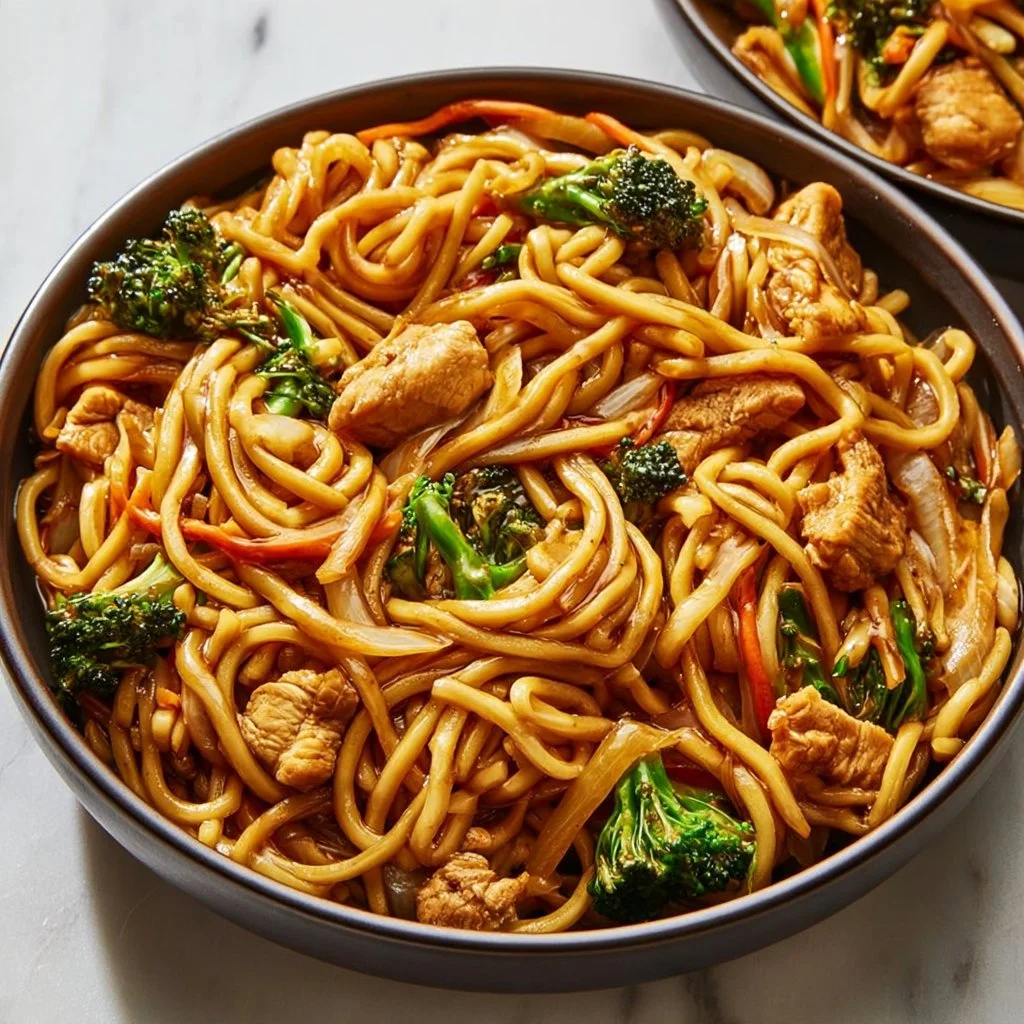
Chicken Lo Mein
Chicken Lo Mein is a beloved dish in many households, renowned for its flavorful and satisfying characteristics. This classic dish combines tender chicken, vibrant vegetables, and hearty noodles, all enveloped in a savory sauce that tantalizes the taste buds. When prepared correctly, it offers a delightful medley of textures—from the tenderness of the chicken to the crispness of the vegetables, complemented by the chewy noodles. The flavors meld together beautifully, creating a dish that’s savory, slightly sweet, and just a bit nutty from the sesame oil.
The appeal of Chicken Lo Mein extends beyond just its taste; it’s a wonderfully versatile dish that can be made with various ingredients based on personal preferences and what you have on hand. Its bright colors and inviting aroma make it an excellent choice for family dinners, casual get-togethers, or even meal prepping for the week ahead. Visually, the dish is a feast for the eyes, with colorful vegetables contrasting against the noodles, making it an appealing centerpiece for any table.
Whether you’re an experienced home cook or a beginner, this Chicken Lo Mein recipe is straightforward and manageable. It’s a time-saver and a great way to use up leftover vegetables or rotisserie chicken you may have on hand. Best of all, it delivers a restaurant-quality dish right in your kitchen without the hassle of takeout.
Moreover, Chicken Lo Mein can be an excellent choice for celebrations and gatherings, bringing people together over a shared love for delicious food. The ability to quickly throw everything together allows you to spend more time with loved ones and less time cooking, making it a perfect option for busy weeknights or special family occasions.
What Makes This Recipe Special
What sets Chicken Lo Mein apart from other noodle dishes is its unique blend of flavors and textures. The combination of marinated chicken with a variety of fresh vegetables creates a harmonious balance that is both satisfying and balanced. This dish showcases the tender juiciness of chicken, where each bite melts in your mouth, complemented by the crunch of crisp vegetables that add an extra layer of freshness. The noodles, whether made from wheat or a gluten-free alternative, soak up all the delicious sauce, making each bite full of flavor.
Unlike fried rice or other stir-fried noodle dishes, Lo Mein places focus on the sauce that coats the dish, enhancing the overall flavor without overpowering the natural tastes of the chicken and vegetables. The use of soy sauce, along with optional oyster sauce, adds depth and umami, while the sesame oil rounds out the flavors with its rich nuttiness. The capabilities for customization allow for this dish to be as versatile as the cook desires, accommodating a range of dietary needs and aesthetic preferences.
Moreover, the cooking technique of stir-frying offers a quick method to achieve that coveted restaurant-quality finish. The process of quickly cooking the ingredients over high heat preserves their nutrients and flavors, unlike boiling or steaming which can dilute tastes. This method also ensures that the chicken remains juicy and the vegetables stay vibrant and crisp rather than becoming soggy.
The ease of preparation combined with its bold flavors makes Chicken Lo Mein a standout dish. It’s satisfying while also giving a nod to the culinary traditions of Chinese cuisine, allowing home cooks to experience a rich cultural dish right in their own kitchens, turning everyday meals into something extraordinary.
Ingredient Overview and Helpful Notes
The primary ingredients in Chicken Lo Mein play crucial roles in achieving the desired flavors and textures of the dish. Starting with the lo mein noodles, they are the backbone of this recipe, providing a chewy texture that pairs perfectly with the tender chicken and crunchy vegetables. If lo mein noodles are unavailable, spaghetti can be utilized as a convenient substitute, as it mimics the texture quite well.
The chicken breast provides a protein base that is tender and satisfying. Choosing boneless, skinless chicken breast allows for easy preparation and promotes even cooking. When selecting chicken, look for pieces that are plump and have a fresh appearance; avoid any that appear dried out or discolored.
Soy sauce is notable for deepening the flavor profile of this dish, contributing its savory umami qualities that balance perfectly with the sweetness of vegetables. It’s essential to opt for a high-quality soy sauce, as this will significantly affect the overall taste of the dish. If you prefer a gluten-free version, tamari can serve as a suitable alternative.
The oyster sauce (optional) adds a sweet and rich flavor that enhances the overall taste, but it can be easily replaced with additional soy sauce for those who wish to avoid it. Sesame oil introduces a warm, nutty aroma that enhances the dish significantly. Using toasted sesame oil elevates the flavor even further—just be careful as it can be quite strong.
As for vegetables, the bell pepper, snap peas, and shredded carrots create a rainbow of color as well as a variety of textures that keep the dish exciting. When selecting vegetables, aim for freshness; they should be bright and firm to ensure they retain their crispness during stir-frying. Green onions add a burst of freshness and flavor as a garnish while also providing a lovely visual appeal.
Before cooking, preparation is key: wash the vegetables thoroughly, slice the chicken into thin pieces for even cooking, and have all ingredients laid out and measured. Doing so offers a smoother cooking process and helps prevent overcooked or unevenly cooked elements in the final dish.
Nutrition & Recipe Details
The nutritional values can vary based on the specific brands of ingredients used, the portion sizes, and any ingredients substituted or omitted. Here’s a general breakdown of what to expect:
| Item | Value |
|---|---|
| Prep time | 10 minutes |
| Cook time | 20 minutes |
| Store time | 3-4 days in the refrigerator |
| Calories | Approximately 550 per serving |
| Protein | 35 grams |
| Carbohydrates | 60 grams |
| Fat | 15 grams |
How to Make Chicken Lo Mein
Making Chicken Lo Mein is a straightforward process that involves a few essential steps to ensure all flavors blend harmoniously. Begin with organizing your ingredients; having everything prepared in advance will reduce stress during cooking. It can be helpful to create a mise en place, where ingredients are portioned out and easily accessible. This way, you’ll transition smoothly through each step without interruption.
A large skillet or wok is recommended for cooking this dish, as its wide surface area allows for even cooking and proper heat distribution. Stir-frying is the primary technique here, so ensure your cooking vessel has a sturdy handle and can maintain high temperatures without warping.
Once your ingredients and equipment are organized, it’s time to get started. The noodles will need to be cooked first, according to the package directions. Once done, drain them and set them aside, allowing you to focus on the chicken and vegetables in the meantime.
Ingredients
| Ingredient | Quantity |
|---|---|
| Lo mein noodles (or spaghetti) | 8 oz |
| Boneless, skinless chicken breast, thinly sliced | 1 lb |
| Soy sauce | 2 tablespoons |
| Oyster sauce (optional, or use additional soy sauce) | 1 tablespoon |
| Sesame oil | 1 tablespoon |
| Garlic, minced | 2 cloves |
| Bell pepper, sliced | 1 cup |
| Snap peas (or green beans) | 1 cup |
| Shredded carrots | 1 cup |
| Green onions, chopped | 2 |
| Salt and pepper | to taste |
| Crushed red pepper flakes (optional) | A pinch |
Before you start cooking, make sure the chicken is properly marinated. Combine the chicken, soy sauce, oyster sauce, and sesame oil in a large bowl, allowing it to sit for about 10 minutes. This will enable the flavors to penetrate into the chicken, enhancing its taste in the final dish.
Step-by-Step Instructions
To create a delicious Chicken Lo Mein, follow these detailed steps carefully:
-
Cook the Noodles: Begin by bringing a large pot of salted water to a boil. Once boiling, add the lo mein noodles and cook according to the package directions, typically around 5-7 minutes. Stir occasionally to prevent them from sticking. When done, drain the noodles and set them aside, saving half a cup of the cooking water in case you need to loosen the dish later.
-
Marinate the Chicken: In a large mixing bowl, combine the thinly sliced chicken breast with the soy sauce, oyster sauce (if using), and sesame oil. Mix well to ensure all pieces are coated. Let it marinate for approximately 10 minutes. This brief resting period is crucial as it infuses the chicken with flavor.
-
Stir-Fry the Chicken: Heat a large skillet or wok over medium-high heat. Once the pan is hot, add a splash of oil (vegetable or any neutral oil works well). Increase the heat slightly and add the marinated chicken to the skillet. Stir-fry the chicken until cooked through and no longer pink, approximately 5-7 minutes. You’ll know it’s done when the chicken is lightly browned and feels firm to the touch.
-
Add the Vegetables: Next, introduce minced garlic to the skillet and stir-fry for about 30 seconds until fragrant. Add the sliced bell pepper, snap peas (or green beans), and shredded carrots next. Continue stir-frying for an additional 3-4 minutes. The goal is to have the vegetables be tender yet still slightly crisp, retaining their vibrant color and nutritional value.
-
Combine Everything: With the vegetables cooked and the chicken perfectly done, reduce the heat to medium. Add the cooked noodles to the skillet. Use tongs or a spatula to toss everything together, ensuring that the noodles are evenly coated with the sauce and mixed with the chicken and vegetables. If the noodles seem too dry, drizzle some of the reserved noodle cooking water to bring it all together.
-
Final Seasoning: Season the chicken lo mein with salt, pepper, and crushed red pepper flakes, tossing again to combine. Taste the dish and adjust seasoning as needed before removing it from the heat. The red pepper flakes can add a nice heat if preferred, but they’re completely optional.
-
Garnish and Serve: Transfer the Chicken Lo Mein to serving plates or a large serving dish. Garnish with chopped green onions before serving. This dish is best enjoyed hot and can be served on its own or with a side of your favorite Asian-inspired dishes.
Understanding the Flavor and Texture
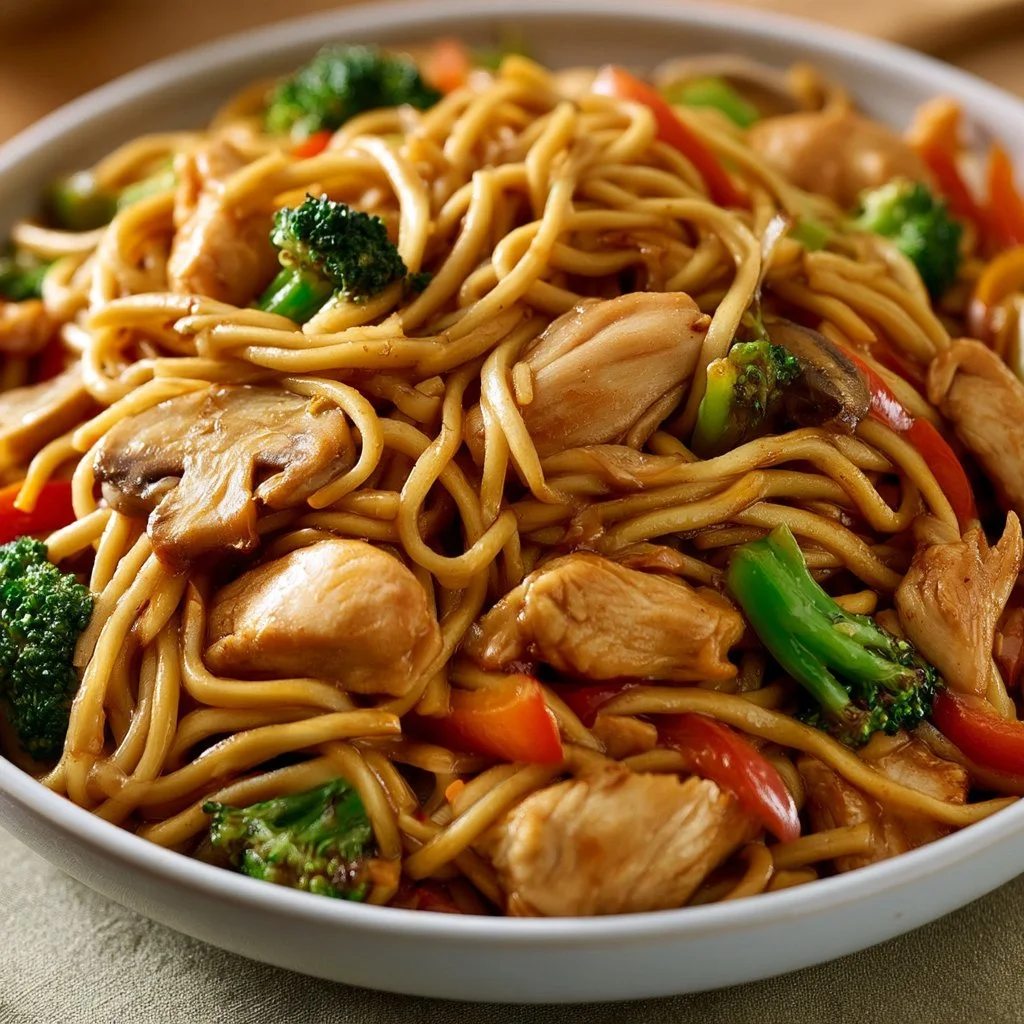
The expected flavor profile of Chicken Lo Mein is a delightful combination of savory, slightly sweet, and nutty notes. The soy sauce delivers that rich umami punch while the sesame oil lends a warmth that envelops the dish in a gentle embrace. As you take a bite, the chicken should taste succulent and well-seasoned, harmonizing beautifully with the crispness of the veggies.
The texture is a highlight of this recipe; when executed correctly, you will experience the chewiness of the lo mein noodles, contrasting with the tender chicken and the crunch of the bell peppers and snap peas. There should be a slight gloss to the noodles from the sauce, which allows each strand to cling together without becoming clumpy. Ideally, the vegetables will maintain a bit of crunch, providing an exciting mouthfeel with every bite.
Furthermore, the cooking method plays a significant role in achieving this successful balance. High heat stir-frying retains moisture in the chicken while also ensuring that the vegetables are cooked just until tender, preserving their vibrant colors and nutrients. The visual appeal of the dish should mirror its flavor—colorful, inviting, and aromatic.
In conclusion, recognizing a successful Chicken Lo Mein relies heavily on balancing flavors and textures. The harmonious blending of the marinated chicken with fresh vegetables and noodles coated in a savory-sweet sauce is the definitive indicator of a recipe well executed.
Pro Tips
A few small techniques can significantly improve the outcome of your Chicken Lo Mein, ensuring each component shines through. Here are some tips that can elevate your dish:
| Tip | Description |
|---|---|
| Use High Heat | Stir-frying at a high temperature ensures that the chicken gets a nice sear, locking in juices while cooking the vegetables quickly to retain their crispness and bright colors. |
| Don’t Overcrowd the Pan | Avoid adding too many ingredients to the skillet at once. Overcrowding can lead to steaming rather than stirring, resulting in less desirable texture and flavors. |
| Preparation is Key | Have all your ingredients prepped and within reach before starting to cook. This organization makes the cooking process smooth and prevents overcooking any elements. |
| Taste and Adjust | Always taste your dish before finishing. This will help you adjust the seasoning, ensuring the flavors are balanced and to your liking. |
Another significant piece of advice is to use fresh ingredients whenever possible. Fresh vegetables not only taste better but also enhance the dish’s overall appearance and nutrition. Aim to buy your ingredients as close to cooking as possible for the best results.
In addition, consider the timing of each component’s addition during cooking. Start with proteins, followed by denser vegetables, and finish with quick-cooking items. This layering technique ensures everything cooks evenly and retains the best characteristics of each ingredient.
Why You’ll Love This Recipe
The nuances of flavor, ease of preparation, and flexibility in this Chicken Lo Mein recipe make it a crowd-pleaser. The simple process allows even novice cooks to whip up a restaurant-quality dish at home. Its adaptability means you can easily swap out ingredients based on personal preferences or what’s available, ensuring it’s a great option for busy days or weeknight meals.
Accessibility is another significant advantage. With common pantry staples and fresh vegetables, you can have everything you need within arm’s reach, lowering the barrier to entry for making this dish. The brief cooking time means you can have dinner on the table in under 30 minutes, making it an ideal choice for hectic weeknights.
Beyond being a delicious meal, Chicken Lo Mein also has versatile serving options. It can be served in large family-style portions or plated individually for more formal gatherings. Plus, it pairs beautifully with various sides or can be altered to the diner’s delight, making it an inviting dish for diverse occasions.
The satisfaction this dish brings, combined with its rich flavors and textures, means it’s destined to become a favorite in your cooking repertoire, whether you’re feeding a family or prepping meals for yourself.
How to Serve Chicken Lo Mein
Presenting Chicken Lo Mein attractively can enhance the dining experience significantly. When plating, consider using shallow bowls to showcase the colorful mix of noodles and vegetables. A sprinkle of fresh green onions on top adds vibrancy and a fresh fragrance that invites everyone to dig in.
To complement your Chicken Lo Mein, consider suggesting side dishes like spring rolls or dumplings, which provide a delightful starter or side. A light cucumber salad with a sesame dressing can also balance the richness of the Lo Mein while adding another layer of flavor to the meal.
If you want to take it a step further, a drizzle of chili oil or a side of soy sauce can please those who enjoy a bit of heat or additional seasoning at the table. Pairing this dish with a refreshing beverage such as jasmine tea or a light sparkling water with lemon can offer a beautifully finished meal that feels both complete and satisfying.
For more formal settings, you can consider serving the Lo Mein in individual portions, garnished with cilantro or sesame seeds for added texture and flavor. These small details can elevate the dish, making it feel special for guests or family alike.
How to Store Chicken Lo Mein
To store leftover Chicken Lo Mein properly, it’s essential to cool the dish quickly before packaging it. Allow the chicken lo mein to reach room temperature, then transfer it to airtight containers for refrigerator storage. Proper storage helps maintain the dish’s flavor and texture, preventing it from becoming soggy.
In the refrigerator, Chicken Lo Mein can typically last for 3-4 days. If you wish to keep it longer, consider freezing it. To do so, portion the lo mein into freezer-safe containers or bags, squeezing out excess air to prevent freezer burn. It can be stored in the freezer for up to three months. Be sure to label containers with the date and contents for easy identification later.
When storing, keep in mind that some textures may change. Noodles might absorb sauces and become softer, while vegetables could lose their crispness. If you notice the lo mein dries out a bit after storage, adding a splash of water or extra soy sauce during reheating can help restore some moisture.
Avoid leaving Chicken Lo Mein at room temperature for extended periods, as this can enhance the risk of bacterial growth and spoilage. Aim to refrigerate or freeze within two hours of cooking for the safest results.
Tips to Make Chicken Lo Mein
A few practical cooking tips can enhance your Chicken Lo Mein, ensuring consistency and flavor throughout your dish. First and foremost, pay careful attention to the heat when cooking. A high, consistent heat keeps the stir-fry cooking quickly, giving you crispy vegetables while locking moisture into the chicken.
Also, monitor the doneness of the chicken closely. Overcooking can lead to dry chicken, taking away from the dish’s expected flavor. Aim for the chicken to be tender and juicy, with a slight golden-brown color to indicate it’s cooked through. Using a meat thermometer can be helpful, ensuring the chicken reaches a safe internal temperature of 165°F (75°C) for optimal safety without compromising on juiciness.
Paying attention to the order in which ingredients are added can also improve the dish. Start with the chicken, then add denser vegetables followed by softer ones. This way, every component has the right amount of cooking time and retains its unique textures.
Lastly, tweaking seasoning is vital. Always taste as you go. Adjusting salt, pepper, and heat levels based on your personal preference will result in a dish that perfectly suits your palate, creating a more satisfying eating experience.
Variations and Substitutions
Chicken Lo Mein offers plenty of opportunities for customization, allowing you to adapt it based on your dietary needs or ingredient preferences. For a vegetarian version, simply omit the chicken and load up on extra vegetables such as mushrooms, zucchini, or broccoli. Tofu can also be a great protein substitute; be sure to press and marinate it for the best flavor and texture.
If you’re looking to reduce carbohydrates, consider using zoodles (zucchini noodles) instead of traditional noodles. This swap decreases the overall carb content while keeping the dish light and refreshing. Alternatively, quinoa can provide a protein-rich grain that adds a unique twist to the dish.
Those who enjoy a bit of kick can prepare a spicy rendition by adding chili paste or fresh sliced chilies into the stir-fry. This addition elevates the flavor profile and creates a delightful heat that many diners enjoy.
To create a gluten-free option, utilize gluten-free soy sauce or tamari in place of regular soy sauce, and ensure your noodles are also gluten-free. This adaptation allows anyone with dietary restrictions to enjoy the dish without compromising on flavor.
Lastly, experimenting with different sauces can yield new flavors. For a twist, try adding hoisin sauce or a touch of sweet chili sauce. These can introduce a nice balance of sweetness and umami, enhancing the overall dish.
Storage and Reheating
When it comes to the storage of Chicken Lo Mein, it’s best to divide leftovers into smaller portions before storing. This makes for easier reheating and helps maintain a consistent texture across each serving. Use airtight containers to keep the dish fresh; if you’re using plastic containers, ensure they are microwave-safe if reheating in that manner.
For reheating, a few methods can be employed. Microwave is the quickest option. Place a serving in a microwave-safe container with a splash of water or soy sauce to help restore moisture. Heat in 1-minute intervals, stirring in between to promote even heating.
If you prefer, reheating in a skillet can help revive the dish’s crispiness. Heat a bit of oil in the skillet over medium heat, then add the lo mein, stirring occasionally until warmed through. This method allows for the possibility of achieving a slight crisp on the noodles and vegetables again, enhancing flavor without compromising texture.
Avoid cooking on high heat when reheating, as it can dry out your dish. Keeping the heat moderate allows the lo mein to warm gradually, ensuring balanced heating throughout each component without sacrificing moisture.
Customization Ideas
To make Chicken Lo Mein your own, consider simple adjustments in flavoring and presentation. For example, add various toppings such as sesame seeds, chopped peanuts, or cilantro to provide an added crunch and flavor to the finished dish.
In terms of seasoning, experiment with different sauces or spices to suit your taste. A drizzle of chili oil or a splash of rice vinegar can add a fresh punch to the dish and make it your own. Additionally, incorporating cooked shrimp, beef, or assorted mushrooms offers exciting alternatives to the traditional chicken framing.
When it comes to vegetables, the world is your oyster. Try including baby corn, bamboo shoots, water chestnuts, or even seasonal veggies like asparagus or green beans to give new life to the dish. This flexibility ensures you can adapt the recipe based on what you love, what’s in season, or what you have available.
Finally, adjusting the serving style can also be a fun way to customize your meal. Serve it in lettuce wraps for a fresh, crispy, handheld version, or layer it with crispy wonton chips for an unexpected twist. These small tweaks can invite creativity into your cooking, keeping meals vibrant and enjoyable.
Common Mistakes to Avoid
Even the best recipes can run into pitfalls. Here are five common mistakes to be aware of when making Chicken Lo Mein:
-
Overcooking the Chicken: This is a common error where the chicken can become dry and rubbery. To prevent this, cook the chicken just until it’s no longer pink and feels firm to the touch, then remove it from heat immediately.
-
Not Preparing Ingredients Ahead: Failing to prep before starting can lead to overcooked vegetables and noodles. Always have all your ingredients chopped and ready to go before beginning to stir-fry.
-
Overcrowding the Pan: Adding too much at once can lower the pan’s temperature, resulting in steaming instead of stir-frying. Cook in smaller batches to ensure everything cooks evenly and maintains that desirable texture.
-
Skipping the Marinade: Omitting the marinating step for the chicken can impact flavor significantly. Allowing it to sit in the marinade enhances taste and tenderness, so take the time to include this step.
-
Ignoring Seasoning Adjustments: Not tasting as you cook can lead to a bland final product. Always taste the dish before serving and adjust seasonings accordingly to ensure an enjoyable flavor balance.
By avoiding these setbacks, you can create a Chicken Lo Mein that is delicious, vibrant, and well-balanced, impressing everyone at the dinner table.
Serving Occasions
Chicken Lo Mein is incredibly versatile and fits a variety of occasions perfectly. For busy weeknights, it serves as a delightful and quick meal solution, offering a wholesome dish ready in a matter of minutes. Parents can feel good about serving this nutritious option, packed with vegetables and protein, that satisfies even the pickiest of eaters.
In addition, it works wonderfully for casual gatherings or potlucks. The dish can easily be scaled up to feed a crowd, making it an easy choice for family reunions or office events. Its vibrant colors and inviting aroma will capture the attention of your guests, enticing them to dive into the deliciousness.
On special occasions like anniversaries or family celebrations, Chicken Lo Mein can elevate your dining experience while remaining relatively simple to prepare. It can be plated beautifully and paired with lighter appetizers or desserts, crafting an elegant, well-rounded dining affair.
Finally, its ability to be made ahead allows it to shine as a meal prep staple. When prepped in advance, Chicken Lo Mein becomes a quick lunch option for busy days, ensuring that nutritious and tasty meals are just a microwave away.
Why Make This Recipe?
This Chicken Lo Mein recipe is worth preparing due to its array of flavors, satisfying textures, and the ease with which it can be made. The distinctive combination of soy and sesame flavors melded with tender chicken and crisp vegetables provides an inviting experience that you won’t easily forget. Unlike other similar dishes, this one allows for quick assembly without compromising on quality, making it a go-to meal for various situations.
Furthermore, the adaptability this recipe offers makes it a treasure for any home cook. Whether accommodating dietary restrictions, using up leftover ingredients, or simply wanting to add a personal touch, the possibilities are endless. The satiety it brings—thanks to the wholesome ingredients—makes it a meal you’ll find yourself returning to repeatedly.
Lastly, the swift preparation and cleanup process means more time enjoying meals with loved ones. The balanced fusion of flavors and the ability to introduce variations will ensure that Chicken Lo Mein holds a solid place in your recipe repertoire, whether you’re catering to guests or preparing a comforting weeknight dinner.
Make-Ahead Preparation
When meal prepping, Chicken Lo Mein lends itself well to make-ahead opportunities. Components like marinating the chicken and chopping vegetables can be completed a day or two in advance, making the cooking process much quicker on actual serving day. However, it’s best to wait until the day of cooking to combine the noodles and sauce with the fresh ingredients to ensure optimal texture.
You can also prepare the lo mein noodles ahead of time by cooking, cooling, and tossing them with a bit of oil to prevent sticking. When you’re ready to finish the dish, simply add those noodles to your stir-fry mix until heated through.
Keep in mind that if you store completed portions in the fridge, they can last for 3-4 days. Just ensure that the sauce is adequate to maintain moisture, as this can help prevent the noodles from soaking up too much sauce and becoming mushy.
By taking advantage of make-ahead preparations, you streamline your cooking process while still enjoying a delicious, homemade meal.
Equipment and Kitchen Preparation
For a successful Chicken Lo Mein cooking experience, having the right equipment is essential. You would want to utilize a large wok or skillet designed for stir-frying. Non-stick options work well, providing the potential for low oil use and easier cleanup while allowing for excellent heat distribution.
Essential utensils include a sturdy spatula or a pair of tongs for flipping and tossing the food as it cooks. A meat tenderizer or mallet can be helpful for preparing proteins, ensuring even cooking throughout. Furthermore, having sharp knives for chopping vegetables and slicing chicken is important to expedite preparation.
Before beginning your cooking adventure, preparing your workspace is crucial. Make sure your cutting board is clean, and have a waste bowl ready to collect scraps while you chop. This keeps your kitchen tidy and the cooking process efficient. Having measuring spoons and cups close by can streamline ingredient adjustments, allowing you to focus on the fun part of cooking.
Lastly, ensure that your ingredients are within reach. This organization makes for an enjoyable cooking session, reducing the chances of overcooked items and allowing for a smooth transition through each recipe step.
FAQs
-
Can I use frozen chicken for this recipe?
Yes, you can use frozen chicken, but it’s important to thaw it completely before marinating. Thawing allows for better absorption of flavors and even cooking. -
Is it necessary to marinate the chicken?
While it’s not strictly necessary, marinating enhances the flavor and tenderness of the chicken, resulting in a more delicious final dish. -
What can I substitute for lo mein noodles?
If lo mein noodles are unavailable, spaghetti is a good substitute. You can also use rice noodles or ramen, though the texture may differ slightly. -
How can I make this dish vegetarian?
Simply omit the chicken and include more vegetables or tofu for protein. Adjust the sauces accordingly to avoid animal products. -
Can Chicken Lo Mein be made ahead and frozen?
Yes, you can make up a batch ahead of time. Cool completely, store in airtight containers, and freeze for up to three months. -
How do I reheat Chicken Lo Mein without becoming soggy?
Add a splash of water or soy sauce when reheating in the microwave or skillet to keep it moist, preventing the noodles from drying out. -
What other vegetables can I add?
Feel free to add assorted vegetables like mushrooms, broccoli, or baby corn based on your preference and what’s on hand. -
How can I adjust the spice level?
To increase the heat, consider adding red pepper flakes or diced chili peppers while cooking to meet your desired level of spiciness.
Disclaimer
Nutritional information is approximate and may vary based on ingredient brands, substitutions, portion sizes, and preparation methods.
Print
Chicken Lo Mein
- Total Time: 30 minutes
- Yield: 4 servings 1x
- Diet: None
Description
A classic Chicken Lo Mein recipe featuring tender chicken, vibrant vegetables, and hearty noodles enveloped in a savory sauce, perfect for quick weeknight dinners.
Ingredients
- 8 oz Lo mein noodles (or spaghetti)
- 1 lb Boneless, skinless chicken breast, thinly sliced
- 2 tablespoons Soy sauce
- 1 tablespoon Oyster sauce (optional, or use additional soy sauce)
- 1 tablespoon Sesame oil
- 2 cloves Garlic, minced
- 1 cup Bell pepper, sliced
- 1 cup Snap peas (or green beans)
- 1 cup Shredded carrots
- 2 Green onions, chopped
- Salt and pepper to taste
- A pinch of Crushed red pepper flakes (optional)
Instructions
- Cook the Noodles: Bring a large pot of salted water to a boil. Add the lo mein noodles and cook according to package directions, about 5-7 minutes. Drain and set aside.
- Marinate the Chicken: In a bowl, combine chicken, soy sauce, oyster sauce, and sesame oil. Let marinate for 10 minutes.
- Stir-Fry the Chicken: Heat a skillet or wok over medium-high heat, add a splash of oil, and stir-fry chicken until cooked through, about 5-7 minutes.
- Add the Vegetables: Stir in minced garlic and cook for 30 seconds. Add bell pepper, snap peas, and carrots. Stir-fry for 3-4 minutes.
- Combine Everything: Reduce heat, add cooked noodles, and toss everything together. Add reserved noodle cooking water if needed.
- Season the Lo Mein: Add salt, pepper, and red pepper flakes. Adjust seasoning to taste.
- Garnish and Serve: Plate Chicken Lo Mein and garnish with chopped green onions.
Notes
For a vegetarian option, omit the chicken and add tofu. Use gluten-free soy sauce for a gluten-free version.
- Prep Time: 10 minutes
- Cook Time: 20 minutes
- Category: Main Course
- Method: Stir-frying
- Cuisine: Chinese
Nutrition
- Serving Size: 1 serving
- Calories: 550
- Sugar: 6g
- Sodium: 850mg
- Fat: 15g
- Saturated Fat: 3g
- Unsaturated Fat: 8g
- Trans Fat: 0g
- Carbohydrates: 60g
- Fiber: 4g
- Protein: 35g
- Cholesterol: 75mg