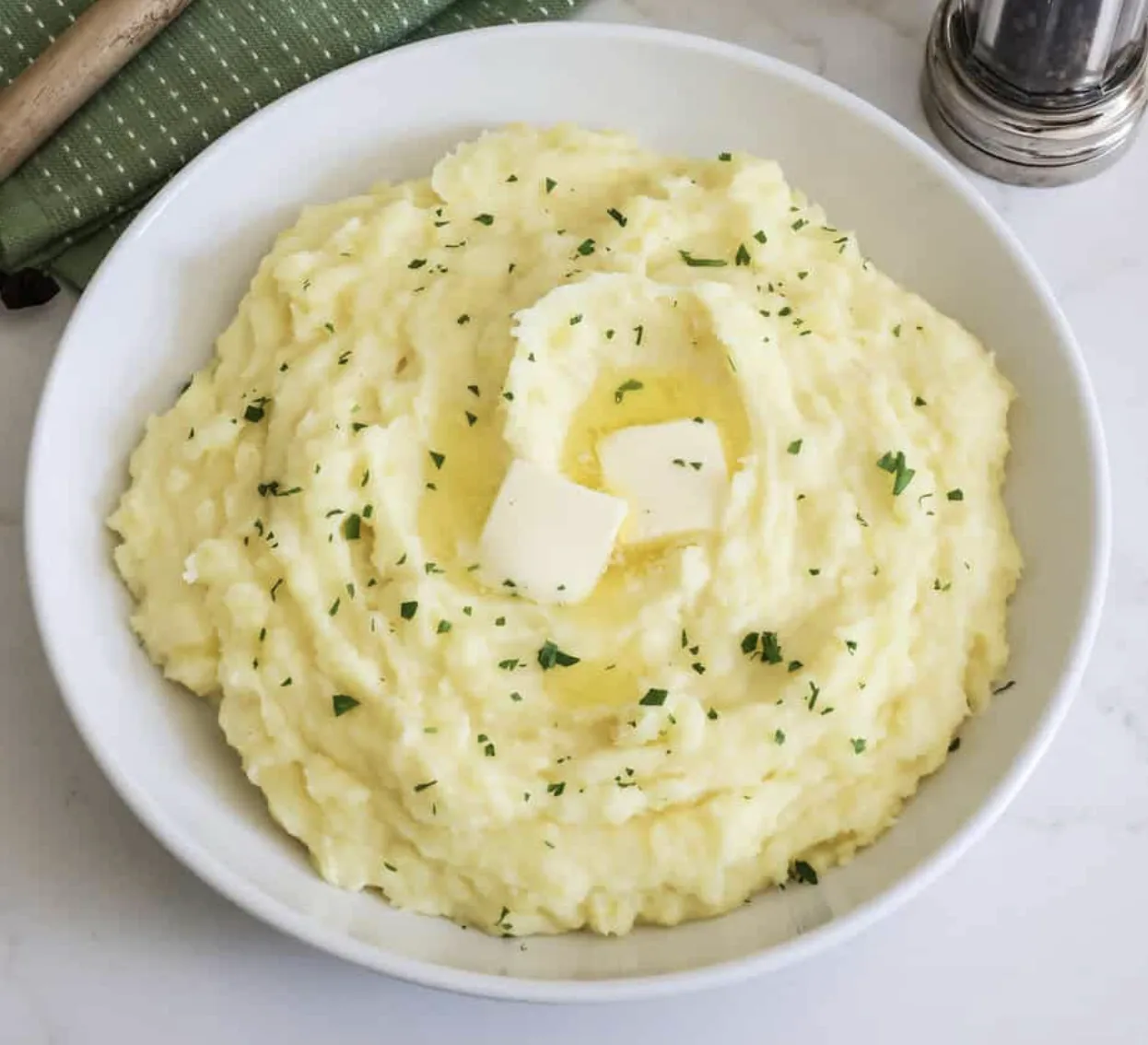
Homemade Mashed Potatoes are the ultimate comfort-food side dish, featuring tender potatoes mashed with butter, sour cream, and whole milk for a rich, creamy texture. Simple to prepare and full of classic flavor, this recipe is perfect for Thanksgiving dinner, Christmas celebrations, Sunday family meals, or any occasion that calls for a comforting homemade side.
Made with Yukon Gold or Russet potatoes, these mashed potatoes are smooth, buttery, and easy to customize. Sour cream adds a pleasant tanginess that balances the richness of the butter, while warm whole milk helps create a soft, creamy consistency. A sprinkle of freshly ground black pepper and chopped fresh parsley completes the dish with a simple, flavorful finish.
One of the best things about homemade mashed potatoes is how easily they pair with other foods. Serve them alongside roasted turkey, baked chicken, beef brisket, pork chops, or your favorite gravy-covered main course. They also make an excellent addition to a holiday buffet because their familiar flavor appeals to almost everyone.
The secret to delicious mashed potatoes is choosing the right potatoes, cooking them until fork-tender, draining them thoroughly, and mashing them while they are still warm. Using a traditional potato masher or potato ricer helps create a light, fluffy texture without making the potatoes gummy.
If you are looking for an easy mashed potato recipe with simple ingredients and reliable results, these Homemade Mashed Potatoes deserve a place on your regular dinner menu.
Why You’ll Love These Homemade Mashed Potatoes
Rich and creamy texture: Butter, sour cream, and whole milk combine to create smooth, comforting mashed potatoes with a deliciously creamy consistency.
Simple ingredients: You only need potatoes, butter, sour cream, milk, salt, pepper, and fresh parsley for garnish.
Easy preparation: The potatoes are peeled, boiled until tender, and mashed with the remaining ingredients. No complicated techniques are required.
Perfect for holidays: These mashed potatoes are an excellent side dish for Thanksgiving turkey, Christmas ham, and other festive meals.
Versatile serving options: Pair them with beef, chicken, pork, roasted vegetables, or your favorite gravy.
Easy to customize: Adjust the milk to achieve your preferred consistency, choose salted or unsalted butter, and finish with your favorite fresh herbs.
A family favorite: Their buttery flavor and creamy texture make them a comforting addition to both everyday dinners and special occasions.
Recipe Overview
- Recipe name: Homemade Mashed Potatoes
- Author: Beth Pierce
- Prep time: 15 minutes
- Cook time: 20 minutes
- Total time: 35 minutes
- Yield: 8 servings
- Cuisine: American
- Course: Potato side dish
- Main ingredients: Yukon Gold or Russet potatoes, butter, sour cream, and whole milk
- Cooking method: Boiling and mashing
- Serving suggestion: Fresh parsley and extra butter
Ingredients for Homemade Mashed Potatoes
This recipe uses a handful of everyday ingredients to create a rich, flavorful side dish. Each ingredient contributes to the final texture and taste, so measuring them carefully will help you achieve the intended result.
1. Potatoes
You will need 3 pounds of Yukon Gold or Russet potatoes.
Both varieties work well, although they offer slightly different textures.
Yukon Gold potatoes have a naturally buttery flavor and tend to produce creamy mashed potatoes. Russet potatoes are starchier and can create a lighter, fluffier result when handled properly.
Choose potatoes that are firm and free from obvious spoilage. Peel them before cooking, then cut them into large, reasonably uniform chunks so they cook evenly.
2. Salt
Use 2 tablespoons of salt for the cooking water, plus additional salt to taste.
Adding salt to the water helps season the potatoes as they cook. The original recipe specifies two tablespoons for the boiling water, so follow the recipe as written and adjust the final seasoning according to your taste.
Remember that the amount of salt absorbed can vary depending on the cooking water and how thoroughly the potatoes are drained.
3. Butter
Add 1/2 cup of butter, either salted or unsalted, plus extra butter for garnish.
Butter provides the rich, familiar flavor associated with classic homemade mashed potatoes. It also helps create a smooth texture when combined with the warm potatoes.
The recipe recommends adding the butter directly to the drained potatoes and covering the pot to allow the residual heat to melt it.
For the finishing touch, place a small pat of butter on top of the mashed potatoes just before serving.
4. Sour Cream
Use 1/2 cup of sour cream.
Sour cream adds creaminess and a subtle tangy flavor that balances the richness of the butter. It also helps give the potatoes a fuller, more satisfying texture.
Full-fat sour cream is recommended for the best flavor and consistency.
Add it after the butter has melted into the warm potatoes, together with the milk.
5. Whole Milk
You will need 1/2 to 3/4 cup of whole milk, warmed.
Milk helps loosen the potatoes and creates a creamy consistency. Warming it before adding it to the pot helps maintain the temperature of the potatoes.
Start with 1/2 cup and gradually add more as needed. Depending on your preferred texture and the type of potatoes you use, you may need only the initial amount or up to 3/4 cup.
Adding milk gradually makes it easier to control the consistency without accidentally making the potatoes too loose.
6. Freshly Ground Black Pepper
Add freshly ground black pepper to taste.
Black pepper contributes a gentle warmth and balances the creamy, buttery flavor. Season the potatoes after mashing, tasting as you go until the flavor is right for you.
7. Fresh Parsley
Use chopped fresh parsley for garnish.
Parsley adds a fresh, green finish that contrasts nicely with the pale mashed potatoes. Sprinkle it over the top just before serving.
You can also use other fresh herbs, such as chives, thyme, sage, or rosemary, depending on the flavors in the rest of your meal.
Equipment You’ll Need
You do not need specialized equipment to prepare this recipe. A few basic kitchen tools are enough.
- Large pot: For boiling the potatoes.
- Vegetable peeler: For removing the potato skins.
- Sharp knife and cutting board: For cutting the potatoes into chunks.
- Colander: For draining the cooked potatoes thoroughly.
- Potato masher: For mashing the potatoes by hand.
- Potato ricer, optional: For a finer, more uniform texture.
- Measuring cups and spoons: For measuring the ingredients.
- Serving bowl: For presenting the finished mashed potatoes.
A traditional potato masher is the simplest option. If you prefer a finer texture, a potato ricer can also work well.
Avoid using an electric mixer or food processor, as the original recipe warns that these tools can release too much starch and produce a gummy consistency.
How to Make Homemade Mashed Potatoes
Follow these steps to prepare creamy mashed potatoes with butter, sour cream, and whole milk.
Step 1: Peel and Cut the Potatoes
Peel the potatoes using a vegetable peeler. Remove any remaining skin and cut the potatoes into large chunks.
Try to keep the pieces reasonably uniform in size. This helps them cook at a similar rate and makes it easier to mash them evenly later.
Place the cut potatoes into a large pot and cover them with cold water.
Starting with cold water allows the potatoes to heat gradually as the water comes to a boil.
Step 2: Add Salt and Bring the Water to a Boil
Add the 2 tablespoons of salt to the pot.
Place the pot over high heat and bring the water to a boil.
Once the water is boiling, reduce the heat to maintain a gentle boil. This helps the potatoes cook through without breaking apart too aggressively.
Keep the potatoes submerged in the water throughout the cooking process.
Step 3: Cook Until Fork-Tender
Cook the potatoes for approximately 15–20 minutes, or until they are fork-tender.
To check for doneness, insert a fork into one of the larger chunks. It should slide in easily without encountering a firm center.
The exact cooking time depends on the size of the potato pieces and the variety of potato you use. If the centers are still firm, continue cooking and check again after a short interval.
Avoid draining the potatoes before they are fully tender. Undercooked potatoes are difficult to mash smoothly and can leave unwanted lumps in the finished dish.
Step 4: Drain the Potatoes Thoroughly
Once the potatoes are tender, carefully drain them in a colander.
Allow the water to drain away thoroughly before returning the potatoes to the pot. Excess water can make mashed potatoes thinner than intended and dilute their flavor.
Handle the hot potatoes carefully, as steam can escape when you lift the lid or drain the pot.
Step 5: Add the Butter
Return the drained potatoes to the warm pot.
Add the 1/2 cup of butter, cut into pieces if necessary, and cover the pot.
Let the residual heat from the potatoes melt the butter.
This step helps the butter distribute throughout the potatoes when you begin mashing. It also gives the potatoes a rich, buttery foundation before the sour cream and milk are added.
Step 6: Add the Sour Cream and Warm Milk
Add the 1/2 cup of sour cream and 1/2 cup of warmed whole milk to the pot.
Cover the pot again for approximately 1–2 minutes to warm the ingredients.
Starting with 1/2 cup of milk allows you to control the consistency. You can add more milk later, one tablespoon at a time, until the potatoes reach your preferred texture.
The combination of butter, sour cream, and whole milk gives the potatoes their signature creamy flavor.
Step 7: Mash the Potatoes
Use a handheld potato masher to mash the potatoes thoroughly.
Work through the pot until the butter, sour cream, and milk are evenly incorporated. Mash while the potatoes are still warm, since warm potatoes are easier to work with and tend to produce a more consistent texture.
For a finer result, you can use a potato ricer. If using a ricer, feed the well-drained potatoes through it before adding the butter, sour cream, and milk.
Avoid using an electric mixer or food processor. These appliances can break down too much starch and leave the potatoes sticky or gummy instead of light and fluffy.
Step 8: Adjust the Consistency
Check the texture after mashing.
If the potatoes are thicker than you prefer, add a little more warm milk. The original recipe allows for a total of 1/2 to 3/4 cup of whole milk.
Add the remaining milk gradually, mixing and checking after each addition. This helps you achieve creamy potatoes without making them too loose.
If you prefer thicker mashed potatoes, you may find that the initial 1/2 cup of milk is sufficient.
Step 9: Season to Taste
Season the mashed potatoes with salt and freshly ground black pepper to taste.
Stir gently to distribute the seasoning evenly, then taste a small spoonful.
Because the cooking water is salted and the butter may also contain salt, it is best to make the final adjustment after the other ingredients have been incorporated.
Add pepper gradually until you reach your preferred flavor.
Step 10: Garnish and Serve
Transfer the mashed potatoes to a serving bowl.
Sprinkle chopped fresh parsley over the top and add a pat or two of butter for a classic presentation.
Serve while warm alongside your favorite beef, chicken, or pork dishes. These mashed potatoes are also an excellent side for Thanksgiving turkey or Christmas ham.
Tips for the Best Homemade Mashed Potatoes
Choose Yukon Gold or Russet Potatoes
The original recipe recommends these two varieties.
Yukon Gold potatoes are a good option for a naturally creamy, buttery flavor. Russet potatoes offer a starchier texture that can produce light, fluffy mashed potatoes.
Whichever variety you choose, cut the potatoes into large, reasonably uniform chunks to help them cook evenly.
Start With Cold Water
Place the potatoes in cold water before bringing the pot to a boil.
This allows the potatoes to heat gradually and helps them cook more evenly from the outside toward the center.
Cook Until the Potatoes Are Completely Tender
Do not rush the boiling stage. The potatoes should be fork-tender before draining.
If they are still firm in the middle, they will be more difficult to mash and may leave lumps in the finished dish.
Drain Thoroughly
Excess water can dilute the butter, sour cream, and milk. Drain the potatoes well before adding the other ingredients.
This simple step helps the finished potatoes maintain a rich flavor and creamy consistency.
Melt the Butter Before Mashing
Adding butter to the warm potatoes and covering the pot allows the residual heat to melt it.
This helps distribute the butter throughout the potatoes as you mash them, creating a smooth and flavorful base.
Warm the Milk
Use warmed whole milk rather than adding it cold directly from the refrigerator.
Warm milk blends more easily with the hot potatoes and helps maintain their temperature as you work.
Add Milk Gradually
Begin with 1/2 cup of milk, then add more as necessary, up to the recipe’s specified 3/4 cup.
Different potatoes absorb liquid differently. Adding milk gradually gives you better control over the finished consistency.
Use a Potato Masher or Ricer
For light, fluffy mashed potatoes, the original recipe recommends a handheld potato masher or a potato ricer.
Avoid using an electric mixer or food processor. Excessive processing can release too much starch, making the potatoes gummy.
Mash While Warm
Mash the potatoes while they are still warm, after draining and adding the butter, sour cream, and milk.
Warm potatoes are easier to mash and allow the ingredients to blend more consistently.
Taste Before Adding Extra Salt
The cooking water is salted, and the butter may also contain salt. Adjust the seasoning after mashing rather than adding extra salt automatically.
Freshly ground black pepper adds flavor without overpowering the creamy potatoes.
Ingredient Substitutions and Variations
These homemade mashed potatoes are easy to customize according to your preferences and the ingredients available in your kitchen.
Salted or Unsalted Butter
The recipe allows either salted or unsalted butter.
Salted butter contributes additional seasoning, while unsalted butter gives you more control over the final salt level. Adjust the seasoning after mashing to achieve the flavor you prefer.
Yukon Gold or Russet Potatoes
Both potato varieties are suitable for this recipe.
Choose Yukon Gold potatoes for their naturally buttery flavor or Russet potatoes for a starchier, fluffier texture.
The cooking method remains the same, although the final texture may vary slightly.
Adjust the Amount of Milk
The recipe specifies between 1/2 and 3/4 cup of warmed whole milk.
Start with the smaller amount and gradually add more if needed. This makes it easy to prepare potatoes that are creamy but still thick enough to hold their shape on the plate.
Fresh Herb Garnishes
Chopped parsley is the recommended garnish, but other fresh herbs can be used.
Try chopped chives for a mild onion flavor or a little fresh thyme, sage, or rosemary to complement a holiday meal.
Add the herbs just before serving for a fresh finish.
Add Garlic for a Different Flavor
If you prefer a garlic-forward side dish, you can explore a separate garlic mashed potato variation. The original recipe notes garlic mashed potatoes as an alternative, but it does not include a specific quantity of garlic in this version.
For the classic recipe, keep the ingredient list as written and use the butter, sour cream, and milk to create its signature flavor.
What to Serve With Homemade Mashed Potatoes
These creamy mashed potatoes pair well with many savory main courses. Their buttery flavor and soft texture make them an especially good match for dishes served with gravy or pan sauce.
Beef Dishes
The original recipe suggests serving mashed potatoes with:
- Oven-baked beef brisket
- Beef short ribs
- Beef tips and gravy
The creamy potatoes work particularly well with tender beef and rich sauces. Spoon the gravy over the potatoes or serve it alongside for guests to add as much as they like.
Chicken Dishes
Mashed potatoes are a comforting side for:
- Mississippi chicken
- Chicken stroganoff
- Cajun chicken
Creamy potatoes help balance flavorful chicken dishes and provide a soft, satisfying base for sauces.
Pork Dishes
The recipe also recommends pairing mashed potatoes with:
- Smothered pork chops
- Air-fried pork tenderloin
- Roasted pork loin
These combinations work well for both everyday dinners and special occasions.
Thanksgiving Turkey
Serve the mashed potatoes with roasted Thanksgiving turkey, gravy, stuffing, and your favorite vegetables.
Their mild, buttery flavor complements the traditional holiday spread and makes them an excellent choice for a family gathering.
Christmas Ham
For Christmas dinner, pair the potatoes with roasted or baked ham, glazed carrots, and green vegetables.
The creamy potatoes balance the savory flavor of the ham and complement sweet holiday glazes.
Roasted Vegetables
Serve the potatoes alongside roasted carrots, Brussels sprouts, green beans, or other seasonal vegetables.
This combination adds color and variety to the plate while keeping the potatoes as a comforting centerpiece of the side dishes.
Frequently Asked Questions
What are the best potatoes for homemade mashed potatoes?
The original recipe recommends Yukon Gold or Russet potatoes.
Yukon Gold potatoes offer a naturally buttery flavor and creamy texture, while Russet potatoes are starchier and can produce a fluffy result. Both work well with butter, sour cream, and whole milk.
How long should I boil potatoes for mashed potatoes?
The recipe recommends boiling the potato chunks for approximately 15–20 minutes after bringing the water to a boil.
The potatoes are ready when they are fork-tender. Larger pieces may take longer, so check their texture rather than relying only on the timer.
Why should I start potatoes in cold water?
Starting the potatoes in cold water allows them to heat gradually as the water comes to a boil. This helps the pieces cook more evenly.
Add the salt to the water before bringing it to a boil, as directed in the recipe.
How much milk should I use?
The recipe calls for 1/2 to 3/4 cup of warmed whole milk.
Begin with 1/2 cup, then add more gradually if the potatoes are too thick. The amount needed depends on the potato variety and the consistency you prefer.
Can I use unsalted butter?
Yes. The recipe allows either salted or unsalted butter.
If you use unsalted butter, taste the finished potatoes and add salt as needed.
Why do my mashed potatoes become gummy?
The original recipe advises against using an electric mixer or food processor because excessive processing releases too much starch, which can make mashed potatoes gummy.
For a light, fluffy texture, use a handheld potato masher or potato ricer instead.
Should I mash the potatoes while they are hot?
Mash the potatoes while they are still warm, after draining them and adding the butter, sour cream, and milk.
Warm potatoes are easier to mash and help the ingredients combine evenly.
Can I use low-fat milk instead of whole milk?
The original recipe recommends warmed whole milk for the creamiest texture. It does not provide a specific alternative quantity for low-fat milk.
For the intended flavor and consistency, use whole milk as listed.
Can I use sour cream in mashed potatoes?
Yes. Sour cream is one of the key ingredients in this recipe.
The 1/2 cup of sour cream adds richness and a subtle tang that complements the butter and milk. Full-fat sour cream is recommended for the best flavor and texture.
How can I make the mashed potatoes smoother?
Mash the potatoes thoroughly while they are warm, and make sure they are well-drained before adding the other ingredients.
A potato ricer can help create a finer texture. Add the warm milk gradually until the potatoes reach your preferred consistency.
What herbs can I use to garnish mashed potatoes?
The recipe recommends chopped fresh parsley. Fresh chives, thyme, sage, and rosemary are also suggested as possible garnishes.
Choose an herb that complements the main course and other side dishes.
Homemade Mashed Potatoes Recipe Card
Prep Time: 15 minutes
Cook Time: 20 minutes
Total Time: 35 minutes
Servings: 8
Calories: 270 kcal per serving
Ingredients
- 3 pounds Yukon Gold or Russet potatoes
- 2 tablespoons salt
- 1/2 cup butter, salted or unsalted, plus more for garnish
- 1/2 cup sour cream
- 1/2–3/4 cup whole milk, warmed
- Salt, to taste
- Freshly ground black pepper, to taste
- Chopped fresh parsley, for garnish
Instructions
- Peel the potatoes and cut them into large chunks.
- Place the potatoes in a large pot of cold water. Add the salt and bring the water to a boil.
- Reduce the heat to maintain a gentle boil and cook for 15–20 minutes, until the potatoes are fork-tender.
- Drain the potatoes thoroughly.
- Return the potatoes to the pot and add the butter. Cover the pot and allow the butter to melt from the residual heat.
- Add the sour cream and 1/2 cup of warmed milk. Cover for 1–2 minutes to warm the ingredients.
- Mash thoroughly with a handheld potato masher. Alternatively, pass the drained potatoes through a potato ricer before adding the butter, sour cream, and milk.
- Add more warm milk as needed, up to the specified 3/4 cup, to achieve the desired consistency.
- Season with salt and freshly ground black pepper to taste.
- Garnish with chopped fresh parsley and a pat or two of butter. Serve warm.
Nutrition Information
The original recipe lists the following nutrition information per serving:
- Calories: 270 kcal
- Carbohydrates: 31 g
- Protein: 4 g
- Fat: 15 g
- Saturated fat: 9 g
- Polyunsaturated fat: 1 g
- Monounsaturated fat: 4 g
- Trans fat: 0.5 g
- Cholesterol: 41 mg
- Sodium: 1,856 mg
- Potassium: 761 mg
- Fiber: 4 g
- Sugar: 3 g
- Vitamin A: 472 IU
- Vitamin C: 34 mg
- Calcium: 58 mg
- Iron: 1 mg
Nutrition values are reproduced from the original recipe and may vary depending on the ingredients used, the type of butter selected, and the final serving size.
Final Thoughts
Homemade Mashed Potatoes are a classic side dish for good reason. With tender Yukon Gold or Russet potatoes, butter, sour cream, and whole milk, this recipe creates a creamy, comforting accompaniment for countless meals.
The preparation is straightforward: boil the potatoes until fork-tender, drain them well, allow the butter to melt, add the sour cream and warm milk, and mash everything together. Using a potato masher or ricer helps preserve a light texture, while gradual additions of milk make it easy to control the consistency.
Finish with freshly ground black pepper, chopped parsley, and a little extra butter for a simple presentation. Serve these mashed potatoes with beef, chicken, pork, Thanksgiving turkey, or Christmas ham for a dependable side dish that belongs on both everyday and holiday tables.