Delicious Honey Garlic Glazed Salmon with Cheesy Asparagus & Roasted Potatoes
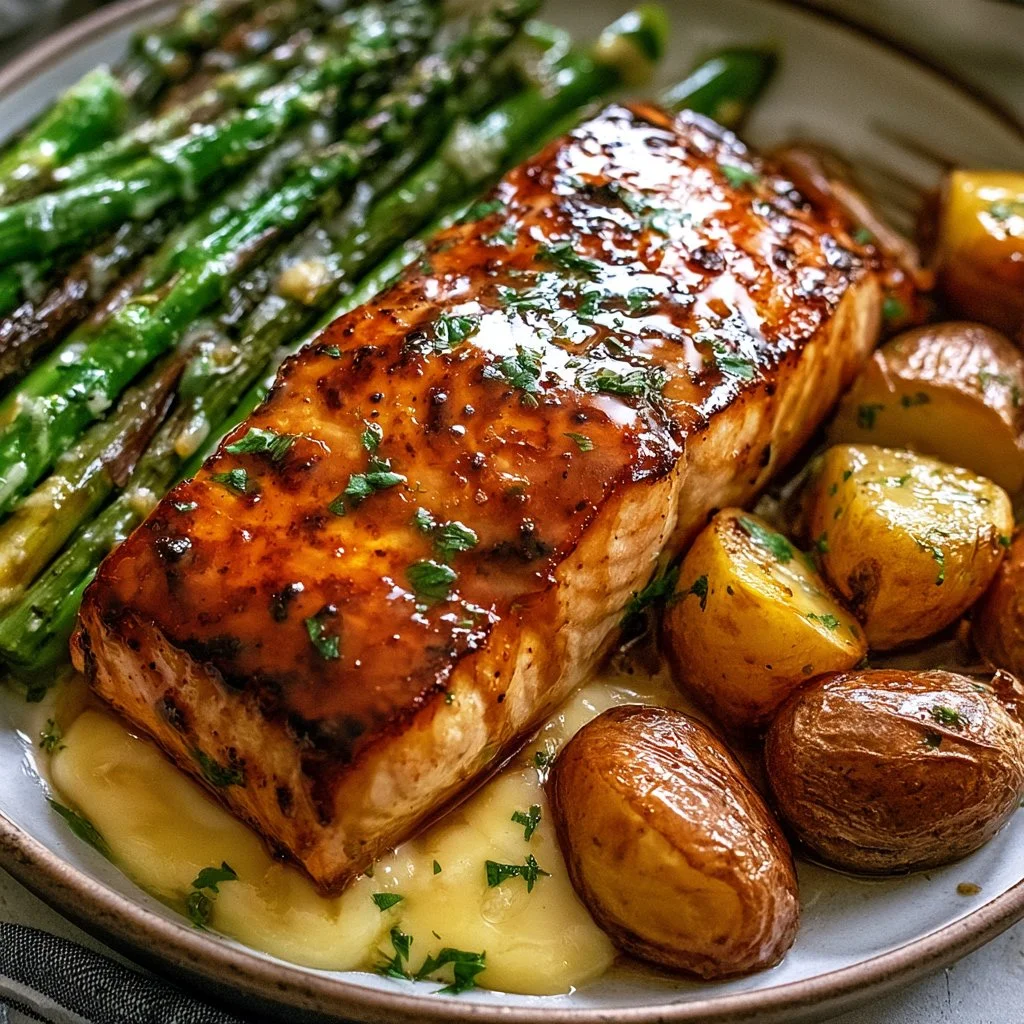
There’s something truly captivating about the combination of sweet and savory flavors in a meal. This dish, featuring honey garlic glazed salmon paired with cheesy asparagus and roasted potatoes, exemplifies that perfect balance. The salmon becomes a delectable centerpiece, kissed with a rich glaze that caramelizes beautifully during cooking. Every bite bursts with the richness of the ocean complemented by the sweet undertones of honey and the warm tang of soy sauce. It’s not just the taste that makes this meal special; the vibrant colors on your plate—from the golden glaze on the salmon to the bright green asparagus and the crispy edges of the potatoes—create an inviting culinary experience.
The texture of honey garlic glazed salmon is worth mentioning, too. With its flaky and tender quality, it contrasts marvelously with the slightly crisp, cheesy asparagus and the fluffy interior of the roasted potatoes. The cheese adds a creamy element, bridging the flavors and textures seamlessly, making every bite satisfying. The combination of these three components creates a harmonious dish that looks as good as it tastes, ensuring it will impress family and friends alike.
This recipe is ideal for various occasions. Whether you’re planning a relaxed family dinner, an upscale gathering, or even a romantic date night, the delightful combination of flavors and textures can elevate any meal. You can whip it up on a weeknight when you’re short on time yet still want to enjoy something indulgent, or double the recipe to serve at a festive family feast. Delicious, visually appealing, and easy to make, this dish is sure to become a staple in your cooking repertoire.
The recipe offers a unique twist on classic flavors, making it a fantastic choice for any meal setting. Not only is it quick to prepare, but it also allows for flexibility with ingredients, catering to both traditional and adventurous palates. Let’s dive into the details of this remarkable dish that brings together harmony of flavor with ease of preparation.
What Makes This Recipe Special
What truly sets this recipe apart is the fusion of flavors and textures that come together effortlessly. The sweetness from the honey paired with the savory elements of the soy sauce creates a glaze that enhances the natural flavor of the salmon. This dish strikes a harmonious balance between sweet, salty, and umami flavors, making it appealing to a wide range of tastes. Moreover, the addition of asparagus introduces a fresh, crunchy element that complements the richer notes found in both the salmon and roasted potatoes.
In comparison to traditional salmon recipes that may only feature herbs or lemon, the honey garlic glaze elevates this dish, giving it a distinct profile that excites the palate. It captures a delightful contrast of flavors—sharpness from the garlic, sweetness from the honey, and depth from the soy sauce—all vibrating in tandem. Coupled with the cheesy asparagus, which adds creamy richness and eye-catching color, the overall presentation is exceptional.
The preparation method also contributes to what makes this recipe special. The roasting technique lends itself to developing deep flavors while allowing for minimal hands-on time; it’s a great option for busy cooks. As the salmon and vegetables roast, the captivating aroma fills the kitchen and sets the stage for a delightful meal. This recipe caters to seasoned home cooks as well as beginners seeking an impressive yet uncomplicated dish.
Adding to the dish’s charm is the versatility of the ingredients. These components can be personalized according to preferences or what you have on hand, opening the door to creativity while still retaining the core essence. Thus, there’s much to love about this recipe, starting with its striking presentation to its delightful amalgamation of flavor and texture.
Ingredient Overview and Helpful Notes
Understanding the key ingredients in this honey garlic glazed salmon recipe will enhance your cooking experience and help ensure flavorful results. Let’s delve into the components that come together to create this mouthwatering meal.
Salmon
Salmon is the star of this dish, renowned for its rich flavor and health benefits. When selecting salmon, look for fillets that are bright in color with a moist appearance. Fresh wild-caught salmon can offer a superior taste compared to farmed varieties, so it’s worth sourcing quality options when possible. The fresh, flaky texture once cooked lends itself beautifully to the sweet and savory glaze.
Honey
Honey is the perfect sweetener for this glaze, bringing a natural sweetness that caramelizes during cooking. Opt for pure, high-quality honey if you can, as it offers a more robust flavor than processed varieties. The inherent viscosity of honey ensures an even coating of the salmon and creates a pleasing glaze that clings to the fish.
Soy Sauce
This ingredient creates depth in flavor, providing that savory umami touch which balances the sweet notes from the honey. Opt for low-sodium soy sauce if you want to control the saltiness of the dish. The soy sauce brings complexity and enhances the taste of the salmon without overpowering it.
Garlic
Fresh garlic adds aromatic qualities and a bit of spiciness, enriching the overall flavor profile. When minced finely, garlic melds into the glaze and allows its flavor to permeate the salmon as it cooks. When choosing garlic, select firm bulbs that feel heavy for their size, avoiding those that are sprouting or shriveled.
Asparagus
A delightful addition to the meal, asparagus adds color, crunch, and nutrients. Select spears that are firm and straight with a vibrant green color. Thicker spears provide a satisfying crunch, while thinner ones can become tender faster. Fresh asparagus will maintain its bright hue and crispiness during cooking.
Potatoes
The baby potatoes serve as hearty companions in this dish. When halved and roasted, they achieve crispy edges while the interiors remain fluffy. Look for potatoes that are uniform in size for even cooking. Red or yellow baby potatoes add a slightly sweet flavor that complements the other components beautifully.
Cheese
For the cheesy asparagus, shredded cheese (cheddar or mozzarella) brings a creamy richness that melds with the vegetables during roasting. Cheddar offers a sharper flavor, whereas mozzarella provides a milder taste. Choose a quality cheese that melts well for the best results.
Salt and Pepper
To season the dish properly, a light sprinkling of salt and pepper can enhance the natural flavors of the ingredients. Remember that soy sauce is already salty, so add these seasonings judiciously. A gentle hand goes a long way in balancing flavors.
By understanding the role of each ingredient, you can make the best choices to create a delicious meal that aligns with your preferences. Pay special attention to selecting high-quality ingredients to ensure the best flavor and texture.
Nutrition & Recipe Details
Nutritional values may vary based on the choice of specific ingredients, portion sizes, and preparation methods used. The following table outlines the estimated nutritional information:
| Item | Value |
|---|---|
| Prep time | 15 minutes |
| Cook time | 20 minutes |
| Store time | 3 days |
| Calories | 550 per serving |
| Protein | 37g |
| Carbohydrates | 32g |
| Fat | 28g |
Keep in mind that these values are estimates and can differ based on the specific brands and quantities used in preparation.
How to Make Delicious Honey Garlic Glazed Salmon with Cheesy Asparagus & Roasted Potatoes
Before you cook, it’s important to have a clear understanding of the preparation process. Start by gathering all your ingredients and having everything prepped in advance. This makes it easier and more organized as you move through each step. You’ll need a few essential kitchen tools, such as baking sheets, mixing bowls, a pot for boiling, and measuring spoons.
Prepping the ingredients will involve washing and trimming the asparagus and halving the baby potatoes. It’s also a good idea to mince the garlic ahead of time. This way, you’ll be able to focus on the cooking once everything is neatly organized. Preparing the glaze requires minimal time, and you want it ready to go as soon as the oven is preheated.
Ingredients
| Ingredient | Quantity |
|---|---|
| Salmon fillets | 4 |
| Honey | 1/4 cup |
| Soy sauce | 1/4 cup |
| Garlic, minced | 3 cloves |
| Olive oil | 1 tablespoon |
| Asparagus, trimmed | 1 pound |
| Shredded cheese (cheddar or mozzarella) | 1 cup |
| Baby potatoes, halved | 1 pound |
| Salt and pepper | to taste |
| Fresh parsley, for garnish (optional) | to taste |
Before you begin cooking, ensure that your workspace is tidy and organized. Gather the necessary utensils and cookware, including baking sheets lined with parchment paper for easy cleanup. With everything in place, you’re ready to dive into this step-by-step culinary adventure.
Step-by-Step Instructions
-
Preheat your oven to 400°F (200°C): The first step is crucial, as a preheated oven allows for even cooking, ensuring that your salmon, asparagus, and potatoes all roast beautifully. Setting the temperature ahead of time prepares your cooking surface for the dishes to come.
-
Prepare the glaze: In a small bowl, mix together 1/4 cup honey, 1/4 cup soy sauce, and minced garlic. Mix until well combined and the honey dissolves into the soy sauce. This glaze will pack your salmon with rich flavors and should be kept handy as you cook.
-
Prepare the salmon: Place the salmon fillets on a lined baking sheet. Using a brush or spoon, generously apply the honey garlic glaze over each fillet, ensuring they are well-coated. This step is essential; the glaze will caramelize during roasting, enhancing the flavor and appearance of the salmon.
-
Toss the asparagus: On another baking sheet, lay out the trimmed asparagus. Drizzle with 1 tablespoon of olive oil, then season with salt and pepper to taste. Toss the asparagus to ensure an even coating. Top the asparagus with shredded cheese, distributing it evenly. This cheese will melt and turn golden, complementing the crispy asparagus beautifully.
-
Prepare the potatoes: Bring a pot of water to a boil and carefully add the halved baby potatoes. Cook them for approximately 10 minutes until they are slightly tender but not fully cooked. Drain the potatoes and toss them with olive oil, salt, and pepper. Arrange them on the same baking sheet with the asparagus.
-
Roasting: Once the oven has reached temperature, place both trays filled with salmon, asparagus, and potatoes in the oven. Roast them for about 15-20 minutes. The salmon should flake easily with a fork when cooked through, and the asparagus should be tender yet crisp.
-
Serving: When everything is perfectly roasted, take the trays out of the oven. Serve the salmon fillets alongside the cheesy asparagus and roasted baby potatoes. If desired, garnish with fresh parsley for an added touch of color and flavor.
Following these steps will ensure that your honey garlic glazed salmon is well-cooked, and full of flavor, while your asparagus and potatoes complement it perfectly. Always keep an eye on the cooking times as ovens can vary; looking for visual cues like color and texture is invaluable during preparation.
Understanding the Flavor and Texture
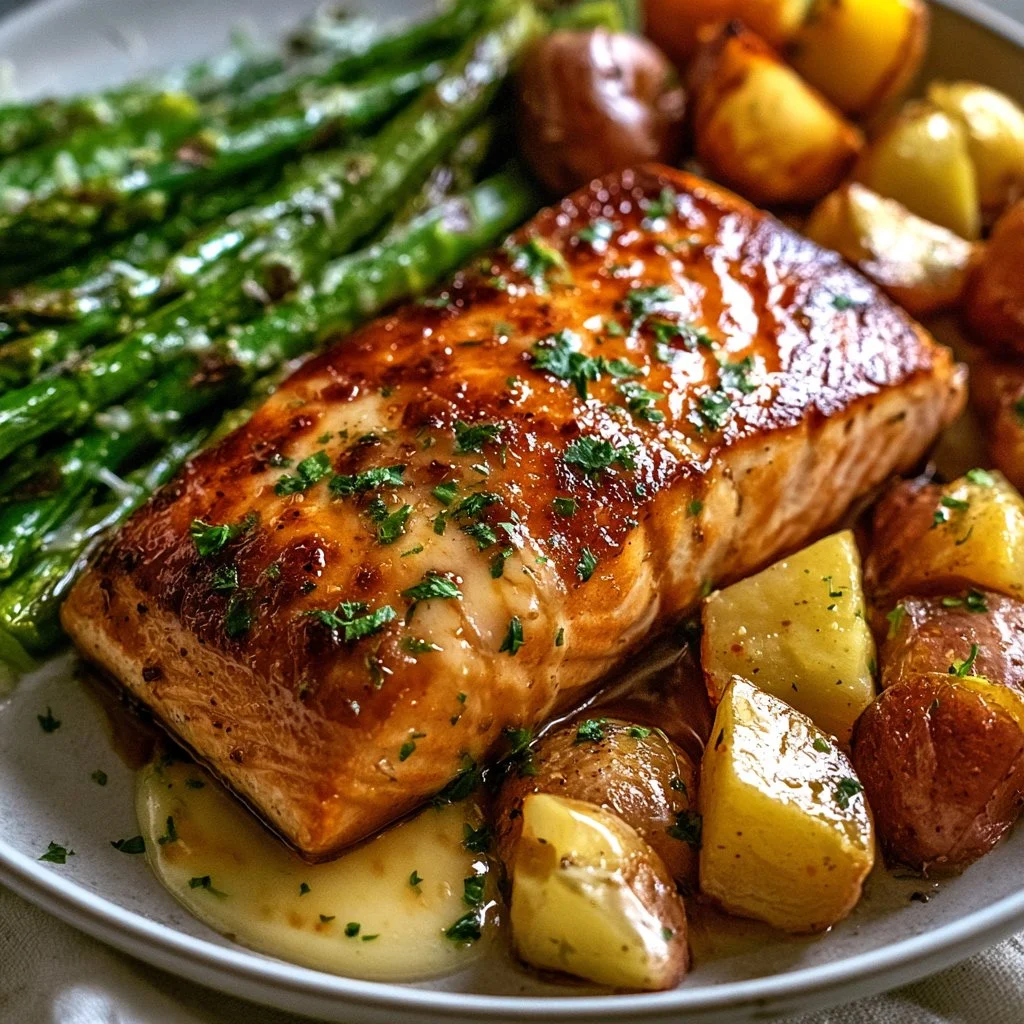
The final presentation of the honey garlic glazed salmon, cheesy asparagus, and roasted potatoes creates a feast for the eyes and palate. The salmon, once cooked, displays a rich amber hue that complements its flaky texture. The glaze provides a glossy sheen, tempting diners even before the first bite. The contrast between the crispy, cheesy asparagus and the tender salmon helps to balance the dish beautifully.
As you cut into the salmon, you should find it moist and tender, revealing a beautifully cooked inside that gives slightly under pressure. The edges of the salmon might have a slight caramelization from the honey glaze, creating a slight crunch that adds to the overall experience. The cheesy asparagus should mellow in flavor yet vibrant in appearance, offering a delicious bite that combines the creaminess of the melted cheese with the fresh crunch of the asparagus.
The roasted baby potatoes serve as both a hearty side and a textural counterbalance in this meal. Their outer skins should develop an inviting crispness, while the insides remain fluffy and warm. When seasoned correctly, every component shines with its unique flavor while harmonizing with each bite.
Recognizing a successful result relies not just on timing but also on sensory cues. Pay close attention to the aroma that fills your kitchen during roasting, as it indicates that flavors are developing nicely. Check doneness based on both visual appearance and texture, ensuring the salmon is flakey and the vegetables are vibrant.
Pro Tips
A few small techniques in the kitchen can dramatically impact the success of your dish. Here are some tips to take your cooking to the next level and ensure that your honey garlic glazed salmon, cheesy asparagus, and roasted potatoes turn out perfectly every time.
| Tip | Description |
|---|---|
| Use Fresh Ingredients | Opt for fresh vegetables and seafood. They not only taste better but also enhance the overall appearance of your dish. Fresh ingredients often provide more nutrients and a brighter flavor profile. |
| Don’t Overcrowd Baking Sheets | Give each ingredient space on the baking sheets for proper roasting. Overcrowding can cause steaming instead of roasting, resulting in less desirable texture and flavor outcomes. |
| Adjust Oven Rack Position | For optimal browning, place your baking sheets in the center of the oven, but check the asparagus for doneness as it can cook faster than the salmon and potatoes. Adjust rack position if necessary halfway through roasting. |
| Let the Salmon Rest | Once out of the oven, let salmon rest for a couple of minutes. This helps the juices redistribute, preventing it from drying out, ensuring that each bite remains moist and flavorful. |
It’s worth noting that being adaptable in the kitchen can lead to wonderful results. Feel free to experiment with these tips based on your preferences to enhance flavor and presentation further.
Why You’ll Love This Recipe
What’s not to love about a meal that not only looks gorgeous but also comes together so effortlessly? This recipe shines in its ease of preparation while delivering restaurant-quality flavors at home. Perfect for those who lead busy lives yet still wish to indulge in homemade goodness, every step is streamlined to ensure minimal effort for maximal flavor.
The blend of textures offers a delightful experience on the palate; you’ll enjoy the contrast between the flaky salmon, crunchy asparagus, and crisp potatoes. The cooking method ensures that everything retains its natural flavors while being elevated by the honey and soy sauce glaze, making for an exciting meal.
Moreover, the ingredients are easy to source, making this recipe accessible to everyone, from beginners to seasoned cooks alike. This dish is also quite adaptable based on what you have on hand, allowing you to play with flavors without straying far from the original concept. All these elements combine to create a memorable dining experience that you can enjoy any day of the week.
How to Serve Delicious Honey Garlic Glazed Salmon with Cheesy Asparagus & Roasted Potatoes
When it comes time to serve, how you present your dish can elevate the overall dining experience. Aim for a balanced plate with an artistic touch—thanks to the vibrant colors found in the salmon, asparagus, and potatoes.
Start with the salmon as your focal point, placing it prominently on the plate. Arrange the cheesy asparagus alongside, using it as a visual contrast to the plate’s main component. The roasted potatoes can be scattered around this duo, perhaps with some garnishment for color, like finely chopped fresh parsley, which resonates beautifully with the green of the asparagus.
In terms of sides, consider serving a light salad with a refreshing vinaigrette to cut through the richness of the salmon and cheese. A simple arugula salad with lemon vinaigrette provides a wonderful balance of flavors without overwhelming the primary dish. Alternatively, consider a quinoa or couscous side—it can add a nutty flavor profile, enhancing the meal further.
For drinks, a crisp sparkling water with a slice of lemon or a refreshing iced tea would be fantastic companions. If looking for something with a bit more complexity, a light citrusy white wine could complement the honey soy glaze well, pairing elegantly with the fish.
Ultimately, the way you serve and accompany this main dish can create an experience that feels special, making it perfect for both casual family nights and more formal gatherings.
How to Store Delicious Honey Garlic Glazed Salmon with Cheesy Asparagus & Roasted Potatoes
Storing your leftovers correctly can extend the longevity of your beautifully cooked meal. Begin by allowing the salmon, asparagus, and potatoes to cool to room temperature before packaging them.
Place the salmon fillets and vegetables into airtight containers. Make sure there’s minimal air in the container, as this can influence freshness. Properly stored, leftovers can maintain their quality for about three days in the refrigerator.
If you wish to store leftovers for a longer period, consider freezing them. However, be mindful that freezing can affect both the texture and flavor of the salmon. When freezing, recommend wrapping the salmon in plastic wrap followed by foil to minimize freezer burn. The vegetables can be stored in the same manner but should be consumed sooner to maintain their texture.
When reheating leftovers, be aware that salmon can dry out if overcooked, and the asparagus may lose its crispness. As a result, opting for gentle reheating methods such as the microwave with a small splash of water could help keep moisture. Aim to enjoy the leftovers within a couple of days for the best flavor and quality.
Tips to Make Delicious Honey Garlic Glazed Salmon with Cheesy Asparagus & Roasted Potatoes
Achieving the perfect result requires attention to detail and timing. Here are some practical cooking tips that can significantly impact the final dish:
-
Evenly Cut Ingredients: When preparing the potatoes and asparagus, ensure that they are cut to similar sizes. This will help achieve uniform cooking, preventing any parts from becoming overcooked or undercooked.
-
Quality of Ingredients: Make an effort to use high-quality salmon and fresh vegetables. The difference in flavor is noticeable—fresh, in-season ingredients lead to better meals overall.
-
Taste as You Cook: While roasting, you cannot taste the salmon or asparagus, but you can taste the glaze before applying it. Always adjust seasonings based on personal preference, especially if you’re monitoring salt levels.
-
Timing for Roasting: Keep an eye on the vegetables. The asparagus may cook faster than the salmon; you might need to check for doneness a few minutes before the full cooking time. If necessary, remove the asparagus early to prevent overcooking.
By being aware of these details while you cook, you can ensure that each element shines, contributing to a harmonious and flavorful dish.
Variations and Substitutions
Flexibility in the kitchen can lead to delightful variations of this recipe. Here are some options that allow you to adapt this dish based on dietary preferences or ingredient availability:
-
Vegetarian Version: Swap the salmon for marinated tofu or tempeh. Both options absorb flavors well and still provide a satisfying texture. You can use the same honey garlic glaze with minor modifications, perhaps substituting soy sauce with tamari for a gluten-free version.
-
Different Vegetables: Feel free to alter the veggies according to what’s in season. Broccoli or Brussels sprouts can work well and can be roasted similarly. Just adjust cooking times so everything finishes at the same time.
-
Spicier Options: If you’re looking to add heat, include a dash of red pepper flakes or a drizzle of sriracha in the glaze. It will create an exciting kick, making the dish stand out even more.
-
Low-Carbohydrate Variation: If you’re aiming for a low-carb version, you may replace baby potatoes with cauliflower, cut into florets. Roast them the same way, and the result will still be deliciously tender with the same great glaze.
While following these variations, keep in mind that you might need to adjust cooking times and methods to suit the ingredients you choose. It’s a fantastic way to keep the recipe fresh and exciting each time you make it!
Storage and Reheating
Properly handling leftovers ensures that you can enjoy your delicious meal over several days. Begin by dividing any uneaten portions into smaller servings. This not only aids in quicker reheating but also minimizes waste if some portions will be consumed later than others.
Use airtight containers to store leftover salmon, asparagus, and potatoes in the refrigerator for up to three days. It’s vital to avoid keeping them at room temperature for long periods to maintain food safety. If you’ve opted to freeze, make sure to use quality freezer-safe storage to protect the ingredients from freezer burn and loss of flavor.
When reheating, aim to bring each component back just to a safe temperature without overdoing it. The microwave allows for gentle reheating; however, using an oven or skillet can help to restore some crispness. Consider covering the salmon with a damp paper towel in the microwave to maintain moisture, and use low power settings to prevent drying out.
Focus on reheating the ingredients gradually. For instance, reheat the salmon for a short time, check for doneness, and fit the asparagus and potatoes into the process as well. Keeping portions smaller can result in a more even, satisfying reheating experience overall.
Customization Ideas
Customization allows you to truly make this meal your own. Small adjustments to flavor, toppings, and presentation can help cater to personal preferences. Here are several ideas to inspire your creativity when preparing this dish:
-
Herb Garnishes: If fresh parsley isn’t available, consider garnishing with fresh dill, basil, or chives. Each herb brings its unique note and can complement the dish beautifully.
-
Different Cheeses: While cheddar and mozzarella provide delicious creaminess, exploring other cheese options like feta or goat cheese can introduce exciting new flavors and textures to the asparagus.
-
Citrus Twist: A squeeze of fresh lemon or lime juice over the cooked salmon and vegetables before serving can brighten the dish and add a zesty contrast to the sweetness of the glaze.
-
Nutty Toppings: When the cheesy asparagus comes out of the oven, consider topping it with toasted pine nuts or slivered almonds. Nuts add crunch and additional depths of flavor.
These various customization options allow you to adapt the dish not only to your liking but also to the seasonal availability of ingredients.
Common Mistakes to Avoid
Cooking can be a learning experience, and awareness of common pitfalls can greatly improve your results. Here are five mistakes to keep an eye out for while preparing this meal:
-
Overcooking the Salmon: This is a frequent issue that can lead to a dry texture. Keep checking the salmon for doneness as it roasts, looking for flakiness as a cue for readiness.
-
Ignoring Ingredient Temperature: Using cold salmon straight from the fridge can affect cooking time. Allow the salmon to come closer to room temperature for even cooking results.
-
Skipping the Seasoning: It’s essential to taste your glaze and seasonings before applying them to the dish. Don’t overdo it, but be sure to infuse flavor throughout.
-
Not Prepping: Waiting Until the Last Minute: The chaos of last-minute prep can lead to mistakes. Do all chopping, measuring, and arranging in advance for a smoother cooking experience.
-
Crowding the Pan: When vegetables are overcrowded on the baking sheet, you won’t achieve that desirable roasting quality, leading to a steamed texture instead. Avoid this rookie oversight by giving space to every ingredient.
By being mindful of these common mistakes, you’ll enhance your cooking skill and ultimately create a more delicious meal.
Serving Occasions
This dish fits wonderfully into a variety of occasions. Whether it’s a busy weeknight or a celebratory gathering, honey garlic glazed salmon with cheesy asparagus and roasted potatoes can shine on any table.
For casual weeknight dinners, it’s an easy yet impressive choice, allowing families to gather around without needing exhaustive prep and cleanup. Conversely, during special occasions or holidays, this dish can serve as an elegant centerpiece. The vibrant colors and enticing aromas appeal to special gatherings, making it a conversation piece.
For potlucks or informal gatherings, this meal can be prepared ahead and reheated seamlessly, appealing to those who appreciate good food without the fuss of complicated preparation. The combination of flavors resonates well with virtually any crowd, whether children or adults, ensuring everyone leaves satisfied.
The versatility in serving styles makes it a suitable option for meal prep, allowing you to enjoy it as a delightful lunch or dinner throughout the week. Adjust the presentation based on the environment— casual bowls for family meals or formal plating for guests—and your meal is sure to impress.
Why Make This Recipe?
This recipe is worth preparing due to its distinctive flavor profile, exciting textures, and relatively simple preparation methods. Delving into the heart of this dish reveals why you might want to include it in your regular rotation.
The flavor balance between sweet, savory, and umami is unique—this meal stands out among traditional fare by introducing a delightful honey garlic glaze that complements salmon unlike anything else. There’s also an element of fun that comes with roasting, as it requires minimal active cooking time while allowing you to tend to other tasks or enjoy the moment.
Another practical benefit lies in ingredient accessibility. Most grocery stores will carry the necessary components, making this dish easy to include in your weekly meal planning. Additionally, the ability to modify ingredients based on personal preferences or seasonal availability keeps it fresh and engaging each time you prepare it.
By incorporating this meal into your cooking repertoire, you’re not only saving time but creating a well-balanced experience that is equally enjoyable to eat and share. Its versatility and deliciousness make it a recipe worth repeating time and time again.
Make-Ahead Preparation
When it comes to meal planning, this recipe can be partially prepared ahead of time, making mealtime even more straightforward. Consider prepping vegetables and the salmon glaze early in the day or the night before.
For optimal freshness, cut the asparagus and halve the potatoes, storing them in airtight containers in the refrigerator until ready to use. You can also prepare the honey garlic glaze ahead of time, storing it in a small jar in the refrigerator. This way, you avoid the chaos of last-minute assembly, allowing you to enjoy the cooking process more.
However, it’s best to leave the salmon unprepared until you’re ready to cook it. Ideally, salmon should be cooked when it’s freshly thawed or bought, ensuring the best texture and flavor. Avoid preparing baked items that are meant to be crisp in advance, as they may lose their desired texture.
By planning ahead with what you can prepare in advance, you can create a seamless cooking experience that doesn’t compromise on quality, allowing you to enjoy the final product even more.
Equipment and Kitchen Preparation
Before diving into cooking, having the right tools can make a world of difference. Here’s a breakdown of essential equipment that would be useful while preparing honey garlic glazed salmon, cheesy asparagus, and roasted potatoes.
For the baking process, have two large rimmed baking sheets on hand—this is where you’ll arrange the salmon and vegetables. Ideally, use ones that distribute heat evenly to avoid hot spots during roasting. Lining them with parchment paper helps with cleanup and prevents ingredients from sticking.
A large pot is necessary for boiling the potatoes. Opt for good quality cookware that retains heat well for even cooking. Additionally, a mixing bowl is useful for preparing the glaze and tossing vegetables in oil and seasonings. Having measuring spoons can aid accuracy when adding in ingredients, ensuring balances of flavor.
Prep your knives for chopping the vegetables, and have cutting boards designated to keep the workspace organized. Engaging in a quick kitchen setup will save time and lead to a more focused cooking experience. By preparing your ingredients and gathering your tools beforehand, you simplify the cooking process, allowing the joy of cooking to shine through.
FAQs
-
Can I substitute other types of fish?
Absolutely! Fish such as trout or cod can work well in place of salmon. Keep an eye on cooking times, as different fish cook at varying rates. -
What can I use if I don’t have soy sauce?
If you’re looking for a gluten-free option, you can use tamari. Alternatively, coconut aminos provide a similar flavor profile with less saltiness. -
Can I make this recipe in one pan?
While it’s possible, it requires careful timing. To ensure everything cooks evenly, you could stagger when each ingredient goes into the oven while using the same baking sheet. -
How can I make the asparagus crispier?
To achieve a crispier result, roast the asparagus at a higher temperature for a shorter time, perhaps 425°F, and avoid oversaturating with oil or cheese. -
What can I serve with this dish?
Light salads or grain-based sides such as quinoa or couscous pair beautifully. A citrusy dressing can add freshness and balance the richness of the salmon. -
Can I freeze leftovers?
Yes, but be aware that freezing may affect the texture of the salmon. Ensure everything is packed properly and consume within two months for the best quality. -
How can I tell if the salmon is done?
When cooked, salmon should flake easily with a fork. Internally, it should reach an internal temperature of 145°F (63°C). -
What should I do if the salmon is overcooked?
If overcooked, consider shredding the salmon and mixing it into pasta or salads to avoid wasting it. Alternatively, serve it with a sauce or new seasoning to enhance flavors.
Disclaimer
Nutritional information is approximate and may vary based on ingredient brands, substitutions, portion sizes, and preparation methods.
Print
Delicious Honey Garlic Glazed Salmon with Cheesy Asparagus & Roasted Potatoes
- Total Time: 35 minutes
- Yield: 4 servings 1x
- Diet: Pescatarian
Description
A perfect blend of sweet and savory, this honey garlic glazed salmon is paired with cheesy asparagus and roasted potatoes for a delicious meal that is visually stunning and easy to make.
Ingredients
- 4 Salmon fillets
- 1/4 cup Honey
- 1/4 cup Soy sauce
- 3 cloves Garlic, minced
- 1 tablespoon Olive oil
- 1 pound Asparagus, trimmed
- 1 cup Shredded cheese (cheddar or mozzarella)
- 1 pound Baby potatoes, halved
- Salt and pepper, to taste
- Fresh parsley, for garnish (optional)
Instructions
- Preheat your oven to 400°F (200°C).
- Prepare the glaze by mixing honey, soy sauce, and minced garlic in a small bowl.
- Place the salmon fillets on a lined baking sheet and brush with the glaze.
- Toss the asparagus with olive oil, salt, pepper, and cheese on another baking sheet.
- Boil halved baby potatoes until slightly tender, then drain, and toss with olive oil, salt, and pepper before placing on the same baking sheet as asparagus.
- Roast everything in the oven for about 15-20 minutes until the salmon flakes easily, and asparagus is tender.
- Serve the salmon alongside cheesy asparagus and roasted potatoes, garnished with parsley if desired.
Notes
Ensure that the salmon is fresh and of high quality for the best flavor. Adjust seasoning according to taste.
- Prep Time: 15 minutes
- Cook Time: 20 minutes
- Category: Main Course
- Method: Baking
- Cuisine: American
Nutrition
- Serving Size: 1 serving
- Calories: 550
- Sugar: 20g
- Sodium: 800mg
- Fat: 28g
- Saturated Fat: 10g
- Unsaturated Fat: 14g
- Trans Fat: 0g
- Carbohydrates: 32g
- Fiber: 5g
- Protein: 37g
- Cholesterol: 70mg