
Korean Beef Bibimbap Bowl
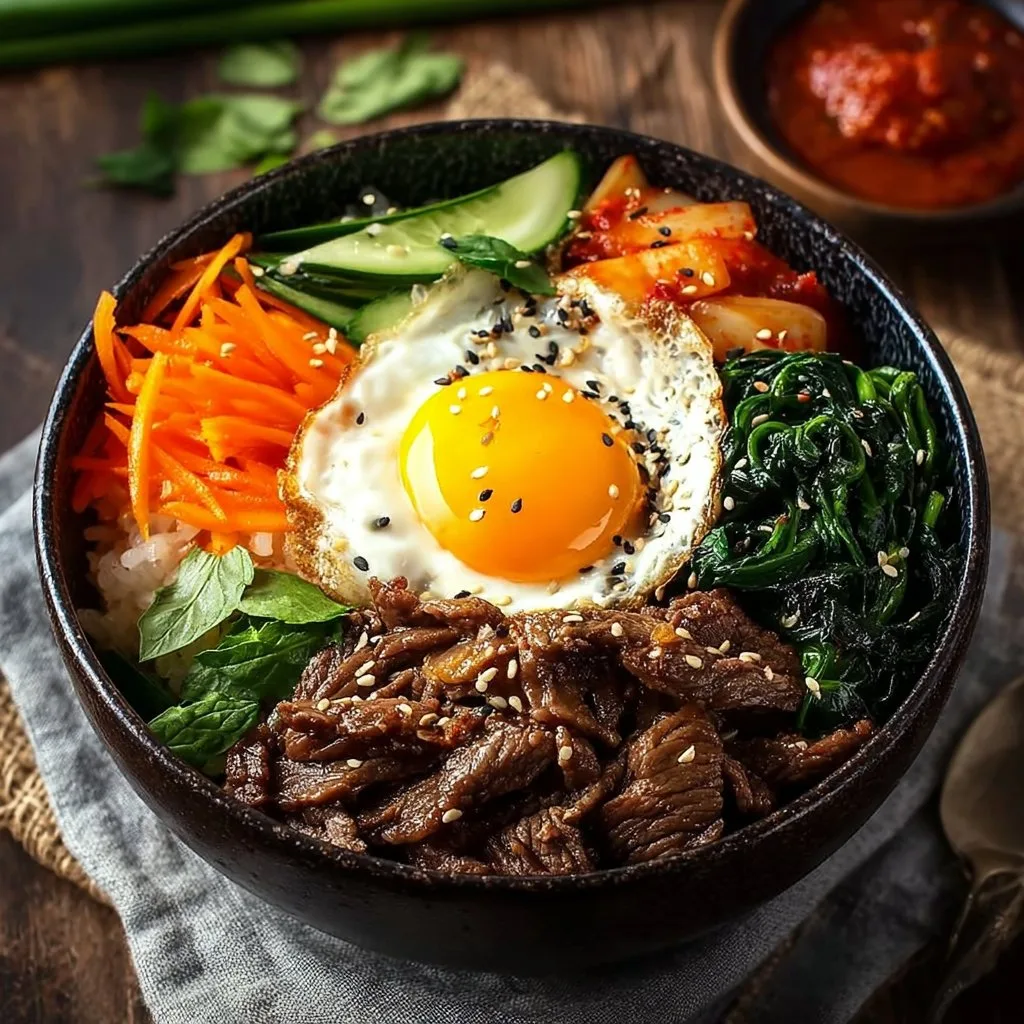
Korean Beef Bibimbap Bowls are a delightful combination of flavors, textures, and colors that make for a visually striking and satisfying dish. This classic Korean recipe features a hearty layer of seasoned ground beef and a rainbow of fresh vegetables on a bed of fluffy rice, all topped with a sunny-side-up egg. The ingredients come together to create a flavorful mix that’s both comforting and invigorating, making it perfect for any meal of the day.
Whether you’re treating yourself to a cozy dinner or impressing guests at a dinner party, this bibimbap bowl is a win. The interplay of savory beef, crispy vegetables, and creamy egg ensures each bite is loaded with delicious flavor. Plus, it’s highly customizable, so you can tweak it to match your taste buds!
Prep Time: 10 min | Cook Time: 25 min | Total Time: 35 min
How to Make Korean Beef Bibimbap Bowl
Ingredients:
- 1 lb lean ground beef
- 2 cups short-grain white rice (cooked)
- 1 cup carrots (julienned)
- 1 cup spinach (fresh)
- 1 cup zucchini (sliced)
- 1 cup bean sprouts
- 3 tbsp gochujang sauce (adjust for spice level)
- 1 tbsp sesame oil
- 2 tbsp low-sodium soy sauce
- 4 eggs
Step-by-Step Instructions:
- Cook the rice according to package instructions; set aside. This can easily be done while preparing other ingredients to save time.
- In a skillet, brown the ground beef over medium-high heat for about 5-7 minutes, draining excess fat. This helps prevent the dish from becoming greasy.
- Stir in the gochujang, soy sauce, and sesame oil; allow to simmer on low for another 5 minutes. This step is key for infusing the beef with bold flavors.
- In a separate pan, sauté the vegetables in sesame oil over medium heat until they are tender-crisp, which should take about 7 minutes. The vegetables should maintain a slight crunch for texture.
- Fry the eggs sunny-side up in a non-stick skillet until the whites are set but yolks remain runny, taking about 3 minutes. The runny yolk adds an extra creaminess to the dish.
- Assemble the bowls by layering the rice, beef mixture, sautéed vegetables, and topping with the fried egg. Drizzle with additional gochujang if desired for an extra kick.
Pro Tips
- Beef Selection: Using lean ground beef cuts down on grease but still provides great flavor. You can substitute with ground turkey or plant-based meat for a lighter option.
- Vegetable Variety: Don’t shy away from adding more vegetables like bell peppers, mushrooms, or broccoli. Each adds different textures and flavors.
- Adjusting Spiciness: Gochujang can be quite spicy; start with less and add more to taste. Always keep in mind the spice tolerance of your guests.
- Rice: Short-grain rice is traditional and gives a lovely sticky texture that holds the ingredients together. Long-grain rice can work, but will not provide the same classic bibimbap experience.
- Egg Cooking: If you prefer well-cooked eggs, simply cook them longer until the yolks are firm. Over-easy eggs can also work, depending on your preference.
Why You’ll Love This Recipe
Korean Beef Bibimbap Bowls encapsulate an explosion of flavor in every bite. The richness of the beef is balanced by the fresh, slightly bitter greens and the soft, comforting rice. It’s hearty enough to be a fulfilling meal any time of the day but still feels light due to its vegetable base.
Moreover, this recipe fits well into many dietary preferences. If you’re looking for a gluten-free option, simply replace soy sauce with tamari or a gluten-free soy sauce. It also fits a variety of meal plans around wholesome ingredients while allowing flexibility with spiciness—ideal for sharing!
How to Serve Korean Beef Bibimbap Bowl
Presentation is key! Serve your bibimbap bowls in colorful, contrasting bowls to showcase the vibrant array of ingredients. For a restaurant-style experience, serve with extra gochujang and sesame seeds on the side.
Some popular side dishes include crunchy kimchi or a light salad to complement the bowl’s heartiness. Pair your meal with a refreshing drink, such as iced tea or a light beer, to cleanse the palate.
How to Store Korean Beef Bibimbap Bowl
To maintain freshness, store any leftovers in an airtight container in the fridge, where they’ll last for about 3-4 days. If you plan to enjoy the dish later, you can freeze the beef and vegetable mixture for up to 3 months. Just make sure to separately store the rice and eggs, as their texture changes upon thawing.
Tips to Make Korean Beef Bibimbap Bowl
- Timing: Have all your ingredients prepped and ready to go before starting. It keeps the process smooth and less stressful.
- Taste as You Go: Adjust seasonings during cooking! It ensures that the final product meets your taste preferences.
- Layering: When assembling, layer everything carefully to allow for even distribution of flavors in every bite.
Variations
You can easily customize Korean Beef Bibimbap Bowls. For a vegan version, swap out the beef for marinated tofu or tempeh, and use chickpeas for added protein. For a spicy kick, add sliced jalapeños or kimchi to the mix.
If you’re aiming for a low-carb option, consider replacing rice with cauliflower rice while still keeping the delicious toppings and flavors intact.
Nutrition Information:
(Serving Size: 1 bowl | Calories: 550 | Protein: 34g | Carbs: 60g | Fat: 20g | Fiber: 4g | Sugar: 5g)
This recipe is protein-packed thanks to the beef and eggs, while also providing a good amount of healthy fats from the sesame oil, which can be beneficial for heart health.
Storage and Reheating
To reheat, you have a few options:
- Microwave: Place in a microwave-safe dish and heat for 1-2 minutes, stirring midway until evenly warmed.
- Oven: Preheat to 350°F (175°C) and cover the dish with foil to avoid drying out, heating for about 10-15 minutes.
- Skillet: For a fresher taste, reheat in a skillet over medium heat, stirring occasionally until heated through.
Customization Ideas
Feel free to experiment with flavors and textures! Add crispy seaweed on top for a salty crunch or swap the gochujang for spicy miso paste for a unique twist. You can even throw in seasonal vegetables like mushrooms or radishes for variety.
Common Mistakes to Avoid
- Overcooking the Beef: This can lead to tough meat. Monitor the browning process and remove from heat as soon as it’s no longer pink.
- Not Cooking Rice Properly: Rinse the rice before cooking to remove excess starch, ensuring it doesn’t end up sticky or gummy.
- Using Cold Ingredients: Let leftover ingredients come to room temperature before reheating for an even heat distribution.
- Skipping the Egg: The egg is a crucial element, so don’t overlook it! If you’re averse to eggs, consider using avocado as a creamy topping instead.
- Neglecting Seasoning: Ensure you taste and adjust seasonings during cooking to find the perfect balance for your palate.
Serving Occasions
Korean Beef Bibimbap Bowls are versatile and fit numerous occasions. They’re perfect for family dinners where everyone can customize their bowls or for casual gatherings with friends. Their vibrant presentation also makes them ideal for celebrations and potlucks!
Why Make This Recipe
Korean Beef Bibimbap is a unique dish thanks to its harmonious blend of flavors and textures. The layering of protein, vegetables, and grains isn’t just for aesthetics; it creates a meal that’s hearty yet balanced. Compared to other rice bowls, bibimbap brings a refreshing depth with its key ingredients and sauces that can transform even a simple meal into something extraordinary.
FAQs
1. Can I use other types of meat?
Absolutely! You can use chicken, pork, or even shrimp for diverse flavor profiles.
2. What can I use instead of gochujang?
If you don’t have gochujang, you can use Sriracha or another chili paste, but remember to adjust the quantity based on spiciness.
3. Can I make this ahead of time?
Yes! You can prepare the beef and rice in advance and simply reheat before serving.
4. Is this dish gluten-free?
It can be! Just ensure you use gluten-free soy sauce (like tamari) and check the labels on other condiments.
5. Can I make it vegetarian?
Yes! Just leave out the beef and eggs, and add more vegetables, tofu, or even a hearty grain like quinoa for a protein boost.
Disclaimer: Nutrition information is approximate, and ingredients may vary. Always check labels for specific dietary needs.
Print
Korean Beef Bibimbap Bowl
- Total Time: 35 minutes
- Yield: 4 servings 1x
- Diet: Gluten-Free, High-Protein
Description
A delightful combination of seasoned ground beef, fresh vegetables, and rice topped with a sunny-side-up egg for a comforting and invigorating meal.
Ingredients
- 1 lb lean ground beef
- 2 cups short-grain white rice (cooked)
- 1 cup carrots (julienned)
- 1 cup spinach (fresh)
- 1 cup zucchini (sliced)
- 1 cup bean sprouts
- 3 tbsp gochujang sauce (adjust for spice level)
- 1 tbsp sesame oil
- 2 tbsp low-sodium soy sauce
- 4 eggs
Instructions
- Cook the rice according to package instructions; set aside.
- In a skillet, brown the ground beef over medium-high heat for about 5-7 minutes, draining excess fat.
- Stir in the gochujang, soy sauce, and sesame oil; allow to simmer on low for another 5 minutes.
- In a separate pan, sauté the vegetables in sesame oil over medium heat until they are tender-crisp, about 7 minutes.
- Fry the eggs sunny-side up in a non-stick skillet until the whites are set but yolks remain runny, about 3 minutes.
- Assemble the bowls by layering the rice, beef mixture, sautéed vegetables, and topping with the fried egg.
Notes
Feel free to customize with additional vegetables or adjust the spice level to your taste.
- Prep Time: 10 minutes
- Cook Time: 25 minutes
- Category: Main Course
- Method: Baking, Sautéing, Frying
- Cuisine: Korean
Nutrition
- Serving Size: 1 serving
- Calories: 550
- Sugar: 5g
- Sodium: 800mg
- Fat: 20g
- Saturated Fat: 5g
- Unsaturated Fat: 12g
- Trans Fat: 0g
- Carbohydrates: 60g
- Fiber: 4g
- Protein: 34g
- Cholesterol: 300mg