
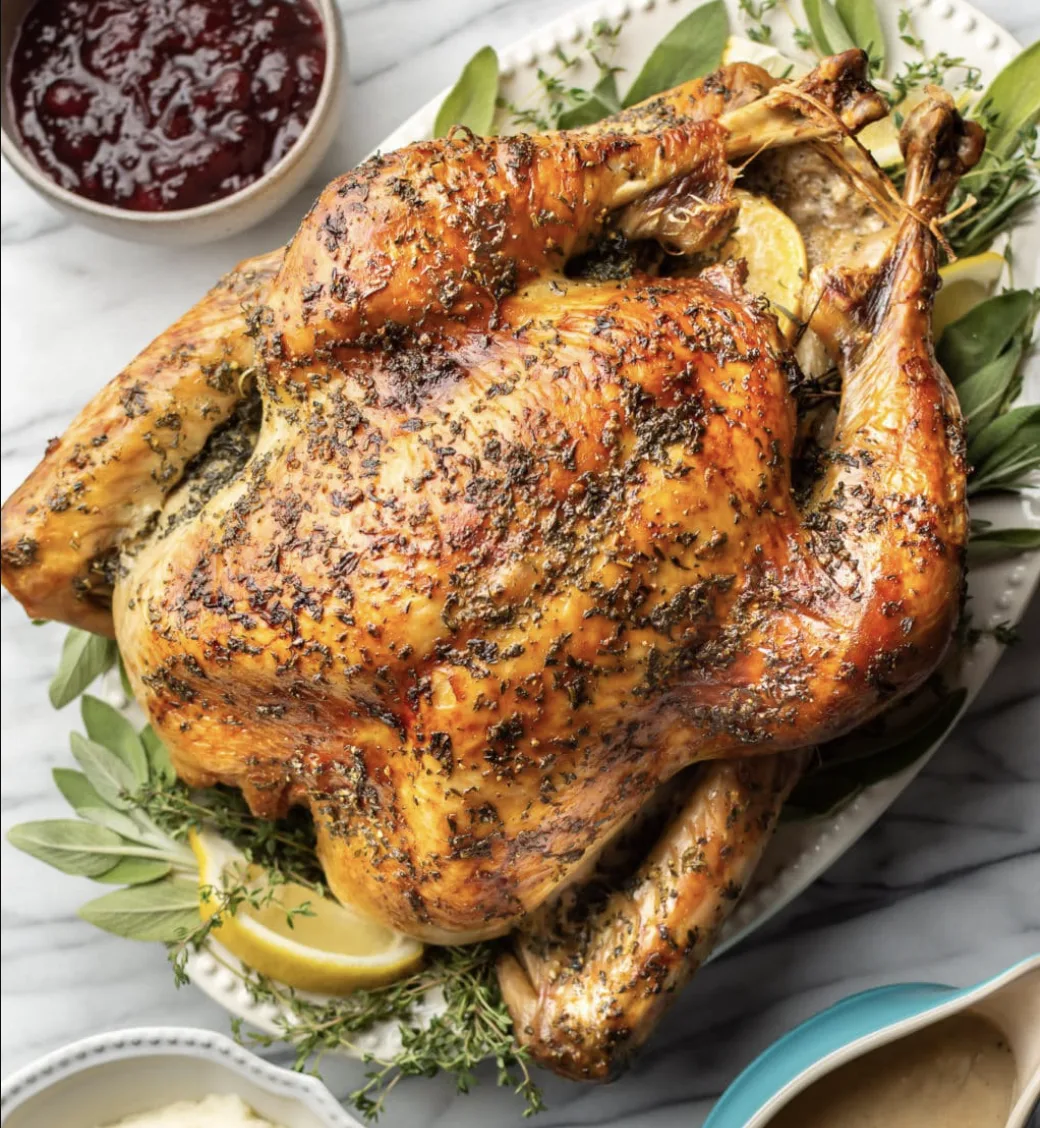
This Easy Roast Turkey is tender, juicy, and full of flavor, thanks to a delicious garlic herb butter rubbed over the skin. Fresh sage, thyme, rosemary, and garlic infuse the turkey with savory flavor, while lemon and fresh herbs tucked inside the cavity add a fragrant touch as it roasts.
Perfect for Thanksgiving, Christmas dinner, or any special family gathering, this oven-roasted turkey is surprisingly simple to prepare. The cooking method requires no regular basting, leaving you more time to prepare side dishes and enjoy the holiday with your guests.
With golden-brown skin, flavorful meat, and plenty of delicious pan drippings for homemade gravy, this roast turkey deserves a place at the center of your holiday table.
Why You’ll Love This Easy Roast Turkey
- Juicy and flavorful: Softened butter, fresh herbs, and garlic create a rich coating that helps the turkey stay moist while roasting.
- Crispy golden skin: Starting the turkey in a hot oven before reducing the temperature helps develop beautifully browned skin.
- Simple preparation: The garlic herb butter comes together quickly, and the turkey roasts without the need for constant basting.
- Perfect for holidays: This recipe is ideal for Thanksgiving, Christmas, and other special occasions.
- Fresh herb flavor: Sage, thyme, rosemary, garlic, and lemon give the turkey a fragrant, savory flavor.
- Great for leftovers: Extra roasted turkey can be refrigerated or frozen and used in soups, sandwiches, and other meals.
Ingredients You’ll Need
This recipe uses a whole turkey, a flavorful herb butter, and a few aromatic ingredients to enhance the meat as it roasts.
For the Turkey
- Whole turkey: One 14–16-pound turkey is recommended for this recipe. Remove the giblets and neck if included, and thaw the bird completely before cooking.
- Salt and pepper: Season the turkey to taste, including a little seasoning inside the cavity.
For the Garlic Herb Butter
- Unsalted butter: One cup, or two sticks, softened to room temperature. Butter helps flavor the skin and contributes to a rich, golden finish.
- Fresh sage: One tablespoon, finely chopped, adds an earthy, savory flavor.
- Fresh thyme: One tablespoon, finely chopped, provides a subtle herbal aroma.
- Fresh rosemary: One tablespoon, finely chopped, contributes a fragrant, woodsy flavor.
- Garlic: Four cloves, minced, add a rich savory note to the butter.
- Salt: One teaspoon seasons the herb butter.
- Black pepper: Half a teaspoon, or to taste, adds a gentle peppery flavor.
For the Turkey Cavity
- Lemon: One lemon, halved, adds a bright citrus aroma.
- Fresh herbs: A few sprigs each of sage, thyme, and rosemary provide extra fragrance.
- Garlic: One head, separated into peeled cloves, adds another layer of savory flavor.
Equipment
Gather these kitchen essentials before you begin:
- Roasting pan with a rack
- Large baking sheet or tray for preparing the turkey
- Small mixing bowl
- Fork
- Paper towels
- Kitchen twine, optional
- Instant-read meat thermometer
- Aluminum foil
How to Make Easy Roast Turkey
Follow these steps to prepare a flavorful turkey with garlic herb butter and golden-brown skin.
Step 1: Prepare the Turkey and Butter
Remove the turkey from the refrigerator about one hour before roasting and place it on a baking sheet to catch any liquid when you open the packaging. Take the butter out of the refrigerator as well so it has time to soften.
In a small bowl, combine the softened butter, chopped sage, thyme, rosemary, minced garlic, one teaspoon of salt, and half a teaspoon of black pepper. Mash everything together with a fork until the herbs and garlic are evenly distributed throughout the butter.
Step 2: Preheat the Oven
Preheat the oven to 450°F. Position an oven rack in the bottom third of the oven and remove any additional racks that might interfere with the roasting pan.
Starting at a higher temperature helps the turkey skin begin browning before the oven temperature is reduced for the remainder of the cooking time.
Step 3: Clean and Dry the Turkey
Remove the turkey from its packaging and take out the giblets and neck if they are included inside the cavity.
Drain any excess liquid from the cavity and pat the turkey thoroughly dry with paper towels. Do not rinse the turkey under running water, as this can spread bacteria around the kitchen.
Season the turkey with salt and pepper, including a little inside the cavity. Because the herb butter already contains salt, approximately one teaspoon of salt in total is suggested for this initial seasoning.
If the turkey has already been brined, reduce or omit the additional salt.
Step 4: Add the Aromatics and Herb Butter
Place the halved lemon, a few sprigs each of fresh sage, thyme, and rosemary, and the peeled garlic cloves inside the turkey cavity.
Rub the garlic herb butter generously over the outside of the turkey, covering the skin as evenly as possible. The original method focuses on the exterior rather than underneath the skin to reduce the risk of tearing it.
Tuck the wings underneath the turkey. If desired, tie the legs together with kitchen twine to give the bird a neater appearance.
Step 5: Position the Turkey in the Roasting Pan
Place the turkey breast-side up on the rack inside the roasting pan.
Elevating the turkey allows it to roast rather than sit directly in the pan juices. The recipe does not require additional liquid in the bottom of the pan, which helps the skin become crisp instead of steamy.
Step 6: Roast the Turkey
Place the roasting pan in the oven and immediately reduce the temperature to 350°F.
For a 14-pound turkey, plan on approximately three hours of roasting time. A general guideline is about 13 minutes per pound at 350°F, but the actual cooking time depends on the size and shape of the bird and your oven.
Begin checking for doneness about 30 minutes before the estimated cooking time is complete. Insert an instant-read meat thermometer into the thickest part of the thigh, avoiding the bone. The turkey must reach at least 165°F.
The skin may brown before the meat is fully cooked. If it becomes deeply golden or starts to look too dark, loosely cover the turkey with nonstick aluminum foil for the remainder of the roasting time.
There is no need to baste the turkey during cooking.
Step 7: Collect the Pan Drippings
When the turkey is cooked, carefully remove the roasting pan from the oven.
Tilt the roasting rack carefully so the juices inside the turkey drain into the bottom of the pan. These drippings can be used to prepare gravy.
Lift the rack and transfer the turkey to a large cutting board or serving platter.
Step 8: Let the Turkey Rest
Allow the turkey to rest for 20 minutes before carving.
Resting gives the juices time to redistribute throughout the meat, helping the turkey remain moist when sliced. The internal temperature may continue to rise slightly during this time.
While the turkey rests, use the pan drippings to prepare gravy if desired. Then carve the turkey and serve it with your favorite holiday side dishes.
Tips for the Best Roast Turkey
- Thaw the turkey in advance: Allow approximately one day of refrigerator thawing for every five pounds of turkey. A 15-pound bird will generally need about three days.
- Use an instant-read thermometer: Cooking time is only an estimate. Always check the internal temperature to confirm the turkey is cooked safely.
- Dry the skin thoroughly: Patting the turkey dry with paper towels helps the skin brown more effectively.
- Use a roasting rack: Elevating the turkey promotes more even roasting and prevents it from sitting directly in the drippings.
- Avoid unnecessary liquid: The original method does not add broth to the bottom of the roasting pan. If you prefer to add liquid, the source suggests 2–4 cups of chicken broth or stock, although the skin may not crisp as well.
- Watch the skin as it browns: If the skin darkens before the turkey is cooked, loosely cover it with nonstick foil.
- Let the butter soften: Softened butter is easier to combine with the herbs and spread over the turkey.
- Skip the basting: This method is designed to roast without regular basting, saving time and avoiding repeated oven opening.
- Do not wash raw turkey: Rinsing can spread bacteria around the sink and kitchen without making the turkey safer.
- Plan for brined turkey: If using a turkey that has already been brined, reduce or eliminate the added salt in both the seasoning and herb butter.
Fresh Herbs vs. Dried Herbs
Fresh herbs give the garlic butter a fragrant, vibrant flavor, but dried herbs can be used if fresh ones are unavailable.
For this recipe, use approximately one teaspoon of dried herbs for every tablespoon of fresh herbs. Italian seasoning or poultry seasoning can also be used as alternatives.
Because dried herbs can vary in intensity, avoid adding more than necessary until you’ve considered the flavor of your seasoning blend.
Can You Make Roast Turkey Ahead of Time?
You can prepare some components in advance to make holiday cooking easier.
- Prepare the herb butter: Mix the softened butter, herbs, garlic, salt, and pepper ahead of time and refrigerate it in a covered container. Let it soften enough to spread before using.
- Thaw the turkey: Plan the refrigerator thawing time well in advance so the turkey is ready on cooking day.
- Prepare the side dishes: Use the roasting time to organize your other dishes and prepare gravy ingredients.
For the best texture and presentation, roast the turkey on the day you plan to serve it.
How to Store and Reheat Leftover Turkey
Refrigerator: Refrigerate leftover turkey within two hours of removing it from the oven. Store the meat in airtight containers and use it within 3–4 days.
Freezer: Freeze leftover turkey in airtight, freezer-safe containers for 2–3 months.
Reheating: Reheat portions until thoroughly hot. Adding a little broth or gravy can help keep the meat moist during reheating.
Leftover roast turkey is delicious in sandwiches, soups, salads, casseroles, and other easy meals.
What to Serve with Roast Turkey
A beautifully roasted turkey pairs well with traditional holiday sides and comforting family favorites.
- Garlic mashed potatoes: Creamy potatoes complement the savory turkey and garlic herb butter.
- Green bean casserole: A creamy, crunchy vegetable side adds texture and classic holiday flavor.
- Roasted sweet potatoes: Their natural sweetness balances the savory turkey.
- Creamy mashed potatoes: A classic pairing for turkey and gravy.
- Corn casserole: A comforting side dish for Thanksgiving and Christmas.
- Scalloped potatoes: Tender potatoes with a creamy sauce make the meal extra satisfying.
- Brussels sprouts with bacon: A savory vegetable side that complements the roasted meat.
- Cranberry sauce: Its bright, tangy sweetness balances the richness of the turkey.
- Homemade turkey gravy: Use the roasting pan drippings to create a flavorful sauce for the meat and potatoes.
Frequently Asked Questions
How long does it take to roast a turkey at 350°F?
A general guideline is approximately 13 minutes per pound for an unstuffed turkey. A 14-pound turkey may take around three hours, but oven performance and the bird’s shape can affect cooking time. Always use a meat thermometer and confirm that the thickest part of the thigh reaches at least 165°F.
What size turkey should I buy?
A common guideline is 1–2 pounds of turkey per person. For smaller appetites or a meal with many side dishes, 1–1.25 pounds per person may be sufficient.
The recipe’s serving guidance suggests approximately an 8-pound turkey for four people, a 12-pound turkey for six, a 16-pound turkey for eight, or a 20-pound turkey for ten.
How long does it take to thaw a frozen turkey?
Allow approximately one day in the refrigerator for every five pounds of turkey. For example, a 15-pound turkey generally needs around three days to thaw. Keep it in its packaging while it thaws, and do not leave it on the counter overnight.
Do I need to baste the turkey?
No. This recipe uses garlic herb butter on the skin and does not require regular basting during roasting.
Should I brine the turkey first?
Brining is optional. The recipe is designed without brining, but you can use a dry-brined turkey if you prefer. If the turkey has already been brined, reduce or eliminate the additional salt in the recipe to avoid making it too salty.
Why should I let the turkey rest before carving?
Resting allows the juices to redistribute throughout the meat. Cutting too soon can cause more juices to escape, leaving the meat drier. Let the turkey rest for approximately 20 minutes before carving.
Can I use dried herbs instead of fresh herbs?
Yes. Use approximately one teaspoon of dried herbs for every tablespoon of fresh herbs. Italian seasoning or poultry seasoning can also be used.
Should I add broth to the roasting pan?
The original recipe does not add liquid to the pan because extra liquid may cause the turkey to steam and prevent the skin from becoming as crisp. If you prefer to add some, 2–4 cups of chicken broth or stock can be used.
What should I do if the turkey skin browns too quickly?
If the skin becomes deeply golden before the turkey reaches the required internal temperature, loosely cover the bird with nonstick aluminum foil and continue roasting until it is cooked through.
How long can I keep leftover roast turkey?
Refrigerate leftovers within two hours of cooking and use them within 3–4 days. For longer storage, freeze the turkey for 2–3 months.
Easy Roast Turkey Recipe Card
Prep Time: 30 minutes
Cook Time: Approximately 3 hours
Total Time: 3 hours 30 minutes
Servings: 10
Course: Main Course
Method: Oven-Roasted
Ingredients
For the Turkey
- 1 whole turkey (14–16 pounds)
- Salt and pepper, to taste
For the Garlic Herb Butter
- 1 cup unsalted butter (2 sticks), softened
- 1 tablespoon fresh sage, finely chopped
- 1 tablespoon fresh thyme, finely chopped
- 1 tablespoon fresh rosemary, finely chopped
- 4 cloves garlic, minced
- 1 teaspoon salt
- 1/2 teaspoon black pepper, or to taste
For the Turkey Cavity
- 1 lemon, halved
- A few sprigs each of fresh sage, thyme, and rosemary
- 1 head garlic, separated into peeled cloves
Instructions
- Remove the turkey from the refrigerator about one hour before roasting. Place it on a baking sheet and let the butter soften.
- In a bowl, mash together the softened butter, chopped sage, thyme, rosemary, minced garlic, one teaspoon of salt, and half a teaspoon of black pepper.
- Preheat the oven to 450°F and position a rack in the bottom third of the oven.
- Remove the turkey from its packaging and take out the giblets and neck if included. Drain excess liquid from the cavity and pat the turkey dry with paper towels.
- Season the turkey with salt and pepper, including a little inside the cavity. If the turkey has already been brined, reduce or omit the additional salt.
- Place the lemon halves, herb sprigs, and peeled garlic cloves inside the cavity.
- Rub the garlic herb butter over the outside of the turkey. Tuck the wings underneath and tie the legs with kitchen twine if desired.
- Place the turkey breast-side up on a rack in a roasting pan.
- Roast in the oven, immediately reducing the temperature to 350°F.
- Roast for approximately three hours for a 14-pound turkey, using about 13 minutes per pound as a general guideline. Begin checking for doneness 30 minutes before the estimated cooking time ends.
- Check the thickest part of the thigh with an instant-read thermometer. The turkey must reach at least 165°F. If the skin browns too quickly, loosely cover it with nonstick foil.
- Remove the turkey from the oven and carefully collect the pan drippings for gravy, if desired.
- Transfer the turkey to a cutting board or platter and let it rest for 20 minutes before carving.
- Carve and serve with your favorite holiday side dishes.
Recipe Notes
- Use an instant-read meat thermometer rather than relying on cooking time alone.
- Thaw the turkey in the refrigerator for approximately one day per five pounds.
- Use sea salt or kosher salt if possible.
- Do not add extra salt to a turkey that has already been brined.
- Leftovers should be refrigerated within two hours and used within 3–4 days, or frozen for 2–3 months.
Final Thoughts
This Easy Roast Turkey is a wonderful centerpiece for Thanksgiving, Christmas, and other special family meals. The garlic herb butter adds rich flavor, while fresh herbs and lemon give the turkey a fragrant aroma as it roasts.
With a simple preparation method, no regular basting, and straightforward temperature checks, you can prepare a flavorful holiday turkey while leaving time for your favorite side dishes. Let the bird rest before carving, serve it with homemade gravy and classic accompaniments, and enjoy a memorable meal with family and friends.