
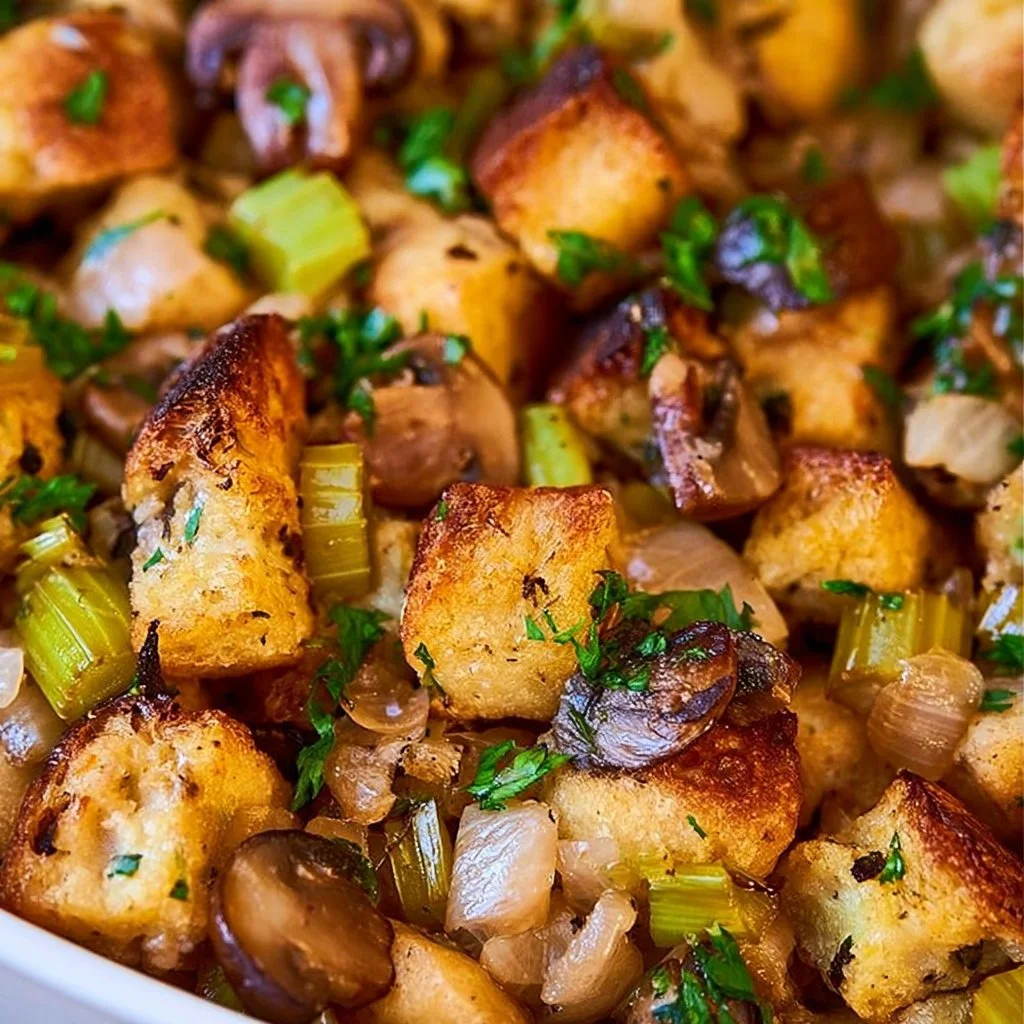
Rustic Sourdough Stuffing | Easy Thanksgiving Side Dish
Thanksgiving is synonymous with a lavish feast filled with beloved comfort foods, and among them, stuffing holds a special place. Rustic Sourdough Stuffing stands out for its delightful blend of flavors and textures, making it a cherished side dish that evokes warmth and nostalgia. The sourdough bread lends a unique tang and chewiness to the stuffing, while the combination of vegetables and herbs enriches it with layers of aromatic goodness. Whether laden with savory onions, crisp celery, or fragrant herbs, this stuffing embodies the spirit of the holiday.
Imagine a dish that emerges from the oven golden and crisp on top, revealing a tender base infused with rich broth and seasoned to perfection. This is the experience Rustic Sourdough Stuffing offers—the contrast between the crispy top layer and the soft, flavorful interior resulting from carefully sautéed ingredients. The aroma wafting from the oven as it bakes creates an appetizing anticipation, making it hard to resist reaching for a warm spoonful.
This stuffing isn’t restricted to Thanksgiving; it’s an incredibly versatile side dish suitable for family dinners, holiday gatherings, or any occasion that calls for comfort food. Its ability to be prepared ahead of time only adds to its appeal, allowing you to enjoy more time with loved ones rather than spending it in the kitchen. Rustic Sourdough Stuffing can effortlessly elevate your meal, be it a celebratory feast or a casual weeknight dinner.
Let’s dive into what sets this stuffing apart from others, exploring its ingredients, textures, and tips to make it a standout dish.
What Makes This Recipe Special
What makes Rustic Sourdough Stuffing truly special lies in its thoughtful blend of flavors, textures, and the rustic character of the sourdough bread. Unlike traditional stuffing made with white bread, sourdough offers a slightly tangy flavor that complements the savory elements of the dish, creating a more sophisticated backdrop for the herbs and vegetables. The unique fermentation process in sourdough also contributes to its delightful chewiness, allowing it to absorb the broth and flavors without becoming mushy—yielding a stuffing that strikes an ideal balance of moist and firm.
The variety of vegetables used in this stuffing enhances both the texture and the flavor profile. Sautéed onions add sweetness and depth, while celery brings a satisfying crunch. Fresh parsley and aromatic herbs like thyme and sage impart an inviting fragrance, filling your kitchen with enticing scents that herald a delicious meal. This medley not only works together harmoniously but allows for creativity, as you can adjust the herb proportions or add other vegetables based on what you have or prefer.
Compared to more conventional stuffing recipes, the use of sourdough elevates this dish’s status from a mere side dish to a feature attraction on your holiday table. Its rustic charm mirrors the warmth of home-cooked meals and family gatherings, making it the ideal companion to roasted turkey, gravy, and cranberry sauce. While other stuffing variations may lean too heavily on traditional bread, this recipe pays homage to the artisanal nature of sourdough, delivering a sophisticated take on a classic.
Ingredient Overview and Helpful Notes
The key to any successful stuffing lies in the quality of its ingredients, and Rustic Sourdough Stuffing is no exception. The star of the show is, of course, the sourdough bread. It serves as the foundation of the dish, providing structure and a slight tang. When selecting sourdough, look for a loaf that has a good crust and a chewy texture. A day or two old loaf is ideal, as it will be slightly dry and will absorb the broth effectively without becoming soggy.
Onions, celery, and garlic form the aromatic base of the stuffing. Onions offer sweetness; celery contributes a crunchy texture; and garlic adds depth and savory notes. Opt for fresh ingredients whenever possible to achieve a vibrant flavor in the final dish. Dicing onions and celery evenly promotes even cooking, while mincing garlic allows it to release its essential oils more readily, ensuring that each bite is infused with its wonderful taste.
Herbs like thyme and sage lend fragrant notes that marry beautifully with the creamy elements of the stuffing. Fresh herbs are preferable, but dried options can work in a pinch. Using herbs effectively can make or break this stuffing, so be generous with your measurements while keeping in mind the balance of flavors. The inclusion of parsley not only adds fresh flavor but also brightens the dish visually with its vibrant green color.
Lastly, the choice of broth—whether vegetable or chicken—can significantly impact the overall flavor. Homemade broth is excellent for freshness, but store-bought versions can also be suitable. Be mindful of the sodium content, as some broths can be quite salty; taste as you go to adjust seasonings accurately. Lastly, melted butter provides richness and helps achieve that coveted crispy topping when baked, giving the stuffing a luxurious finish.
Nutrition & Recipe Details
Nutritional values can fluctuate based on ingredients, brands, portion sizes, and variations in preparation methods. Here’s a breakdown of the estimated nutrition for this Rustic Sourdough Stuffing.
| Item | Value |
|---|---|
| Prep time | 30 minutes |
| Cook time | 45 minutes |
| Store time | 3–4 days in fridge |
| Calories | 250 per serving |
| Protein | 5g |
| Carbohydrates | 30g |
| Fat | 10g |
How to Make Rustic Sourdough Stuffing
Making Rustic Sourdough Stuffing is a straightforward process that leads to a deeply flavorful and satisfying dish. Start by gathering your ingredients and preparing your workspace to streamline the cooking experience. Equipment such as a large skillet, mixing bowl, and a baking dish will serve you well in this endeavor. Prepping your vegetables ahead of time can save valuable moments in the kitchen, letting you focus more on the cooking.
Ingredients
| Ingredient | Quantity |
|---|---|
| Sourdough bread, cubed | 1 loaf |
| Onion, diced | 1 cup |
| Celery, diced | 1 cup |
| Garlic, minced | 3 cloves |
| Fresh parsley, chopped | 1/2 cup |
| Dried thyme | 1 teaspoon |
| Dried sage | 1 teaspoon |
| Salt | 1/2 teaspoon |
| Black pepper | 1/4 teaspoon |
| Vegetable or chicken broth | 2 cups |
| Butter, melted | 1/4 cup |
Before you start cooking, take a moment to cube the sourdough bread into bite-sized pieces and allow them to air-dry for a bit; this will help the bread absorb the broth better. Dice the onions and celery and mince the garlic—uniformity is crucial, as this ensures even cooking. Have your herbs ready to go, as well as the melted butter.
Step-by-Step Instructions
-
Preheat the oven to 350°F (175°C). This step is essential as it allows the stuffing to bake evenly and develop a golden top.
-
In a large skillet, melt the butter over medium heat. Once melted, add the diced onion and celery, stirring frequently. You should notice the onions becoming translucent, which typically takes about 5-7 minutes. Then, add the minced garlic, cooking for an additional one to two minutes, just until fragrant. Be cautious not to let the garlic burn, as it can turn bitter.
-
In a large mixing bowl, combine the cubed sourdough bread, dried thyme, dried sage, salt, and black pepper. Toss to distribute the herbs and spices evenly among the bread.
-
Pour the sautéed vegetable mixture over the bread cubes and gently toss to combine. You want everything well-mixed without overly crushing the bread.
-
Gradually add the broth to the mixture while stirring gently. The goal is to moisten the bread evenly without making it overly soggy. Each piece should absorb some of the liquid as you go.
-
Once mixed, transfer the stuffing to a greased baking dish. Make sure it is evenly spread out, ensuring consistent cooking. Cover the dish with aluminum foil to prevent excessive drying during the initial baking phase.
-
Bake in the preheated oven for about 30 minutes. After this time, carefully remove the foil and continue baking for an additional 15 minutes or until the top is golden brown and a bit crispy. This final step adds texture and enhances the flavors of the herbs.

Understanding the Flavor and Texture
Upon serving, Rustic Sourdough Stuffing presents a beautifully golden, crisp exterior, contrasting delightfully with the tender, savory interior. The richness of the melted butter, combined with the broth-soaked bread, results in a flavor-soaked bite that resonates with warmth and comfort. The combination of soft, pillowy chunks of sourdough interspersed with fragrant bits of onion, celery, and garlic provides not just a symphony of tastes but also a pleasurable variety of textures.
As the stuffing bakes, the natural moisture from the vegetables interacts with the bread, creating small pockets of flavor-rich liquid within the stuffing. This moistness is perfectly balanced with a slight crust on the top, adding a satisfying crunch as your fork digs in. Fresh herbs elevate the dish, adding an aromatic note that shines through every mouthful.
A successful Rustic Sourdough Stuffing will have a slightly chewy base with crispy edges, indicating that it has baked long enough to achieve that coveted caramelization. The herbs, when used correctly, provide a depth of flavor without overpowering the pairing of the vegetables and bread. The whole experience should feel comforting—a reminder of home-cooked meals and holiday gatherings.
Pro Tips
Small techniques can vastly improve the outcome of your Rustic Sourdough Stuffing. Here are some effective suggestions:
| Tip | Description |
|---|---|
| Use Day-Old Bread | Letting the sourdough bread sit out for a day or two makes it drier, which is ideal for absorbing broth and preventing sogginess in the final stuffing. |
| Customize the Vegetables | Feel free to add other vegetables like mushrooms or carrots. Each addition brings its unique flavor and contributes to a more complex stuffing. |
| Don’t Skip the Broth | Ensure you add enough broth to moisten the bread properly. Check the mixture; it should feel damp but not swimming in liquid. |
| Cover with Foil | Covering the dish for the first part of baking helps retain moisture. Remove the foil late in the cooking process to achieve that perfect crispiness. |
In addition to these tips, consider experimenting with different types of broth for varied flavors—homemade versions tend to offer the best results. Your choice of herbs can also personalize the stuffing; for example, incorporating rosemary in place of thyme provides an entirely new flavor experience.
Why You’ll Love This Recipe
What’s not to love about a dish that boasts simplicity, rich flavors, and versatility? Rustic Sourdough Stuffing is incredibly straightforward to prepare, making it accessible for cooks of all skill levels—from novices to seasoned chefs. Its primary ingredients are easy to find and come together quickly, making the stuffing an uncomplicated addition to any meal.
Its adaptability is another boon. Whether you are hosting a festive gathering or preparing a casual family meal, this pulling flavor-packed stuffing suits various dining occasions. It can be easily scaled—making it perfect for intimate diners or large holiday gatherings—and pairs beautifully with many main dishes.
Prepare it in advance to further enhance its advantages. This working-man’s stuffing can be assembled the night before and stored in the refrigerator until it’s ready to bake. No need to rush as your guests arrive; simply pop it into the oven. Enjoying family and friends around the table with a delicious reserve of flavors and textures represents what it’s all about—successfully weaving food and experiences together.
How to Serve Rustic Sourdough Stuffing
Serving Rustic Sourdough Stuffing is an opportunity to enhance your dining experience visually and gastronomically. A large serving bowl or casserole dish works wonderfully to present this dish at the center of the table, inviting everyone to dig in. Garnishing the top with fresh parsley adds a lovely splash of color and an extra hint of freshness.
Rustic Sourdough Stuffing pairs beautifully with traditional Thanksgiving fare such as roasted turkey and cranberry sauce. However, it also complements grilled chicken, sautéed fish, or even a hearty vegetable main course perfect for vegetarian diners. For a complete meal, consider serving it alongside a fresh garden salad dressed in a light vinaigrette, which adds a bright contrast and balances out the rich flavors of the stuffing.
Consider accompanying your stuffing with homemade gravy or a drizzle of melted butter for added richness and moisture. When it comes to drinks, pair the dish with refreshing iced tea, a warm apple cider, or simply water flavored with lemon for a bright, celebratory touch.
You can also elevate the experience as a brunch option by transforming the leftovers into a stuffing casserole topped with eggs and cheese, then baked until golden. This would transform the dish into a new delightful interpretation that can be served with a side of fresh fruit or pastries.
How to Store Rustic Sourdough Stuffing
Storage of leftover Rustic Sourdough Stuffing should be done with care to maintain its flavors and textures. Allow the stuffing to cool completely before storing, as this helps prevent condensation from forming in the container, which can make it soggy. Using an airtight container is the best method for preserving freshness.
In the refrigerator, the stuffing can last for about three to four days. To maximize its shelf life, make sure no moisture remains when sealing. For longer storage, consider freezing it. Wrapped tightly in plastic wrap or aluminum foil, followed by a layer of aluminum foil or a freezer-safe bag, leftover stuffing can be frozen for up to three months. When ready to use, it’s best to defrost in the refrigerator overnight, then reheat thoroughly before serving.
While reheating, be mindful that the texture may shift slightly. To combat dryness after refrigeration or freezing, consider adding a splash of broth or water before reheating to restore moisture. The goal is to retain the stuffing’s original appeal, with crispy edges and a moist interior, which makes it tantalizing even as leftovers.
Tips to Make Rustic Sourdough Stuffing
To ensure your Rustic Sourdough Stuffing achieves the best possible flavor and texture, here are several practical tips to keep in mind throughout the cooking process:
-
Cube your bread consistently. This serves a crucial role in ensuring your stuffing cooks evenly. Too small, and it may get mushy; too large, and it won’t absorb the flavors adequately. Aim for a uniform bite-sized piece for the best outcome.
-
Taste as you go. This tip cannot be stressed enough. Adjusting flavors based on personal preferences ensures the final dish is tailored to your palate. Feel free to tweak the amount of salt, herbs, and broth to achieve an enjoyable flavor balance.
-
Keep garlic and herbs fresh. For the best taste, use fresh garlic and herbs rather than dried alternatives. Fresh herbs bring a punch of brightness to the dish, while garlic adds aromatic richness.
-
Don’t rush the sautéing stage. Taking the time to cook the vegetables properly makes a significant difference compared to simply throwing them in. The caramelization process will enhance the flavor and create a pleasant texture within the stuffing that complements the sourdough beautifully.
Each of these tips contributes to a successful result. Even slight modifications can enhance your dish’s depth of flavor and overall satisfaction, making for an unforgettable meal.
Variations and Substitutions
The beauty of Rustic Sourdough Stuffing comes from its adaptability, allowing for various twists that can cater to different dietary preferences or flavor profiles. Here are some useful variations and substitutions to consider:
-
Vegetarian Version: Swap out chicken broth with vegetable broth to keep the stuffing vegetarian-friendly. Additionally, consider adding vegetables such as spinach, carrots, or bell peppers for extra color and nutrition.
-
Dairy-Free Option: Replace butter with a plant-based substitute, such as olive oil or vegan butter. This ensures that the stuffing remains free of dairy while still providing the richness.
-
Spicy Kick: For those who crave a touch of heat, consider adding diced jalapeños or crushed red pepper flakes. These can be sautéed along with the vegetables to imbue the stuffing with a warm spice that contrasts beautifully with the sourdough base.
-
Gluten-Free Adaptation: Seek out gluten-free bread varieties to create a gluten-free version of this stuffing. There are many bread products available today that maintain the texture and flavor similar to traditional sourdough.
-
Add Fruits: Enhance the stuffing’s natural sweetness by incorporating dried fruits such as cranberries or apricots. Soaking these in the broth before combining them with the bread mixture will infuse the stuffing with delightful bites of fruity goodness.
Each variation offers its unique take on the classic recipe while maintaining the essential character that makes Rustic Sourdough Stuffing such a favorite.
Storage and Reheating
To ensure your Rustic Sourdough Stuffing remains tasty even after the meal is finished, proper storage and reheating procedures are essential. For leftover stuffing, here’s a simple guide:
-
Portioning and Packaging: After cooking, allow the stuffing to cool to room temperature. Divide it into smaller portions if you anticipate wanting individual servings later. Place portions into airtight containers or freezer-safe bags, ensuring minimal air exposure to prevent freezer burn.
-
Refrigerator Storage: In the refrigerator, the stuffing can last safely for about three to four days. Keep an eye on it—if it starts to dry out, adding a splash of broth or water when reheating will help restore moisture.
-
Freezing Technique: For longer preservation, you may freeze the stuffed portions for up to three months. When you are ready to enjoy it again, move the container to the refrigerator the night before to allow it to thaw slowly.
-
Reheating Methods: When reheating, use an oven for the best texture. Preheat to 350°F, cover the dish with foil to prevent excessive drying, and heat for about 20 minutes. Alternatively, you can use the microwave; just sprinkle water or broth on the stuffing to keep it moist, and cover it to trap steam. Aim for even reheating by stirring midway through the process.
These methods help maintain the stuffing’s flavor and texture, allowing you to enjoy delicious leftovers with minimal effort.
Customization Ideas
Customizing your Rustic Sourdough Stuffing presents an enjoyable avenue for expressing creativity in the kitchen. Here are practical ideas to adjust flavors, textures, and presentation according to personal preferences or ingredients on hand:
-
Herb and Spice Customization: Experiment with a variety of herbs beyond thyme and sage. Oregano, dill, or tarragon can provide vibrant new notes and can be tailored to what pairs best with your main dish.
-
Texture Tweaks: If you prefer a creamier stuffing, consider ladling in a little more broth or even adding a splash of cream. This can create a richer mouthfeel and enhance the savoriness.
-
Presentation Enhancements: For a more visually appealing dish, transfer the cooked stuffing into a decorative serving dish. Topping it with toasted almond slices or sunflower seeds before serving adds not only texture but also a pop of visual interest.
-
Serving Modifications: Elevate your stuffing presentation by transforming it into a stuffed pepper or squash dish. Use hearty vegetables as vessels, fill them with the stuffing, and bake until everything is warmed through and slightly browned.
These ideas offer versatility and ensure the Rustic Sourdough Stuffing can adapt to suit varying tastes or occasions elegantly.
Common Mistakes to Avoid
Cooking can sometimes present challenges, especially when trying to perfect a recipe like Rustic Sourdough Stuffing. Here are common mistakes to watch out for, along with remedies to enhance your final result:
-
Using Fresh Bread: Using freshly baked bread without allowing it to sit for a while can lead to a soggy stuffing. Toasting or letting the bread dry at room temperature helps with absorption, preventing wetness.
-
Underseasoning: Failing to taste and adjust seasoning can leave your stuffing bland. Don’t hesitate to add more salt, herbs, or spices until it sings with flavor.
-
Skipping the Sauté: Sautéing the vegetables before adding them to the bread is key to developing flavor. Skipping this step can lead to raw, assertive bites instead of beautifully flavored ones.
-
Overmixing: Mixing too thoroughly can break down the bread and turn your mixture mushy. Treat your bread gently, combining just until moistened to maintain texture.
-
Ignoring Baking Time: Not following the indicated baking time may result in a poorly cooked stuffing. A golden-brown top is a visual cue that it’s ready; under-baked stuffing can taste off-putting.
By being aware of these pitfalls, you can navigate the cooking process more confidently and ensure a flavorful outcome that will impress everyone at the table.
Serving Occasions
Rustic Sourdough Stuffing shines in a variety of serving situations, making it a versatile contribution to your meal repertoire. Its comforting nature makes it particularly suitable for gatherings centered around family and festivities.
Thanksgiving and Christmas are nearly synonymous with stuffing, as they create a perfect pairing with roasted meats and festive flavors. However, don’t limit this dish to just holidays; it’s also an excellent choice for hearty family dinners, potlucks, or Sunday meals, where comfort food is at the forefront.
The presentation can shift based on the occasion—while a large, lovingly prepared casserole might impress guests during holidays, simpler, quick-serving portions work well for casual dinners or lunchtime gatherings.
This adaptability keeps the experience fresh and enjoyable no matter the setting.
Why Make This Recipe?
Choosing to make Rustic Sourdough Stuffing rather than opting for typical stuffing alternatives is worth considering for many reasons. The unique combination of flavors, stemming from quality sourdough bread and fresh herbs, offers a more complex profile than traditional stuffing recipes.
This stuffing is also approachable, requiring no unusual techniques or ingredients. The straightforward preparation appeals to both novice and experienced cooks, allowing anyone to engage with the dish comfortably. Unlike other recipes that may necessitate special techniques or timing, this dish flourishes with simplicity, enabling more focus on enjoying the remarkable flavors rather than stressing over complicated methods.
Incorporating this stuffing into your recipe rotation not only diversifies your meal options but also cultivates an inviting atmosphere at your dining table with its ability to evoke cherished memories surrounding food, family, and celebration.
Make-Ahead Preparation
One of the great things about Rustic Sourdough Stuffing is its ability to be made ahead of time, which can alleviate stress on busy holiday or meal prep days. There are key steps and timing considerations that you should be aware of to maximize efficiency:
-
Prep Ingredients Ahead of Time: Chop your vegetables and cube the sourdough a day before you plan to prepare the stuffing. This allows you to save precious time when you’re ready to cook.
-
Assemble Before Baking: You can prepare the entire stuffing and then store it in the refrigerator before baking. Simply mix all the ingredients and transfer them to the baking dish, covering it tightly to keep it fresh.
-
Reheating Considerations: If you’ve prepped it in advance, remember to allow the stuffing to come closer to room temperature before placing it in the oven for baking. This will ensure even cooking without needing to extend your baking time significantly.
By following these guidelines, you can serve a delicious, comforting dish while keeping your focus on what truly matters—spending time with friends and family during meal times.
Equipment and Kitchen Preparation
Equipping yourself with the right tools can make all the difference when making Rustic Sourdough Stuffing. Here’s what you’ll need:
-
Large Skillet: Essential for sautéing your vegetables, a non-stick skillet or well-seasoned cast iron work well. Ensure it’s large enough to accommodate all vegetables at once for even cooking.
-
Mixing Bowl: A large bowl is necessary for mixing the bread cubes and other ingredients. Use a bowl spacious enough to allow you to toss everything together without making a mess.
-
Baking Dish: The choice of a baking dish can vary in size and material; glass or ceramic dishes are popular due to their heat distribution qualities. Additionally, choose a dish that can hold the stuffing comfortably with some space for expansion while baking.
-
Measuring Tools: Accurate measuring cups and spoons are helpful for maintaining ingredient proportions. A good knife and cutting board will be necessary for prepping veggies.
Finally, organizing your workspace is key to smooth cooking. Have your ingredients prepped and ready within arm’s reach to make the cooking process more streamlined and enjoyable.
FAQs
-
Can I use any bread for this recipe?
Yes, while sourdough is preferred for its unique flavor and texture, you can also use whole grain or gluten-free bread. Just be mindful that it can change the flavor and texture of the final dish. -
Is it possible to prepare this stuffing the day before?
Absolutely! You can assemble the entire stuffing the day before and store it in the fridge. Just cover it tightly and bake it the following day; it may take a few extra minutes to heat through. -
What’s the best way to reheat leftovers?
Reheat in the oven at 350°F, covered with foil to keep moisture in. For quicker reheating, use a microwave, adding a splash of broth to maintain its moisture and flavor. -
Can I make this stuffing vegetarian-friendly?
Yes! Simply replace chicken broth with vegetable broth to suit vegetarian preferences, and consider adding additional vegetables or herbs for extra flavor. -
How can I add more flavor to the stuffing?
You can enhance flavor by adding spices, garlic, or even some chopped or diced fruits like cranberries or apples. Consider what pairs well with your main dish for a cohesive flavor profile. -
Is it possible to freeze the stuffing?
Yes, leftovers can be frozen. Just ensure the stuffing is stored in airtight containers and consumed within three months. Thaw in the fridge overnight before reheating. -
What’s the best way to check if it’s done baking?
Look for a golden brown top and ensure the stuffing feels firm yet moist. You can also stick a knife or fork in the center; it should come out warm and edges crispy. -
What if I don’t have sage or thyme?
If you don’t have those specific herbs, feel free to substitute with other dried herbs like rosemary, dill, or poultry seasoning to enhance flavor according to your preference.
Disclaimer
Nutritional information is approximate and may vary based on ingredient brands, substitutions, portion sizes, and preparation methods.