
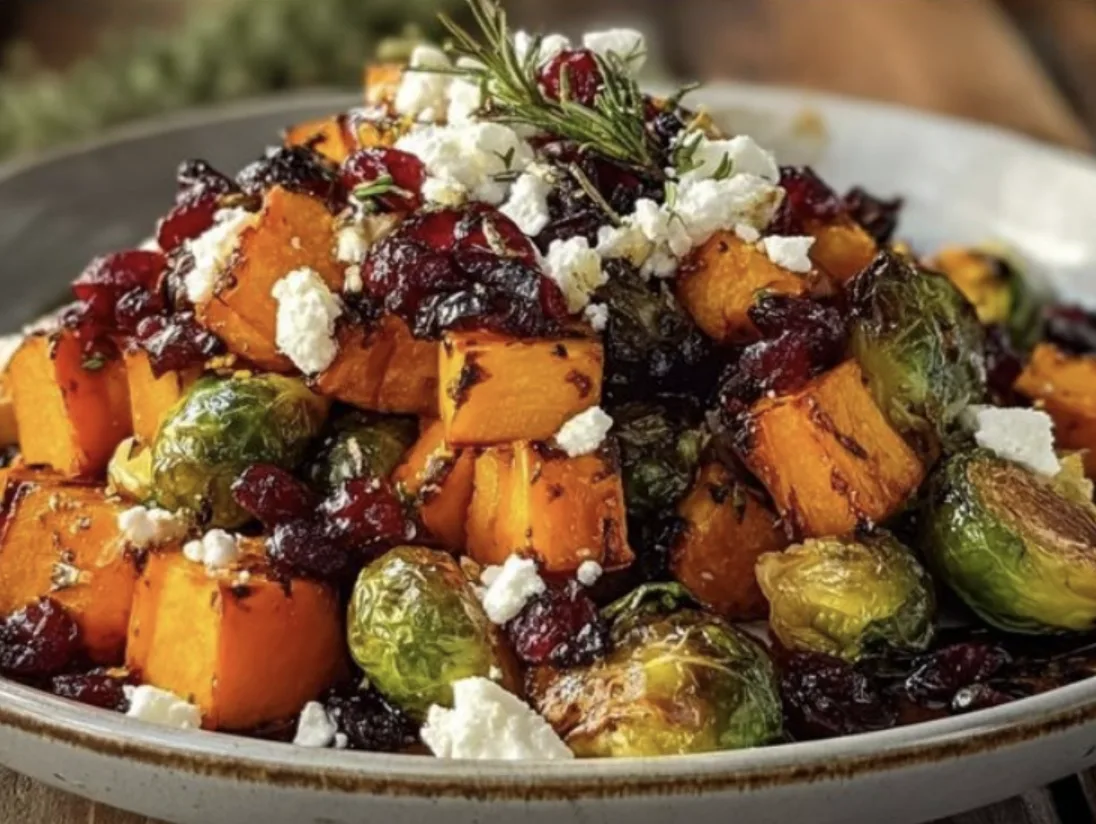
If you’re looking for a colorful, flavorful side dish that captures the best tastes of autumn, this Sweet Potato & Cranberry Salad is a delicious choice. Made with roasted sweet potatoes, tender butternut squash, and golden Brussels sprouts, this festive salad combines naturally sweet vegetables with a tangy cranberry glaze and creamy goat cheese.
Every bite offers a satisfying balance of sweet, savory, tangy, and creamy flavors. The vegetables become tender on the inside with caramelized edges, while dried cranberries add bursts of sweetness and the cranberry glaze brings everything together. Crumbled goat cheese provides a creamy, slightly tangy finish that complements the roasted vegetables beautifully.
Despite its impressive appearance, this recipe is surprisingly simple to prepare. Toss the vegetables with olive oil and thyme, roast them until golden, and prepare a quick cranberry glaze on the stovetop while they cook. Once everything is ready, combine the vegetables with the glaze and finish with goat cheese, dried cranberries, and fresh parsley.
This roasted vegetable salad is perfect for Thanksgiving, Christmas dinners, autumn potlucks, and cozy weeknight meals. It can be served warm, at room temperature, or chilled, making it versatile enough for holiday gatherings and meal preparation.
Whether you serve it as a colorful side dish alongside roasted turkey or enjoy it as a vegetarian meal with quinoa or crusty bread, this Sweet Potato & Cranberry Salad brings seasonal flavor and beautiful color to the table.
Why You’ll Love This Sweet Potato & Cranberry Salad
1. A Delicious Balance of Sweet and Savory Flavors
Sweet potatoes and butternut squash develop a naturally sweet, caramelized flavor when roasted. Brussels sprouts add a slightly earthy, savory taste that balances the sweetness of the other vegetables.
The cranberry glaze introduces a bright, tangy element, while goat cheese contributes creamy richness. Together, these ingredients create a balanced dish that feels both comforting and refreshing.
2. Packed with Colorful Vegetables
This salad combines three vegetables with different colors, flavors, and textures.
Orange sweet potatoes and butternut squash create a warm autumn palette, while Brussels sprouts add contrasting green tones. Dried cranberries and crumbled goat cheese provide finishing touches that make the dish especially attractive on a serving platter.
3. Perfect for Holiday Meals
A festive side dish should be flavorful, visually appealing, and easy to serve. This recipe checks all three boxes.
The roasted vegetables and cranberry glaze complement traditional holiday dishes, particularly roast turkey and other hearty mains. The colorful presentation also makes it a welcome addition to Thanksgiving and Christmas tables.
4. Easy to Prepare with Simple Ingredients
You don’t need complicated techniques or specialized equipment. A baking sheet, a mixing bowl, and a small saucepan are enough to prepare the vegetables and cranberry glaze.
Most of the cooking happens in the oven, giving you time to prepare other parts of your meal.
5. Versatile Serving Options
This salad can be served warm straight after assembly, at room temperature during a buffet, or chilled for a convenient prepared dish.
It works as a side dish, a vegetarian lunch, or part of a larger meal with grains and bread.
6. Easy to Customize
You can adapt the recipe with toasted pecans, walnuts, pomegranate seeds, or alternative squash varieties. If you prefer a dairy-free version, use a plant-based cheese alternative or toasted nuts instead of goat cheese.
These variations let you adjust the flavor and texture while keeping the roasted vegetable base.
Recipe Details
- Recipe Name: Sweet Potato & Cranberry Salad
- Preparation Time: 15 minutes
- Cooking Time: 30 minutes
- Total Time: 45 minutes
- Servings: 4–6
- Course: Salad, Side Dish
- Cuisine: American, Festive
- Oven Temperature: 400°F (200°C)
- Cooking Method: Roasting and stovetop simmering
- Difficulty: Easy
Ingredients for Sweet Potato & Cranberry Salad
This recipe has three components: roasted vegetables, cranberry glaze, and finishing ingredients.
Ingredients for the Roasted Vegetables
1 Small Butternut Squash, Peeled and Cubed
Butternut squash adds a naturally sweet flavor and tender texture. Roasting brings out its sweetness and creates lightly caramelized edges.
Peel the squash, remove the seeds, and cut the flesh into evenly sized cubes. Keeping the pieces similar in size helps them roast at a consistent rate.
1 Pound Brussels Sprouts, Trimmed and Halved
Brussels sprouts add a savory, slightly earthy flavor that balances the sweet potatoes and squash.
Trim away the tough stem ends, remove any damaged outer leaves, and cut each sprout in half. The cut surfaces can brown beautifully during roasting.
2 Medium Sweet Potatoes, Peeled and Cubed
Sweet potatoes provide the hearty foundation of the salad. Their naturally sweet flesh becomes tender and flavorful in the oven.
Peel and cut them into approximately 1-inch cubes, as recommended in the original recipe’s preparation tips. Uniform pieces help the vegetables cook evenly.
3 Tablespoons Olive Oil
Olive oil helps coat the vegetables, distributes the thyme and seasonings, and encourages browning during roasting.
Toss the vegetables thoroughly so the oil reaches their surfaces without collecting excessively at the bottom of the bowl.
1 Teaspoon Dried Thyme
Dried thyme adds an aromatic, savory flavor that complements roasted vegetables.
Mix it with the olive oil, salt, and pepper so it is evenly distributed across the squash, sweet potatoes, and Brussels sprouts.
Salt and Black Pepper, to Taste
Salt enhances the vegetables’ natural flavor, while black pepper adds a subtle savory note.
Season the vegetables before roasting and adjust the final seasoning after assembling the salad if needed.
Ingredients for the Cranberry Glaze
½ Cup Cranberry Juice
Cranberry juice forms the liquid base of the glaze and provides the tart flavor that balances the sweetness of the roasted vegetables.
Simmering it with dried cranberries and a sweetener helps concentrate its flavor.
¼ Cup Dried Cranberries
Dried cranberries add chewy texture and concentrated sweetness to the glaze.
As they simmer, they soften and release some of their flavor into the liquid.
2 Tablespoons Honey or Maple Syrup
Honey or maple syrup adds sweetness and balances the cranberry juice’s tartness.
Choose honey for a classic sweet flavor or maple syrup for a deeper, warm note that complements the autumn vegetables.
1 Tablespoon Balsamic Vinegar
Balsamic vinegar adds acidity and complexity to the glaze. Its sweet-tart flavor works particularly well with roasted vegetables and cranberries.
Ingredients for Finishing
4 Ounces Goat Cheese, Crumbled
Goat cheese adds a creamy texture and tangy flavor that contrasts with the sweet roasted vegetables and cranberry glaze.
Crumble it over the salad just before serving so the pieces remain visible and provide a fresh finishing touch.
½ Cup Dried Cranberries, for Garnish
The additional dried cranberries add color, sweetness, and texture to the finished dish.
Sprinkle them over the salad after tossing the vegetables with the glaze.
1 Tablespoon Fresh Parsley, Chopped (Optional)
Fresh parsley adds a bright green accent and a fresh herbal flavor. Although optional, it makes the finished salad look especially inviting.
Kitchen Tools You’ll Need
Gather these simple tools before starting:
- Large baking sheet: Provides space for the vegetables to roast evenly.
- Sharp knife: For cutting the squash and sweet potatoes and trimming the Brussels sprouts.
- Cutting board: Provides a stable surface for preparing the vegetables.
- Mixing bowls: For tossing the vegetables with oil and seasoning.
- Measuring cups and spoons: Help measure the ingredients accurately.
- Wooden spoon or spatula: For tossing vegetables and mixing the salad.
- Small saucepan: For simmering the cranberry glaze.
- Serving bowl: For combining and presenting the finished salad.
Parchment paper is also useful for lining the baking sheet and making cleanup easier.

How to Make Sweet Potato & Cranberry Salad
Follow these steps to prepare tender roasted vegetables coated in a tangy cranberry glaze.
Step 1: Preheat the Oven and Prepare the Vegetables
Preheat your oven to 400°F (200°C).
Peel the butternut squash and sweet potatoes, then cut them into approximately 1-inch cubes. Trim the Brussels sprouts and slice them in half.
Try to keep the squash and sweet potato pieces relatively uniform in size. Smaller pieces cook more quickly, while larger pieces may need additional roasting time.
Place all the prepared vegetables in a large mixing bowl.
Step 2: Season the Vegetables
Add the olive oil, dried thyme, salt, and black pepper to the bowl.
Toss everything thoroughly until the vegetables are evenly coated. Use a spoon or spatula to reach the bottom of the bowl and distribute the seasoning.
The oil helps the vegetables brown, while the thyme adds a savory herbal flavor that complements the cranberry glaze.
Step 3: Arrange the Vegetables on a Baking Sheet
Transfer the seasoned vegetables to a large baking sheet.
Spread them in a single layer, leaving space between the pieces whenever possible. Avoid piling the vegetables on top of one another.
Crowded vegetables tend to release moisture and steam rather than develop caramelized edges. If necessary, use a second baking sheet to provide more space.
For easier cleanup, line the baking sheet with parchment paper before adding the vegetables.
Step 4: Roast Until Tender and Golden
Place the baking sheet on the center rack of the preheated oven.
Roast the vegetables for 25–30 minutes, stirring once halfway through cooking.
As they roast, the sweet potatoes and butternut squash should become tender, while the Brussels sprouts develop golden edges. The vegetables should be lightly caramelized rather than burned.
Check the vegetables toward the end of the cooking time. A fork should slide into the sweet potatoes and squash without much resistance.
If the pieces are still firm, continue roasting until they reach the desired tenderness.
Step 5: Prepare the Cranberry Glaze
While the vegetables roast, combine the following ingredients in a small saucepan:
- ½ cup cranberry juice
- ¼ cup dried cranberries
- 2 tablespoons honey or maple syrup
- 1 tablespoon balsamic vinegar
Place the saucepan over medium heat and bring the mixture to a gentle simmer.
Cook for 8–10 minutes, stirring occasionally, until the cranberries soften and the liquid thickens slightly.
The glaze should become flavorful and concentrated enough to coat the vegetables without turning the salad into a watery mixture.
Keep an eye on the saucepan as the liquid reduces. If it becomes too thick, remove it from the heat rather than allowing it to reduce excessively.
Step 6: Allow the Vegetables to Cool Briefly
When the vegetables are finished roasting, remove the baking sheet from the oven.
Let them rest for approximately 5 minutes before adding the glaze.
This brief cooling period helps reduce excess steam and makes it easier to coat the vegetables without softening their roasted surfaces too much.
The vegetables should still be warm when you assemble the salad if you want to serve it warm.
Step 7: Toss the Vegetables with the Cranberry Glaze
Transfer the roasted vegetables to a large serving bowl.
Drizzle the cranberry glaze over the vegetables and toss gently with a wooden spoon or spatula.
Try to coat the vegetables evenly without breaking apart the softer sweet potato and squash pieces.
You can add the glaze gradually, checking the consistency as you toss. The goal is to enhance the roasted vegetables with a bright cranberry flavor while preserving their texture.
Step 8: Add Goat Cheese and Garnishes
Sprinkle the crumbled goat cheese over the glazed vegetables.
Add the remaining ½ cup dried cranberries and the optional chopped parsley.
For the most attractive presentation, distribute the toppings across the surface instead of mixing them completely into the salad.
Serve warm, at room temperature, or chilled according to your preference.
Tips for the Best Roasted Sweet Potato Salad
A few practical techniques help the vegetables develop the right texture and flavor.
Cut the Vegetables into Uniform Pieces
Try to cut the sweet potatoes and butternut squash into similar-sized cubes. This helps them roast at approximately the same rate.
If the pieces vary greatly in size, smaller pieces may become too soft before larger pieces are tender.
Preheat the Oven Fully
Allow the oven to reach 400°F (200°C) before adding the vegetables.
A properly preheated oven helps the vegetables begin roasting immediately and encourages browning.
Avoid Overcrowding the Baking Sheet
Give the vegetables enough space to roast rather than steam.
Spread them in a single layer and use a second baking sheet if necessary. Good spacing is especially helpful when working with vegetables that release moisture as they cook.
Stir Halfway Through Roasting
Stir the vegetables once halfway through the 25–30-minute cooking period.
This helps expose different surfaces to the hot baking sheet and encourages more even browning.
Allow the Glaze to Thicken Slightly
Simmer the cranberry mixture for 8–10 minutes, until the cranberries soften and the liquid becomes slightly thicker.
A glaze with some body clings to the vegetables better than a very thin liquid.
Let the Vegetables Rest Before Adding the Glaze
Allowing the roasted vegetables to cool for about five minutes helps reduce excess steam.
This makes it easier to coat them while preserving some of their roasted texture.
Add the Goat Cheese Just Before Serving
For the freshest presentation, crumble the goat cheese over the salad at the end.
If you’re preparing the vegetables in advance, store the cheese separately and add it when assembling the salad.
Garnish at the Last Minute
Fresh parsley and the extra dried cranberries look most attractive when added just before serving.
This also helps keep the finishing ingredients from becoming lost among the vegetables.
Common Mistakes and How to Avoid Them
Why Are My Roasted Vegetables Too Soft?
Overcrowding the baking sheet can trap moisture around the vegetables and cause them to steam.
Spread the pieces in a single layer, roast in a fully preheated oven, and stir halfway through cooking.
Why Are the Vegetables Still Firm?
The vegetables may be cut too large or may need more roasting time.
Cut them into approximately 1-inch cubes and check for tenderness near the end of the suggested cooking window. If necessary, continue roasting until the pieces are fork-tender.
Why Does the Salad Taste Dry?
Over-roasting or using insufficient olive oil can make the vegetables seem dry.
Check the vegetables near the end of cooking and avoid roasting them longer than necessary. You can also add a small drizzle of olive oil before serving if needed.
The cranberry glaze and goat cheese contribute additional moisture and richness.
Why Is My Cranberry Glaze Too Thin?
The glaze may need more simmering time.
Cook it over medium heat for the recommended 8–10 minutes, stirring occasionally, until the cranberries soften and the liquid thickens slightly.
Avoid reducing it excessively, since a very thick glaze may be harder to distribute evenly.
Why Did the Salad Become Soggy?
Adding the glaze while the vegetables are extremely hot can introduce excess moisture into the finished salad.
Allow the vegetables to rest for five minutes after roasting, and make sure the glaze has thickened slightly before tossing everything together.
Why Is the Salad Too Tangy?
Cranberry juice and balsamic vinegar both contribute acidity.
The honey or maple syrup helps balance those flavors. If you prefer a sweeter result next time, choose the sweetener that best suits your taste while keeping in mind that changing quantities alters the original recipe.
Creative Variations to Try
This recipe is flexible enough to suit different preferences and seasonal ingredients.
Dairy-Free Cranberry Vegetable Salad
Replace the goat cheese with a plant-based cheese alternative or use toasted nuts for a crunchy finish.
To keep the dish dairy-free, check the labels of any prepared ingredients you use.
Add Toasted Pecans or Walnuts
Toasted pecans and walnuts add a satisfying crunch that complements the soft roasted vegetables and chewy cranberries.
Scatter them over the finished salad just before serving to preserve their texture.
Add Pomegranate Seeds
Pomegranate seeds provide bright color and a fresh, tart flavor.
Add them as a garnish at the end, alongside the dried cranberries and parsley.
Try a Different Winter Squash
The original recipe suggests using acorn squash or pumpkin instead of butternut squash.
These alternatives can provide a similar seasonal feel, although their sweetness and texture may vary. Cut them into evenly sized pieces and check for tenderness during roasting.
Use Maple Syrup Instead of Honey
Maple syrup is an alternative sweetener already included in the recipe.
Its warm flavor complements the roasted vegetables and adds a seasonal note to the cranberry glaze.
Add Whole Garlic Cloves
For a deeper savory flavor, roast a few whole garlic cloves alongside the vegetables, as suggested in the original recipe’s pro tips.
The garlic softens during roasting and can be mixed into the salad before serving.
Make It a More Filling Vegetarian Meal
Serve the salad with quinoa or crusty bread, both of which are suggested serving options in the original recipe.
This turns the roasted vegetables into a more substantial meal while retaining the seasonal flavors of the salad.
What to Serve with Sweet Potato & Cranberry Salad
This salad is versatile enough to accompany many main dishes.
Roast Turkey
The cranberry glaze, roasted vegetables, and goat cheese make this salad an excellent companion to roast turkey.
Its sweet-tart flavor adds contrast to a traditional holiday plate, while the colorful vegetables brighten the presentation.
Roasted Chicken
Serve it alongside roasted chicken or baked chicken thighs for a comforting autumn dinner.
The savory chicken complements the sweetness of the squash and sweet potatoes.
Grilled or Roasted Pork
Pork dishes pair well with sweet and tangy accompaniments. The cranberry glaze and roasted vegetables can balance the rich flavor of roasted or grilled pork.
Vegetarian Main Dishes
Pair the salad with quinoa, a grain bowl, or another vegetarian main dish.
The roasted vegetables provide hearty texture, while the goat cheese and olive oil contribute richness.
Crusty Bread
Serve the salad with slices of crusty bread for a simple lunch or light dinner.
Bread is particularly useful when serving the dish warm, allowing you to enjoy the flavorful glaze alongside the vegetables.
Holiday Buffet
Add the salad to a Thanksgiving or Christmas buffet alongside roasted meats, grain dishes, and other seasonal vegetables.
It can be served warm or at room temperature, giving you some flexibility when coordinating the rest of the meal.
How to Store Sweet Potato & Cranberry Salad
Proper storage helps preserve the flavor and texture of the roasted vegetables.
Refrigerating Leftovers
Transfer leftover salad to an airtight container and refrigerate for up to 2 days, following the original recipe’s storage guidance.
For the best texture, store the goat cheese separately when possible and add it shortly before serving.
The vegetables will soften during storage, so the salad may not retain exactly the same texture as when freshly roasted.
Can You Freeze the Salad?
The original recipe recommends freezing the roasted vegetables separately for up to 1 month, rather than freezing the fully assembled salad.
To do this:
- Roast the vegetables until tender.
- Allow them to cool completely.
- Transfer them to a suitable freezer-safe container.
- Label and freeze for up to one month.
- Thaw in the refrigerator before reheating.
Prepare the cranberry glaze separately when possible, then assemble the salad with the goat cheese and garnish after reheating.
Freezing may soften the vegetables, so the final texture may differ from a freshly prepared salad.
How to Reheat the Vegetables
After thawing, reheat the vegetables in the oven until warmed through.
Spread them on a baking sheet rather than piling them into a deep dish. This allows heat to circulate more evenly.
Add the cranberry glaze and goat cheese after reheating to preserve the best texture and presentation.
Can You Prepare It Ahead of Time?
Yes. Preparing components ahead of time is especially useful for holiday meals.
You can roast the vegetables and prepare the cranberry glaze in advance, then store them separately in the refrigerator. Reheat the vegetables and combine everything shortly before serving.
Add the goat cheese, dried cranberries, and parsley at the end.
Frequently Asked Questions
1. Is Sweet Potato & Cranberry Salad Served Warm or Cold?
Both options work. The original recipe recommends serving it warm, at room temperature, or chilled.
Serving it warm highlights the roasted vegetables, while a chilled version can be convenient for meal preparation or buffet-style meals.
2. Can I Make This Salad Ahead of Time?
Yes. Roast the vegetables and prepare the cranberry glaze ahead of time, then store them separately.
Reheat the vegetables if desired, combine them with the glaze, and add the goat cheese and garnish just before serving.
3. How Do I Keep the Vegetables from Becoming Soggy?
Spread the vegetables in a single layer, avoid overcrowding the baking sheet, and let them rest for five minutes after roasting before tossing them with the glaze.
A slightly thickened glaze also helps coat the vegetables without adding too much liquid.
4. Can I Replace Goat Cheese?
Yes. The original recipe suggests a plant-based cheese alternative for a dairy-free version, or toasted nuts if you’d prefer a crunchy topping.
Each substitution changes the flavor and texture slightly.
5. Can I Use Fresh Cranberries Instead of Dried Cranberries?
The original recipe specifies dried cranberries for both the glaze and the garnish. It does not provide a tested fresh-cranberry substitution.
Fresh cranberries have a different moisture content and tartness, so using them may require adjustments to the glaze.
6. Can I Substitute Another Squash?
Yes. Acorn squash or pumpkin are suggested alternatives to butternut squash.
Cut the pieces into similar sizes and check them during roasting, since different varieties may cook at different rates.
7. What Sweetener Works Best in the Cranberry Glaze?
The recipe gives two options: honey or maple syrup.
Both provide sweetness to balance the cranberry juice and balsamic vinegar. Choose according to your flavor preference.
8. How Long Does the Salad Last in the Refrigerator?
The original recipe recommends storing leftovers in an airtight container for up to two days.
For the best texture, keep the goat cheese separate until serving if possible.
9. Can I Freeze the Fully Assembled Salad?
The original recipe recommends freezing the roasted vegetables separately for up to one month.
It does not specifically recommend freezing the fully assembled salad. Freezing the vegetables separately allows you to add the glaze and cheese after thawing and reheating.
10. What Can I Serve with This Salad?
It pairs well with roast turkey, roasted chicken, pork, quinoa, or crusty bread.
It is also suitable as a festive side dish or as part of a vegetarian meal.
11. Is This Salad Naturally Gluten-Free?
The ingredients listed in the recipe do not include wheat-based products, but ingredient labels can vary.
If you need a gluten-free dish, check the labels of the cranberry juice, balsamic vinegar, seasonings, and any other packaged ingredients you use.
12. How Can I Make the Salad More Crunchy?
Add toasted pecans or walnuts just before serving. This adds crunch and complements the soft roasted vegetables and dried cranberries.
Adding the nuts at the end helps preserve their texture.
Nutrition Information
The original recipe provides the following estimated nutrition information per serving:
| Nutrient | Amount per serving |
|---|---|
| Serving size | 1 cup |
| Calories | 230 |
| Protein | 5 g |
| Carbohydrates | 36 g |
| Fat | 9 g |
| Fiber | 7 g |
| Sugar | 12 g |
These figures are estimates supplied with the original recipe and may vary depending on the specific ingredients, brands, portion sizes, and preparation method. The actual nutrition per serving will also depend on whether the recipe is divided into four or six portions.
Final Thoughts
Sweet Potato & Cranberry Salad is a colorful, comforting recipe that brings together the best flavors of autumn. Roasted sweet potatoes, caramelized butternut squash, and tender Brussels sprouts create a hearty base, while the cranberry glaze adds tangy sweetness and goat cheese provides a creamy finish.
The recipe is simple enough for a weeknight dinner but attractive enough for Thanksgiving, Christmas, and other festive gatherings. It also offers flexible serving options: enjoy it warm, serve it at room temperature, or prepare the components ahead of time for a convenient meal.
For the best results, cut the vegetables evenly, give them enough space on the baking sheet, and allow the cranberry glaze to thicken before tossing it with the roasted vegetables. Finish with goat cheese, dried cranberries, and fresh parsley just before serving.
Whether you pair it with roast turkey, serve it with quinoa, or enjoy it with crusty bread, this roasted vegetable salad is a delicious way to bring seasonal color and flavor to your table.
Recipe Card: Sweet Potato & Cranberry Salad
Prep Time: 15 minutes
Cook Time: 30 minutes
Total Time: 45 minutes
Servings: 4–6
Course: Salad, Side Dish
Cuisine: American, Festive
Ingredients
For the Roasted Vegetables
- 1 small butternut squash, peeled and cubed
- 1 lb Brussels sprouts, trimmed and halved
- 2 medium sweet potatoes, peeled and cubed
- 3 tablespoons olive oil
- 1 teaspoon dried thyme
- Salt and pepper, to taste
For the Cranberry Glaze
- ½ cup cranberry juice
- ¼ cup dried cranberries
- 2 tablespoons honey or maple syrup
- 1 tablespoon balsamic vinegar
For the Finishing Touch
- 4 oz goat cheese, crumbled
- ½ cup dried cranberries, for garnish
- 1 tablespoon fresh parsley, chopped (optional)
Instructions
- Preheat the oven to 400°F (200°C).
- Peel and cube the butternut squash and sweet potatoes. Trim and halve the Brussels sprouts.
- Place the vegetables in a large mixing bowl. Add olive oil, dried thyme, salt, and pepper, then toss until evenly coated.
- Spread the vegetables in a single layer on a baking sheet.
- Roast for 25–30 minutes, stirring once halfway through, until tender with golden, caramelized edges.
- While the vegetables roast, combine the cranberry juice, ¼ cup dried cranberries, honey or maple syrup, and balsamic vinegar in a small saucepan.
- Simmer over medium heat for 8–10 minutes, until the cranberries soften and the glaze thickens slightly.
- Let the roasted vegetables rest for 5 minutes.
- Transfer the vegetables to a large serving bowl, drizzle with the cranberry glaze, and toss gently.
- Sprinkle with crumbled goat cheese, the remaining ½ cup dried cranberries, and chopped parsley if desired.
- Serve warm, at room temperature, or chilled.
Storage
Refrigerate leftovers in an airtight container for up to two days. For freezing, freeze the roasted vegetables separately for up to one month. Thaw in the refrigerator and reheat before assembling with the glaze and cheese.
Serving Suggestions
Serve with roast turkey, roasted chicken, pork, quinoa, or crusty bread. For a dairy-free variation, replace the goat cheese with a suitable plant-based alternative or toasted nuts.