
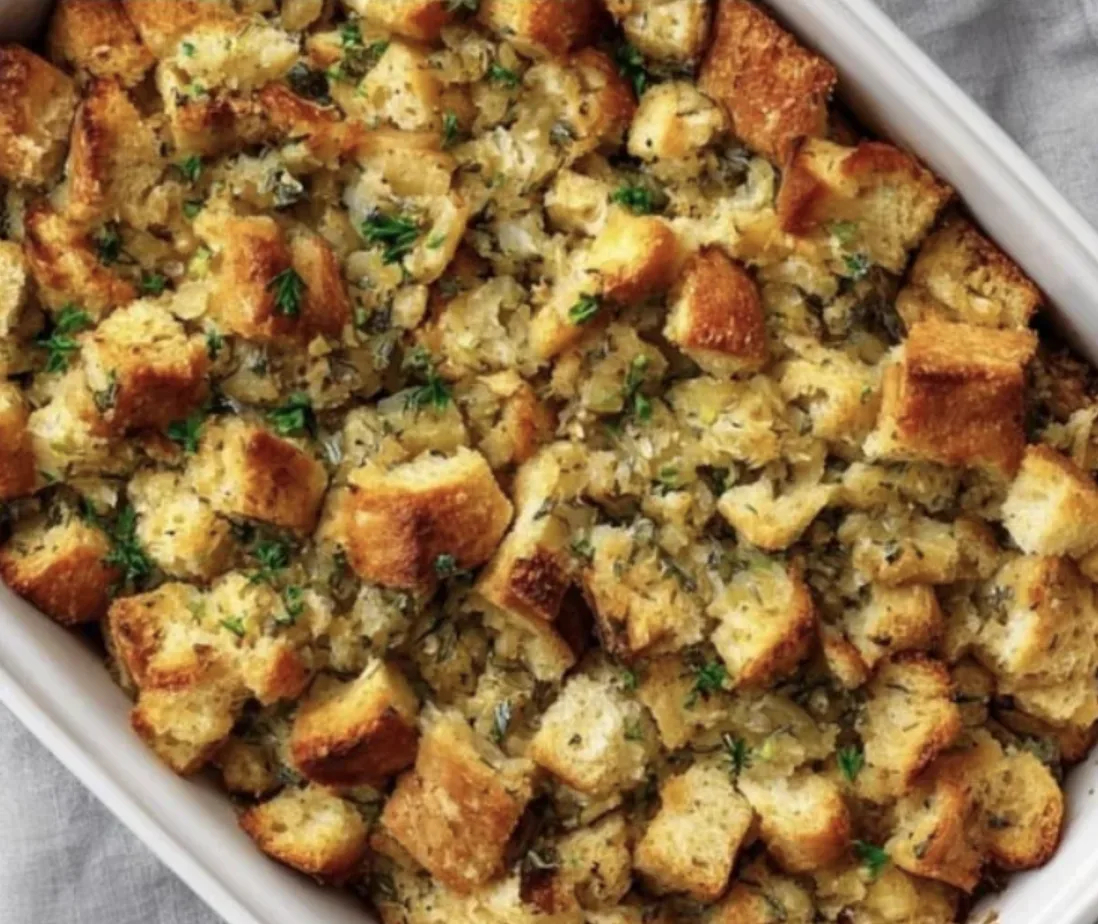
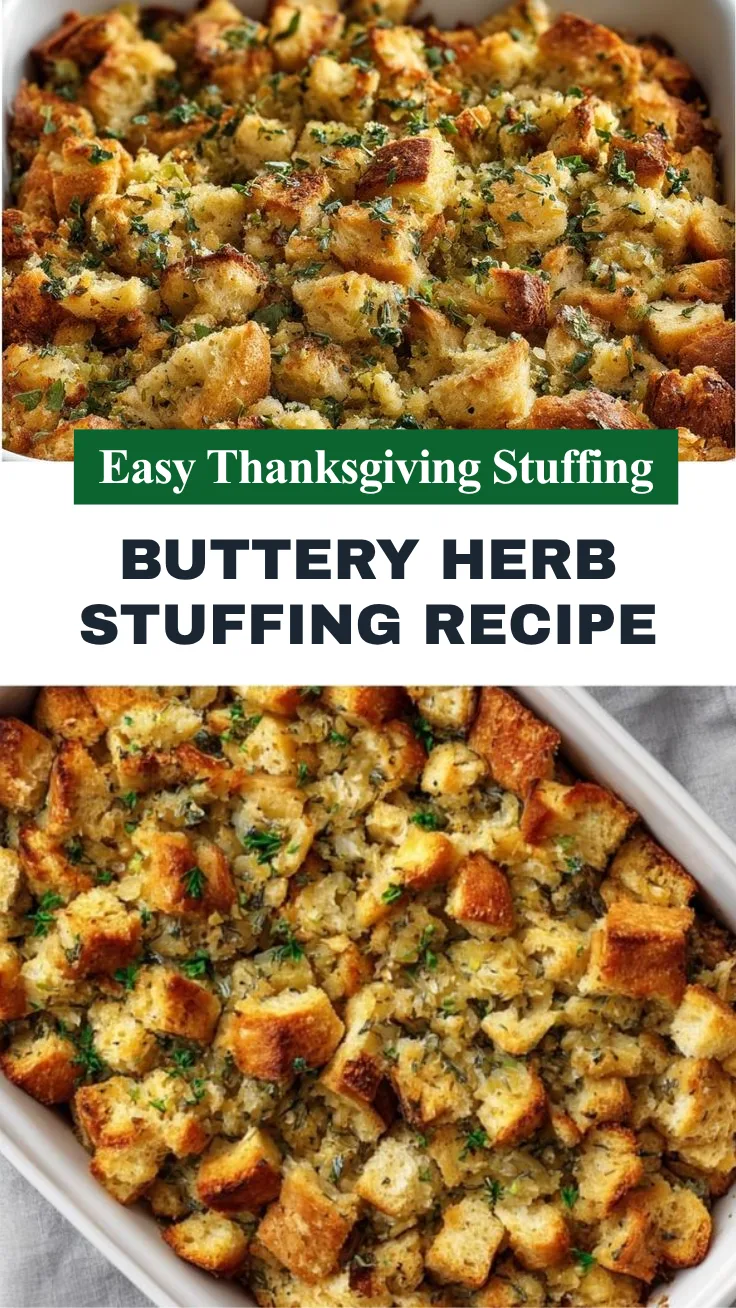
This Easy Buttery Herb Stuffing is the perfect side dish for Thanksgiving, Christmas, or any cozy family dinner. Made with crusty bread cubes, rich butter, sweet onions, celery, garlic, and fresh herbs, it delivers a delicious combination of golden, crispy edges and a soft, savory center.
Fresh sage, rosemary, and parsley give this classic American side dish its irresistible aroma, while chicken or vegetable stock and eggs help bring everything together. Whether you’re serving roasted turkey, baked chicken, or a hearty vegetable dinner, this buttery herb stuffing is a comforting addition to the table.
Best of all, you can assemble it up to 24 hours ahead, making it a practical choice when you’re preparing a big holiday meal.
Why You’ll Love This Buttery Herb Stuffing
- Crispy on top, tender inside: The bread develops a beautiful golden crust while staying soft and flavorful in the center.
- Packed with fresh herbs: Sage, rosemary, and parsley provide the classic savory flavor associated with holiday stuffing.
- Made with simple ingredients: Bread, butter, vegetables, stock, eggs, and herbs create a satisfying homemade side dish.
- Easy to prepare ahead: Assemble the stuffing the day before and bake it when you’re ready to serve.
- Easy to customize: Use vegetable stock, gluten-free bread, or your favorite optional add-ins to suit your meal.
- Perfect for holiday dinners: Serve it alongside turkey, chicken, gravy, cranberry sauce, and roasted vegetables.
Recipe Details
- Prep Time: 45 minutes
- Cook Time: 50 minutes
- Total Time: 1 hour 35 minutes
- Servings: 8
- Course: Side Dish
- Cuisine: American
- Cooking Method: Oven-baked
Ingredients for Easy Buttery Herb Stuffing
Main Ingredients
18–24 oz dried bread cubes (about 12–14 cups)
Sourdough or Italian bread works particularly well because it holds its shape while absorbing the flavorful butter and stock mixture.
1 cup unsalted butter
Butter adds richness, coats the vegetables, and helps create the stuffing’s signature savory flavor.
3 cups diced sweet onion (about 2 large onions)
Sweet onions provide a mellow flavor and become tender and fragrant as they cook.
2 cups diced celery
Celery adds a traditional stuffing flavor and a little texture to balance the soft bread.
6 garlic cloves, minced
Fresh garlic deepens the savory flavor of the vegetable mixture.
1 teaspoon kosher salt, plus more to taste
Salt enhances the flavors of the bread, butter, vegetables, and herbs.
1 teaspoon freshly ground black pepper
Black pepper adds a gentle warmth and balances the richness of the butter.
3 tablespoons fresh sage, chopped
Sage brings a classic earthy, aromatic flavor to holiday stuffing.
3 tablespoons fresh rosemary, chopped
Rosemary contributes a fragrant, woodsy note that pairs beautifully with butter and bread.
3 tablespoons fresh parsley, chopped
Parsley adds freshness and balances the stronger herbs.
2½ cups chicken or vegetable stock
Stock moistens the bread and carries the savory flavors throughout the dish.
2 large eggs, lightly beaten
Eggs help bind the bread mixture so the finished stuffing holds together while remaining tender.
Extra fresh herbs for garnish
Sprinkle chopped herbs over the baked stuffing just before serving for a fresh finish.
Kitchen Equipment You’ll Need
- Large skillet or Dutch oven
- Large mixing bowl
- Separate bowl for the eggs and stock
- Whisk
- Spatula or large spoon
- 9 × 13-inch baking dish
- Measuring cups and spoons
- Kitchen thermometer
How to Make Buttery Herb Stuffing
Step 1: Prepare the Bread Cubes
Preheat your oven to 350°F (175°C). Cut the bread into bite-sized cubes if it isn’t already cubed, then spread the cubes across baking sheets in a single layer.
Toast for approximately 15 minutes, until the bread is dry and lightly golden. Alternatively, leave the cubes uncovered overnight to dry out.
Dry bread is essential because it absorbs the flavorful stock without becoming overly soft or mushy.
Step 2: Prepare the Baking Dish
Grease a 9 × 13-inch baking dish with butter or oil.
Coating the dish helps prevent sticking and encourages the edges of the stuffing to develop a delicious golden finish during baking. Set the prepared dish aside.
Step 3: Cook the Onion, Celery, and Garlic
Place a large skillet or Dutch oven over medium heat and melt the 1 cup of unsalted butter.
Add the diced sweet onion, celery, minced garlic, kosher salt, and black pepper. Cook for 8–10 minutes, stirring frequently, until the vegetables have softened and become fragrant.
Avoid rushing this step. Allowing the vegetables to soften helps develop the savory flavor that makes homemade stuffing so satisfying.
Step 4: Add the Fresh Herbs and Stock
Stir in the chopped sage, rosemary, and parsley. Cook for about 1 minute, allowing the herbs to release their aroma into the melted butter.
Pour in 1 cup of the stock and scrape the bottom of the pan with a spoon or spatula to loosen any flavorful browned bits.
Remove the pan from the heat once the mixture is combined.
Step 5: Combine the Bread and Vegetable Mixture
Transfer the toasted bread cubes to a large mixing bowl.
Pour the warm butter, vegetable, and herb mixture over the bread. Toss gently until the cubes are evenly coated.
Try to distribute the vegetables and herbs throughout the bowl so that each serving has a balanced mixture of bread and aromatics.
Step 6: Mix the Eggs and Remaining Stock
In a separate bowl, whisk together the 2 beaten eggs and the remaining 1½ cups of stock.
Pour the mixture over the bread cubes. Using a spatula or large spoon, gently fold everything together until the bread is evenly moistened.
The bread should absorb the liquid without becoming waterlogged. If the mixture still feels very dry, add a small splash of additional stock, as needed.
Step 7: Bake Until Golden
Transfer the stuffing mixture to the prepared baking dish and spread it into an even layer.
Bake uncovered at 350°F (175°C) for 45–50 minutes, until the top is golden brown and the center reaches 160°F on a kitchen thermometer.
If the top begins browning too quickly, loosely cover the dish with foil for the remainder of the baking time.
For food safety, if you use this mixture to stuff a turkey, the center of the stuffing must reach 165°F (74°C).
Step 8: Rest, Garnish, and Serve
Remove the baking dish from the oven and allow the stuffing to rest for 5–10 minutes.
Finish with a sprinkle of fresh chopped herbs, then serve warm alongside your favorite holiday dishes.
The brief resting period allows the stuffing to settle slightly, making it easier to scoop and serve.
Expert Tips for the Best Herb Stuffing
Use thoroughly dried bread. Fresh, soft bread can absorb too much liquid and turn mushy. Toasting the cubes or drying them overnight helps maintain the ideal texture.
Choose sturdy bread. Sourdough, Italian bread, French bread, and country-style white bread are good options because they hold their shape better than very soft sandwich bread.
Cut the bread into similar-sized cubes. Even pieces help the stuffing moisten and bake more consistently.
Cook the vegetables until tender. Give the onion and celery the full 8–10 minutes to soften and develop flavor before adding the herbs and stock.
Let the herbs bloom in the butter. Cooking the chopped herbs for about a minute releases their aroma and helps distribute their flavor throughout the stuffing.
Add the stock gradually. Pour the egg-and-stock mixture over the bread and fold gently. The goal is moist bread cubes, not a soggy mixture.
Taste and adjust seasoning carefully. If you want to check the seasoning, cook a small spoonful of the mixture before the eggs are incorporated, or use your judgment based on the saltiness of the stock.
Use a thermometer. Check the center rather than relying only on the color of the top. For this baked side dish, the recipe specifies 160°F; stuffing cooked inside a turkey must reach 165°F.
For extra crispy edges, spread the mixture evenly in the 9 × 13-inch baking dish and avoid compressing it too tightly.
Common Stuffing Mistakes to Avoid
Using Fresh Bread Without Drying It
Soft bread can become heavy and mushy when mixed with stock. Toast the bread cubes for 15 minutes at 350°F or leave them uncovered overnight before proceeding.
Adding Too Much Stock
Too much liquid can prevent the bread from maintaining its texture. Begin with the specified amount and add only a little extra if the mixture appears excessively dry.
Skipping the Vegetable Cooking Step
Adding raw onion, celery, and garlic directly to the bread can result in a less developed flavor and vegetables that remain too firm. Cook them in butter until softened first.
Overmixing the Bread
Aggressive mixing can break down the cubes. Fold the mixture gently so the bread retains some structure.
Letting the Top Brown Too Quickly
If the surface becomes dark before the center reaches the target temperature, loosely tent the dish with foil and continue baking.
Serving It Straight From the Oven
Rest the stuffing for 5–10 minutes before serving. This helps the mixture settle and makes portions easier to scoop.
Easy Variations and Ingredient Substitutions
Vegetarian Buttery Herb Stuffing
Replace the chicken stock with vegetable stock. Check the labels of your other ingredients if you need to meet specific dietary requirements.
Dairy-Free Herb Stuffing
Replace the butter with olive oil or plant-based butter. The flavor and texture may differ slightly, but the onion, celery, garlic, and fresh herbs still provide plenty of savory character.
Gluten-Free Stuffing
Use sturdy gluten-free bread cubes in place of the sourdough or Italian bread. The source recipe suggests a similar baking time, but check the texture and temperature as the dish cooks because different breads absorb liquid differently.
Apple Cranberry Herb Stuffing
Add 1 cup of diced apple and ½ cup of dried cranberries for a sweet-and-savory variation. The fruit adds sweetness and a pleasant contrast to the earthy herbs.
Parmesan Herb Stuffing
Add shredded Parmesan cheese for a richer, savory flavor and a cheesy finish.
Mushroom Brioche Stuffing
Use brioche bread and add sautéed mushrooms for a richer version with a soft texture and earthy flavor.
Sausage and Apple Stuffing
Add cooked turkey or chicken sausage along with diced apple for a heartier side dish. Make sure any meat added to the mixture is fully cooked before combining it with the bread.
Sourdough Bread Stuffing
Use sourdough as the main bread for a slightly tangy flavor and a chewy texture that pairs well with the buttery herbs.
What to Serve with Buttery Herb Stuffing
This classic stuffing is especially delicious with holiday mains and comforting side dishes.
- Roast turkey: A traditional Thanksgiving pairing that works beautifully with gravy and cranberry sauce.
- Roasted chicken: Serve the stuffing alongside roast chicken for a comforting Sunday dinner.
- Garlic mashed potatoes: The creamy potatoes complement the crispy top and tender center of the stuffing.
- Sweet potato casserole: A sweet, creamy side creates a pleasant contrast with the savory herbs.
- Roasted vegetables: Carrots, Brussels sprouts, and green beans add color and balance to the plate.
- Gravy: Spoon warm gravy over the stuffing for extra moisture and savory flavor.
- Cranberry sauce: Its tart, fruity flavor contrasts nicely with the rich butter and aromatic herbs.
For a complete holiday meal, combine the stuffing with roasted turkey or chicken, mashed potatoes, seasonal vegetables, and cranberry sauce.
Make-Ahead Instructions
This recipe is convenient for holiday entertaining because you can assemble it up to 24 hours before baking.
- Prepare and dry the bread cubes.
- Cook the onion, celery, garlic, butter, herbs, and the first cup of stock.
- Combine the bread with the vegetable mixture.
- Whisk the remaining stock with the eggs and fold it into the bread mixture.
- Transfer everything to the prepared baking dish.
- Cover the dish and refrigerate for up to 24 hours.
- When ready to cook, bake at 350°F (175°C) for 45–50 minutes, checking the center and adding time if needed.
Because the dish is assembled cold, the baking time may vary. Use the appearance and internal temperature to determine when it is ready. Keep the prepared mixture refrigerated until baking, and avoid leaving the egg-containing mixture at room temperature for extended periods.
Storage and Reheating Instructions
How to Store Leftover Stuffing
Allow leftovers to cool promptly, then transfer them to an airtight container and refrigerate. The recipe specifies keeping leftovers for up to 3 days.
How to Reheat Stuffing
Place the stuffing in an oven-safe dish, cover it with foil, and reheat at 325°F until warmed through. The source recipe estimates approximately 15–20 minutes, but the time will depend on the amount being reheated and whether the dish is cold from the refrigerator.
For food safety, reheat leftovers to 165°F (74°C).
Can You Freeze Herb Stuffing?
Yes. Cool the stuffing, wrap it tightly in foil or place it in a freezer-safe container, and freeze for up to 2 months. Thaw overnight in the refrigerator before reheating.
For easier meal prep, divide the stuffing into individual portions before freezing.
Frequently Asked Questions
What is the best bread for herb stuffing?
Sourdough and Italian bread are recommended for this recipe. French bread and country-style white bread are also suitable choices. Sturdy bread holds its shape while absorbing the stock and butter.
Why is my stuffing soggy?
The bread may not have been dry enough, or the mixture may contain too much stock. Toast the bread cubes or dry them overnight, then add the liquid gradually and fold gently.
Can I make this stuffing the day before?
Yes. Assemble the mixture, cover the baking dish, and refrigerate it for up to 24 hours before baking. Bake at 350°F, checking the center for doneness.
Can I use dried herbs instead of fresh herbs?
Fresh sage, rosemary, and parsley are specified in the recipe. Dried herbs have a more concentrated flavor and may produce a different result, so adjust substitutions carefully rather than replacing the fresh herbs in equal quantities automatically.
Can I make this stuffing without eggs?
The recipe notes that you can make a vegan-style variation by using plant-based butter, vegetable stock, and omitting the eggs, with a little extra stock if needed. The texture will be different because the eggs normally help bind the bread mixture.
Can I use this recipe to stuff a turkey?
Yes, but food safety is especially important when stuffing poultry. The center of the stuffing must reach 165°F (74°C). The baked casserole method in this recipe uses a lower target temperature, so do not apply that target to stuffing cooked inside a turkey.
How do I get a crispy top?
Bake the stuffing uncovered in a wide, shallow baking dish. If the top browns too quickly, cover it loosely with foil to prevent over-browning while the center finishes cooking.
Can I add sausage or mushrooms?
Yes. The recipe suggests cooked turkey or chicken sausage, sautéed mushrooms, diced apples, and dried cranberries as possible additions. Cook ingredients that require cooking before adding them to the bread mixture.
How long does leftover stuffing last?
Refrigerate leftovers in an airtight container for up to 3 days, according to the recipe. Reheat thoroughly before serving.
Final Thoughts
This Easy Buttery Herb Stuffing brings together everything that makes a classic holiday side dish special: golden bread cubes, tender vegetables, rich butter, and the comforting aroma of fresh sage, rosemary, and parsley.
It’s simple enough to prepare for a family Sunday roast yet festive enough for Thanksgiving and Christmas dinner. With its crispy top, soft center, and make-ahead option, it can help make holiday cooking a little easier.
Serve it warm with roast turkey, chicken, mashed potatoes, gravy, and cranberry sauce for a comforting meal everyone can enjoy.
If you’re planning your holiday menu, save this Buttery Herb Stuffing recipe so it’s ready when you need a reliable, flavorful side dish.
Easy Buttery Herb Stuffing Recipe Card
Prep Time: 45 minutes
Cook Time: 50 minutes
Total Time: 1 hour 35 minutes
Servings: 8
Course: Side Dish
Cuisine: American
Ingredients
- 18–24 oz dried bread cubes (about 12–14 cups; sourdough or Italian recommended)
- 1 cup unsalted butter
- 3 cups diced sweet onion (about 2 large onions)
- 2 cups diced celery
- 6 garlic cloves, minced
- 1 teaspoon kosher salt, plus more to taste
- 1 teaspoon freshly ground black pepper
- 3 tablespoons fresh sage, chopped
- 3 tablespoons fresh rosemary, chopped
- 3 tablespoons fresh parsley, chopped
- 2½ cups chicken or vegetable stock
- 2 large eggs, lightly beaten
- Extra fresh herbs for garnish
Instructions
- Preheat the oven to 350°F (175°C). Cut the bread into cubes if necessary and toast on baking sheets for 15 minutes, until dry and lightly golden. Alternatively, air-dry uncovered overnight.
- Grease a 9 × 13-inch baking dish with butter or oil.
- Melt the butter in a large skillet over medium heat. Add the onion, celery, garlic, salt, and pepper. Cook for 8–10 minutes, until softened and fragrant.
- Stir in the sage, rosemary, and parsley. Cook for 1 minute, then pour in 1 cup of stock and scrape up any browned bits.
- Place the bread cubes in a large bowl. Add the hot vegetable and herb mixture and toss gently to coat.
- Whisk the remaining 1½ cups of stock with the beaten eggs. Pour over the bread mixture and fold gently until evenly moistened. Add a small splash of extra stock only if needed.
- Transfer the mixture to the prepared baking dish. Bake uncovered for 45–50 minutes, until the top is golden and the center reaches 160°F.
- If the top browns too quickly, cover loosely with foil. Remove from the oven and rest for 5–10 minutes.
- Garnish with extra fresh herbs and serve warm.
Recipe Notes
- Assemble up to 24 hours ahead, cover, and refrigerate before baking.
- Use vegetable stock for a vegetarian version.
- Plant-based butter and egg-free preparation are options for a vegan-style variation, although the texture will change.
- Use sturdy gluten-free bread for a gluten-free variation.
- Refrigerate leftovers for up to 3 days or freeze for up to 2 months.
- Reheat leftovers thoroughly to 165°F (74°C).
- If cooking the stuffing inside a turkey, ensure its center reaches 165°F (74°C).