
Best Homemade Tomato Soup Recipe
Tomato soup holds a special place in the hearts of many, offering both comfort and nostalgia. It’s versatile, quick to prepare, and can be tailored to suit various tastes. This particular recipe is all about harnessing the flavors of fresh, ripe tomatoes. The vibrant hue of the finished soup comes not only from the tomatoes but also from the aromatic blend of onion and garlic, which together create a rich and inviting flavor profile. With the addition of basil, the soup takes on a fragrant quality that pairs beautifully with the natural sweetness of roasted tomatoes. The optional splash of heavy cream can elevate the dish even further, lending it a luscious, silky texture that envelops each spoonful.
One of the most appealing aspects of homemade tomato soup is its beautiful simplicity. You’ll find that the ingredients are straightforward, focusing primarily on the beauty of natural produce, making it a wonderful dish for both novice cooks and seasoned chefs. When served, the soup presents an inviting, warm bowl filled with a velvety mixture that promises to envelop you like a cozy blanket. The subtle green of fresh basil as a garnish complements the vibrant red of the tomatoes, creating an appealing visual presentation.
Tomato soup is perfect for a variety of occasions. Whether you’re enjoying it as a quick weekday lunch paired with a grilled cheese sandwich or serving it as a starter at a dinner party, this soup is sure to impress. Its warm, comforting nature makes it an ideal choice during the cooler months, but it can also be enjoyed year-round, providing a refreshing taste of summertime any day of the week.
Homemade tomato soup can also be a crowd-pleaser at family gatherings or potlucks. Easy to make in large batches, it can be prepared ahead of time and served warm when ready. This makes it a convenient option for anyone looking to impress guests without spending hours in the kitchen. Overall, this recipe is not just a wholesome meal; it’s an exploration of flavors and textures that can brighten any dining experience.
What Makes This Recipe Special
A standout feature of this homemade tomato soup is its use of fresh, seasonal tomatoes. Unlike store-bought varieties that may rely on additives and preservatives, this recipe celebrates the wholesome goodness of natural ingredients. The roasting technique intensifies the flavor of the tomatoes and brings out a natural sweetness that enhances the overall dish. As they caramelize, the tomatoes develop deeper, more complex flavors, which eliminates the need for excessive seasoning.
The simplicity of the ingredient list is also noteworthy. Each element plays a critical role, ensuring that the soup doesn’t feel oversaturated or complicated. The fragrant garlic and onion add layers of flavor, while fresh basil brightens the taste profile with herby notes. The optional addition of heavy cream changes the soup’s character entirely, creating a creamy, luxurious texture that elevates the final dish. This balance of flavors and textures is what makes this soup special; it caters to both hearty appetites and delicate tastes.
For those who may have tried basic canned tomato soups or more complex versions with dairy and chemical preservatives, this homemade option offers a refreshing contrast. It is customizable, enabling cooks to tweak the ingredients to suit personal preferences or dietary needs, which is often not possible with commercial products. The use of vegetable broth adds richness to the soup while keeping it vegetarian-friendly. Additionally, this recipe’s flexibility invites experimentation, enticing cooks to explore new flavors and variations.
Ultimately, the homely nature of this recipe promotes a family-friendly cooking experience, encouraging everyone to get involved in the preparation. Each step in crafting this soup invites the taste of home and nourishment, creating an ideal dish that can be enjoyed at any meal or occasion. It’s the kind of recipe that not only fills the belly but also warms the heart and draws family and friends together.
Ingredient Overview and Helpful Notes
When it comes to making the best homemade tomato soup, the quality of your ingredients is crucial. The primary ingredient is fresh tomatoes, and choosing the right variety can make a significant difference in flavor. Ripe, in-season tomatoes, whether they’re heirloom, vine-ripened, or Roma, should be selected since they are naturally sweeter and more flavorful. Inspect for firmness and a deep red color, avoiding any with blemishes or signs of spoilage.
Onions and garlic are other key players in this recipe. They contribute aromatic and savory notes that serve as a flavorful base for the soup. Yellow or white onions are commonly used in tomato soup, while garlic adds a lovely depth of flavor. Ensure your garlic is fresh; older garlic can lose its robust taste and aroma. This recipe calls for minced garlic, so finely chopping or using a garlic press is essential for releasing its full flavor potential.
Basil, both as a core ingredient and a garnish, adds a fresh, slightly peppery herbaceous note that complements the tomatoes beautifully. For the best outcome, use fresh basil leaves if possible, as dried basil can sometimes lack the aromatic quality needed for optimal flavor. When preparing the basil, gently wash and dry the leaves before tearing or chopping them to release their oils and fragrances.
The choice of broth is also important; vegetable broth enhances the flavor without overpowering the soup or adding unnecessary calories. For those who prefer a heartier flavor, homemade chicken stock can be a great substitute, but be mindful of sodium levels in pre-made options. The addition of heavy cream is optional and adds a rich, creamy texture that some may find irresistible. If you choose to include it, opt for a high-quality cream for the best result.
The seasonings – salt and pepper – should always be tasted and adjusted at the end of cooking. A light hand is recommended to ensure that the natural flavors of the tomatoes shine through. If you choose to experiment with additional spices, such as a pinch of red pepper flakes for heat or a splash of lemon juice for brightness, do so sparingly to maintain the integrity of the soup.
Nutrition & Recipe Details
The nutritional values of tomato soup can vary based on the specific ingredients and portion sizes utilized. The following table provides an estimate of the nutritional content for one serving, but it’s important to remember that these values may change if you swap ingredients or change portion sizes.
| Item | Value |
|---|---|
| Prep time | 15 minutes |
| Cook time | 40 minutes |
| Store time | 3-5 days |
| Calories | 220 |
| Protein | 4g |
| Carbohydrates | 20g |
| Fat | 14g |
These values serve as a general guideline and should be adjusted as needed based on your specific recipes or ingredient choices. Always consider consulting nutrition labels or databases for the most accurate assessment relating to your specific ingredients and serving sizes.
How to Make Best Homemade Tomato Soup
Preparing homemade tomato soup is not only uncomplicated but also rewarding as it fills your home with delightful aromas. Before you begin, make sure to gather all your ingredients and any necessary kitchen equipment. An immersion blender is highly recommended for pureeing the soup smoothly, although you can use a regular blender if you don’t have one on hand.
Ingredients
| Ingredient | Quantity |
|---|---|
| Fresh tomatoes, halved | 2 pounds |
| Onion, chopped | 1 |
| Garlic, minced | 4 cloves |
| Olive oil | 2 tablespoons |
| Vegetable broth | 2 cups |
| Fresh basil leaves | 1 cup |
| Salt and pepper to taste | To taste |
| Heavy cream (optional) | 1/2 cup |
Before starting your cooking journey, take a moment to prepare your ingredients. Start by washing the tomatoes, then slice them in half. Chop your onion and mince the garlic cloves to maximize their flavor contributions. Ensure you have your olive oil and vegetable broth measured out, and gather fresh basil leaves, which should be rinsed and dried before use.
Preparation is key in cooking; having your ingredients ready allows for a smoother cooking experience and minimizes the chances of forgetting to add something vital during the process. Once everything is organized, you’re ready to begin crafting your delightful homemade tomato soup.
Step-by-Step Instructions
-
Preheat the oven to 400°F (200°C). Preheating the oven is crucial as it ensures that the tomatoes roast evenly, enhancing their sweetness and flavor. A properly heated oven allows for perfect caramelization, which adds depth to the soup’s taste.
-
Place the halved tomatoes, chopped onion, and minced garlic on a baking sheet. It’s essential to arrange the vegetables evenly, allowing proper airflow around them for even roasting. Drizzle with olive oil and season generously with salt and pepper. Toss everything together to ensure that each piece is well-coated in oil and seasoning, which will help to enhance the flavor during roasting.
-
Roast in the oven for about 25-30 minutes until the tomatoes are soft and caramelized. Keep an eye on them towards the end of the roasting time; you want them to be tender and slightly charred but not burnt. The edges should be beginning to crisp, and the tomatoes will start releasing their juices, mingling with the aromatics for a deeply rich flavor.
-
Transfer the roasted vegetables to a pot, add vegetable broth and basil, and simmer for 10 minutes. This allows the flavors to merge while keeping the basil fresh. You can gently stir the basil into the soup as it simmers. Pay attention to the texture; you want the tomatoes to be soft enough for a smooth blend.
-
Use an immersion blender to puree the soup until smooth. Blending the soup allows it to reach a velvety consistency. If you don’t have an immersion blender, you can transfer the soup in batches to a standard blender. Be careful during this step, and allow steam to escape when blending to avoid splatters that could burn.
-
Stir in heavy cream if using, and adjust the seasoning as needed. This is your chance to taste the soup and see if it needs any more salt, pepper, or other seasonings. If the soup appears too thick, consider adding a splash more of vegetable broth to reach your desired consistency.
-
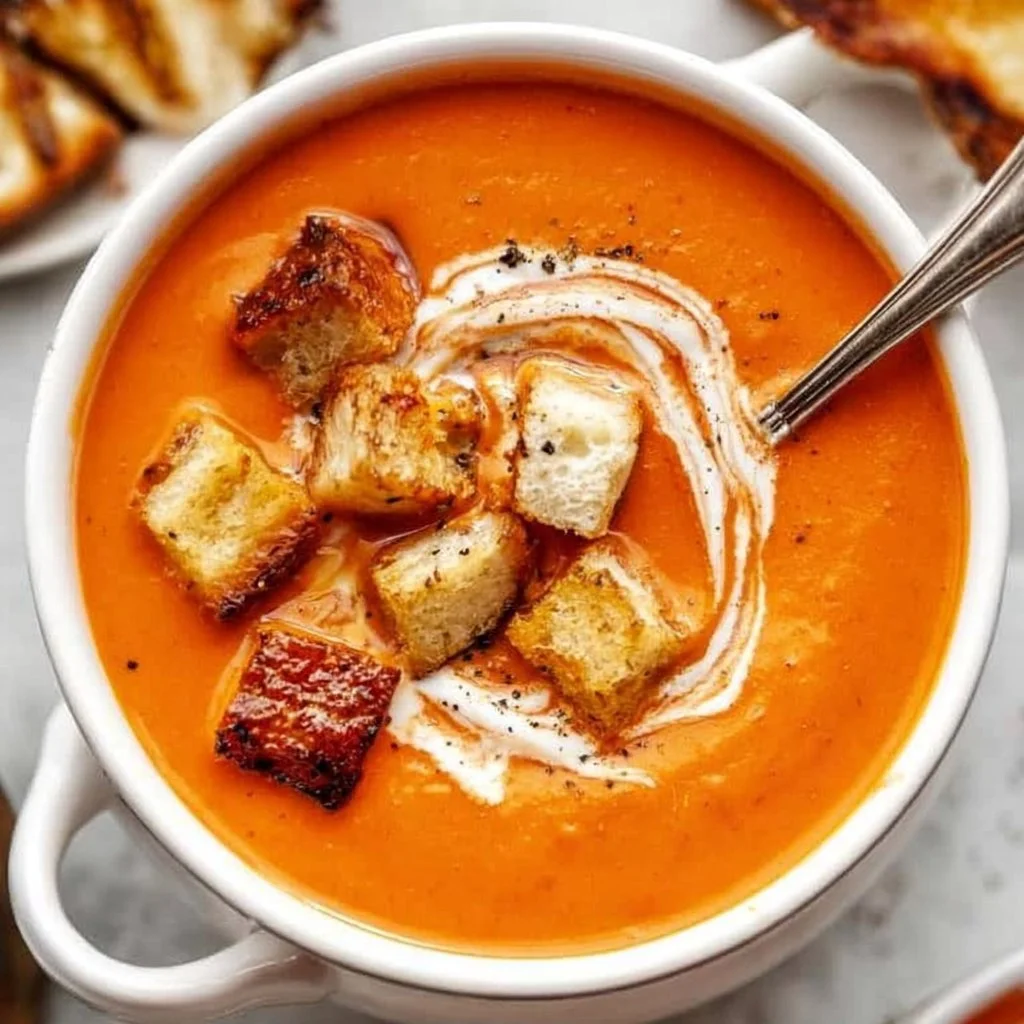
Serve warm, garnished with fresh basil. Adding a touch of fresh basil on top not only enhances the appearance but also provides that aromatic scent, making the presentation even more inviting. Enjoy the bright red color against the green basil for a beautiful, appetizing bowl of soup.
Understanding the Flavor and Texture
Once you’ve crafted this tomato soup, expect a delightful medley of flavors and textures. The base of the soup is rich and flavorful, thanks to the caramelized tomatoes, which bring a perfect blend of sweetness and tanginess. This nuanced taste is complemented by the background notes of onion and garlic, each adding layers of savory goodness. Cooking them until soft creates a rounded flavor that provides a satisfying depth to the dish without overshadowing the tomatoes’ natural brilliance.
The optional heavy cream changes the texture of the soup significantly, introducing velvety smoothness that enhances the overall mouthfeel. If you decide to add cream, aim for a balance where the soup remains light but creamy, without being too rich. The soup should glide smoothly across the palate, providing warmth and comfort with every spoonful.
The appearance of the soup is equally enticing—a vibrant red hue dotted with pieces of fresh herbs. The bright green basil adds a pop of color that contrasts beautifully with the soup’s richness, inviting anyone to take a sip. A well-executed tomato soup should have a bit of body to it from the roasted veggies but still maintain a light texture—it shouldn’t feel heavy but rather refreshing and satisfying.
This balance of sweet, savory, and aromatic elements combined with the textures achieved from roasting and blending is what brings this tomato soup to another level. It’s this combination that creates an overall sensory experience—engaging taste, smell, and sight—leading to a profoundly gratifying dish perfect for any occasion.
Pro Tips
A few simple techniques can significantly improve the outcome of your tomato soup. The following table provides helpful tips to elevate your cooking experience:
| Tip | Description |
|---|---|
| Use ripe tomatoes | Fresh, in-season tomatoes enhance the flavor profile and sweetness of the soup. Look for tomatoes that feel heavy for their size and have a vibrant color. |
| Don’t skip the roasting step | Roasting enhances the natural sugars in the tomatoes and adds a richer, caramelized flavor to your soup. This step contributes immensely to the final taste. |
| Taste as you go | Flavor development is crucial; tasting the soup at various stages allows you to adjust seasonings and ensure balance. Adjust salt, pepper, and herbs until you achieve the desired flavor. |
| Cook with love | Cook with intention, and enjoy the process. Cooking is about the experience as well as the outcome, so engage with the ingredients and enjoy the endeavor. |
When cooking, the little things can make a big difference. For instance, if you’re not a fan of cream, consider blending in a potato or a piece of carrot during the puree step to help achieve the desired creaminess without using dairy. Also, using a variety of tomatoes can create a complex flavor; mixing different types together can enhance the soup’s profile. Lastly, don’t hesitate to experiment with herbs and spices to find a flavor combination that best suits your palate.
Why You’ll Love This Recipe
There are countless reasons to fall in love with this homemade tomato soup. For starters, the recipe showcases accessible ingredients that most home cooks can easily find. You won’t need to hunt for exotic items or spend exorbitantly—you can create an outstanding dish with staples commonly found in your pantry and fridge. This makes it an ideal dish for both those cooking on a budget and anyone looking to whip up something delicious without a lot of fuss.
Additionally, this tomato soup is incredibly easy to prepare. The straightforward steps mean you can have a delicious meal on the table in under an hour. It’s the perfect option for busy weeknights or impromptu gatherings when you need something comforting and satisfying to serve. The soup’s versatility also allows it to be paired with a variety of sides, such as crusty bread, salads, and even grilled cheese sandwiches, adding to its appeal as a meal-time favorite.
As for beginner cooks, this tomato soup is a fantastic confidence-building recipe. It doesn’t require advanced culinary skills, yet it rewards even novice chefs with a delicious outcome. The ability to craft something nourishing and delightful from scratch can be immensely satisfying and can inspire further culinary exploration.
Overall, the ease of preparation, delicious flavors, and comforting warmth all come together to make this tomato soup a recipe you’ll keep returning to time after time. It brings a nostalgic warmth whether it’s served on a chilly evening or during a summer gathering, making it a timeless dish that caters to all occasions.
How to Serve Best Homemade Tomato Soup
Serving tomato soup can be nearly as enjoyable as making it. The presentation plays a huge part in the overall experience. It’s lovely to serve the soup in warm bowls, garnishing each portion with fresh basil leaves for an added touch of color and freshness. A sprinkle of freshly cracked black pepper or a drizzle of olive oil on top can also enhance visual appeal while contributing a bit of flavor.
For an extra touch of comfort, consider serving your soup alongside grilled cheese sandwiches, classic breadsticks, or a simple side salad. A fresh garden salad with a light vinaigrette can lend a refreshing contrast to the rich soup, while crusty sourdough or fluffy white bread acts as the perfect vehicle for sopping up the delicious broth. Adding a cheese toast or garlic bread can elevate the experience further, offering a delightful crunch and buttery flavor that pairs beautifully with the smooth soup.
Not only are these accompaniments delicious, but they also help create a satisfying meal. You can even set up a ‘soup bar’ where guests can customize their bowls with toppings like croutons, grated parmesan, or chili flakes for those who desire a bit of spice.
For drinks, consider pairing your tomato soup with a crisp white wine or a light, sparkling beverage if serving at a gathering. If you’re looking for non-alcoholic options, a glass of iced tea or lemonade can balance the flavors nicely, adding a touch of brightness to the meal. Feel free to play with the flavors, doing what works best for your taste and that of your guests, enriching the overall dining experience.
How to Store Best Homemade Tomato Soup
Proper storage of your homemade tomato soup is crucial to preserving its flavor and quality. After cooking, allow the soup to cool to room temperature before transferring it to an airtight container. This will prevent condensation from altering the texture and taste during storage. Your soup can be kept in the refrigerator for up to 3-5 days. When reheating, gently warm it on the stove over low heat, stirring occasionally to ensure even heating.
If you find yourself with a large batch of soup and want to extend its shelf life, consider freezing it for later use. Let the soup cool completely before portioning it into freezer-safe containers. Make sure to leave some space at the top, as liquids expand when frozen. Frozen tomato soup can last up to 3 months. When you’re ready to enjoy it after freezing, thaw it in the refrigerator overnight and reheat on the stove to restore its delicious flavors.
Keep in mind that while the soup will still be good after freezing, the texture may change slightly. The cream, if added, could separate upon freezing; however, a quick stir during reheating should restore some creaminess. If that’s a concern for you, consider omitting the cream beforehand and adding it fresh when reheating for an extra velvety texture.
Overall, understanding how to store and reheat your soup properly will help ensure you get the most out of your homemade dish while enjoying it as a convenient meal option down the road.
Tips to Make Best Homemade Tomato Soup
Mastering homemade tomato soup involves paying attention to a few key elements. Consistency is essential to achieving the ideal smoothness; ensure you blend the soup well until no chunks remain. If using a regular blender, blend small amounts at a time and be cautious about steam build-up that can cause splatters. Allow the lid to vent slightly to escape hot air during blending.
Seasoning should happen in stages. Season gradually throughout the cooking process, and don’t hesitate to adjust as your soup simmers. Tasting occasionally allows you to fine-tune the flavors before the final blending. Remember that flavors often develop and intensify as the soup cooks, so what seems under-seasoned at first may become perfectly balanced by the end.
In terms of ingredient preparation, cutting vegetables into similar sizes promotes even cooking and roasting. A uniform cut ensures that each piece reaches the desired tenderness simultaneously and avoids any pieces being burnt. Additionally, when roasting, don’t overcrowd the baking sheet; ample space allows for even roasting and caramelization, enhancing overall flavor.
Lastly, take your time with the simmering phase. Let the soup stew long enough for flavors to meld without rushing. Keeping the heat moderate during this phase will allow for a slow and even cook, enhancing the aromatic quality of your soup.
Variations and Substitutions
This tomato soup offers a flexible base that encourages numerous delicious variations. If you’re interested in a spicier profile, consider incorporating a diced jalapeño or a pinch of red pepper flakes during the roasting stage. This kick will provide an exciting contrast to the sweet tomatoes and enhance the overall depth of the soup.
For a dairy-free option, simply omit the heavy cream or substitute it with full-fat coconut milk. This provides a creamy consistency while adding a subtle coconut flavor that pairs well with the tomatoes. Another alternative might be nut-based creams, such as cashew cream, providing a non-dairy richness without compromising taste.
If you want to enhance the flavor further, try incorporating sun-dried tomatoes or roasted red peppers into the mix. These ingredients add another layer of complexity to your tomato soup, deepening the flavor profile. Just remember to adjust seasoning accordingly as these additions can bring varying levels of richness and saltiness.
For those following specific dietary preferences, this recipe can easily be made gluten-free, as all the ingredients are naturally gluten-free. Simply ensure that any store-bought vegetable broth you use is certified gluten-free. Additionally, you can add a splash of balsamic vinegar or lemon juice at the end of cooking for brightness without altering the overall profile of the tomato base.
By experimenting with these variations, you can make the dish uniquely your own while still preserving the heart and soul of homemade tomato soup. It’s all about finding combinations that speak to your taste, making each bowl a personal expression of comfort food.
Storage and Reheating
When it comes to leftovers, proper storage is essential for maintaining the flavor and quality of your soup. As mentioned earlier, once cooled to room temperature, pour the tomato soup into an airtight container. Label the container with the date to keep track of its storage time and ensure you consume it within the recommended period of 3-5 days if refrigerated.
For longer storage, freezing is an excellent option. Pour the soup into freezer-safe bags or containers, leaving some room at the top for expansion. It’s often beneficial to portion the soup into individual servings for easier reheating later on. Spread the bags flat in your freezer for efficient use of space; they can be stacked once frozen.
When reheating, be conscious of the method you choose. The stove is usually the best option to prevent uneven heat distribution, but microwaving can also work if done carefully. If using a microwave, place the soup in a microwave-safe bowl, cover it loosely to allow steam to escape, and heat in short intervals—stirring in between—until warmed through. This method helps keep the soup at an optimal temperature without overcooking or creating hot spots.
If the soup seems thick after reheating, consider adding a splash of vegetable broth or water to return it to your desired consistency. A gentle swirl of extra cream can bring back the rich creaminess, making for a satisfying bowl even after days in the fridge or freezer.
Customization Ideas
Customizing your tomato soup allows you to make it exciting every time you prepare it. For instance, consider blending in additional vegetables for added nutrition. Carrots, bell peppers, or even zucchini can be roasted alongside the tomatoes, enriching the soup’s complexity and flavor profile. This not only enhances the flavor but also provides a colorful and visually appealing dish.
Different herbs can also create an entirely new flavor experience. Although basil is traditional, you could swap it for parsley, thyme, or oregano based on your preference. Fresh herbs can be stirred in at the end for a pop of flavor and freshness. Aim to experiment with combinations that reflect your personal tastes or what’s in season.
For crunch, consider topping the soup with homemade croutons or toasted seeds such as sunflower or pumpkin seeds. They add an appealing contrast in texture, making the eating experience even more enjoyable. You can also adjust the seasoning for uniqueness; employing spices like cumin or coriander can add warmth and depth, setting your soup apart with exotic flavors.
Finally, changing the presentation can change the entire feel of the dish. Serve the soup in fun bowls and garnish with colorful edible flowers or a dollop of pesto for a sophisticated twist. Utilizing a variety of toppings, such as citrus zests, grated cheese, or fresh herbs, can keep the dish vibrant and exciting each time you serve it.
Common Mistakes to Avoid
Making homemade tomato soup can be simple and rewarding, but it also comes with a few common pitfalls that could affect the final product. Here are some mistakes to watch out for:
-
Using under-ripe tomatoes: Opting for tomatoes that aren’t fully ripe will yield a soupy taste instead of the rich, savory flavor you’re looking for. Ensure they are sweet and ripe for the best outcome.
-
Neglecting to roast the vegetables: Skipping the roasting step limits the development of deep flavors caused by caramelization. Roasting helps enhance the sweetness and reduces acidity; don’t overlook this essential step.
-
Not tasting during preparation: Waiting until the end to taste your soup prevents you from making real-time adjustments to salt content and seasoning. To achieve the perfect balance, be sure to taste throughout the cooking process.
-
Forgetting to release steam while blending: If using a traditional blender, ensure to allow steam to escape before blending hot soup, as the pressing lid can lead to hot soup splattering everywhere, hurting you in the process. Always vent the lid when blending hot liquids.
-
Using too much cream: Adding excess cream can overwhelm the dish, masking the fresh tomato flavor. Use it sparingly so that the richness complements the dish instead of overpowering it.
Avoiding these mistakes will help ensure that your tomato soup is as delicious and satisfying as it can be, leading to a comforting dish to return to time and time again.
Serving Occasions
Homemade tomato soup suits various serving occasions, making it a versatile dish to have in your repertoire. It’s a comforting choice for cozy weeknight dinners, bringing warmth and familiarity to the dinner table. The simplicity of preparation means you can whip it up on busier nights or when time is tight, yet it still offers the heartiness and satisfaction that a meal should provide.
Gatherings with family or friends also lend themselves to this dish. Many people associate tomato soup with comfort food—the ultimate dish to share with loved ones during gatherings or casual potlucks. Whether served as a starter or a main dish, the soup can reignite nostalgia and warmth around the table, sparking conversations and cherished memories.
For holidays and special occasions, consider dressing up your tomato soup with fancy garnishes or serving it in elegant bowls to match the event’s decor. For example, when hosting a Valentine’s Day dinner, a beautiful presentation garnished with herbs can provide just the right touch for a memorable meal. For a festive holiday brunch, serve it alongside a selection of crostini or pastries, transforming simple soup into a celebratory feast.
Overall, this recipe’s flexibility in serving occasions allows you to connect with others over a bowl of warmth and comfort, making it a timeless dish worth sharing throughout the seasons.
Why Make This Recipe?
Opting for this homemade tomato soup over similar store-bought varieties is a wise choice for several reasons. For one, the standout freshness of ingredients is a game-changer; you control what’s in your soup, avoiding unwanted preservatives or artificial flavors typically found in canned soups. With a few simple, nourishing ingredients, you can make a delicious meal that is not only satisfying but also good for you.
Additionally, the versatility of this recipe allows it to adapt to various dietary needs and taste preferences. Whether you’re maintaining a vegetarian lifestyle or requiring gluten-free options, this homemade tomato soup can easily accommodate. It also proves to be a wholesome option for families, as it can be customized to include additional vegetables or spices to suit your loved ones’ palates, making it suitable for both picky eaters and adventurous foodies alike.
The comforting nature of this soup can also ignite feelings of nostalgia, reminiscent of warm evenings spent with family enjoying hearty meals. The ability to create something so flavorful and heartwarming from scratch allows for personalization and creativity in the kitchen. It invites cooks to explore their culinary skills while savoring the satisfaction of evolving a simple recipe into a beloved dish. Therefore, keeping this tomato soup in your rotation promises not just a meal but an opportunity for connection, nostalgia, and culinary exploration.
Make-Ahead Preparation
If you’re looking to ease your meal prep, several aspects of this tomato soup can be made ahead of time. All the chopping and measuring can be completed in advance, saving you time on cooking days. For example, you can roast the tomatoes, garlic, and onions ahead of time, and store them in the refrigerator until you’re ready to blend the soup. This step will reduce your active cooking time significantly, allowing you to focus on simply reheating and mixing in broth and basil to finish the dish.
Making the soup itself is also straightforward; once it’s blended and seasoned, you can cool it and store it in the refrigerator for a few days ahead of serving. Many people find that the flavors deepen as the soup sits, making it taste even better after a day or two. If you prefer to prepare the soup for longer storage, you can freeze it as outlined previously; just remember to leave space for expansion in your containers.
While some components, like fresh basil, are best added at the last moment to preserve their freshness, fully cooked soup can be made and frozen. Be mindful not to freeze any ingredients that might alter texture negatively, such as cream, if you want to maintain the soup’s velvety quality. By preparing ahead of time, you ensure that delicious homemade tomato soup remains an accessible meal option, regardless of how busy life gets.
Equipment and Kitchen Preparation
Having the right equipment and tools can make all the difference when whipping up your homemade tomato soup. While this recipe doesn’t require specialized equipment, there are a few fundamental items that will streamline the process. A quality knife and cutting board are essential for properly dicing the onions and mincing the garlic. Having a sharp knife ensures you achieve clean cuts and maintain the freshness of the flavors.
An immersion blender is highly recommended for this type of recipe. The convenience of blending directly in the pot minimizes cleanup and allows for quick adjustments to the soup’s temperature as you mix. If you don’t have an immersion blender, a standard blender will work; just ensure you blend the soup in batches and allow steam to escape to avoid splatters.
Also, a baking sheet is necessary for roasting your tomatoes, onions, and garlic. Using parchment paper can further simplify cleanup but is not absolutely required. Lastly, choose a pot that can accommodate the volume of soup being made, ideally one with a thick bottom to promote even heating during the simmering process. Properly preparing your kitchen with these essentials ensures a smooth and enjoyable cooking experience.
FAQs
-
Can I use canned tomatoes instead of fresh?
Yes, you can use canned tomatoes if fresh ones are unavailable. Choose whole peeled or crushed tomatoes, ideally those packed in juice or purée. Keep in mind that using canned tomatoes may slightly change the flavor profile, but it’s still delicious. -
How can I make this recipe vegan?
To make the tomato soup vegan, simply omit the heavy cream. You can replace it with a plant-based cream or simply enjoy the soup without cream. The richness from the roasted tomatoes and broth remains satisfying without dairy. -
Is it possible to freeze the soup?
Yes, this tomato soup freezes wonderfully! Make sure to cool it completely before transferring it to freezer-safe containers, leaving room at the top for expansion. It can be stored in the freezer for up to 3 months. -
How long does homemade tomato soup last in the fridge?
Homemade tomato soup can be stored in the refrigerator for 3-5 days. Allow it to cool, then transfer to an airtight container to retain freshness. -
Can I add other vegetables to the soup?
Absolutely! Feel free to add vegetables like bell peppers, carrots, or zucchini during the roasting phase. These can enhance the flavor and add additional nutrition to the soup. -
What should I serve with my tomato soup?
Tomato soup pairs beautifully with grilled cheese sandwiches, crusty bread, fresh salads, or even pasta. Feel free to get creative with your pairings for a well-rounded meal. -
How can I adjust the sweetness of the soup?
If the soup tastes too sweet, consider adding a splash of balsamic vinegar or a squeeze of lemon juice to balance the flavors. This acidity will help cut through the sweetness of the tomatoes. -
What’s the best way to reheat leftovers?
To reheat, gently warm the soup on the stovetop over low heat, stirring occasionally until warmed through. If using a microwave, heat in intervals, stirring in between to ensure even warming.
Disclaimer
Nutritional information is approximate and may vary based on ingredient brands, substitutions, portion sizes, and preparation methods.
Print
Best Homemade Tomato Soup
- Total Time: 55 minutes
- Yield: 4 servings 1x
- Diet: Vegetarian
Description
A comforting and delicious homemade tomato soup made with fresh tomatoes, garlic, and basil, perfect for any occasion.
Ingredients
- 2 pounds fresh tomatoes, halved
- 1 onion, chopped
- 4 cloves garlic, minced
- 2 tablespoons olive oil
- 2 cups vegetable broth
- 1 cup fresh basil leaves
- Salt and pepper to taste
- 1/2 cup heavy cream (optional)
Instructions
- Preheat the oven to 400°F (200°C).
- Place the halved tomatoes, chopped onion, and minced garlic on a baking sheet. Drizzle with olive oil and season with salt and pepper.
- Roast in the oven for about 25-30 minutes until the tomatoes are soft and caramelized.
- Transfer the roasted vegetables to a pot, add vegetable broth and basil, and simmer for 10 minutes.
- Use an immersion blender to puree the soup until smooth.
- Stir in heavy cream if using, and adjust seasoning as needed.
- Serve warm, garnished with fresh basil.
Notes
For a dairy-free option, omit the heavy cream or use coconut milk.
- Prep Time: 15 minutes
- Cook Time: 40 minutes
- Category: Soup
- Method: Roasting
- Cuisine: Italian
Nutrition
- Serving Size: 1 serving
- Calories: 220
- Sugar: 5g
- Sodium: 400mg
- Fat: 14g
- Saturated Fat: 7g
- Unsaturated Fat: 5g
- Trans Fat: 0g
- Carbohydrates: 20g
- Fiber: 3g
- Protein: 4g
- Cholesterol: 30mg