
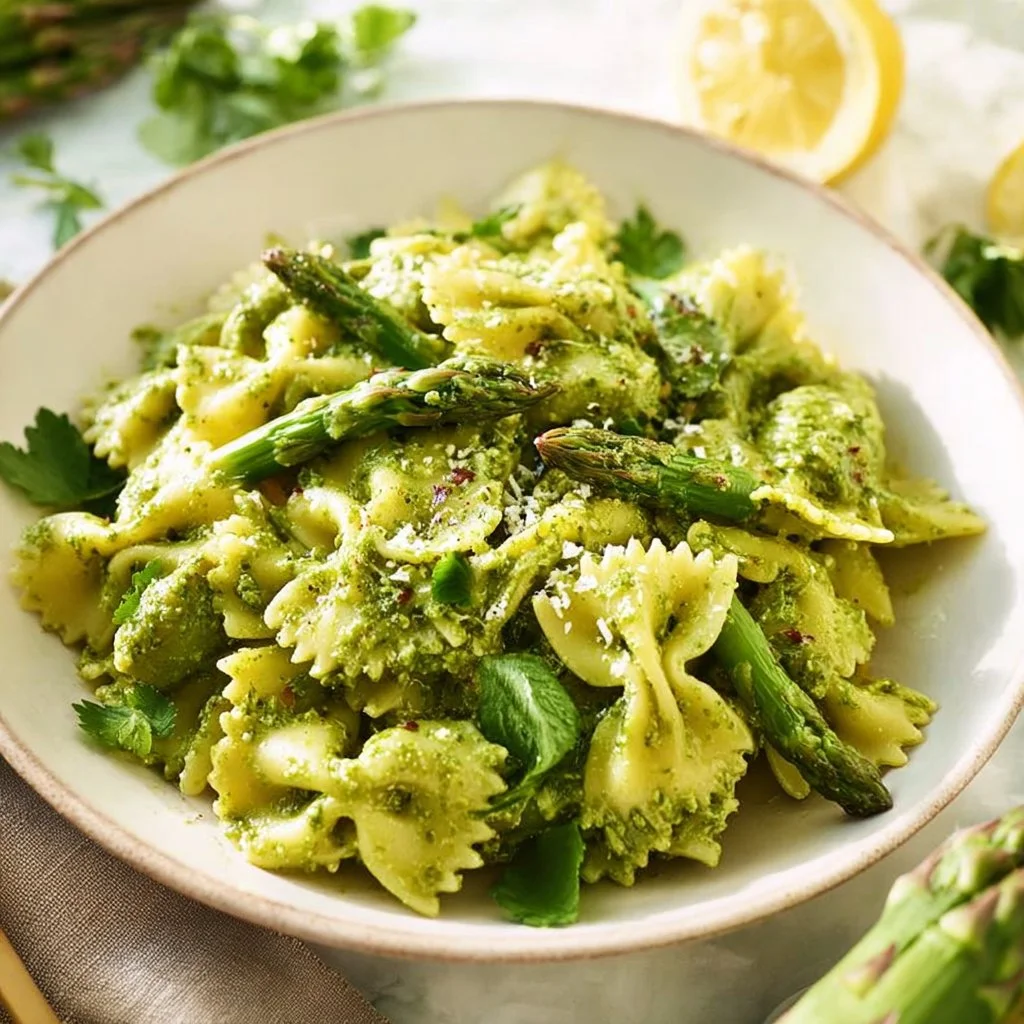
Asparagus Pesto Pasta
This Asparagus Pesto Pasta is a delightful and fresh dish that’s bursting with flavor and texture. The creamy, vibrant green pesto made from asparagus, pistachios, and parsley coats al dente pasta perfectly, creating a comforting yet sophisticated meal. The combination of nutty, earthy flavors and the bright citrus notes from lemon juice makes every bite a refreshing experience. Best served for a light dinner, a elegant lunch, or even at a gathering with friends, this dish is not only quick to prepare but also visually appealing.
Imagine a dinner gathering where the aroma of garlic and fresh herbs fills the air; this pasta dish would steal the show. The colors—deep greens mingling with golden pasta—are sure to catch everyone’s eye. Whether you choose gluten-free pasta or traditional options, this recipe caters to various dietary preferences, ensuring everyone at the table can enjoy it.
Prep Time, Cook Time, Total Time:
Prep Time: 10 min | Cook Time: 25 min | Total Time: 35 min
How to Make Asparagus Pesto Pasta
Ingredients:
- Fresh asparagus
- Pistachio nuts
- Parsley
- Lemon juice
- Olive oil
- Garlic
- Salt
- Pepper
- Gluten-free pasta (optional)
Step-by-Step Instructions:
- Cook the gluten-free pasta according to package instructions. Drain and set aside. It’s essential to drain well to avoid a soggy dish.
- In a food processor, combine the cooked asparagus, pistachio nuts, parsley, lemon juice, olive oil, garlic, salt, and pepper. Blend until smooth to create a delicious pesto. Make sure it’s blended thoroughly for the best texture.
- Toss the pesto with the cooked pasta until well coated. You can adjust the amount of pesto based on your pasta preference—more if you like it saucy!
- Serve warm, garnished with additional parsley and pistachios if desired. This extra touch adds a fantastic visual appeal and crunch.
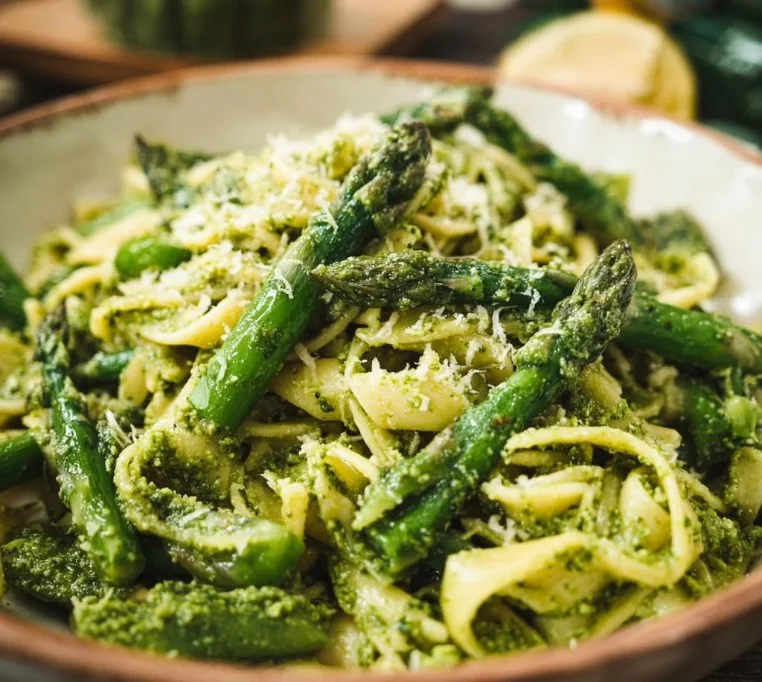
Pro Tips
- Use Fresh Ingredients: Fresh asparagus, herbs, and garlic really make this dish pop. Avoid using canned or frozen products if possible for the best flavor.
- Don’t Overcook the Pasta: Al dente pasta holds up better against the pesto and gives a pleasant bite. Always check for doneness a minute or two before the package suggests.
- Taste as You Go: Adjust the seasoning while you’re making the pesto. More salt, pepper, or lemon juice can make a huge difference in flavor.
- Experiment with Nuts: While pistachios provide a unique taste, you can substitute walnuts or even pine nuts if you prefer.
- Add Greens: Tossing in spinach or kale while blending creates an even richer color and adds nutritional benefits—perfect for getting your greens in!
- Leftover Pesto: If you have leftover pesto, it’s excellent as a spread on sandwiches or as a dip for veggies.
Why You’ll Love This Recipe
This Asparagus Pesto Pasta is a game-changer for anyone looking for a quick, healthy meal. The combination of textures—from the tender pasta to the creamy pesto—is utterly satisfying. It’s a fantastic way to enjoy seasonal asparagus, making it a go-to during springtime when the vegetable is at its peak.
Additionally, the recipe is versatile. It can easily fit into vegan diets if you skip any cheese alternatives, and it’s inherently gluten-free if you choose the right pasta. This makes it suitable for various gatherings, from family dinners to casual picnics.
How to Serve Asparagus Pesto Pasta
Presentation can elevate any dish. To serve this pasta, consider using a large, shallow bowl for a family-style appeal. Garnish with extra chopped parsley and a sprinkle of crushed pistachios for a pleasing texture contrast. You can also drizzle a little extra olive oil over the top for a glossy finish.
Pair it with a crisp green salad or roasted vegetables for a complete meal. A chilled glass of white wine or sparkling water with lemon complements this dish beautifully, enhancing its refreshing qualities.
How to Store Asparagus Pesto Pasta
To store leftover Asparagus Pesto Pasta:
- Refrigerator: Place it in an airtight container and store it in the fridge for up to 3 days.
- Freezer: This dish can also be freeze for up to one month, although the pasta texture may change slightly upon reheating. Just ensure it’s well-sealed to prevent freezer burn.
- Room Temperature: It’s best to avoid leaving pasta out at room temperature for more than two hours, especially in warmer conditions.
Tips to Make Asparagus Pesto Pasta
- Adjust the Consistency: If your pesto is too thick, you can thin it out with a bit more olive oil or a splash of pasta cooking water.
- Balance the Flavors: If it’s too tart, you can add a pinch of sugar or more olive oil to smooth out the taste.
- Timing is Key: Prepare your pesto while the pasta cooks, so everything becomes ready simultaneously; this keeps the dish fresh and vibrant.
- Herb Options: If you want to switch it up, try basil or mint along with or instead of parsley for a different flavor profile.
Variation
- Vegan Option: Simply omit any added cheese or use nutritional yeast for a cheesy flavor without dairy.
- Spicy Twist: Add a pinch of red pepper flakes or a dash of hot sauce to the pesto for an extra kick.
- Low-Carb Interpretation: Swap out traditional pasta for spiralized zucchini or spaghetti squash for a lower-carb alternative.
Nutrition Information:
(Serving Size | Calories | Protein | Carbs | Fat | Fiber | Sugar): This dish is loaded with vitamins from asparagus and healthy fats from olive oil and nuts. Notably, it’s also low in sugar, making it a guilt-free option for any meal.
Storage and Reheating
To reheat leftovers:
- Microwave: Place the pasta in a microwave-safe container, cover with a damp paper towel, and heat in short intervals (1-2 minutes) stirring in-between until warm.
- Oven: Preheat the oven to 350°F (175°C), place the pasta in an oven-safe dish with a splash of water, cover with foil, and heat for about 15-20 minutes.
- Skillet: Heat a bit of olive oil or water in a skillet over medium heat, add the pasta, and stir frequently until heated through.
Customization Ideas
Try adding different vegetables like cherry tomatoes or spinach for added nutrition and flavor. You can also play around with different pasta shapes—penne, fusilli, or even whole grain options work well here. For a more substantial meal, consider adding grilled chicken or shrimp on top.
Common Mistakes to Avoid
- Using Cold Pasta: Don’t toss the pesto with cold pasta; it’s essential to have everything warm for the best flavor melding.
- Too Much Garlic: Start with less garlic and taste as you go so that it doesn’t overpower the other flavors.
- Skipping the Salt: Salt is crucial for bringing out the flavors. Don’t be afraid to season your pasta water and adjust the pesto seasoning.
- Pasta Overcooking: This is a common mistake that can lead to mushy pasta. Keep an eye on the cooking time for perfect texture.
- Not Blending Enough: Ensure the pesto is well-blended; it should be creamy and not chunky for a smooth coating on the pasta.
Serving Occasions
This Asparagus Pesto Pasta is perfect for various settings! Whether it’s a family gathering during the week, a potluck event, or a simple lunch to impress friends, it’s versatile enough to fit numerous occasions. Additionally, it makes a great dish for meal prep—quick, easy, and delightful every time you heat it up!
Why Make This Recipe
This recipe stands out because it combines simplicity with sophisticated flavor. It’s a fantastic way to showcase seasonal produce while being easy to prepare. Unlike heavier pasta dishes, this one offers a lighter feel without skimping on taste, making it a healthier option for any meal.
Plus, the vibrant green color of the pesto not only looks appetizing but also signals that you’re eating something nutritious. It’s a dish that brings together joy, health, and culinary creativity effortlessly.
FAQs
-
Can I use other nuts for the pesto?
Absolutely! Walnuts, almonds, or pine nuts can also work beautifully. Each nut provides a unique flavor. -
Is this recipe gluten-free?
Yes, simply choose gluten-free pasta to make the entire dish compatible with gluten-free diets. -
Can I make this dish vegan?
Yes, omit cheese or use a vegan cheese substitute to keep it plant-based. -
How do I enhance the flavors of the pesto?
You can add more lemon juice for acidity, extra garlic for a kick, or a bit of parmesan cheese (or its vegan counterpart) for richness. -
Does it reheat well?
Yes, with the right reheating methods, you can enjoy this dish multiple times without losing flavor or texture.
Disclaimer: Nutrition information is approximate and may vary based on specific ingredients used. Always check labels and consult with a dietitian for precise dietary needs.
Print
Asparagus Pesto Pasta
- Total Time: 35 minutes
- Yield: 4 servings 1x
- Diet: Vegetarian
Description
A delightful and fresh asparagus pesto pasta that’s bursting with flavor and texture, perfect for a light dinner or elegant lunch.
Ingredients
- 8 oz gluten-free pasta (or traditional)
- 1 bunch fresh asparagus
- 1/2 cup pistachio nuts
- 1/2 cup fresh parsley
- 2 tbsp lemon juice
- 1/4 cup olive oil
- 2 cloves garlic
- Salt to taste
- Pepper to taste
Instructions
- Cook the gluten-free pasta according to package instructions. Drain and set aside.
- Combine the cooked asparagus, pistachio nuts, parsley, lemon juice, olive oil, garlic, salt, and pepper in a food processor.
- Blend until smooth to create a delicious pesto.
- Toss the pesto with the cooked pasta until well coated.
- Serve warm, garnished with additional parsley and pistachios if desired.
Notes
Use fresh ingredients for the best flavor and adjust seasoning to your taste. Can substitute other nuts if desired.
- Prep Time: 10 minutes
- Cook Time: 25 minutes
- Category: Main Course
- Method: Baking
- Cuisine: Italian
Nutrition
- Serving Size: 1 serving
- Calories: 350
- Sugar: 5g
- Sodium: 400mg
- Fat: 12g
- Saturated Fat: 2g
- Unsaturated Fat: 10g
- Trans Fat: 0g
- Carbohydrates: 45g
- Fiber: 4g
- Protein: 15g
- Cholesterol: 0mg