
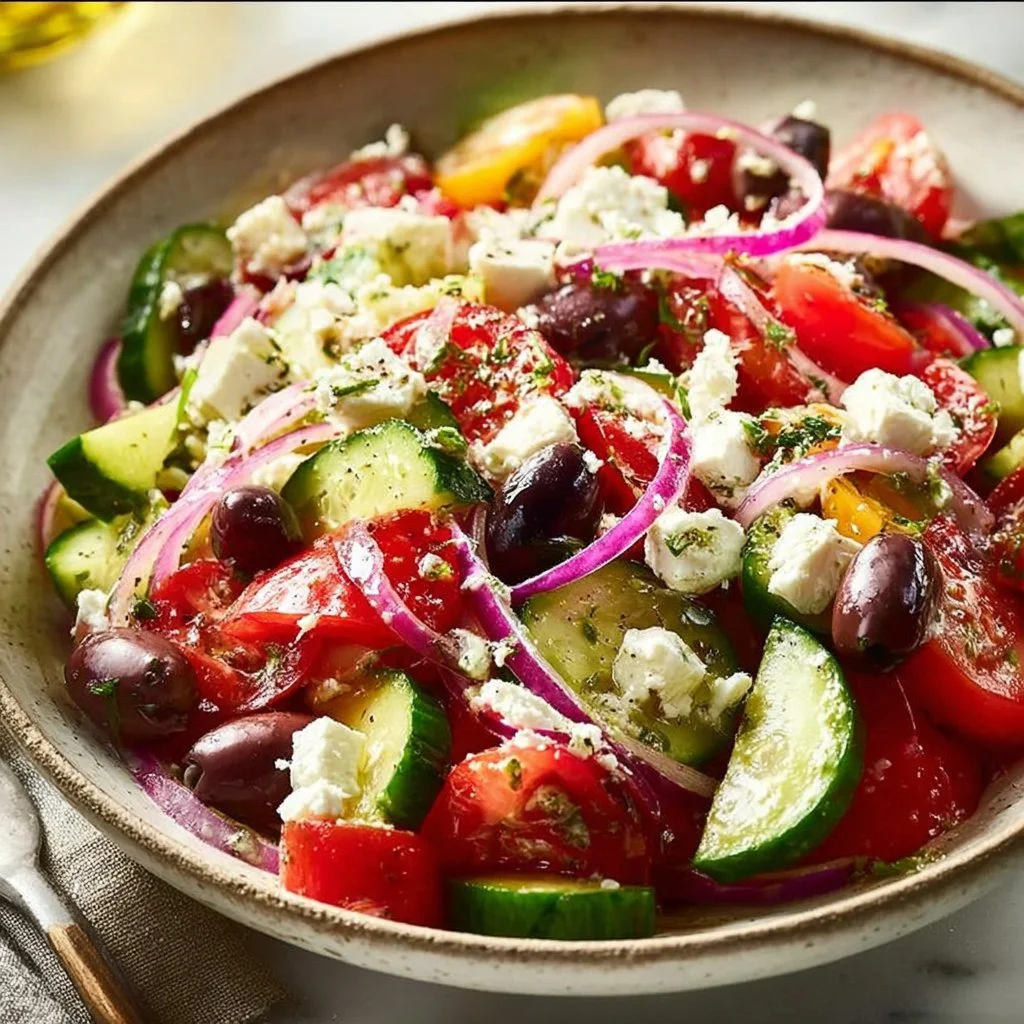
Authentic Greek Salad
There’s something incredibly refreshing about an Authentic Greek Salad. The vibrant colors and crisp textures come together in a delightful symphony of flavors that truly capture the essence of Mediterranean cuisine. With fresh tomatoes, cucumbers, crunchy red onion, briny olives, and creamy feta cheese drizzled with fruity olive oil, each bite is a celebration of freshness. This salad is perfect for summer picnics, family dinners, or as a delightful side dish at any gathering.
Whether you’re serving it during lunch, dinner, or even at a barbecue, this salad shines brightly. It’s not only tasty but also quick to prepare, making it an excellent choice for busy weeknights or when you’re entertaining guests. Serve it as a refreshing starter or a light main dish with some crusty bread on the side, and you’ll have your diners asking for more.
Prep Time: 10 min | Cook Time: 0 min | Total Time: 10 min
How to Make Authentic Greek Salad
Ingredients
- Fresh tomatoes
- Crisp cucumbers
- Red onion
- Olives
- Thick feta cheese
- Olive oil
- Oregano
Step-by-Step Instructions
-
Chop the tomatoes and cucumbers into bite-sized pieces. Start by selecting ripe tomatoes that yield slightly to pressure; they should be juicy and flavorful. Slice cucumbers into thick rounds or half-moons for a hearty bite.
-
Thinly slice the red onion. Grating the onion can impart a strong flavor, so using thin slices will give your salad a more subtle taste. Soaking the onion in cold water for a few minutes can also mellow its sharpness.
-
In a large bowl, combine the tomatoes, cucumbers, red onion, olives, and feta cheese. Mix everything gently to avoid breaking the feta too much. Feel free to go with Kalamata olives for a more traditional taste.
-
Drizzle with olive oil and sprinkle with oregano to taste. The quality of olive oil can significantly impact the flavor of your salad, so opt for a good extra virgin olive oil.
-
Toss gently to mix and serve immediately. This salad is best enjoyed fresh as the ingredients will lose their crispness over time.
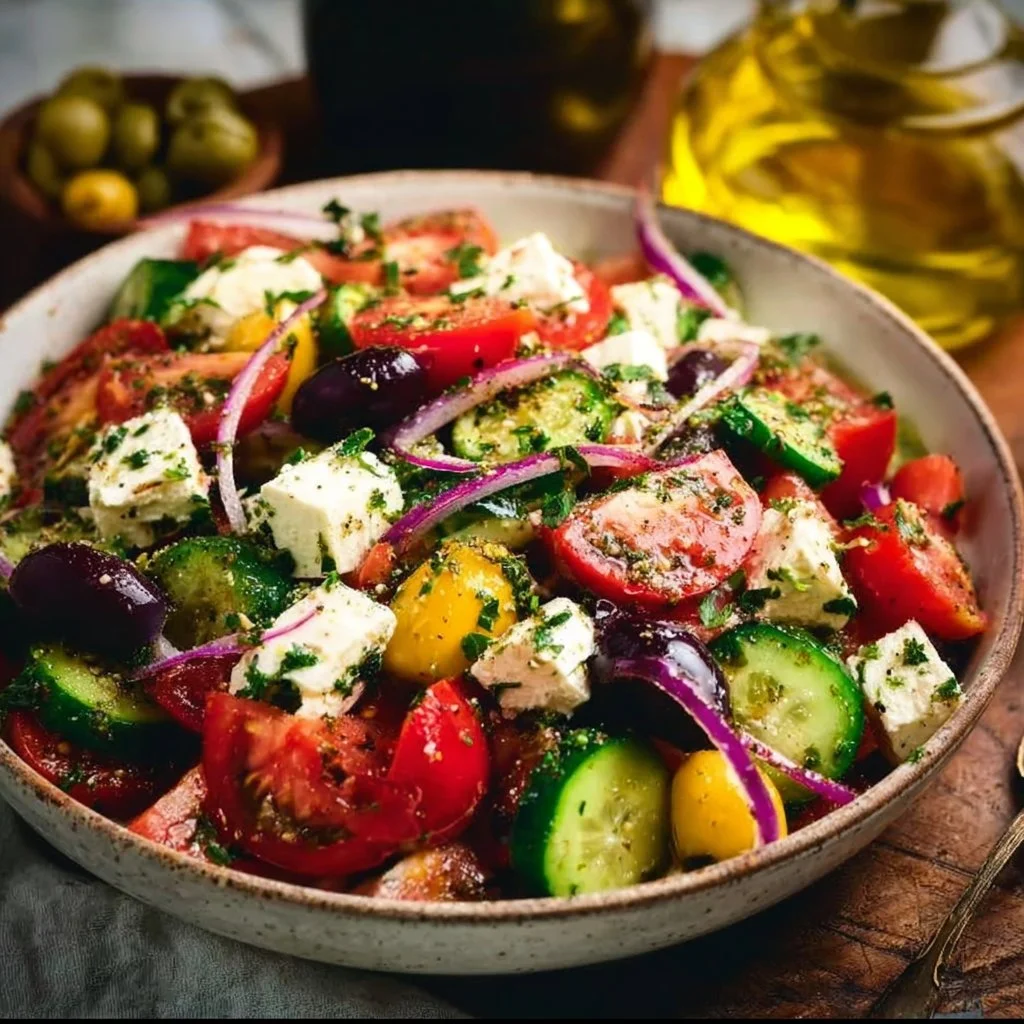
Pro Tips
-
Choose the Right Tomatoes: Opt for vine-ripened or heirloom tomatoes for a burst of flavor. Avoid mealy out-of-season tomatoes, as they can spoil the dish’s freshness.
-
Don’t Overdress: A light drizzle of olive oil goes a long way. Too much can turn your salad soggy, masking the fresh ingredients’ flavors.
-
Add Fresh Herbs: Besides oregano, fresh parsley or basil can elevate the salad’s taste and add complexity to its aroma.
-
Use Quality Feta: Look for imported Greek feta made from sheep’s milk for authenticity. Crumbled feta can get too salty, while a block of feta allows you to control the amount and texture better.
-
Serve Cold: For a refreshing experience, chill the ingredients before mixing, especially on hot days. A cold salad enhances the freshness of the veggies.
-
Experiment with Olives: Different types of olives can give your salad a unique twist. Try green olives for a milder flavor or pitted jumbo olives for added texture.
Why You’ll Love This Recipe
This Authentic Greek Salad is a perfect example of how simple ingredients can create outstanding flavor. Each ingredient plays a vital role; the acidity of the tomatoes balances perfectly with the creaminess of the feta and the saltiness of the olives. Plus, it only requires minimal prep time, making it an effortless addition to any meal.
Whether you’re on a Mediterranean diet, looking for a healthy side dish, or simply want a flavorful salad, this recipe fits the bill. It’s low in calories while being high in nutrients like fiber and vitamin C, making it a wholesome choice for any occasion.
How to Serve Authentic Greek Salad
When it comes to presentation, layer the salad in a clear bowl to showcase the vibrant colors. Pair it with warm, crusty bread or pita for a delightful Mediterranean experience. Consider drizzling a few extra drops of olive oil on top before serving to add a touch of elegance.
For drinks, a glass of chilled white wine or a refreshing iced tea can complement the flavors beautifully. If serving for a party, consider making individual servings in small bowls for an appealing touch that makes it easy for guests to enjoy.
How to Store Authentic Greek Salad
Storing an Authentic Greek Salad can be tricky due to its fresh ingredients. In the fridge, the salad can last for about 1-2 days. Keep the components separate if you plan to make it ahead—store dressing in a jar and vegetables in a covered container to maintain their freshness.
Freezing is not recommended for salads with cucumbers and tomatoes, as they lose their texture when thawed. However, if you have leftover feta or olives, they can be stored in the fridge for a longer shelf life.
Tips to Make Authentic Greek Salad
-
Seasoning: Taste as you go. A sprinkle of salt can enhance the ingredients, but be careful with salty feta and olives.
-
Timing: If making ahead, leave out the olive oil and only add it just before serving to retain crispness.
-
Texture Balance: For more crunch, consider adding bell peppers or radishes. For additional flavor, try roasted garlic or toasted nuts.
Variation
-
Vegan Greek Salad: Swap feta for a vegan cheese alternative or avocado for creaminess.
-
Spicy Greek Salad: Add sliced jalapeños or a sprinkle of red pepper flakes if you enjoy heat.
-
Low-Carb Greek Salad: Skip the tomatoes and cucumbers, and add more olives and feta cheese instead.
-
Gluten-Free: This recipe is naturally gluten-free, so just ensure any added bread or crackers are also gluten-free.
Nutrition Information
Serving Size: 1 cup | Calories: 220 | Protein: 6g | Carbs: 10g | Fat: 18g | Fiber: 2g | Sugar: 3g
This salad is low in calories but high in healthy fats from olive oil and feta, making it nutritious without being heavy. The fiber from the vegetables helps keep you full longer.
Storage and Reheating
To reheat leftovers, avoid using the microwave for salads, as this can ruin the texture. Instead, if you have leftover ingredients (like feta or olives), store them separately in their containers. When ready to consume, just mix fresh, uncooked ingredients with the portion you’d like.
For any remaining salad, enjoy it cold the next day, as it can be a refreshing option. If it has wilted, try adding a handful of fresh spinach or lettuce to revive it.
Customization Ideas
-
Taste Adjustments: If you prefer a sweeter flavor, try adding a splash of balsamic vinegar or honey to the dressing.
-
Texture Adjustments: For crunch, add nuts like toasted pine nuts or walnuts. For creaminess, diced avocado makes an excellent addition.
-
Ingredient Swaps: Feel free to swap the vegetables based on what you have on hand. Bell peppers, radishes, or even shredded carrots can add unique flavor profiles.
Common Mistakes to Avoid
-
Using Overripe Tomatoes: Make sure your tomatoes are fresh to ensure the best flavor.
-
Soggy Salad: If serving later, store the dressing separately and add it just before eating to avoid mushiness.
-
Not Covering Leftovers: Always cover leftovers to prevent them from absorbing smells from your fridge or drying out.
-
Being Heavy-Handed with Feta: This salad should be balanced; too much feta can overwhelm the other flavors.
-
Choosing the Wrong Olive Oil: Use high-quality olive oil for the best flavor—don’t reach for that old bottle collecting dust in the back of your pantry.
Serving Occasions
This Authentic Greek Salad fits perfectly into many occasions. Serve it at family gatherings, barbecues, or alongside grilled meats for a refreshing touch. It’s also incredible for quick lunches or as a side dish at potlucks. During warm months, it can really be the star of your next picnic!
Why Make This Recipe
Authentic Greek Salad stands out from other salads because of its emphasis on fresh, quality ingredients that meld together to create a refreshing, vibrant dish. Unlike many salads that rely on heavy dressings or cooked components, this recipe showcases raw vegetables at their peak, allowing the natural flavors to shine.
Not only does it taste incredible, but it’s also a healthful option that can be adapted to fit various diets, from vegetarian to low-carb. By making this salad, you’re not just creating a meal; you’re inviting a taste of Greece into your kitchen.
FAQs
-
Can I make Greek salad ahead of time?
Yes, but it’s best to keep the dressing separate until you’re ready to serve, especially if you’re using cucumbers, as they may become watery. -
What kind of olive oil should I use?
Opt for a good-quality extra virgin olive oil for the best flavor. -
Is this salad gluten-free?
Absolutely! All of the ingredients are naturally gluten-free. -
Can kids enjoy Greek salad?
Yes! It’s colorful, flavorful, and can be customized according to their tastes. You can reduce the onion if they find it too strong. -
How long can I keep a Greek salad in the fridge?
Ideally, consume it within 1-2 days for the freshest taste. Always store it in a covered container.
Disclaimer
Nutritional values are approximate and can vary based on ingredient brands and portion sizes. Always check the labels if you’re following a specific dietary plan.
Print
Authentic Greek Salad
- Total Time: 10 minutes
- Yield: 4 servings
- Diet: Vegetarian
Description
A refreshing blend of fresh tomatoes, crisp cucumbers, red onion, olives, and feta cheese, drizzled with olive oil and oregano.
Ingredients
- Fresh tomatoes
- Crisp cucumbers
- Red onion
- Olives
- Thick feta cheese
- Olive oil
- Oregano
Instructions
- Chop the tomatoes and cucumbers into bite-sized pieces.
- Thinly slice the red onion.
- Combine the tomatoes, cucumbers, red onion, olives, and feta cheese in a large bowl.
- Drizzle with olive oil and sprinkle with oregano.
- Toss gently to mix and serve immediately.
Notes
Serve with crusty bread and consider chilling the ingredients before mixing for a refreshing experience.
- Prep Time: 10 minutes
- Cook Time: 0 minutes
- Category: Salad
- Method: No Cook
- Cuisine: Greek
Nutrition
- Serving Size: 1 cup
- Calories: 220
- Sugar: 3g
- Sodium: 300mg
- Fat: 18g
- Saturated Fat: 6g
- Unsaturated Fat: 10g
- Trans Fat: 0g
- Carbohydrates: 10g
- Fiber: 2g
- Protein: 6g
- Cholesterol: 15mg