
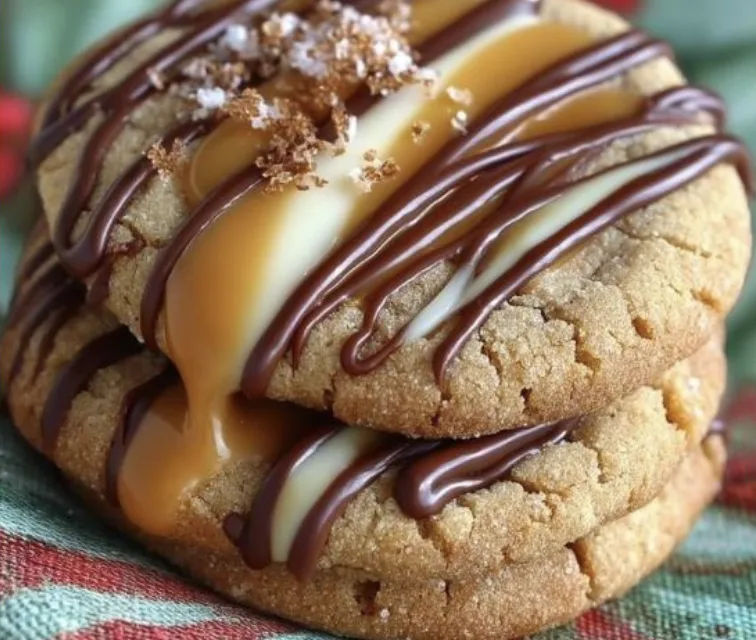
If you love the rich flavor of espresso, the sweetness of caramel, and the creamy taste of white chocolate, these Caramel Macchiato Cookies are a dessert worth adding to your baking list. Inspired by the popular coffeehouse drink, these cookies combine a soft, buttery cookie base with a delicious coffee flavor and an indulgent topping of caramel, white chocolate, and dark chocolate.
Each cookie offers a delightful balance of flavors. The coffee adds depth, the caramel brings a buttery sweetness, and the chocolate drizzle creates a rich finish that looks as beautiful as it tastes. Their attractive appearance makes them ideal for Christmas cookie trays, holiday gatherings, homemade gifts, and everyday treats when you want something a little more special than an ordinary cookie.
The best part is that you can prepare them in your own kitchen using familiar baking ingredients. You do not need professional decorating equipment or advanced baking skills. With a simple cookie dough, a few flavorful toppings, and some patience while the chocolate sets, you can create cookies that look like they came straight from a bakery.
This article provides a suggested homemade version inspired by the photograph. The image itself does not include a verified ingredient list or recipe measurements, so the quantities below are proposed for this version rather than confirmed as the original Sweet Banana Chef recipe.
Why You’ll Love These Caramel Macchiato Cookies
There are plenty of reasons to love these cookies, especially if you enjoy desserts inspired by your favorite coffee drinks.
1. Coffeehouse Flavor in Every Bite
A caramel macchiato combines coffee, milk, vanilla, and caramel into a sweet, flavorful drink. These cookies take inspiration from that combination by pairing espresso-flavored dough with creamy white chocolate and caramel sauce.
The coffee flavor adds a slightly bitter note that balances the sweetness of the toppings. Instead of tasting like an ordinary sugar cookie, each bite has a more complex flavor that appeals to both coffee lovers and dessert enthusiasts.
2. A Soft and Chewy Cookie Texture
The cookie base is designed to be tender in the center with lightly golden edges. Butter contributes richness, while brown sugar helps create a moist, chewy texture.
For the best results, avoid baking the cookies until they become completely firm in the oven. They will continue to set as they cool, helping preserve their soft centers.
3. A Beautiful Caramel and Chocolate Topping
One of the most appealing features of these cookies is their decoration. A creamy white chocolate drizzle, golden caramel sauce, and dark chocolate lines create a layered finish that looks impressive without requiring complicated techniques.
You can drizzle the toppings with a spoon or use small piping bags for more precise lines. Either way, the contrast between the different colors makes these cookies especially attractive on a dessert platter.
4. A Delicious Balance of Sweetness and Coffee
Caramel and white chocolate are naturally sweet, while espresso has a more intense, roasted flavor. Combining them creates a dessert that feels rich without relying on sweetness alone.
If you enjoy coffee-flavored desserts but do not want an overwhelmingly bitter taste, this combination provides a pleasant balance. You can also adjust the espresso flavor slightly to suit your preference.
5. Perfect for Special Occasions
These cookies work beautifully for Christmas, birthdays, parties, cookie exchanges, and family gatherings. Their glossy toppings make them look more elaborate than traditional drop cookies, yet the decorating process remains simple.
They also make thoughtful homemade gifts for friends and family members who enjoy coffee and chocolate.
Ingredients for Caramel Macchiato Cookies
The following ingredients are suggested for a homemade version inspired by the cookies in the photograph. They are not verified measurements from the original image source.
For the Cookie Dough
- 1/2 cup unsalted butter, softened: Provides richness and helps create a tender cookie texture.
- 1/2 cup packed light brown sugar: Adds moisture and a subtle caramel-like flavor.
- 1/4 cup granulated sugar: Contributes sweetness and supports the cookie’s texture.
- 1 large egg: Helps bind the dough and provides structure.
- 1 teaspoon vanilla extract: Adds a warm, rounded flavor that complements the coffee and caramel.
- 2 teaspoons instant espresso powder: Gives the cookies their signature coffee flavor.
- 1 tablespoon hot water: Helps dissolve the espresso powder before it is added to the dough.
- 1 1/2 cups all-purpose flour: Forms the structure of the cookies.
- 1/2 teaspoon baking soda: Helps the cookies spread and develop a tender texture.
- 1/4 teaspoon salt: Balances the sweetness and enhances the other flavors.
For the Topping
- 1/3 cup caramel sauce: Adds the buttery caramel flavor associated with a caramel macchiato.
- 1/3 cup white chocolate chips: Creates a creamy, pale drizzle.
- 1/3 cup semisweet chocolate chips: Adds a rich chocolate finish and contrasts with the caramel.
- 1 teaspoon neutral oil, divided as needed: Helps loosen the melted chocolate if necessary.
Use a caramel sauce with a consistency suitable for drizzling. If it is too thick, warm it gently according to the product instructions before decorating the cookies.
Ingredient Notes
Butter: Use softened butter rather than completely melted butter. Softened butter is easier to cream with the sugars and helps the dough develop a consistent texture.
Brown sugar: Light brown sugar adds moisture and a mild molasses flavor. Dark brown sugar can produce a deeper flavor, but it may also change the taste and color of the finished cookies.
Espresso powder: Instant espresso powder is a convenient way to add coffee flavor without introducing too much liquid into the dough. Make sure it dissolves thoroughly in the hot water before mixing it with the other ingredients.
Vanilla extract: Vanilla complements the coffee and caramel, helping bring the flavors together. Pure vanilla extract or a suitable baking vanilla can be used.
Caramel sauce: Choose a smooth sauce that can be drizzled over cooled cookies. A thick caramel topping may need gentle warming to make it easier to apply.
White chocolate: White chocolate gives the cookies their creamy, macchiato-inspired appearance. Use baking-quality white chocolate chips or chopped white chocolate that melts smoothly.
Semisweet chocolate: This creates the dark lines across the caramel and white chocolate. Its slightly bitter flavor balances the sweeter toppings.
Kitchen Equipment You Will Need
Before beginning, gather a few basic kitchen tools:
- A large mixing bowl.
- A medium bowl for dissolving the espresso powder.
- An electric hand mixer or sturdy whisk.
- A flexible spatula.
- Measuring cups and measuring spoons.
- A baking sheet.
- Parchment paper.
- A cookie scoop or tablespoon.
- Microwave-safe bowls for melting chocolate.
- Small spoons or piping bags for decorating.
- A wire cooling rack, if available.
Parchment paper helps prevent sticking and makes cleanup easier. Small piping bags are useful for creating thin chocolate lines, but a spoon works perfectly well if you prefer a more casual, homemade appearance.
How to Make Caramel Macchiato Cookies
Follow these steps to prepare the cookie dough, bake the cookies, and finish them with caramel and chocolate.
Step 1: Preheat the Oven
Preheat your oven to 350°F (175°C).
Line a baking sheet with parchment paper and set it aside. Preparing the baking sheet before mixing the dough makes the process easier once the cookies are ready to bake.
Allow the oven to reach the correct temperature before placing the cookies inside. An oven that is not fully preheated can affect how quickly the dough spreads and sets.
Step 2: Dissolve the Espresso Powder
Place the instant espresso powder in a small bowl and add the hot water.
Stir until the powder dissolves as completely as possible. Set the mixture aside briefly to cool.
Dissolving the espresso powder first helps distribute the coffee flavor throughout the dough. It also prevents dry pockets of coffee powder from appearing in the finished cookies.
Avoid adding the mixture while it is extremely hot, as it can soften the butter too much when combined with the other ingredients.
Step 3: Cream the Butter and Sugars
Place the softened butter, brown sugar, and granulated sugar in a large mixing bowl.
Using an electric mixer, beat the ingredients until the mixture becomes creamy and well combined. Stop occasionally to scrape the sides and bottom of the bowl with a spatula.
This step distributes the butter throughout the sugars and helps create a consistent cookie dough. The mixture should look smooth and slightly fluffy, although it does not need to become extremely pale.
If you are mixing by hand, use a sturdy whisk or wooden spoon and work until the butter and sugars are evenly combined.
Step 4: Add the Egg and Vanilla
Add the egg and vanilla extract to the butter mixture.
Mix until the egg is fully incorporated and the mixture looks smooth. Scrape down the sides of the bowl as needed to prevent ingredients from remaining unmixed around the edges.
Add the cooled espresso mixture and stir again until the coffee is evenly distributed.
At this stage, the dough should have a light coffee aroma. The espresso flavor will become more noticeable when combined with the caramel and chocolate toppings.
Step 5: Combine the Dry Ingredients
In a separate bowl, whisk together the all-purpose flour, baking soda, and salt.
Mixing the dry ingredients separately helps distribute the baking soda and salt evenly throughout the flour. This reduces the chance of uneven texture or isolated salty areas in the finished cookies.
Add the dry mixture gradually to the wet ingredients, mixing on low speed or stirring with a spatula.
Stop as soon as the flour is incorporated and no dry patches remain. Overmixing can develop too much gluten and make the cookies tougher than intended.
Step 6: Check the Dough Consistency
The dough should be soft enough to scoop but firm enough to hold its shape when portioned.
If it feels unusually sticky or warm, refrigerate it for approximately 20 to 30 minutes before shaping. This suggested resting period can make the dough easier to handle, although the precise chilling time may vary depending on the temperature of your kitchen.
Avoid adding large amounts of extra flour simply because the dough feels softer than expected. Too much flour can make the cookies dry and reduce their tenderness.
Step 7: Portion the Cookies
Scoop the dough into portions using a cookie scoop or tablespoon.
Roll each portion gently between your hands to create a ball, then place it on the prepared baking sheet. Leave enough space between the dough balls so they can spread during baking.
For more consistent results, try to keep the portions approximately the same size. Cookies that are similar in size are more likely to finish baking at the same time.
If your baking sheet cannot accommodate all the dough with sufficient spacing, bake the cookies in separate batches.
Step 8: Bake Until the Edges Are Set
Bake the cookies for approximately 10 to 13 minutes, checking them as they approach the lower end of the suggested range.
The edges should look set and lightly golden, while the centers may still appear slightly soft. The cookies will continue to firm up after they are removed from the oven.
Exact baking time depends on the size of the dough portions, the baking sheet, and your oven. Use the visual cues as well as the suggested time rather than relying on the clock alone.
Avoid baking until the entire surface becomes deeply brown. The goal is a tender cookie base that can support the toppings without becoming dry or hard.
Step 9: Cool the Cookies Completely
Remove the baking sheet from the oven and let the cookies rest on it for several minutes.
Once they are firm enough to handle, transfer them to a wire rack to cool completely.
This step is especially important because the toppings will be added after baking. Warm cookies can melt the white chocolate and chocolate too quickly, causing the drizzles to spread or blend together.
Wait until the cookies feel cool to the touch before decorating.
Step 10: Melt the White Chocolate
Place the white chocolate chips in a microwave-safe bowl.
Heat them in short intervals, stirring between each interval, until the chocolate is mostly melted. Continue stirring until the remaining pieces melt and the mixture becomes smooth.
White chocolate can scorch if heated for too long, so use gentle heat and avoid leaving it unattended. If it becomes too thick to drizzle, a small amount of suitable neutral oil may help loosen it.
Allow the chocolate to cool slightly before decorating so it remains fluid but does not run excessively.
Step 11: Prepare the Dark Chocolate
Place the semisweet chocolate chips in a separate microwave-safe bowl.
Heat in short intervals, stirring frequently until the chocolate is smooth. If needed, add a small amount of neutral oil to improve its drizzling consistency.
Keep the white chocolate and semisweet chocolate separate so that each retains its distinct color.
For the most attractive finish, the chocolate should flow easily from a spoon or piping bag while remaining thick enough to form visible lines on the cookie surface.
Step 12: Add the White Chocolate Drizzle
Arrange the cooled cookies on a clean tray or parchment-lined surface.
Use a spoon or piping bag to drizzle white chocolate across the top of each cookie. Move your hand from side to side to create thin, slightly curved lines.
The pattern does not need to be perfectly uniform. Small variations give the cookies a homemade appearance while still looking polished.
Allow the white chocolate to begin setting before adding a large amount of warm caramel. This helps preserve the layered appearance of the toppings.
Step 13: Add the Caramel Sauce
Drizzle caramel sauce over the white chocolate.
Use a spoon to create ribbons down the center or across the top of each cookie. If you prefer a more controlled design, place the caramel in a piping bag with a small opening.
Avoid adding so much caramel that it completely covers the cookie. Leaving some of the golden-brown surface visible makes the finished dessert more attractive and easier to handle.
If the caramel sauce is too thick to drizzle, warm it gently until it reaches a pourable consistency. Let it cool slightly before using it.
Step 14: Finish with Semisweet Chocolate
Drizzle the melted semisweet chocolate over the caramel and white chocolate.
Use thin lines that cross the other toppings to create the layered look shown in the photograph. You can make several narrow stripes or a few thicker ribbons, depending on the appearance you prefer.
For an elegant finish, keep the lines relatively thin and allow the caramel to remain visible underneath.
If desired, add a tiny pinch of flaky sea salt while the toppings are still soft. This is optional and should be used sparingly because the caramel and chocolate already provide plenty of flavor.
Step 15: Let the Toppings Set
Leave the decorated cookies at room temperature until the chocolate has firmed up.
The setting time will depend on the thickness of the drizzles and the temperature of your kitchen. Avoid stacking the cookies while the toppings are still soft, as the chocolate can transfer onto the cookies above them.
Once set, arrange the cookies on a serving plate or place them carefully in a storage container.
Tips for the Best Caramel Macchiato Cookies
A few practical techniques can help you achieve a consistent texture and a beautiful finish.
Use Properly Softened Butter
Butter that is too cold can be difficult to combine with the sugars. Butter that is completely melted can change how the dough spreads.
Let the butter soften until it yields slightly when pressed but still holds its shape. This makes creaming easier and helps create a more consistent dough.
Measure Flour Carefully
Adding too much flour is a common reason homemade cookies turn out dry or dense.
If measuring by volume, spoon the flour into the measuring cup and level the top rather than pressing the flour down. If your chosen recipe provides weight measurements, using a kitchen scale can improve consistency.
Do Not Overmix the Dough
Once the flour has been added, mix only until the ingredients are combined.
Overmixing can develop the gluten in the flour, making the cookies firmer and less tender. Gentle mixing is especially helpful when preparing soft, chewy cookies.
Let the Cookies Cool Before Decorating
Patience makes a noticeable difference when adding the toppings. If the cookies are warm, the white chocolate may melt into the caramel and the dark chocolate may lose its defined lines.
Allow the cookies to cool completely before starting the decorating process.
Use a Separate Bowl for Each Chocolate
Keeping the white and semisweet chocolate separate makes it easier to control the appearance of the finished cookies.
Use a clean spoon for each topping. This helps prevent the colors from mixing and keeps the white chocolate looking creamy rather than streaked with dark chocolate.
Warm the Caramel Gently
Cold caramel sauce can be too thick to drizzle evenly. Gentle warming makes it easier to spread into smooth ribbons.
Do not overheat it. Very hot caramel can burn skin and may melt the chocolate underneath. Let it cool slightly before applying it to the cookies.
Keep the Drizzles Balanced
The caramel and chocolate are important to the flavor, but too much topping can make the cookies overly sweet and messy to eat.
Use enough to create visible ribbons without completely covering the cookie. The best presentation lets the cookie base, caramel, white chocolate, and dark chocolate remain distinguishable.
Common Mistakes to Avoid
Adding Espresso Powder Without Dissolving It
Undissolved espresso powder can leave small concentrated spots of coffee flavor in the dough. Dissolving it in hot water first helps distribute the flavor more evenly.
Baking the Cookies for Too Long
Cookies that remain in the oven until completely firm can become dry as they cool. Remove them when the edges are set and lightly golden, allowing the centers to finish setting outside the oven.
Decorating Warm Cookies
Warm cookies can cause the toppings to melt together. Wait until they have cooled completely to maintain the layered appearance.
Using Chocolate That Is Too Hot
Excessively hot chocolate can become difficult to control and may cause the caramel to soften. Melt it gradually, stir frequently, and let it cool slightly before drizzling.
Stacking Cookies Before the Toppings Set
Soft chocolate and caramel can smear when cookies touch one another. Place the decorated cookies in a single layer until the topping is firm.
Delicious Variations to Try
These cookies are flexible enough to inspire several variations, depending on your favorite flavors.
Make the Coffee Flavor Stronger
If you enjoy a more pronounced espresso taste, you can try a version formulated with a stronger coffee flavor. Increase the espresso only cautiously, since changing the amount can affect the balance of flavor.
For a milder result, use a little less espresso powder while maintaining the other ingredient proportions as closely as possible.
Use Dark Chocolate Instead of Semisweet Chocolate
Dark chocolate creates a deeper, less sweet finish that pairs well with caramel. It is a good choice if you prefer a stronger chocolate flavor.
Because different chocolate products melt differently, heat gently and adjust the consistency as needed.
Add a Touch of Sea Salt
A small pinch of flaky sea salt can create a pleasant contrast with the caramel and chocolate. Sprinkle it over the topping before it sets so that it adheres to the surface.
Use a light hand to avoid making the cookies too salty.
Try a White Chocolate-Focused Version
For a sweeter, creamier finish, use more white chocolate in the decoration and keep the dark chocolate drizzle thin.
This variation emphasizes the vanilla-like notes associated with white chocolate while still allowing the coffee and caramel flavors to come through.
Add Chopped Pecans
Finely chopped pecans can add a nutty flavor and a little crunch. Sprinkle a small amount over the toppings while they are still soft.
Keep the pieces small so they adhere easily and do not make the cookies difficult to package.
Make Smaller Cookies
Smaller cookies can be useful for dessert platters and parties. Portion the dough into smaller, evenly sized balls and watch the baking time carefully, as smaller cookies may finish sooner.
The final yield and baking time will depend on the size you choose.
How to Store Caramel Macchiato Cookies
Because these cookies include caramel and chocolate toppings, proper storage helps protect their texture and appearance.
At Room Temperature
Once the toppings have completely set, place the cookies in an airtight container. Keep them in a cool, dry place away from direct sunlight and heat.
For best quality, enjoy them within about three days. The precise storage time can vary depending on the caramel sauce, the humidity, and the conditions in your kitchen.
If you stack the cookies, place parchment paper between the layers to reduce sticking and protect the decoration.
Can You Refrigerate the Cookies?
Refrigeration can help keep the toppings firm in a warm environment, but it may also make the cookie base firmer.
If you refrigerate them, use an airtight container. Before serving, allow the cookies to sit at room temperature briefly so the texture becomes more pleasant.
Avoid moving cold cookies directly into a humid environment while uncovered, as condensation can affect the chocolate finish.
Can You Freeze Them?
Freezing can affect the texture and appearance of decorated cookies, particularly when the topping contains caramel.
If you want to prepare these cookies in advance, consider freezing undecorated cookies only after confirming that your chosen cookie formula freezes well. Thaw them fully before adding fresh caramel and chocolate drizzles.
This approach can help preserve the appearance of the topping, although results may vary depending on the ingredients and storage conditions.
How to Serve Caramel Macchiato Cookies
These cookies are rich enough to serve on their own, but they also pair beautifully with a variety of drinks and desserts.
With a cup of coffee: Serve them alongside brewed coffee or an espresso for a treat that emphasizes their coffeehouse-inspired flavor.
With a latte: A creamy latte complements the caramel and chocolate, making this pairing especially enjoyable for coffee lovers.
With hot chocolate: The combination of chocolate, caramel, and a warm drink creates a comforting dessert for chilly days.
On a holiday cookie platter: Arrange the cookies with sugar cookies, shortbread, chocolate crinkle cookies, or other festive treats. Their glossy toppings add variety to the presentation.
As a homemade gift: Place completely cooled cookies in a food-safe box or tin with parchment paper between the layers. Choose packaging that prevents the toppings from being crushed.
As a dessert-table treat: Serve the cookies on a simple plate or cake stand. Their layered drizzles provide enough decoration without the need for additional frosting or elaborate garnishes.
Frequently Asked Questions
What Are Caramel Macchiato Cookies?
Caramel Macchiato Cookies are cookies inspired by the flavors of a caramel macchiato coffee drink. They typically combine a coffee-flavored cookie base with caramel and chocolate toppings. Variations may include white chocolate, vanilla, or other complementary ingredients.
Do These Cookies Taste Strongly of Coffee?
The coffee flavor depends on the amount and type of espresso used. This suggested version uses instant espresso powder for a noticeable coffee note that balances the sweetness of caramel and chocolate.
If you prefer a milder flavor, choose a recipe with less espresso. If you want a stronger coffee taste, use a formula designed for that adjustment.
Can I Use Regular Instant Coffee Instead of Espresso Powder?
Instant coffee may work, although the flavor can be milder or different depending on the product. Espresso powder is often chosen for baking because it provides concentrated coffee flavor.
If substituting, use a recipe that accounts for the strength of the coffee product rather than assuming all instant coffees have the same intensity.
Can I Use Store-Bought Caramel Sauce?
Yes. A smooth store-bought caramel sauce is a convenient option for decorating these cookies. Choose one that is thick enough to stay visible but fluid enough to drizzle.
If the sauce is too thick, warm it gently according to the product instructions.
Can I Use Only One Type of Chocolate?
Yes. You can decorate the cookies with only white chocolate or only semisweet chocolate if you prefer. Using both creates the layered appearance shown in the photograph, but the recipe can be adapted to your taste.
Why Did My Cookies Spread Too Much?
Possible causes include butter that was too warm, dough that was too soft, inaccurate flour measurements, or differences in oven temperature.
Try measuring the ingredients carefully and chilling the dough briefly if it is difficult to handle. Also make sure the oven has fully preheated before baking.
Why Are My Cookies Hard Instead of Soft?
Overbaking is one possible reason. Cookies often continue to firm up after leaving the oven, so they do not need to feel completely firm while still baking.
Too much flour or overmixing can also affect texture. Measure carefully and mix only until the dough comes together.
How Do I Make the Chocolate Drizzle Look Professional?
Use melted chocolate that flows smoothly but is not excessively hot. A piping bag with a small opening provides more control, while a spoon creates a more relaxed, homemade pattern.
Drizzle in thin lines and let each topping settle slightly before adding the next. This helps keep the colors distinct.
Can I Make These Cookies for Christmas?
Absolutely. Their caramel ribbons and contrasting chocolate drizzles make them attractive additions to Christmas cookie trays and holiday dessert tables.
They can also be packaged as homemade gifts, provided the toppings have completely set before the cookies are packed.
Can I Prepare Them in Advance?
You can bake the cookies ahead and decorate them closer to serving time. This allows you to prepare the cookie base without worrying about the toppings being damaged during storage.
For the best presentation, keep the undecorated cookies in an airtight container and add the caramel and chocolate when you are ready to finish them.
Are These Cookies Suitable for Gifting?
Yes. Once the toppings are firm, place the cookies in a food-safe container with parchment paper between the layers. Avoid packaging them while the caramel or chocolate is still soft.
If the weather is warm, keep the box away from heat and direct sunlight to help protect the decoration.
Caramel Macchiato Cookies Recipe Card
Recipe name: Caramel Macchiato Cookies
Category: Cookies, Dessert, Coffee-Inspired Treats
Flavor profile: Coffee, caramel, vanilla, and chocolate
Suggested preparation time: 20 minutes
Suggested baking time: 10–13 minutes per batch
Additional time: Cooling and topping-setting time
Yield: Approximately 12–16 cookies, depending on portion size
Ingredients
For the cookies
- 1/2 cup unsalted butter, softened
- 1/2 cup packed light brown sugar
- 1/4 cup granulated sugar
- 1 large egg
- 1 teaspoon vanilla extract
- 2 teaspoons instant espresso powder
- 1 tablespoon hot water
- 1 1/2 cups all-purpose flour
- 1/2 teaspoon baking soda
- 1/4 teaspoon salt
For the topping
- 1/3 cup caramel sauce
- 1/3 cup white chocolate chips
- 1/3 cup semisweet chocolate chips
- 1 teaspoon neutral oil, divided as needed
Instructions
- Preheat the oven to 350°F (175°C) and line a baking sheet with parchment paper.
- Dissolve the espresso powder in the hot water and allow the mixture to cool slightly.
- Beat the softened butter, brown sugar, and granulated sugar until creamy.
- Add the egg and vanilla extract, then mix in the cooled espresso mixture.
- In a separate bowl, whisk together the flour, baking soda, and salt.
- Gradually add the dry ingredients to the wet mixture, mixing just until combined.
- If the dough is very soft, refrigerate it for approximately 20 to 30 minutes.
- Scoop the dough into evenly sized portions and place them on the prepared baking sheet with space between each cookie.
- Bake for approximately 10 to 13 minutes, until the edges are set and lightly golden.
- Let the cookies rest on the baking sheet for several minutes, then transfer them to a rack and cool completely.
- Melt the white chocolate gently in a microwave-safe bowl, stirring between short heating intervals.
- Melt the semisweet chocolate separately, adding a little neutral oil if needed to improve the consistency.
- Drizzle the white chocolate over the cooled cookies.
- Add caramel sauce, followed by the semisweet chocolate drizzle.
- Allow the toppings to set completely before serving or storing.
Recipe Notes
- The ingredient quantities and method above are a suggested version inspired by the photograph, not verified original measurements.
- Use espresso powder for a concentrated coffee flavor.
- Cool the cookies completely before adding the toppings.
- Warm thick caramel sauce gently to make it easier to drizzle.
- Store the finished cookies in an airtight container in a cool, dry place and enjoy them within about three days for best quality.
Final Thoughts
Caramel Macchiato Cookies bring together the comforting flavor of coffee, the buttery sweetness of caramel, and the richness of chocolate in one attractive dessert. Their soft cookie base and glossy toppings make them a lovely choice for coffee lovers, holiday baking, special occasions, or a homemade treat to share with family and friends.
Although the finished cookies look impressive, the process is manageable with basic kitchen equipment. Prepare the dough, bake until the edges are set, allow the cookies to cool, and finish with white chocolate, caramel, and semisweet chocolate.
For the best results, measure carefully, avoid overbaking, and give the toppings enough time to set before serving. Arrange the finished cookies on a platter or package them as gifts for a sweet treat that looks as appealing as it tastes.
Source note: The image contains the Sweet Banana Chef website name but does not show the original recipe measurements. This article therefore uses a suggested recipe inspired by the visual appearance of the cookies. It should not be treated as a verified transcription of the website’s original recipe.