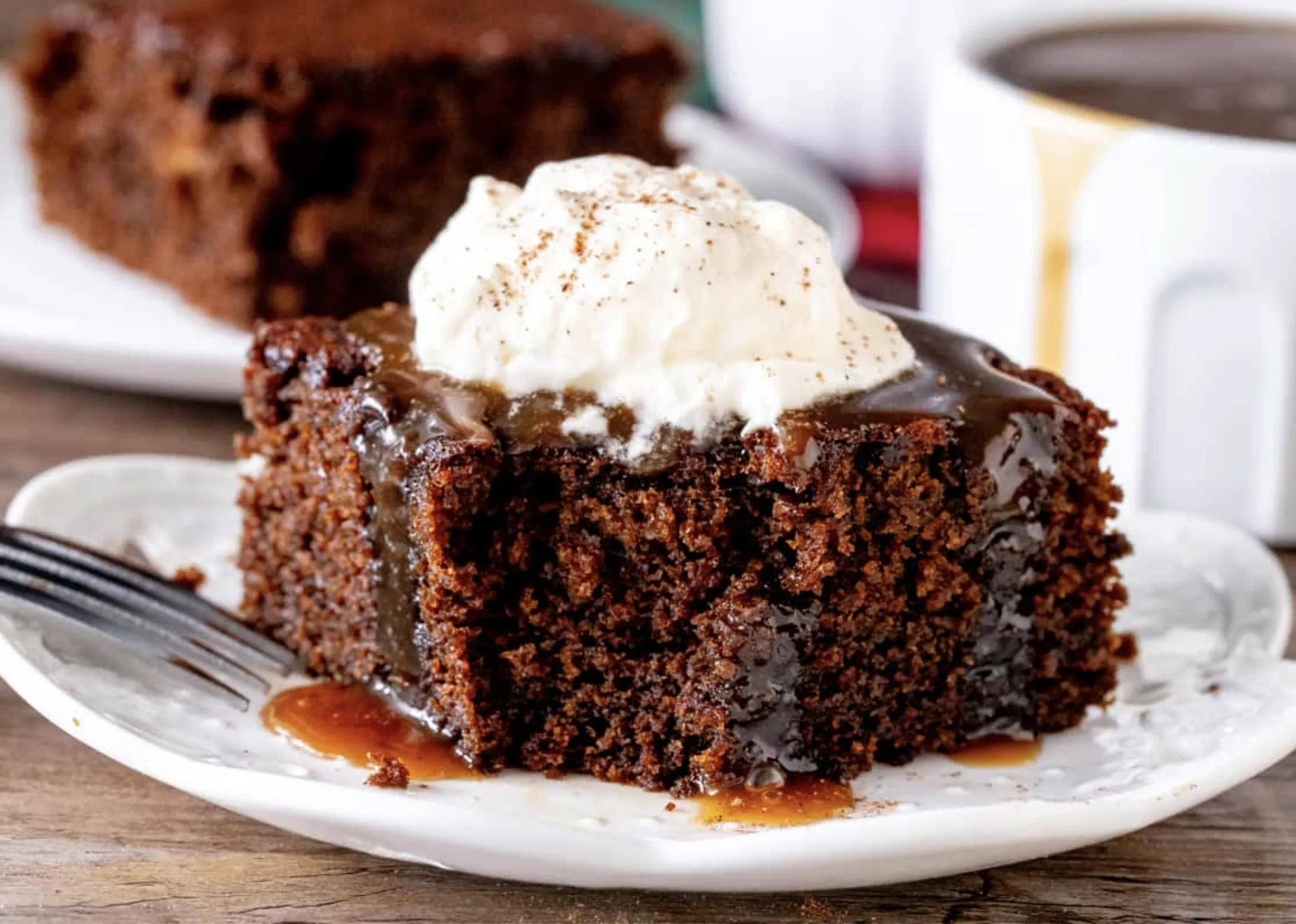
Old-Fashioned Gingerbread Cake is a timeless holiday dessert filled with warm spices, rich molasses, brown sugar, and vanilla. This moist, tender cake has a deep gingerbread flavor with hints of cinnamon, nutmeg, and cloves, creating the comforting taste and aroma that make homemade gingerbread so special during the Christmas season.
Unlike crisp gingerbread cookies, this traditional gingerbread cake has a soft, dense crumb that stays wonderfully moist. It is sweet without being overwhelming, allowing the distinctive flavor of ginger and molasses to shine through. Each slice is delicious on its own, but serving it warm with homemade butterscotch sauce and a dollop of whipped cream takes it to another level.
One of the best things about this recipe is how simple it is to prepare. You do not need an electric mixer or complicated baking techniques. The dry ingredients are whisked together in one bowl, while the melted butter, brown sugar, molasses, and hot water form the flavorful wet mixture. Once the eggs and vanilla are incorporated, the ingredients are combined to create a thin batter that bakes into a beautifully moist cake.
The homemade butterscotch sauce is an especially delicious addition. Made with butter, brown sugar, salt, heavy cream, and vanilla extract, it adds a smooth, creamy sweetness that complements the bold spices in the cake.
This Gingerbread Cake is perfect for Christmas celebrations, holiday dinners, afternoon tea, or a cozy dessert on a cold evening. You can prepare it in a 9-by-13-inch baking pan, cut it into individual portions, and serve it warm with your favorite toppings.
Whether you grew up enjoying traditional gingerbread or are discovering this classic dessert for the first time, this recipe is a wonderful way to bring comforting holiday flavors into your kitchen.
Why You Will Love This Gingerbread Cake
There are plenty of reasons to add this old-fashioned gingerbread recipe to your holiday baking collection.
1. Rich, Warm Gingerbread Flavor
The combination of ground ginger, cinnamon, nutmeg, and cloves gives this cake its signature flavor. Each spice contributes something different, creating a balanced blend that tastes warm, fragrant, and comforting.
Molasses adds depth and a distinctive sweetness, while brown sugar enhances the caramel-like notes. Vanilla extract rounds out the flavor and complements the spices without overpowering them.
2. Soft and Moist Texture
This gingerbread cake is designed to have a moist, dense texture with a tender crumb. The combination of melted butter, molasses, brown sugar, hot water, and eggs helps create a cake that is rich without being overly heavy.
The batter is thinner than many conventional cake batters, and this is expected. Once baked, it develops the soft texture that makes traditional gingerbread cake so enjoyable.
3. Easy Preparation Without a Mixer
You can make this recipe using mixing bowls and a whisk. There is no need for an electric mixer, complicated creaming techniques, or multiple rounds of decoration.
The dry ingredients are combined separately from the wet ingredients, then gently mixed together until the batter is smooth. This straightforward method makes the recipe approachable for beginners and experienced home bakers alike.
4. Homemade Butterscotch Sauce
The accompanying butterscotch sauce adds another layer of flavor to the finished dessert.
Brown sugar and butter create the base, while whipping cream makes the sauce smooth and rich. A little salt balances the sweetness, and vanilla extract adds warmth.
Drizzle the sauce over warm gingerbread just before serving so it flows over the cake and settles into the soft crumb.
5. Perfect for Christmas and Winter Gatherings
Gingerbread is a classic holiday flavor, and the aroma of ginger, cinnamon, nutmeg, and cloves fills the kitchen as the cake bakes.
Serve it after a Christmas dinner, bring it to a holiday gathering, or enjoy a slice with a warm drink during a quiet afternoon.
6. Easy to Serve a Crowd
The recipe uses a 9-by-13-inch cake pan and yields approximately 15 servings.
Instead of preparing individual cakes or cookies, you can bake one large cake and cut it into portions when you are ready to serve. This makes it convenient for family gatherings and holiday meals.
7. Flexible Serving Options
Although warm gingerbread with butterscotch sauce is the recommended serving method, there are several other ways to enjoy it.
Try a dollop of whipped cream, a sprinkle of cinnamon, a dusting of powdered sugar, caramel sauce, or cream cheese frosting. These options let you adapt the presentation to your preferences and the occasion.
Ingredients for Old-Fashioned Gingerbread Cake
This recipe has two components: the gingerbread cake and the homemade butterscotch sauce. Measuring the ingredients accurately helps preserve the intended flavor and texture.
Ingredients for the Gingerbread Cake
All-Purpose Flour: 2⅓ Cups
Flour provides the structure for the cake. It helps the batter hold together as it bakes and creates the soft, sliceable crumb associated with traditional gingerbread.
Measure the flour carefully to avoid adding too much, which can make the cake dry or dense. If you use measuring cups, avoid packing the flour down.
Ground Ginger: 2 Teaspoons
Ground ginger is the main spice responsible for the cake’s distinctive gingerbread flavor.
The recipe uses two teaspoons to give the cake a noticeable ginger taste without making the spices overwhelmingly strong. It works alongside cinnamon, nutmeg, and cloves to create the classic flavor profile.
Ground Cinnamon: 1½ Teaspoons
Cinnamon adds warmth and sweetness to the spice mixture. Its familiar aroma complements the ginger and molasses, making the cake especially appealing during the holidays.
Ground Nutmeg: ½ Teaspoon
Nutmeg contributes a subtle, aromatic flavor that adds depth to the cake. Because it is used in a smaller quantity than ginger and cinnamon, it supports the overall spice blend without dominating it.
Ground Cloves: ¼ Teaspoon
Ground cloves have a strong, warm aroma, so only a small amount is needed.
The quarter teaspoon used in this recipe helps complete the traditional gingerbread spice combination.
Baking Soda: 1½ Teaspoons
Baking soda helps the cake rise during baking and contributes to its texture.
Measure it carefully and whisk it thoroughly with the flour and spices so it is distributed throughout the batter.
Salt: ¼ Teaspoon
Salt balances the sweetness and helps bring out the flavors of the spices, molasses, and butter.
Unsalted Butter, Melted: ¾ Cup
Melted butter contributes richness and helps create the cake’s moist texture.
Allow the butter to cool slightly before mixing it with the other wet ingredients. The mixture should not be so hot that it risks scrambling the eggs when they are added later.
Brown Sugar: 1 Cup
Brown sugar adds sweetness and a deeper flavor that complements molasses.
The original recipe allows either light or dark brown sugar. Both can be used, depending on what you have available.
Molasses: 1 Cup
Molasses is one of the defining ingredients in traditional gingerbread. It provides the dark color, distinctive flavor, and rich sweetness that make this cake different from an ordinary spiced cake.
The original recipe recommends using molasses labeled as fancy molasses or cooking molasses. Avoid blackstrap molasses because its flavor can be more bitter.
If molasses is difficult to find, the source notes that honey can be substituted, although the flavor will be milder and different from the original version.
Hot Water: 1 Cup
Hot water thins the molasses mixture, helping it combine evenly with the other ingredients.
It also contributes moisture to the batter. The resulting mixture will be relatively thin, which is normal for this recipe.
Large Eggs: 2
Eggs help bind the ingredients together and provide structure to the cake.
Whisk them into the wet mixture only after it has cooled enough. If the butter and molasses mixture is too hot, the eggs may begin to scramble.
Vanilla Extract: 2 Teaspoons
Vanilla extract adds warmth and complements the ginger, cinnamon, and molasses.
It is added to the wet ingredients along with the eggs so the flavor is distributed throughout the batter.
Ingredients for the Homemade Butterscotch Sauce
Unsalted Butter: ⅓ Cup
Butter forms the rich base of the butterscotch sauce. It combines with brown sugar to create the sauce’s characteristic buttery flavor.
Brown Sugar: ¾ Cup
Brown sugar gives the sauce its sweetness and deep caramel-like taste.
It is stirred into the melted butter until dissolved before the cream is added.
Salt: ½ Teaspoon
Salt balances the sweetness of the brown sugar and cream, helping create a more rounded flavor.
Whipping Cream: ⅔ Cup
Whipping cream gives the sauce its smooth, rich consistency.
It is whisked into the butter and brown sugar mixture, then gently boiled until incorporated.
Vanilla Extract: 2 Teaspoons
Vanilla adds a final layer of flavor to the sauce. It is stirred in after the saucepan is removed from the heat.
How to Make Old-Fashioned Gingerbread Cake
Follow these steps to prepare the cake and homemade butterscotch sauce. The process is simple, but allowing the wet mixture to cool slightly before adding the eggs is important.
Step 1: Preheat the Oven and Prepare the Pan
Preheat your oven to 350°F (180°C).
Lightly grease a 9-by-13-inch (23-by-33-centimeter) cake pan and dust it with flour.
Coating the pan helps prevent the cake from sticking and makes it easier to cut and serve the finished dessert.
Set the prepared pan aside while you mix the batter.
Step 2: Combine the Dry Ingredients
In a large bowl, whisk together the flour, ground ginger, cinnamon, nutmeg, ground cloves, baking soda, and salt.
Continue whisking until the spices and leavening agent are evenly distributed throughout the flour.
This step helps ensure that each portion of the cake has a balanced flavor and that the baking soda is spread throughout the batter.
Set the bowl aside while you prepare the wet ingredients.
Step 3: Mix the Butter, Brown Sugar, Molasses, and Hot Water
In a separate large bowl, whisk together the melted butter, brown sugar, molasses, and hot water.
Whisk until the ingredients are combined and the butter no longer appears separated from the mixture.
The hot water helps thin the molasses, making it easier to distribute throughout the batter. This is particularly useful because molasses is thick and sticky.
If the mixture is still very warm, allow it to cool slightly before adding the eggs.
Step 4: Add the Eggs and Vanilla
Whisk the two large eggs into the wet mixture, followed by the vanilla extract.
Make sure the mixture is not too hot before adding the eggs. If it is excessively warm, the eggs may begin to cook or scramble instead of blending smoothly into the batter.
Whisk until the eggs and vanilla are incorporated.
The mixture should look relatively uniform before you add the dry ingredients.
Step 5: Combine the Wet and Dry Ingredients
Gradually add the dry ingredients to the wet mixture.
Gently whisk until the flour mixture is incorporated and there are no more visible lumps.
Avoid mixing more than necessary. The goal is to create a smooth batter without overworking it.
You will notice that the batter is quite thin compared with some other cake batters. This is expected for this gingerbread recipe, so there is no need to add extra flour simply to make it thicker.
Step 6: Pour the Batter into the Pan
Pour the finished batter into the prepared 9-by-13-inch cake pan.
Use a spatula to spread it evenly if necessary, making sure the batter reaches the corners of the pan.
Carefully transfer the pan to the preheated oven.
Step 7: Bake the Gingerbread Cake
Bake at 350°F (180°C) for approximately 30–35 minutes.
Begin checking around the 30-minute mark. Insert a toothpick into the center of the cake. It should come out clean or with a few crumbs attached, rather than wet batter.
If the center needs more time, return the pan to the oven and check again after a short interval.
The original recipe notes that baking may take up to 35 minutes, so do not be concerned if your cake needs the longer end of the suggested range.
Once the cake is baked through, remove it from the oven and allow it to cool enough to slice and serve comfortably.
How to Make Homemade Butterscotch Sauce
The butterscotch sauce is an excellent accompaniment to this gingerbread cake. Its buttery sweetness complements the rich molasses and warm spices.
Step 1: Melt the Butter
Place the unsalted butter in a medium saucepan over low to medium heat.
Allow it to melt gently.
Using moderate heat helps you control the process and gives you time to incorporate the brown sugar without rushing.
Step 2: Add the Brown Sugar and Salt
Once the butter has melted, add the brown sugar and salt.
Stir gently until the brown sugar has dissolved into the butter.
Continue stirring as needed to help the mixture combine evenly.
Step 3: Bring the Mixture to a Gentle Boil
Allow the butter and sugar mixture to reach a gentle boil.
Keep the heat controlled and stir as necessary. The goal is to combine the sugar and butter before incorporating the cream.
Step 4: Whisk in the Whipping Cream
Pour in the whipping cream and whisk the mixture as it gently boils.
Continue whisking until the cream is incorporated and the sauce looks smooth.
Avoid letting the mixture boil too aggressively. Gentle heat allows you to control the sauce as the ingredients come together.
Step 5: Add the Vanilla Extract
Remove the saucepan from the heat.
Whisk in the vanilla extract until evenly incorporated.
The sauce is now ready to serve with the gingerbread cake. If you are preparing the sauce ahead of time, transfer it to an appropriate storage container once it has cooled.
How to Serve Gingerbread Cake
This cake is especially delicious when served warm, but there are several ways to present it depending on the occasion.
1. Warm Gingerbread with Butterscotch Sauce
The original recipe recommends serving the cake warm with warm butterscotch sauce.
Cut the cake into individual portions and drizzle the sauce over each slice. The rich sauce complements the ginger, cinnamon, molasses, and brown sugar, creating a comforting dessert that feels perfect for Christmas dinner.
If you are serving the cake after an evening meal, you can time the baking so it comes out of the oven shortly before dinner. This gives it a little time to cool before slicing and serving.
2. Add a Dollop of Whipped Cream
Whipped cream is an optional topping that pairs beautifully with the warm spices.
Add a dollop to each serving and finish with a little cinnamon if desired. The light, creamy texture contrasts with the dense, moist cake and rich butterscotch sauce.
3. Sprinkle with Powdered Sugar
For a simpler presentation, dust the cooled cake with powdered sugar.
This option adds a decorative finish without requiring a separate sauce. It is useful when you want the flavor of the gingerbread to remain the main focus.
4. Serve with Caramel Sauce
Caramel sauce is another alternative suggested in the original recipe.
Drizzle a small amount over each slice for an extra layer of sweetness. This is a good option if you prefer caramel flavors to butterscotch.
5. Add Cream Cheese Frosting
If you prefer a frosted cake, allow the gingerbread to cool completely and spread cream cheese frosting over the top.
The tangy frosting provides a contrast to the sweetness of the cake and creates a different presentation from the traditional warm dessert.
6. Enjoy with Afternoon Tea or Coffee
Gingerbread is also an excellent treat for an afternoon break.
Serve a slice with coffee or tea and enjoy the combination of molasses, brown sugar, and spices. The cake’s balanced sweetness makes it suitable for a snack as well as a dessert.
Tips for the Best Gingerbread Cake
A few simple techniques can help you achieve the moist texture and rich flavor that make this recipe special.
Use the Right Type of Molasses
The original recipe recommends fancy molasses or cooking molasses.
Avoid blackstrap molasses because its stronger, more bitter flavor can overpower the spices and change the intended taste of the cake.
Molasses is one of the main ingredients, so choosing the type specified in the recipe is important for achieving the expected flavor.
Let the Wet Mixture Cool Before Adding Eggs
The melted butter, molasses, brown sugar, and hot water mixture can be warm.
Before adding the eggs, make sure the mixture is not too hot. Adding eggs to an excessively hot liquid can cause them to scramble, affecting the consistency of the batter.
If necessary, pause briefly to allow the mixture to cool.
Measure the Spices Carefully
Ginger, cinnamon, nutmeg, and cloves work together to create the cake’s distinctive flavor.
Use the quantities specified in the recipe rather than increasing all the spices automatically. The original author tested the proportions to create a ginger-forward cake without making the overall flavor too strong.
Do Not Worry About the Thin Batter
This batter is thinner than many traditional cake batters because of the molasses and hot water.
The source recipe specifically notes that this is expected. Once the dry ingredients have been incorporated, pour the batter into the prepared pan without adding extra flour to thicken it.
Avoid Overmixing
Whisk the dry ingredients into the wet ingredients gently until the lumps disappear.
Overmixing cake batter can affect its texture. Once the ingredients are combined, stop mixing and transfer the batter to the pan.
Check for Doneness with a Toothpick
Start checking the cake around 30 minutes.
Insert a toothpick into the center. If it comes out clean or with a few crumbs, the cake is ready. If wet batter remains on the toothpick, bake for a little longer.
The recipe allows approximately 30–35 minutes, depending on your oven.
Serve the Cake Warm
Although the cake can be served after cooling, warm gingerbread with butterscotch sauce is the recommended presentation.
The warm spices and rich sauce create a comforting combination that is particularly suitable for holiday desserts.
Can You Make Gingerbread with Honey Instead of Molasses?
Yes. The original recipe notes that honey can be substituted if molasses is unavailable.
In some countries, gingerbread is traditionally made with honey rather than molasses. Honey creates a milder flavor, while molasses provides the deep, distinctive taste associated with this version of gingerbread.
Because the supplied recipe was developed and tested using molasses, the author recommends using molasses whenever possible.
If you do use honey, expect the finished cake to have a different flavor profile. It may not have the same dark, rich molasses character as the original recipe.
For the closest match to the intended taste, choose fancy molasses or cooking molasses and avoid blackstrap molasses.
How to Store Gingerbread Cake
If you have leftovers, proper storage helps keep the cake moist and flavorful.
Storing at Room Temperature
Place leftover cake in an airtight container and store it at room temperature for up to three days, according to the original recipe.
Keep the cake covered between servings to help prevent the surface from drying out.
If you are serving the cake with butterscotch sauce, store the sauce separately rather than pouring it over the entire cake before storage.
Storing in the Refrigerator
The original recipe allows the cake to be refrigerated for up to five days.
Place it in an airtight container to protect the texture and prevent it from absorbing other refrigerator odors.
If the cake has been refrigerated, you may prefer to warm individual portions before serving them with butterscotch sauce.
Storing the Butterscotch Sauce
Transfer leftover butterscotch sauce to an airtight container and refrigerate it for up to one week.
Keep the sauce separate from the cake so you can add the desired amount to each serving.
When you are ready to use the sauce, warm it gently until it reaches a pourable consistency, taking care not to overheat it.
Frequently Asked Questions
What is the difference between gingerbread cake and gingerbread cookies?
Gingerbread cake is soft, moist, and relatively dense, while gingerbread cookies are usually shaped individually and can have a firmer texture.
This recipe produces a cake with a tender crumb and a rich molasses flavor. It is baked in a 9-by-13-inch pan and cut into individual pieces rather than rolled and cut into cookie shapes.
What type of molasses should I use?
The original recipe recommends fancy molasses or cooking molasses.
Avoid blackstrap molasses because it can taste bitter and may overpower the other ingredients.
Can I replace molasses with honey?
Yes. The source notes that honey can be substituted if necessary, although the flavor will be milder and different from the original molasses-based cake.
For the intended flavor, molasses is recommended.
Why is my gingerbread batter so thin?
The batter is expected to be relatively thin because the recipe uses one cup of hot water along with molasses, melted butter, and other wet ingredients.
The original instructions specifically mention that the thin consistency is normal. Do not add extra flour simply to make it thicker.
How do I know when the cake is finished baking?
Bake the cake at 350°F for approximately 30–35 minutes.
Insert a toothpick into the center. It should come out clean or with a few crumbs rather than wet batter. If necessary, continue baking until the center is done.
Can I make the butterscotch sauce ahead of time?
Yes. The original recipe states that the sauce can be stored in an airtight container in the refrigerator for up to one week.
Keep it separate from the cake and warm it gently before serving if you want a pourable sauce.
What can I serve with gingerbread cake?
The original recipe recommends warm butterscotch sauce and an optional dollop of whipped cream.
Other suggested options include caramel sauce, a sprinkling of powdered sugar, or cream cheese frosting. The cake can also be served with coffee or tea.
How long does gingerbread cake last?
According to the original recipe, store leftovers in an airtight container at room temperature for up to three days or in the refrigerator for up to five days.
Can I frost gingerbread cake?
Yes. The original recipe suggests allowing the cake to cool fully before topping it with cream cheese frosting.
This creates a different presentation from the traditional warm gingerbread served with butterscotch sauce.
Can I make this recipe without an electric mixer?
Yes. The recipe is designed to be made without an electric mixer.
Use a whisk to combine the dry ingredients, mix the wet ingredients in a separate bowl, and gently whisk the two mixtures together until smooth.
Old-Fashioned Gingerbread Cake Recipe Card
Prep Time: 15 minutes
Cook Time: 30–35 minutes
Total Time: 50 minutes
Yield: 15 pieces
Course: Dessert, Cake
Cuisine: Traditional
Author: Fiona Dowling
Ingredients
For the gingerbread cake
- 2⅓ cups all-purpose flour
- 2 teaspoons ground ginger
- 1½ teaspoons ground cinnamon
- ½ teaspoon ground nutmeg
- ¼ teaspoon ground cloves
- 1½ teaspoons baking soda
- ¼ teaspoon salt
- ¾ cup unsalted butter, melted
- 1 cup light or dark brown sugar
- 1 cup molasses
- 1 cup hot water
- 2 large eggs
- 2 teaspoons vanilla extract
For the butterscotch sauce
- ⅓ cup unsalted butter
- ¾ cup brown sugar
- ½ teaspoon salt
- ⅔ cup whipping cream
- 2 teaspoons vanilla extract
Instructions
For the Gingerbread Cake
- Preheat the oven to 350°F (180°C). Lightly grease a 9-by-13-inch (23-by-33-centimeter) cake pan and dust it with flour.
- In a large bowl, whisk together the flour, ginger, cinnamon, nutmeg, cloves, baking soda, and salt.
- In a separate large bowl, whisk together the melted butter, brown sugar, molasses, and hot water until combined and the butter no longer appears separated.
- Make sure the mixture is not too hot, then whisk in the eggs and vanilla extract.
- Gently whisk the dry ingredients into the wet mixture until no lumps remain. The batter will be thin.
- Pour the batter into the prepared pan.
- Bake for 30–35 minutes, or until a toothpick inserted into the center comes out clean or with a few crumbs.
For the Butterscotch Sauce
- Place the butter in a medium saucepan over low to medium heat.
- Melt the butter, then add the brown sugar and salt.
- Stir gently until the brown sugar dissolves.
- Bring the mixture to a gentle boil, then whisk in the whipping cream.
- Continue whisking as the mixture gently boils until the cream is incorporated.
- Remove the saucepan from the heat and whisk in the vanilla extract.
To Serve
- Slice the gingerbread cake with a sharp knife.
- Serve warm with butterscotch sauce.
- Add a dollop of whipped cream and a sprinkle of cinnamon if desired.
Storage Notes
- Room temperature: Store leftover cake in an airtight container for up to three days.
- Refrigerator: Store the cake in an airtight container for up to five days.
- Butterscotch sauce: Store separately in an airtight container in the refrigerator for up to one week.
Nutrition Information
Estimated per serving, including butterscotch sauce, assuming the cake and sauce are divided evenly into 15 portions:
- Calories: 402 kcal
- Carbohydrates: 58 g
- Protein: 3 g
- Fat: 18 g
- Saturated Fat: 11 g
- Cholesterol: 75 mg
- Sodium: 257 mg
- Potassium: 407 mg
- Fiber: 1 g
- Sugar: 42 g
- Vitamin A: 601 IU
- Vitamin C: 1 mg
- Calcium: 87 mg
- Iron: 2 mg
Final Thoughts
Old-Fashioned Gingerbread Cake is a comforting dessert that brings together everything people love about traditional holiday baking. Its rich molasses flavor, warm spices, brown sugar, and vanilla create a moist cake with a soft, dense crumb and a wonderfully inviting aroma.
The simple preparation makes this recipe accessible even if you do not have an electric mixer. Whisk the dry ingredients, combine the melted butter and molasses with the other wet ingredients, gently mix everything together, and bake until the center is set.
The homemade butterscotch sauce makes the dessert even more special. Its buttery brown sugar flavor complements the gingerbread beautifully, especially when served warm with whipped cream.
For the best results, use fancy or cooking molasses, allow the wet mixture to cool slightly before adding the eggs, and avoid overmixing the batter. Remember that the batter should be thin, and check the cake with a toothpick toward the end of the baking time.
Serve this cake after a Christmas dinner, enjoy it during an afternoon coffee break, or share it with family and friends throughout the holiday season. Whether you choose warm butterscotch sauce, caramel, powdered sugar, or cream cheese frosting, this gingerbread cake is a delicious way to enjoy a timeless seasonal favorite.