
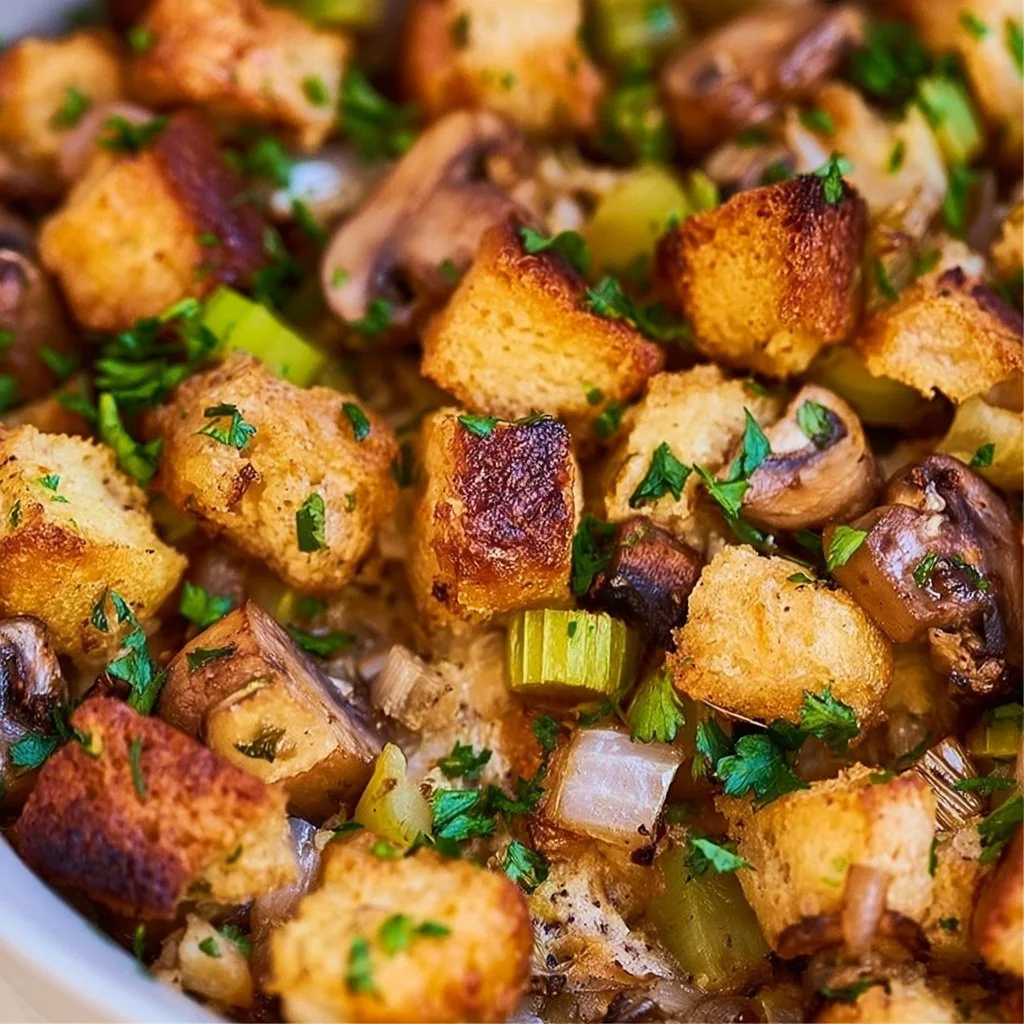
Rustic Sourdough Stuffing | Easy Thanksgiving Side Dish
Sourdough stuffing is often hailed as one of the most delicious side dishes available, particularly during the Thanksgiving holiday. Featuring the unique tang and robust character of sourdough bread, this rustic stuffing brings an inviting aroma to your kitchen as it bakes. The combination of celery, onion, and garlic provides a wonderful savory base that blends seamlessly with aromatic herbs such as thyme and parsley. When you pull it out of the oven, expect a golden-brown top, crisp edges, and a soft, flavorful center that promises to delight each guest at your table.
Served alongside turkey, mashed potatoes, and cranberry sauce, customizable sourdough stuffing becomes a centerpiece side dish both visually and in flavor. Each bite delivers a comforting embrace of earthy textures and bright, herby notes. It expertly captures the essence of home cooking with its inviting flavors that remind you of family gatherings and holiday traditions. Whether it’s the main course at family feasts or a delicious addition to an everyday meal, this dish is sure to satisfy and impress.
The best part? This rustic sourdough stuffing is simple enough for even novice cooks to master. With just a handful of ingredients and straightforward instructions, you can whip up a dish that feels far more complex than it is. Perfect for Thanksgiving gatherings, potlucks, or a cozy Sunday dinner, this recipe accommodates both large spread and intimate family settings. The lovely combination of crunch and softness will become a beloved staple in your recipe arsenal, inviting you to experiment with flavors and ingredients year after year.
What Makes This Recipe Special
The charm of this recipe lies in its balance of simplicity and flavor. The sourdough bread, with its crusty exterior and chewy interior, contrasts beautifully with the soft, aromatic vegetable mixture. This layering of textures is a hallmark of any successful stuffing, making each forkful an enjoyable medley. The inclusion of fresh herbs elevates the taste, offering complex notes that cut through the richness of butter and broth, which helps bind the stuffing together.
While traditional stuffing recipes often lean on a variety of breads, the use of sourdough presents a distinctive flavor profile. Its gentle tanginess brightens the dish, ensuring that the final product is far from bland. Compared to sweet bread such as brioche or white bread, the sourdough provides a hearty foundation that can hold its own against bold flavors without becoming overly mushy. This unique quality sets it apart from many other stuffing recipes, making it a must-try for those seeking something a bit different on their holiday tables.
What truly makes this savory stuffing special, however, is the potential for customization. Feel free to experiment with additional ingredients, such as mushrooms, nuts, or even dried cranberries to add sweetness and texture. Each variation can create a unique experience that reflects personal tastes and seasonal availability. The foundational elements remain the same, allowing for flexibility while maintaining the comforting essence of iconic Thanksgiving stuffing.
Ingredient Overview and Helpful Notes
When creating this rustic sourdough stuffing, understanding the role of each ingredient is key to achieving the best results. The star of the show, sourdough bread, not only provides a firm texture but also a delightful flavor that permeates each bite. Its tangy profile helps keep the stuffing from being overly rich, ensuring that the dish complements rather than dominates the rest of your meal.
The vegetables, including onion, celery, and garlic, contribute depth and aroma, transforming the stuffing into a savory harmony of flavors. Onions yield natural sweetness when sautéed, while celery adds a necessary crunch, providing contrast to the softer bread cubes. Garlic introduces a rich, aromatic element that enhances the overall flavor. Choose fresh, firm vegetables with vibrant colors for the best results.
Fresh herbs, including thyme and parsley, add bright flavors and freshness to the dish. They invigorate the stuffing, lifting it with fragrant notes that will make your kitchen smell delightful as the stuffing bakes. When selecting herbs, look for bright green, fragrant leaves. For a substitution, dried herbs could work in a pinch, but keep in mind that the fresh variety generally lends a more intense flavor.
Finally, broth brings everything together by moistening the bread cubes without making them soggy. Either vegetable or chicken broth can be used, depending on dietary preferences. It’s vital to taste the broth and adjust the seasoning if necessary before adding it to the mixture. Additionally, choose high-quality butter for sautéing, as it adds richness and flavor to the vegetables and ultimately to the stuffing itself.
Nutrition & Recipe Details
Nutritional values may vary depending on ingredient brands, portion sizes, and preparation methods. However, here’s a general overview of what to expect from this delicious stuffing recipe.
| Item | Value |
|---|---|
| Prep time | 20 minutes |
| Cook time | 30-40 minutes |
| Store time | 3-4 days in the refrigerator |
| Calories | 220 per serving (estimated) |
| Protein | 5g |
| Carbohydrates | 30g |
| Fat | 9g |
How to Make Rustic Sourdough Stuffing
Preparing sourdough stuffing is an engaging and straightforward process. Begin by gathering your ingredients and equipment. Essential items include a large skillet for sautéing the vegetables, a mixing bowl for combining all ingredients, and a greased baking dish for the final baking step. Pre-measuring your ingredients can help streamline the cooking process, making it easier to follow each step seamlessly.
Once all your ingredients are assembled, ensure you have a plan in place. This will help manage your cooking time effectively. Start by cube cutting the sourdough bread, allowing it a chance to dry out a bit. This firmness will improve the overall texture of the stuffing once baked. Next, dice the vegetables finely, so they cook evenly and blend perfectly into the bread mixture.
The following sections provide a comprehensive guide on how to put together this delightful rustic sourdough stuffing.
Ingredients
| Ingredient | Quantity |
|---|---|
| Sourdough bread | 1 loaf, cubed |
| Onion | 1, diced |
| Celery | 2 stalks, diced |
| Garlic | 2 cloves, minced |
| Vegetable or chicken broth | 1 cup |
| Fresh thyme | 1 tablespoon, chopped |
| Fresh parsley | 1 tablespoon, chopped |
| Salt and Pepper | to taste |
| Butter | 1/4 cup |
Before starting the cooking process, it’s essential to prepare your ingredients properly. Cut the sourdough bread into small cubes to ensure they absorb the broth evenly and achieve the right texture during baking. For the onions and celery, aim for uniform chopping; this will ensure even cooking and a delightful blend of flavors. The garlic should be minced finely to disperse its pungent flavor across the stuffing.
When all ingredients are chopped, and your broth is at the ready, you’ll be prepared to create the flavorful stuffing that will perfectly complement your holiday feast.
Step-by-Step Instructions
-
Preheat Your Oven: Start by preheating your oven to 350°F (175°C). This ensures the oven reaches the ideal temperature for baking, which helps develop the golden, crispy crust on the stuffing.
-
Sauté the Vegetables: Heat your large skillet over medium heat, adding the butter. Once it melts, add the diced onion and celery. Sauté these vegetables until they become tender, usually around 5-7 minutes, stirring occasionally to avoid burning. Add in the minced garlic and sauté for an additional 1-2 minutes until fragrant, but be careful not to let the garlic brown.
-
Combine the Ingredients: In a large mixing bowl, combine the cubed sourdough bread with the sautéed vegetables. Sprinkle fresh thyme and parsley over the top, along with salt and pepper to taste. Gently mix everything together, ensuring the bread is evenly coated with the vegetable mixture and herbs.
-
Moisten the Bread: Carefully pour in the vegetable or chicken broth, folding it into the stuffing mixture until the bread is sufficiently moistened but not soggy. Aim for a light but moist texture; you should have some bread pieces that absorb the broth while others remain firmer.
-
Transfer and Bake: Transfer the stuffing mixture to a greased baking dish, spreading it evenly. Place the dish in the preheated oven and bake for about 30-40 minutes. You’ll know it’s ready when the stuffing is heated through and has developed a nice golden brown crust on top.

Understanding the Flavor and Texture
The harmonious blend of flavors and textures in rustic sourdough stuffing really sets it apart from other side dishes. The sourdough itself offers a pleasantly tangy taste that balances the savory undertones of the sautéed vegetables. Each bite yields a delightful combination of crispy edges and soft centers, making it incredibly satisfying. The butter adds a richness that enhances the flavor profile, while the broth keeps the stuffing moist, ensuring that each serving has that comforting quality synonymous with holiday meals.
When baked, the stuffing develops a beautiful golden-brown crust, which adds an appealing visual contrast and a slight crunch. In contrast, the inside stays moist and soft due to the absorbed broth, creating the ultimate contrast of textures. Fresh herbs lend a vibrant flavor that enlivens the dish, giving it a refreshing quality that cuts through the richness.
Ultimately, the way the ingredients complement each other defines the success of the recipe. A well-prepared rustic sourdough stuffing oozes warmth and has the capacity to evoke nostalgia, bringing back memories of family gatherings and celebrations. Look for a successful result with an inviting aroma, appealing color, and a mixture of textures that will entice everyone to return for seconds.
Pro Tips
A few small techniques can significantly enhance the quality of your sourdough stuffing. Here are some invaluable tips to keep in mind:
| Tip | Description |
|---|---|
| Use Day-Old Bread | Choosing bread that’s a day or two old means it’s drier and will absorb broth without becoming mushy. Make sure to cut it into cubes and leave it out to air dry a bit before using. |
| Adjust Herbs to Taste | This recipe is versatile; if you prefer a more pronounced flavor, feel free to increase the amount of herbs or add others like rosemary or sage for additional depth. |
| Taste as You Go | Always sample your broth and vegetable mixture before pouring it over the bread. Adjusting seasoning early helps you achieve a flavor profile to your liking. |
| Cool Slightly Before Baking | If the stuffing mixture is too hot when placed in the baking dish, it can lead to uneven cooking. Allow it to cool slightly for even baking results. |
Extra attention to detail makes all the difference in your rustic sourdough stuffing. Each tip focuses on ensuring that every bite is as flavorful and enjoyable as possible. Experience with these small adjustments will lead to newfound confidence in your cooking!
Why You’ll Love This Recipe
This rustic sourdough stuffing is bound to be your new go-to side dish for a variety of occasions. Not only does it strike the perfect balance of flavor and texture, but its straightforward preparation also allows cooks of any skill level to shine in the kitchen. The ingredients are simple enough to be easily found at your local grocery store, making it an accessible option for everyone.
With its delightful mix of crunch and softness, this stuffing pairs well with traditional Thanksgiving fare, but it can also accompany any roast or baked chicken—offering wide-ranging versatility. Additionally, you can prepare it ahead of time and bake it just before mealtime, making it an ideal choice for busy holidays or family gatherings. Its comforting, nostalgic qualities make it appealing not only to seasoned cooks but also to those just starting their culinary journey.
Consider integrating this rustic sourdough stuffing into your meal repertoire. Its accessible ingredients, flexibility, and ease of preparation make it a standout choice for any occasion. With each bite, you will savor every moment spent with family and friends around the dining table as you enjoy this beloved dish.
How to Serve Rustic Sourdough Stuffing
Serving rustic sourdough stuffing is just as essential as preparing it. Consider plating ideas that highlight its warm and inviting qualities. For family meals, serve it straight from the baking dish at the table; a simple presentation can feel personal and inviting. Be sure to provide a large spoon for guests to help themselves, encouraging them to enjoy this hearty side dish alongside their favorite entrees.
Pair your stuffing with traditional Thanksgiving fare like roast turkey, cranberry sauce, and gravy. However, it also complements roasted vegetables or baked chicken seamlessly, offering a comforting addition to any meal. An excellent serving example is to create a plate that includes a healthy portion of stuffing, a scoop of mashed potatoes, and a drizzle of gravy all together, providing an array of flavors for your taste buds to enjoy.
For a finishing touch, sprinkle some freshly chopped parsley on top of the stuffing just before serving. This will not only add a pop of color but also an aromatic touch that enhances its fresh flavor profile. Accompanying your stuffing with a light salad or some steamed green beans can bring a refreshing balance to the meal, ensuring that your guests are satisfied without feeling too heavy.
How to Store Rustic Sourdough Stuffing
Storing your leftover rustic sourdough stuffing correctly is key to maintaining its flavor and texture. Once the stuffing has cooled down, it’s important to package it in an airtight container to keep it fresh in the refrigerator. Typically, leftover stuffing can be stored in the fridge for 3-4 days. If you would like to keep your stuffing for a longer period, consider freezing it.
To freeze leftovers, allow the stuffing to cool completely, then transfer it to an airtight freezer-safe container. Clearly label the container with the date to help you track freshness. Properly frozen, it can last for up to three months. When you’re ready to reheat it, defrost overnight in the refrigerator and reheat in the oven to retain its texture.
Keep in mind that over time, while the flavors will remain pleasant, the texture may change slightly due to moisture lost during storage. Reheating the stuffing in the oven will help restore some of its crispiness, especially if you bake it uncovered for the last few minutes. Using these storage tips will ensure you enjoy every bite of your rustic sourdough stuffing even days after it was made!
Tips to Make Rustic Sourdough Stuffing
To ensure the best flavor and texture in your sourdough stuffing, consider the following practical cooking advice. First and foremost, pay attention to the drying process. If your bread is newly baked, give it a day or two for it to dry out slightly before using. This will help the bread absorb the broth while maintaining structure and avoiding a mushy texture.
When chopping vegetables for the stuffing, aiming for uniform sizes will promote even cooking. This way, every spoonful of stuffing has a balanced combination of vegetables and bread. Don’t shy away from seasoning either; proper seasoning is essential to bringing out the flavors of the ingredients. Taste as you go, and adjust accordingly to save the need for heavy seasoning at the end.
Effective heat management while cooking will directly impact your final results. Keep an eye on your sautéing vegetables—too high a heat can burn the garlic, affecting the overall flavor. Aim for a medium heat that allows the vegetables to soften gradually while bringing out their natural sweetness.
Lastly, integrating your herbs thoughtfully also enhances the flavor. Instead of tossing them in at the end, add them during the sautéing process to infuse the stuffing with aromatic notes. This small adjustment will elevate your rustic sourdough stuffing to a new level of deliciousness!
Variations and Substitutions
While this rustic sourdough stuffing is delightful as is, there are numerous ways to customize the recipe to cater to your personal preferences. One popular variation includes adding in sautéed mushrooms, which lend an earthy depth to the stuffing. Simply cook the mushrooms alongside the onions and celery for a remarkable flavor enhancement.
For those who prefer a slightly sweeter stuffing, consider incorporating dried fruits such as cranberries or apricots. Their natural sugars will add a delightful contrast to the savory elements, creating a more complex taste profile. Just be cautious of the moisture content; if using fruits, consider slightly reducing the overall broth amount.
A vegetarian version of this dish can easily be achieved using vegetable broth instead of chicken broth and keeping the recipe intact. Additionally, if you’re looking for a gluten-free alternative, try using gluten-free sourdough bread; just keep an eye on the textural differences during preparation and adjust liquid levels accordingly.
If you want to kick up the heat, adding red pepper flakes or a touch of cayenne pepper can bring a subtle warmth to the dish, perfect for those who enjoy a spicier twist. Each variation offers a delightful culinary experience while staying close to the original aesthetic and flavor of rustic sourdough stuffing.
Storage and Reheating
When it comes to reheating rustic sourdough stuffing, proper storage and the right methods will ensure a great experience. After cooking, allow the stuffing to cool down before dividing it into portions. Use airtight containers to store in the refrigerator or freezer. If you’ve frozen portions, be sure to defrost them overnight in the fridge before reheating.
When ready to enjoy your stuffing again, consider your preferred reheating method. In the oven, you can reheat at 350°F (175°C) until warmed through, typically about 15-20 minutes. This method helps restore some of the original crispness, especially if you leave it uncovered while reheating.
For quicker options, reheating in the microwave works too. Place the stuffing in a microwave-safe dish and cover it with a damp paper towel to prevent it from drying out—heat in intervals of 1-2 minutes, stirring in between until warmed through.
Be cautious about the texture; if your stuffing seems dry after reheating, adding a few drops of broth can help rehydrate it without sacrificing flavor. Planning ahead for reheating will let you savor every delicious bite of your sourdough stuffing!
Customization Ideas
One of the biggest advantages of rustic sourdough stuffing is its adaptability. You can personalize every batch by adjusting flavors, toppings, or even the type of broth used in the recipe. If you’re a fan of nuts, consider adding chopped walnuts or pecans for added crunch and a nutritious bonus. They not only enhance the flavor but also provide some healthy fats.
In addition to nuts, consider varying herbs based on seasonal availability. Fresh sage or oregano can impart a distinctly different character from thyme and parsley. Don’t shy away from experimenting with various combinations until you find the ideal balance that suits your taste!
If you’re looking to switch up the texture, incorporating a creamy element like cream cheese can provide an unexpected twist. Melt it alongside your sautéed vegetables before mixing it into the bread mixture, creating a rich, velvety stuffing.
Finally, exploring different bread choices can add exciting flavors to your dish. Though sourdough is the traditional pick, artisan breads like ciabatta or focaccia could add interesting dimensions to your stuffing experience, letting you mix things up every holiday season.
Common Mistakes to Avoid
Like any dish, certain pitfalls can hinder the enjoyment of your rustic sourdough stuffing. Avoiding these common mistakes will help produce the best results:
-
Using Fresh Bread: A common mistake is using bread that’s too fresh, which can lead to a mushy consistency. Allow your sourdough bread to dry out overnight or cut it into cubes and let it sit out for a few hours before preparation.
-
Not Tasting as You Cook: Forgoing the taste test can lead to underseasoning and bland stuffing. Sampling throughout the cooking process will allow you to adjust seasoning as needed, ensuring a well-balanced flavor.
-
Soggy Stuffing: Overloading with broth can result in a soggy dish that lacks character. Ensure a good balance between moistening the bread without making the entire mixture watery. Opt for the “less is more” mantra during the initial broth addition.
-
Ignoring Cook Times: Not keeping an eye on your stuffing as it bakes can lead to uneven cooking or burning on the edges. Use visual cues, like golden tops, to determine doneness and adjust cooking time accordingly.
-
Leaving it at Room Temperature Too Long: Storing leftovers improperly or leaving them out for extended periods can cause spoilage. Always refrigerate leftovers promptly within two hours of cooking to maintain food safety.
By sidestepping these issues, you can create a stunning, flavorful rustic sourdough stuffing every time.
Serving Occasions
Rustic sourdough stuffing is the perfect side dish for various occasions, making it a versatile addition to any meal. Naturally, it shines during large family gatherings like Thanksgiving, Christmas, or other festive occasions where a hearty meal is at the forefront. Its popularity stems from its comfort and homey flavors, which evoke a sense of nostalgia at the holidays.
However, it isn’t just meant for special occasions. This stuffing can elevate everyday meals, making it ideal for cozy weeknight dinners or even a casual lunch with friends. Pair it with a simple green salad on a weeknight for a balanced meal, bringing warmth and joy to any table.
Potluck events also serve as excellent opportunities to showcase this rustic dish. It’s always a crowd-pleaser, offering an inviting option when served alongside various main dishes. Your homemade version will stand out, shared among others at community gatherings, and build camaraderie through food.
Lastly, consider serving rustic sourdough stuffing during intimate family dinners, elevating the experience without overwhelming any member of the household with a labor-intensive preparation. Its simplicity and flexibility make it worthy of inclusion throughout all seasons.
Why Make This Recipe?
Choosing rustic sourdough stuffing means opting for a flavorful, authentic dish that stands out among its counterparts. Its unique combination of tangy sourdough and aromatic vegetables allows for a comfort food experience that speaks volumes, especially during meal times. Unlike other stuffing recipes that may rely on mundane flavor profiles, this preserves the complexity and character that leaves a lasting impression on your palate.
Furthermore, this recipe is remarkably adaptable for culinary experimentation, allowing you to personalize flavors easily while still maintaining the essence of what makes stuffing lovable. It accommodates various dietary preferences and makes room for creativity in the kitchen, promoting confidence for any home cook.
Enjoying rustic sourdough stuffing gives you not only an opportunity to create a delicious meal but also a chance to bond with loved ones, sharing stories and laughter. This dish may soon find its place not just on your holiday table but as a cherished family favorite you return to time and again, making it a recipe worthy of a permanent spot in your culinary repertoire.
Make-Ahead Preparation
To streamline your meal preparation, consider making rustic sourdough stuffing ahead of time. You can chop the vegetables, cube the sourdough bread, and even combine the bread and vegetable mixture a day in advance. Store the mixture in an airtight container in the refrigerator until you’re ready to proceed with baking, saving precious time on the day of your gathering.
However, it’s best to wait until just before baking to add the broth to avoid overly soggy stuffing. Mixing in the broth right before baking ensures that each piece is perfectly moistened, resulting in a balanced texture.
If freezing, prepare the stuffing mixture and place it in a freezer-friendly container after allowing it to cool completely. The night before you plan to serve, transfer it to the refrigerator to thaw. This method significantly cuts down on preparation time, making mealtime less stressful and allowing you to focus on enjoying the company of your guests.
By implementing these make-ahead strategies, you’ll experience the joy of sharing delicious food without the last-minute rush.
Equipment and Kitchen Preparation
A few key tools will make preparing rustic sourdough stuffing simple and effective. Ensure you have a large mixing bowl to accommodate the ingredients comfortably and a substantial cutting board for chopping the vegetables and bread. A sharp chef’s knife is essential for achieving consistent cuts for uniform cooking.
For sautéing, a large skillet is crucial. Ideally, choose one that has a heavy bottom for even heat distribution. This prevents burning the vegetables while allowing them to caramelize beautifully. The right skillet will enhance the overall flavor of the stuffing.
Lastly, have a greased baking dish ready for transfer once you’ve combined your ingredients. The size of the dish will affect the cooking time, so be mindful of using a shallow dish for quicker baking or a deeper dish for a more traditional bake. Organizing your area with all ingredients and tools within reach can keep the cooking process efficient and enjoyable.
FAQs
-
Can I use any type of bread for this stuffing?
Yes, while sourdough adds unique flavor and texture, feel free to experiment with different types of hearty breads like ciabatta or whole grain. Just maintain the firmness to avoid a mushy result. -
Can I make this stuffing vegan?
Absolutely! Substitute the butter with a plant-based alternative and use vegetable broth instead of chicken broth for a completely vegan dish. -
How long can I store leftovers in the fridge?
Leftover sourdough stuffing can be stored in an airtight container in the refrigerator for up to 3-4 days. Ensure it cools to room temperature before sealing. -
What’s the best way to reheat the stuffing?
The oven is the best method for reheating. Bake at 350°F (175°C) for 15-20 minutes until heated through, ensuring it stays crispy on top. -
Can I freeze raw or cooked stuffing?
Yes, you can freeze either. For raw stuffing, assemble it and then freeze before baking. For cooked stuffing, ensure it cools before freezing. It can last up to three months in the freezer. -
How do I know when the stuffing is done baking?
When the stuffing reaches a golden brown color on top and is heated through, it is ready. Use a fork to check the center for warmth as well. -
Could I add other veggies to the stuffing?
Definitely! Carrots, bell peppers, or mushrooms are great additions. Just ensure they are cooked and chopped evenly to blend well with the other ingredients. -
What if I can’t find fresh herbs?
If fresh herbs aren’t available, dried herbs can be substituted, but use about 1/3 the amount since dried herbs are more concentrated in flavor.
Disclaimer
Nutritional information is approximate and may vary based on ingredient brands, substitutions, portion sizes, and preparation methods.