

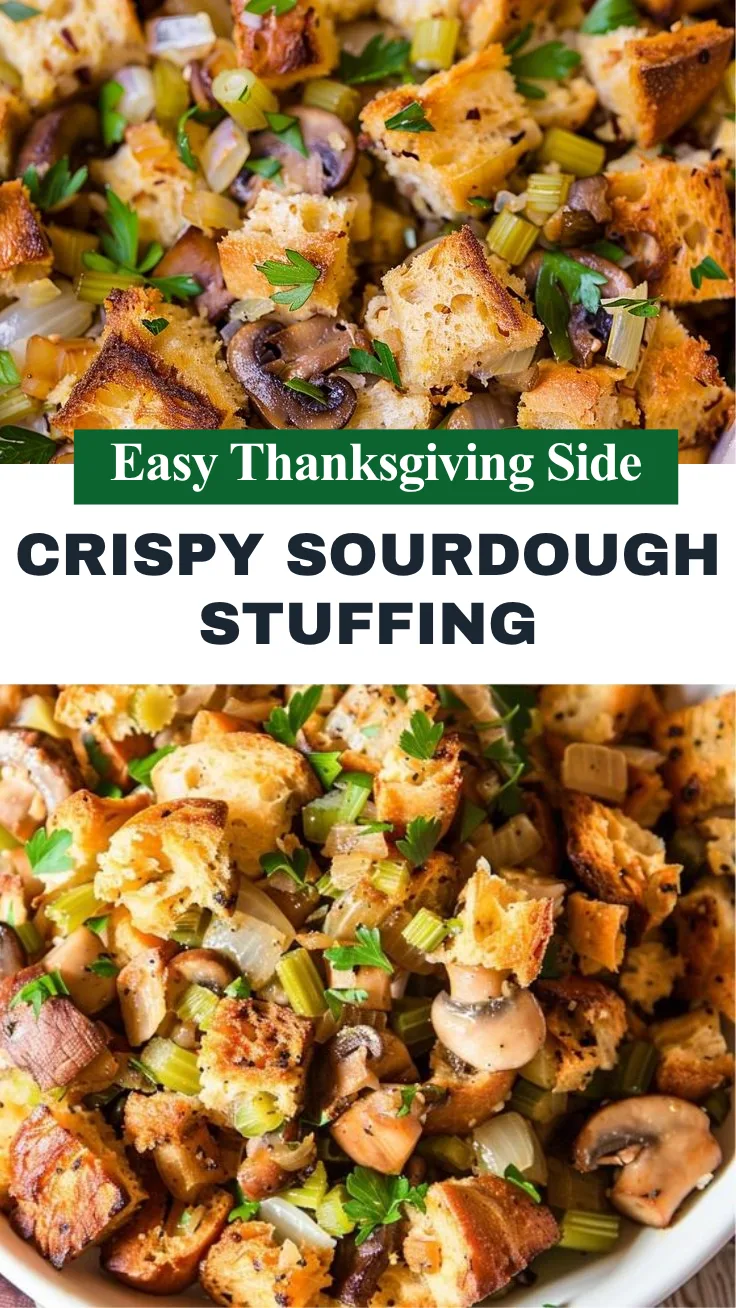
Sourdough Bread Stuffing is a delicious, comforting side dish that brings a rustic homemade touch to your Thanksgiving table. Made with toasted sourdough bread, buttery onions, crisp celery, savory mushrooms, and fresh herbs, this recipe delivers a wonderful combination of flavors and textures. The top turns beautifully golden and crispy while the center stays soft, moist, and full of flavor.
Whether you’re preparing a traditional Thanksgiving dinner, planning a Christmas feast, or simply looking for a comforting side dish for a family gathering, this sourdough stuffing is a wonderful choice. The slightly tangy flavor of sourdough bread pairs perfectly with fresh sage, thyme, parsley, and sautéed vegetables, creating a dish that feels both familiar and special.
One of the best things about this homemade stuffing recipe is how easy it is to prepare. You don’t need complicated ingredients or special kitchen equipment, and much of the preparation can be completed ahead of time. With a few simple steps, you can create a flavorful stuffing that complements roasted poultry, vegetable dishes, gravy, and other holiday favorites.
If you love classic bread stuffing but want something with a little more character, this rustic sourdough version deserves a place on your holiday menu.
Why You’ll Love This Sourdough Bread Stuffing
There are plenty of reasons to make this savory sourdough stuffing for your next holiday meal.
- Rustic sourdough flavor: Sourdough bread adds a subtle tanginess and hearty texture that makes this stuffing stand out from traditional white-bread versions.
- Crispy top and tender center: Toasted bread absorbs the seasoned broth while the top develops a delicious golden crust in the oven.
- Fresh herbs and vegetables: Sage, thyme, parsley, onions, celery, and mushrooms create a savory flavor without requiring complicated seasonings.
- Simple ingredients: Most of the ingredients are easy to find at an ordinary grocery store.
- Great for holiday gatherings: The recipe makes 12 servings, making it suitable for Thanksgiving, Christmas, and family dinners.
- Make-ahead friendly: You can prepare the toasted bread and cooked vegetables in advance to simplify your cooking schedule.
- Easy to customize: Add your favorite ingredients or make suitable substitutions to match your preferences.
Recipe Details
- Prep Time: 15 minutes
- Cook Time: 55 minutes
- Total Time: 1 hour 10 minutes
- Servings: 12
- Course: Side Dish
- Cuisine: American
- Calories: Approximately 195 kcal per serving, as listed in the original recipe
Ingredients for Sourdough Bread Stuffing
Each ingredient contributes to the flavor, texture, and overall success of this homemade Thanksgiving side dish.
Main Ingredients
- 1 (22-ounce) loaf sourdough bread, cubed: The foundation of the recipe. Sourdough provides a hearty texture and slightly tangy flavor.
- 4 tablespoons butter: Adds richness and helps the vegetables become tender and flavorful.
- 3 cups diced celery, about 6 stalks: Provides a mild, fresh flavor and a little texture.
- 2 cups diced onion, about 1 large onion: Adds sweetness and savory depth as it cooks.
- 8 ounces chopped mushrooms, about 3 cups: Bring an earthy flavor that complements the sourdough and herbs.
- 1/2 cup chopped flat-leaf parsley: Adds freshness and balances the richer ingredients.
- 2 tablespoons chopped fresh sage: Gives the stuffing its classic holiday aroma.
- 1 tablespoon fresh thyme leaves: Adds a subtle herbal flavor.
- 1 large egg, lightly beaten: Helps bind the ingredients together.
- 2 to 3 cups vegetable broth: Moistens the bread and helps create a tender center.
- Kosher salt, to taste: Enhances the natural flavors of the ingredients.
- Freshly ground black pepper, to taste: Adds gentle warmth and seasoning.
- Nonstick cooking spray: Prevents the stuffing from sticking to the baking dish.
Choosing the Best Sourdough Bread
The bread is the most important ingredient in this recipe, so choosing the right loaf makes a difference. A sturdy sourdough loaf works especially well because it can absorb broth without immediately falling apart.
Day-old bread is a convenient option because it is naturally drier than fresh bread. If your loaf is fresh, cut it into cubes and toast them in the oven before combining them with the vegetables.
Try to cut the bread into pieces of relatively similar size. Consistent cubes help the stuffing moisten evenly and create a balanced texture throughout the dish.
Kitchen Equipment You’ll Need
You don’t need expensive kitchen gadgets to prepare this recipe. Gather these basic tools before you begin:
- Two baking sheets
- A large skillet or frying pan
- A 9-by-13-inch baking dish
- A large mixing bowl
- A wooden spoon or spatula
- Measuring cups and spoons
- A sharp knife and cutting board
Having everything ready makes the cooking process easier and helps you move smoothly from toasting the bread to assembling the stuffing.
How to Make Sourdough Bread Stuffing
Follow these beginner-friendly steps to prepare a flavorful stuffing with a golden top and a soft, savory center.
Step 1: Preheat the Oven and Prepare the Dish
Preheat your oven to 350°F (175°C). Lightly coat a 9-by-13-inch baking dish with nonstick cooking spray.
Preparing the baking dish first saves time later and helps prevent the stuffing from sticking during baking.
Step 2: Cut and Toast the Sourdough Bread
Cut the sourdough loaf into cubes and spread them evenly across two baking sheets. Avoid piling the pieces on top of one another so that they toast more evenly.
Bake for 10 minutes, then flip or stir the cubes and continue baking for another 5 to 10 minutes, until the edges are golden and crunchy.
Remove the bread from the oven and allow it to cool slightly. The cubes should be dry enough to absorb broth without becoming immediately soggy.
Step 3: Sauté the Onion and Celery
While the bread is toasting, melt the butter in a large skillet over medium heat.
Add the diced onion and celery. Season with kosher salt and freshly ground black pepper, then cook for 7 to 10 minutes, stirring occasionally.
The vegetables should soften and the onions should become translucent. Avoid rushing this step, as gently cooked vegetables develop a sweeter, more rounded flavor.
Step 4: Cook the Mushrooms
Add the chopped mushrooms to the skillet with the softened onion and celery.
Continue cooking for another 10 to 15 minutes, stirring occasionally. The mushrooms will release moisture as they cook. Allow that liquid to evaporate so the vegetables become more concentrated in flavor and the mushrooms begin to brown.
This step is important because excess moisture in the vegetables can contribute to a softer, heavier stuffing.
Step 5: Add the Fresh Herbs
Remove the skillet from the heat. Stir in the chopped parsley, fresh sage, and thyme leaves.
Taste the vegetable mixture and adjust the salt and pepper as needed. Remember that the bread and broth will also contribute to the final flavor, so season thoughtfully.
The fresh herbs give the stuffing its comforting holiday aroma and complement the earthy mushrooms and tangy sourdough.
Step 6: Combine the Bread, Vegetables, and Egg
Place the toasted sourdough cubes in a large mixing bowl. Add the sautéed vegetable mixture and the lightly beaten egg.
Gently toss everything together until the vegetables and herbs are distributed throughout the bread.
Try not to crush the bread cubes while mixing. Keeping some of their structure helps the finished stuffing maintain a pleasant texture.
Step 7: Add the Vegetable Broth Gradually
Pour in the vegetable broth a little at a time, stirring gently after each addition.
Start with a smaller amount and assess the texture before adding more. Depending on how dry your bread is, you may need closer to 2 cups or as much as 3 cups.
The bread should feel moist but not waterlogged. You want the cubes to absorb the broth while retaining enough structure to prevent the finished stuffing from becoming mushy.
Step 8: Transfer to the Baking Dish
Spoon the mixture into the prepared 9-by-13-inch baking dish and spread it into an even layer.
Avoid pressing the mixture down too firmly. A gently arranged layer allows the stuffing to heat evenly while helping the surface become golden and crisp.
Step 9: Bake Until Golden
Place the dish on the center rack of the preheated oven.
Bake for 35 to 40 minutes, or until the stuffing is hot throughout and the top is golden brown. Check that the center is heated through before removing it from the oven.
If the top begins browning faster than the center heats, loosely cover the dish with aluminum foil while it finishes baking.
Step 10: Rest and Serve
Remove the stuffing from the oven and let it rest for 5 to 10 minutes before serving.
This brief resting period allows the mixture to settle and makes it easier to serve. Spoon the warm stuffing onto plates alongside your favorite main dishes.
Tips for Perfect Sourdough Stuffing
A few simple techniques can make a noticeable difference in the final result.
Toast the Bread Thoroughly
The bread should be dry and lightly crisp before you add the broth. Bread that is too fresh or insufficiently toasted may absorb liquid unevenly and produce a heavy texture.
Add Broth Slowly
The amount of broth needed depends on the bread’s dryness and texture. Add it gradually instead of pouring in all the liquid at once.
Let the Mushrooms Brown
Cooking the mushrooms until their excess moisture evaporates helps concentrate their savory flavor. It also reduces the amount of additional liquid entering the stuffing.
Use Fresh Herbs When Available
Fresh sage, thyme, and parsley provide a fragrant flavor that suits Thanksgiving and Christmas meals. Measure the herbs carefully and distribute them evenly throughout the mixture.
Avoid Packing the Stuffing Too Tightly
A loosely arranged mixture heats more evenly and allows the top to develop a crisp surface. Pressing it down firmly may result in a denser texture.
Prepare Ingredients in Advance
Toast the bread and cook the vegetables ahead of time, then refrigerate them separately. Assemble the mixture closer to baking time for a more convenient holiday cooking schedule.
Common Sourdough Stuffing Problems and How to Fix Them
Even a straightforward recipe can benefit from a few troubleshooting tips.
Why Is My Stuffing Too Dry?
Dry stuffing may need more moisture, or it may have spent too long in the oven. Before baking, add a little more vegetable broth if the bread still feels dry.
If the stuffing is already baking and the surface is drying too quickly, cover it loosely with foil to help retain moisture while the center finishes heating.
Why Is My Stuffing Mushy?
Mushy stuffing usually results from too much broth, bread that was not toasted sufficiently, or vegetables that retained too much liquid.
Next time, toast the bread until it is dry and crunchy, cook the mushrooms until their liquid evaporates, and add the broth gradually. Stop when the bread is moist but not saturated.
Why Does My Stuffing Lack Flavor?
Underseasoned vegetables or insufficient herbs can make the finished dish taste bland.
Season the onion, celery, and mushroom mixture as it cooks, and taste it before combining it with the bread. Adjust the salt, pepper, sage, and thyme as needed.
Why Isn’t the Top Crispy?
A very wet mixture or a tightly packed baking dish can prevent the surface from becoming crisp.
Make sure the bread is toasted properly and the broth is measured carefully. Bake until the top is golden, checking the center to ensure it is heated through.
Easy Variations to Try
This recipe is easy to adapt, depending on your dietary preferences and the ingredients you have available.
Gluten-Free Sourdough Stuffing
Use a suitable gluten-free sourdough loaf if you need a gluten-free version. Toast the cubes thoroughly, as gluten-free breads can vary considerably in texture and moisture absorption.
Check the labels on your broth and other packaged ingredients to ensure they meet your dietary requirements.
Dairy-Free Version
Replace the butter with olive oil or a suitable dairy-free butter alternative. The vegetables will still become tender and flavorful, while the herbs and mushrooms provide plenty of savory character.
Sourdough Stuffing with Cranberries
For a sweet-and-savory variation, add dried cranberries to the mixture before baking. Their tart sweetness complements the earthy mushrooms and tangy bread.
Add Chopped Pecans
Chopped pecans can add a pleasant crunch and a nutty flavor. Stir them into the mixture before transferring it to the baking dish.
Roasted Garlic Variation
Roasted garlic offers a mellow, rich flavor that works beautifully with sourdough and fresh herbs. Mix it into the cooked vegetables before combining everything with the bread.
Parmesan Topping
For an extra savory finish, sprinkle Parmesan over the top before baking. Keep in mind that this changes the recipe’s dairy content and may not suit every dietary preference.
Can You Make Sourdough Bread Stuffing Ahead of Time?
Yes. Preparing some of the components in advance can make holiday cooking much easier.
Toast the sourdough bread and cook the vegetables with the herbs. Allow them to cool, then refrigerate them separately in covered containers.
When you’re ready to assemble the stuffing, combine the prepared bread and vegetables with the beaten egg and vegetable broth. Transfer the mixture to the baking dish and bake as directed.
For food safety, refrigerate prepared ingredients promptly and keep them properly chilled. Because this recipe contains egg and broth, avoid leaving the assembled mixture at room temperature for extended periods. If assembling the dish in advance, keep it refrigerated until you are ready to bake it.
Allow extra time if the baking dish is cold from the refrigerator, and check that the center reaches a safe temperature before serving.
How to Store Leftover Stuffing
If you have leftovers, allow the stuffing to cool slightly and transfer it to an airtight container. Refrigerate it promptly and use it within 3 to 4 days.
For longer storage, freeze the stuffing in a freezer-safe container or wrap it securely to protect it from freezer burn. The original recipe suggests freezing for up to 2 months for best quality.
Thaw frozen stuffing in the refrigerator before reheating.
How to Reheat Sourdough Stuffing
To reheat a larger portion, place the stuffing in an oven-safe dish and cover it loosely with aluminum foil. Warm it in a 325°F oven until heated through.
Remove the foil near the end if you want to restore some crispness to the top. If the stuffing seems dry, a small amount of broth can help restore moisture.
You can also reheat individual portions in the microwave, using a microwave-safe dish and checking that the center is thoroughly heated.
What to Serve with Sourdough Bread Stuffing
This rustic side dish pairs well with many classic holiday foods.
- Roasted turkey: A traditional Thanksgiving pairing, especially with gravy.
- Roasted chicken: A simple main course that complements the savory herbs and mushrooms.
- Vegetarian mains: Serve alongside roasted vegetables, stuffed squash, or a hearty vegetable casserole.
- Herbed gravy: A spoonful of gravy adds moisture and richness.
- Green salad: A crisp salad with a light dressing provides a refreshing contrast to the buttery stuffing.
- Roasted seasonal vegetables: Carrots, Brussels sprouts, and other roasted vegetables make a colorful holiday plate.
For a complete Thanksgiving menu, combine the stuffing with a main dish, a fresh vegetable side, and your favorite holiday dessert.
Frequently Asked Questions
Can I use fresh sourdough bread?
Yes. Fresh sourdough bread works, but it should be cubed and toasted before mixing. This helps remove excess moisture and gives the bread a better structure for absorbing the broth.
Should I remove the crust from the sourdough?
No. The crust can remain on the bread. It adds texture and helps the cubes maintain their shape during baking.
Can I make this recipe without mushrooms?
Yes. You can omit the mushrooms if you prefer. The finished stuffing will have a different flavor and texture, but the onion, celery, and herbs will still provide a savory base.
Can I use chicken broth instead of vegetable broth?
Yes, if you do not need the recipe to remain vegetarian. Chicken broth is a suitable alternative and will give the stuffing a different savory flavor. Choose vegetable broth if you want to keep the original vegetarian-friendly ingredient selection.
How do I know when the stuffing is done?
The top should be golden brown, and the center should be hot throughout. The original recipe recommends baking for 35 to 40 minutes after assembling the stuffing.
Can I freeze leftover sourdough stuffing?
Yes. Store it in a well-sealed freezer-safe container for up to 2 months for best quality. Thaw it in the refrigerator and reheat until thoroughly hot.
Is sourdough stuffing vegetarian?
The listed ingredients are suitable for a vegetarian version when the vegetable broth used is vegetarian. The recipe contains egg and butter, so it is not vegan as written.
Why is sourdough bread a good choice for stuffing?
Sourdough has a distinctive tangy flavor and a sturdy texture. When toasted, it absorbs seasoned broth while retaining more structure than very soft, fresh bread.
Final Thoughts
Sourdough Bread Stuffing is a comforting, flavorful side dish that brings something special to the holiday table. Toasted sourdough, tender vegetables, earthy mushrooms, and fragrant fresh herbs combine to create a dish with a crispy golden top and a soft, savory center.
The recipe is simple enough for home cooks, adaptable to different tastes, and convenient for preparing ahead of a busy holiday meal. Serve it with roasted turkey, chicken, vegetables, or gravy for a delicious addition to your Thanksgiving or Christmas menu.
If you enjoy rustic bread dishes and classic holiday flavors, save this Sourdough Bread Stuffing recipe and give it a try at your next family gathering.
Sourdough Bread Stuffing Recipe Card
Prep Time: 15 minutes
Cook Time: 55 minutes
Total Time: 1 hour 10 minutes
Servings: 12
Calories: 195 kcal per serving, as listed in the original recipe
Ingredients
- Nonstick cooking spray
- 1 (22-ounce) loaf sourdough bread, cubed
- 4 tablespoons butter
- 3 cups diced celery (about 6 stalks)
- 2 cups diced onion (about 1 large onion)
- 8 ounces mushrooms, chopped (about 3 cups)
- 1/2 cup chopped flat-leaf parsley
- 2 tablespoons chopped fresh sage
- 1 tablespoon fresh thyme leaves
- 1 large egg, lightly beaten
- 2 to 3 cups vegetable broth
- Kosher salt, to taste
- Freshly ground black pepper, to taste
Instructions
- Preheat the oven to 350°F (175°C). Spray a 9-by-13-inch baking dish with nonstick cooking spray.
- Spread the cubed sourdough bread over two baking sheets. Bake for 10 minutes, flip, and toast for another 5 to 10 minutes until golden and crunchy.
- Melt the butter in a large skillet over medium heat. Add the onion and celery, season with salt and pepper, and cook for 7 to 10 minutes until softened.
- Add the mushrooms and cook for another 10 to 15 minutes, stirring occasionally, until their liquid evaporates and they begin to brown.
- Remove the skillet from the heat. Stir in the parsley, sage, and thyme, then adjust the seasoning.
- Combine the toasted bread, cooked vegetables, and beaten egg in a large mixing bowl.
- Gradually add 2 to 3 cups of vegetable broth, stirring gently until the bread is moist but not soggy.
- Transfer the mixture to the prepared baking dish and spread it evenly.
- Bake for 35 to 40 minutes, until hot throughout and golden brown on top.
- Let the stuffing rest for 5 to 10 minutes before serving.
Notes
- Toasting the bread thoroughly helps prevent soggy stuffing.
- Add the broth gradually because the amount needed depends on the dryness of the bread.
- To prepare ahead, toast the bread and cook the vegetables separately, then refrigerate them promptly in covered containers.
- Refrigerate leftovers promptly and use within 3 to 4 days.
- Freeze leftovers for up to 2 months for best quality.
- Reheat in a 325°F oven until thoroughly heated.