
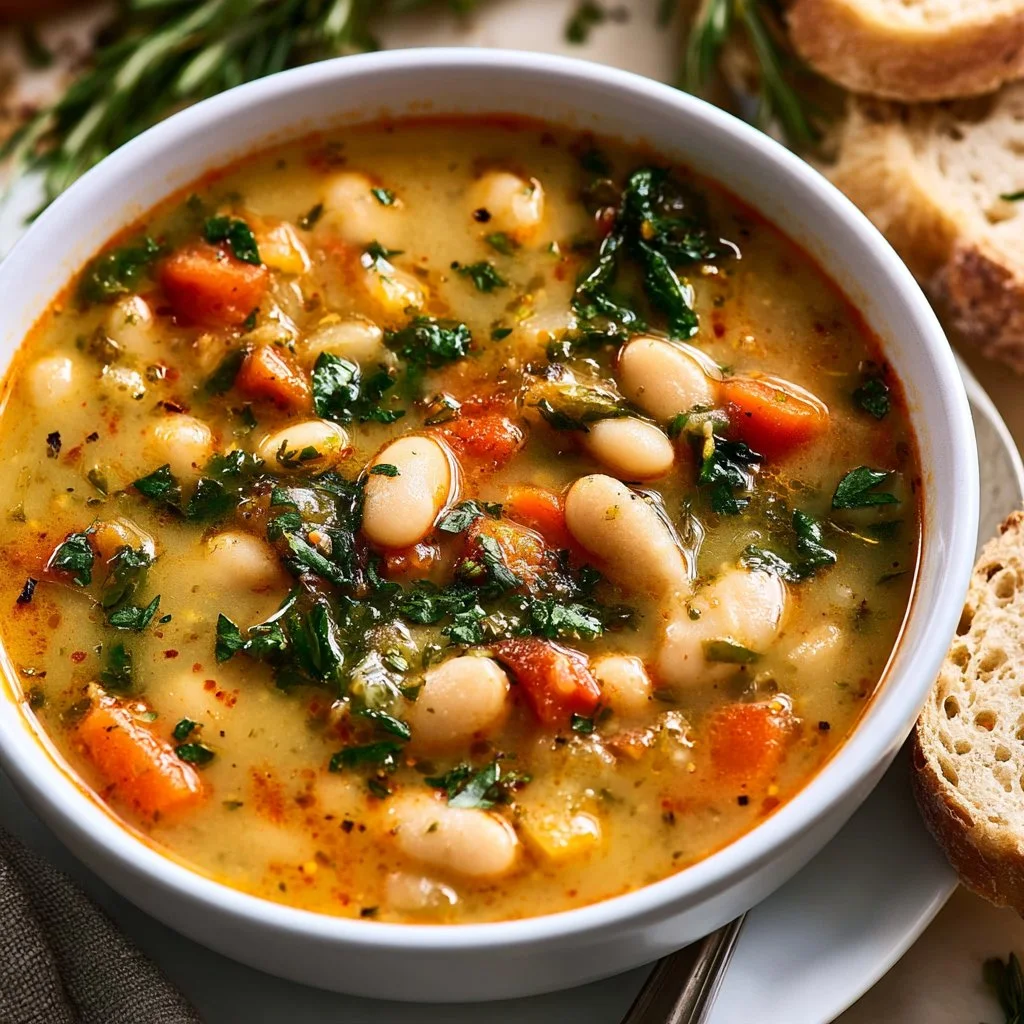
White Bean Soup
Whether you’re looking for a comforting bowl of goodness on a chilly night or a nutritious meal that you can whip up quickly, White Bean Soup checks all the boxes. This dish is not just a soup; it is a wholesome blend of tender white beans, vibrant greens, and hearty vegetables, simmered in a savory broth. The creamy texture brought by the beans harmonizes beautifully with the slight crunch of the carrots and the freshness of kale, creating a delightful sensory experience. Every spoonful brings warmth and nourishment, making it an excellent choice for both casual lunches and family dinners.
As you prepared to serve this dish, imagine a steaming bowl filled with vibrant greens and creamy white beans, garnished with a sprinkle of fresh herbs or a drizzle of olive oil. It’s perfect for sharing, making it a lovely centerpiece at a gathering or a cozy meal at home. The earthy flavors meld together to create a dish that feels grounding and nourishing. Not to mention, the bright colors of the kale and carrots make it visually appealing, enhancing the overall dining experience.
This soup is incredibly versatile and can be enjoyed at any time — from a brisk fall evening to a casual weekday lunch; it also pairs wonderfully with crusty bread or a simple salad. It’s not just a recipe; it’s an invitation to savor the simple yet profound flavors that nature offers us, making a healthy meal that everyone will appreciate.
What Makes This Recipe Special
What truly sets this white bean soup apart is its simplicity coupled with robust flavors. The primary ingredients – white beans, kale, carrots, and garlic – combine to create a soup that is not only filling but also rich in nutrients. The beans provide protein and fiber, making the dish satisfying without feeling heavy. Kale introduces a fresh, slightly bitter note that balances perfectly with the creamy texture of the beans, while the carrots offer a hint of sweetness that rounds out the flavor profile beautifully.
Moreover, the preparation method enhances the soup’s taste. Sautéing the onions and garlic first builds a flavor base that infuses the entire dish, creating a rich aroma that fills the kitchen. With just a few simple steps, you can elevate basic ingredients into a comforting, hearty meal. This technique allows the soup’s natural flavors to shine without overwhelming spices or complex techniques.
Compared to other bean soups, what makes this recipe stand out is its lightness and vibrant greens, making it more refreshing than heavier, cream-based soups. It’s perfect for those who admire a well-balanced dish that still feels indulgent. Enjoying this soup not only warms the body but also fosters a deep appreciation for wholesome ingredients that nourish and comfort.
Ingredient Overview and Helpful Notes
The main ingredients in white bean soup each play a crucial role in defining its flavor and texture. The star of the dish, white beans, provide creaminess without the need for dairy, allowing for a rich texture that is still healthy. Cannellini or navy beans are preferred for their mild flavor and tender skin, which breaks down beautifully during cooking. If you’re in a rush, canned beans can also be used for convenience; however, dried beans offer a more robust flavor and can be cooked to your preference.
Kale is another essential ingredient, contributing not only color but also vital nutrients such as vitamins A, C, and K, as well as fiber and antioxidants. When selecting kale, look for deep green leaves without yellowing edges, indicating freshness. Chopped kale should be slightly wilted when added to the soup, ensuring it harmonizes without losing its textural appeal.
Carrots bring a natural sweetness, balancing the earthy flavor of the beans and greens. They should be diced uniformly to ensure even cooking. Onions and garlic provide a fragrant base, adding depth to the soup’s flavor. Fresh ingredients can elevate the dish significantly; using good-quality olive oil adds richness and enhances the overall taste.
Before beginning, take the time to wash, chop, and prepare all ingredients, making it easier to manage the cooking process. Be mindful not to overwhelm the dish with too many spices as it could mask the natural flavors. Simple seasoning of salt and pepper can transform it beautifully, ensuring that the freshness of each ingredient shines through without any one element overpowering the soup.
Nutrition & Recipe Details
Nutritional values can vary widely based on the specific ingredients used, their brands, and portion sizes. This section outlines approximate values to give you a better idea of what to expect from this delicious dish.
| Item | Value |
|---|---|
| Prep time | 15 minutes |
| Cook time | 30 minutes |
| Store time | 3-4 days in refrigerator |
| Calories | 200 (per serving) |
| Protein | 9g |
| Carbohydrates | 29g |
| Fat | 6g |
This soup is not only a delicious option for those looking for a healthy meal but also provides a robust amount of dietary fiber, ensuring you remain satiated while enjoying its flavors.
How to Make White Bean Soup
Preparing white bean soup is straightforward and makes for a delightful cooking experience, especially as aromas begin to waft through your kitchen. Begin by organizing your ingredients: have your chopped vegetables and minced garlic ready before you start cooking. You’ll need a large pot to allow for ample mixing and simmering of all ingredients.
Essential tools for this recipe include a good-quality cutting board and knife for chopping, along with measuring spoons for accuracy. A large wooden spoon or spatula will assist in mixing and preventing sticking while cooking.
Ingredients
Here’s a breakdown of the ingredients you’ll need for this fulfilling soup:
| Ingredient | Quantity |
|---|---|
| White beans (cannellini or navy) | 1 can |
| Kale, chopped | 2 cups |
| Carrots, diced | 2 |
| Onion, chopped | 1 |
| Garlic, minced | 3 cloves |
| Vegetable broth | 4 cups |
| Olive oil | 2 tablespoons |
| Thyme | 1 teaspoon |
| Salt and pepper | to taste |
Before cooking, ensure that you have all your ingredients prepped and within easy reach. Rinse the canned beans under cold water to remove excess sodium and any canning residue. Chop the vegetables into similar sizes to ensure they cook evenly and harmoniously in the soup.
Step-by-Step Instructions
-
Heat Olive Oil: In a large pot, heat 2 tablespoons of olive oil over medium heat. The oil should shimmer but not smoke; this helps in sautéing the vegetables.
-
Sauté Onions and Garlic: Add the chopped onion to the pot. Sauté for about 5 minutes until they become translucent and slightly tender. Stir them occasionally to prevent sticking or burning. Then, add the minced garlic and cook for an additional minute. The mix should smell fragrant and inviting.
-
Cook the Carrots: Toss in the diced carrots, cooking for another 5 minutes. The carrots should become slightly softened but retain a bit of their crunch. Stir regularly to evenly distribute heat.
-
Add Broth: Pour in 4 cups of vegetable broth, ensuring to scrape up any bits stuck to the bottom of the pot. This will incorporate additional flavor into the soup. Increase the heat slightly and allow the broth to come to a gentle simmer.
-
Introduce the Beans and Kale: Once simmering, add the rinsed white beans, chopped kale, 1 teaspoon of thyme, and season with salt and pepper. Stir everything together and allow the pot to return to a simmer.
-
Simmer Until Tender: Let the soup simmer for about 15-20 minutes. This allows the flavors to meld and the vegetables to become tender. You can taste it during this time and adjust seasoning if needed by adding more salt or pepper.
-
Serve Hot: Once the vegetables are tender, turn off the heat. Serve the soup hot, garnished with fresh herbs or a drizzle of olive oil, if desired. Enjoy its comforting flavors with a side of crusty bread or a fresh salad for a complete meal.
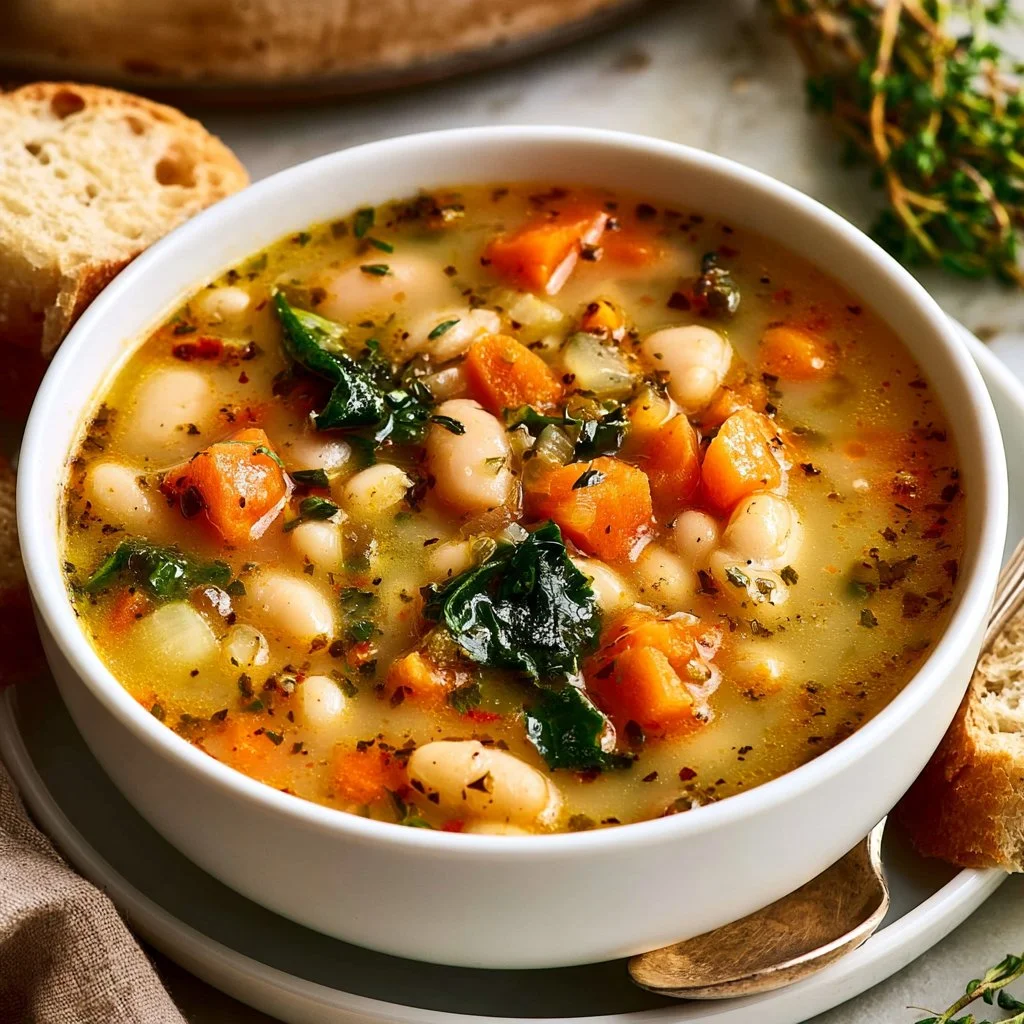
Understanding the Flavor and Texture
The finished white bean soup presents a delightful texture and a balance of flavors that excite the palate. As you scoop into the bowl, expect to find creamy beans that melt in your mouth accompanied by tender kale and carrots that still retain a bit of bite. The richness from the olive oil and the savory depth from the sautéed garlic and onions elevate the overall experience without overpowering the subtle taste of the beans.
The gentle simmering process helps incorporate flavors harmoniously. The kale adds a slight earthiness, while the sweetness of the carrots offsets the savory notes, creating a well-rounded dish. You’ll notice that each spoonful is a blend of creamy and chunky textures, providing both comfort and satisfaction.
In terms of flavor, this soup is aromatic, with noticeable herbaceous and earthy undertones from the thyme and vegetables. It should have a comforting warmth that’s not spicy, making it a delicious option for all ages. A successful batch will have a delicious aroma wafting throughout your kitchen, inviting everyone to gather around the table for a warm and satisfying meal.
Pro Tips
Mastering the art of white bean soup can be straightforward with a few extra techniques that improve the end result. Here are some tips to keep in mind:
| Tip | Description |
|---|---|
| Soak Your Beans | For dried beans, soaking them overnight can reduce cooking time and make them easier to digest. If using canned beans, simply rinse them to reduce sodium content without sacrificing flavor. |
| Use Low-Sodium Broth | Selecting low-sodium vegetable broth allows for better control over the soup’s saltiness. You can always add more salt, but you can’t take it away. |
| Chop Vegetables Evenly | Cutting vegetables into similar sizes ensures even cooking and helps maintain a consistent texture throughout the soup. |
| Blend for Creamier Texture | If you prefer a creamier soup, use an immersion blender after cooking to puree a portion of the soup while leaving some beans and vegetables whole for texture. |
Another valuable tip for enhancing the flavor is to add a splash of lemon juice right before serving. It can brighten the overall taste and add a refreshing contrast to the hearty soup. Additionally, exploring different types of herbs, such as rosemary or oregano, can introduce new dimensions to your white bean soup, keeping it exciting each time you prepare it.
Why You’ll Love This Recipe
This white bean soup offers a delightful balance of flavor and texture that makes it increasingly favorable in any cooking rotation. Not only is it uncomplicated to prepare, but it is also a dish that resonates with comfort and nutrition. The simplicity of the ingredients allows it to shine, creating a satisfying meal without fuss.
Another significant advantage is the versatility of this soup regarding dietary preferences. It’s naturally vegetarian and can be easily tailored for various diets, making it inclusive for family meals or dinner guests. The combination of accessible ingredients means that it’s easy to whip up on a whim, making it a practical choice for weekday dinners.
Moreover, you can prepare this soup in advance, making it perfect for meal prep. It stores well in the refrigerator and even tastes better the next day as the flavors meld together. The easy clean-up that accompanies one-pot meals is a plus, leaving you more time to focus on enjoying the meal rather than dreading the dishes afterward.
How to Serve White Bean Soup
Presenting the finished white bean soup attractively will enhance the overall dining experience. Start by ladling the soup into warmed bowls to keep it piping hot while serving. For an added touch, you can garnish each serving with cracked pepper, a drizzle of high-quality olive oil, or even a sprinkle of fresh herbs like parsley or thyme. These small accents can elevate the dish visually and taste-wise.
To create a full meal, consider pairing the soup with a simple green salad dressed with balsamic vinaigrette or lemon dressing. A side of crusty bread or garlic bread complements the soup perfectly, allowing guests to soak up all the delicious broth. If you want to make the meal even heartier, serving with a grain-based side like quinoa or farro can expand the nutritional profile while adding texture.
For special occasions, consider offering a selection of toppings and accompaniments. Items like croutons, fresh avocado, or a spoonful of pesto can allow guests to customize their bowls to suit their tastes. When it comes to drinks, a sparkling water with a twist of lemon or an herbal tea can complement the soup beautifully, enhancing the overall experience.
How to Store White Bean Soup
When it comes to storing leftover white bean soup, proper cooling and packaging are essential to maintain its flavor and freshness. Allow the soup to cool to room temperature before transferring it to airtight containers. Once cooled, it can be stored in the refrigerator for 3-4 days. If preparing larger batches, freezing is an excellent option; just ensure the soup is fully cooled and use freezer-safe containers.
For freezing, you may want to divide the soup into individual portions for easy reheating later. Label the containers with dates to help keep track of how long they’ve been stored. Freezing can extend the soup’s life around 2-3 months without significantly altering its flavor.
When reheating, be aware that the soup may thicken as it sits due to the beans. Adding a splash of broth or water can restore its original consistency. However, avoid leaving the soup out at room temperature for extended periods, as this could raise food safety concerns.
Tips to Make White Bean Soup
Achieving the perfect bowl of white bean soup requires attention to a few critical areas during the cooking process. Firstly, managing heat is crucial. If the soup boils too vigorously, it can break down the vegetables too much, leading to a mushy outcome. A gentle simmer allows flavors to meld without compromising texture.
Additionally, seasoning at the right time can significantly impact the overall flavor of the soup. It’s often best to wait until most of the cooking time is completed before doing a final taste and adjusting seasonings. This is because flavors develop as the soup cooks, and adding salt too early could magnify its impact later.
Another factor to consider is the timing of adding the kale. If added too early, it may become overly soft and lose its vibrant color and nutritional benefits. Adding it toward the end of the simmering period ensures it retains a slightly crisp texture and deep green color.
Keep in mind that leftovers can often taste better the following day, as the flavors continue to marry. So, making extra soup can lead to a second-day treat that is equally enjoyable.
Variations and Substitutions
There are numerous ways to customize white bean soup to keep things varied and exciting in your meal planning. If you’re looking for a heartier version, consider adding some diced potatoes or sweet potatoes during the initial vegetable cooking phase. These additions not only add substance but also provide subtle sweetness and additional nutrients.
For a spicier kick, you can easily incorporate red pepper flakes or diced jalapeños with the onions and garlic. This will infuse the soup with heat and complexity, transforming the fundamental flavors into something more dynamic. Alternatively, incorporating a tablespoon of harissa paste can provide warmth and delightful spices inherent to North African cuisine.
If aiming for extra greens, you could swap out kale for spinach or Swiss chard, depending on availability. Simply add spinach at the end of cooking, allowing it to wilt quickly, ensuring it retains its bright color and nutrients.
For those looking to reduce carbohydrates, you might consider omitting some of the beans and replacing them with more non-starchy vegetables like zucchini, bell peppers, or mushrooms. These substitutions can create a lighter version while still maintaining that comforting soup sensation.
Storage and Reheating
When reheating white bean soup, it’s essential to do so properly to ensure safety and quality. Start by dividing leftovers into smaller portions if you’ve stored them in a large container, as this will allow for quicker and more even heating.
You can reheat the soup on the stove over low to medium heat. Stir often to prevent sticking and ensure that heating is uniform. If the soup has thickened, adding a splash of broth or water will help restore its creamy texture.
Alternatively, microwave reheating is also an option. Spoon the desired portion into a microwave-safe bowl, covering it loosely with a lid or plate to prevent splatters. Heat in 1-minute intervals, stirring in between, until heated through. It’s vital to ensure the soup reaches a hot temperature throughout for safe consumption.
Avoid boiling the soup again during reheating, as this can lead to a breakdown of the vegetables and affect the overall texture. Keeping it on low heat and stirring regularly will help you maintain that comforting texture achieved in the original cooking.
Customization Ideas
When preparing white bean soup, there is ample opportunity for customization according to personal preferences or dietary needs. For instance, adding toppings like crispy shallots or sautéed mushrooms can introduce delightful textures and enrich flavor without straying too far from the original recipe.
If you’re a fan of herbs, fresh basil or dill can add a fragrant kick to the dish. Simply chop and sprinkle over each serving right before enjoying to introduce a burst of freshness that complements the soup beautifully.
For those who enjoy a richer flavor, consider finishing the bowls with a dollop of plain Greek yogurt or a swirl of tahini before serving. This will add creaminess and unique flavor without needing additional calories from dairy.
If you’re looking to create a heartier meal, serve the soup alongside some grilled or roasted vegetables or serve it atop a bed of quinoa or couscous for added texture and nutrition. Each of these suggestions can significantly diversify your culinary experience while keeping the foundation of the soup intact.
Common Mistakes to Avoid
Mistakes can happen in cooking, but being aware of them can help you achieve a better result with your white bean soup. Here are five common pitfalls to avoid:
-
Using Overcooked Ingredients: Adding too many soft vegetables or cooking for too long can make the soup mushy. Cook carrots and add kale later to maintain a good texture.
-
Neglecting to Rinse Canned Beans: Not rinsing canned beans can lead to excess sodium in the dish; always give them a quick rinse to improve flavor and healthiness.
-
Skipping the Sauté Step: Failing to sauté the onions and garlic at the start can reduce overall flavor. Always take the time to build that base for a more robust soup.
-
Adding All Seasoning at Once: If you season the soup too early or excessively, especially salt, it may become too salty once the broth is added. Taste throughout the cooking process to find the right balance.
-
Ignoring Storage Guidelines: Leaving soup at room temperature for too long while serving can lead to food safety hazards. Always cool leftovers promptly and store them correctly.
By keeping these common mistakes in mind, you’ll set yourself up for success when making this delicious dish.
Serving Occasions
White bean soup is remarkably versatile, making it suitable for various occasions. Whether it’s a cozy family dinner on a chilly evening, a casual lunch with friends, or a contribution to a potluck gathering, this dish is guaranteed to please.
For intimate family meals, you can serve the soup in rustic bowls with a warm, crusty loaf of bread, encouraging a shared experience over comfort food. Alternatively, it can be dished out for larger gatherings, where guests can enjoy it buffet-style paired with salads and appetizers.
On festive occasions, consider enhancing the presentation by adding garnishes and serving in elegant bowls, making it perfect for gatherings, holidays, or special celebrations.
The adaptability of white bean soup makes it a go-to recipe for busy weeknights or for meal prep. It’s easy to make in larger batches and tastes just as delicious on the second or third day, making for perfect leftovers to enjoy throughout the week.
Why Make This Recipe?
Choosing to prepare white bean soup matters not only for its rich flavor but also for its wholesome nutritional profile. The recipe offers a simple way to incorporate fiber-rich beans and greens into your diet, creating a balance of health and comfort.
The satisfying creaminess of the beans, paired with fresh vegetables, gives you a meal that sustains without feeling heavy. This creates a nurturing dish that resonates well with those seeking healthy meal options without sacrificing taste.
Moreover, its simplicity means that even novice cooks can achieve excellent results. With straightforward steps and ingredients, the recipe encourages confidence in the kitchen, allowing you to impress family and friends with minimal effort. Embracing this soup can introduce more wholesome eating habits, making it a practical addition to your weekly meal rotation.
Make-Ahead Preparation
For busy nights, white bean soup can answer the call as a make-ahead meal prepared in advance. One key advantage is the flexibility in ingredient preparation, where you can chop vegetables and store them in the refrigerator a day or two prior to cooking. This will significantly reduce your overall prep time on cooking day.
The soup itself benefits from being made in advance. In fact, letting it cool and sit overnight in the refrigerator before serving improves the flavor profile, as the ingredients meld together. Just ensure to store it in an airtight container to maintain its freshness and prevent it from absorbing any odors in the fridge.
When it comes to reheating, you can do so easily on the stovetop or in the microwave, as mentioned earlier. Making the soup in advance not only enhances the depth of flavor but also allows for smooth and quick meal prep. It’s ideal for those eager to enjoy comforting, homemade meals without the fuss on a busy weeknight.
Equipment and Kitchen Preparation
Having the right equipment at hand will streamline your cooking process. For white bean soup, a large, heavy-bottomed pot or Dutch oven is ideal for even heat distribution, which helps prevent burning or sticking. Tools such as a wooden spoon or spatula are useful for mixing ingredients without scratching the pot.
Ensure you have a good-quality knife for chopping vegetables, a sturdy cutting board, and measuring cups for accuracy. An immersion blender is optional but can be great for achieving a creamy texture if you prefer a smooth soup.
Before starting, consider organizing your workspace: wash and chop all your ingredients, gather your tools, and measure out spices. Having everything laid out will make the cooking process more efficient, allowing you to focus on creating this delicious meal without distraction.
FAQs
-
Can I use dried beans instead of canned?
Yes, you can use dried beans. However, you will need to soak them overnight and adjust the cooking time accordingly. Dried beans typically take longer to cook, so be sure to start cooking them before adding the other ingredients. -
Is this soup gluten-free?
Absolutely! The ingredients in this white bean soup recipe are naturally gluten-free, making it a suitable option for those with gluten intolerance. -
Can I freeze the soup?
Yes, this soup freezes well. Just make sure to cool it completely before transferring it to airtight containers. When ready to consume, thaw in the refrigerator overnight before reheating. -
How long does the soup last in the refrigerator?
The soup can be stored in the refrigerator for 3-4 days. Ensure it is kept in an airtight container to maintain freshness. -
What if I don’t have kale?
If kale is unavailable, you can substitute it with another leafy green like spinach or Swiss chard. Just add these greens at the end of cooking, allowing them to wilt before serving. -
Can other vegetables be added?
Absolutely! Feel free to incorporate diced zucchini, bell peppers, or even corn. Just make sure to maintain the cooking times to achieve even tenderness. -
Is it necessary to sauté the veggies first?
Sautéing the onions and garlic first builds a flavor base for your soup, ensuring a rich and aromatic profile. Skipping this step might result in a more bland flavor. -
Can this soup be made vegan?
Yes! This soup is already vegan-friendly as all the ingredients used are plant-based, making it a perfect choice for vegan diets.
Disclaimer
Nutritional information is approximate and may vary based on ingredient brands, substitutions, portion sizes, and preparation methods.
Print
White Bean Soup
- Total Time: 45 minutes
- Yield: 4 servings 1x
- Diet: Vegetarian
Description
A comforting and nutritious white bean soup with vibrant greens and hearty vegetables, perfect for chilly nights or a quick meal.
Ingredients
- 1 can of white beans (cannellini or navy)
- 2 cups chopped kale
- 2 diced carrots
- 1 chopped onion
- 3 minced garlic cloves
- 4 cups vegetable broth
- 2 tablespoons olive oil
- 1 teaspoon thyme
- Salt and pepper to taste
Instructions
- Heat olive oil in a large pot over medium heat.
- Sauté onions for about 5 minutes until translucent, then add minced garlic and cook for an additional minute.
- Cook the diced carrots for 5 minutes until slightly softened.
- Pour in vegetable broth and bring to a gentle simmer.
- Add the rinsed white beans, chopped kale, thyme, salt, and pepper, and stir to combine.
- Simmer for about 15-20 minutes until the vegetables are tender.
- Serve hot, garnished with herbs or olive oil, with crusty bread or a fresh salad.
Notes
For a creamier texture, blend part of the soup and adjust seasoning to taste.
- Prep Time: 15 minutes
- Cook Time: 30 minutes
- Category: Main Course
- Method: Baking
- Cuisine: Italian
Nutrition
- Serving Size: 1 serving
- Calories: 350
- Sugar: 5g
- Sodium: 400mg
- Fat: 12g
- Saturated Fat: 4g
- Unsaturated Fat: 6g
- Trans Fat: 0g
- Carbohydrates: 45g
- Fiber: 3g
- Protein: 15g
- Cholesterol: 30mg