
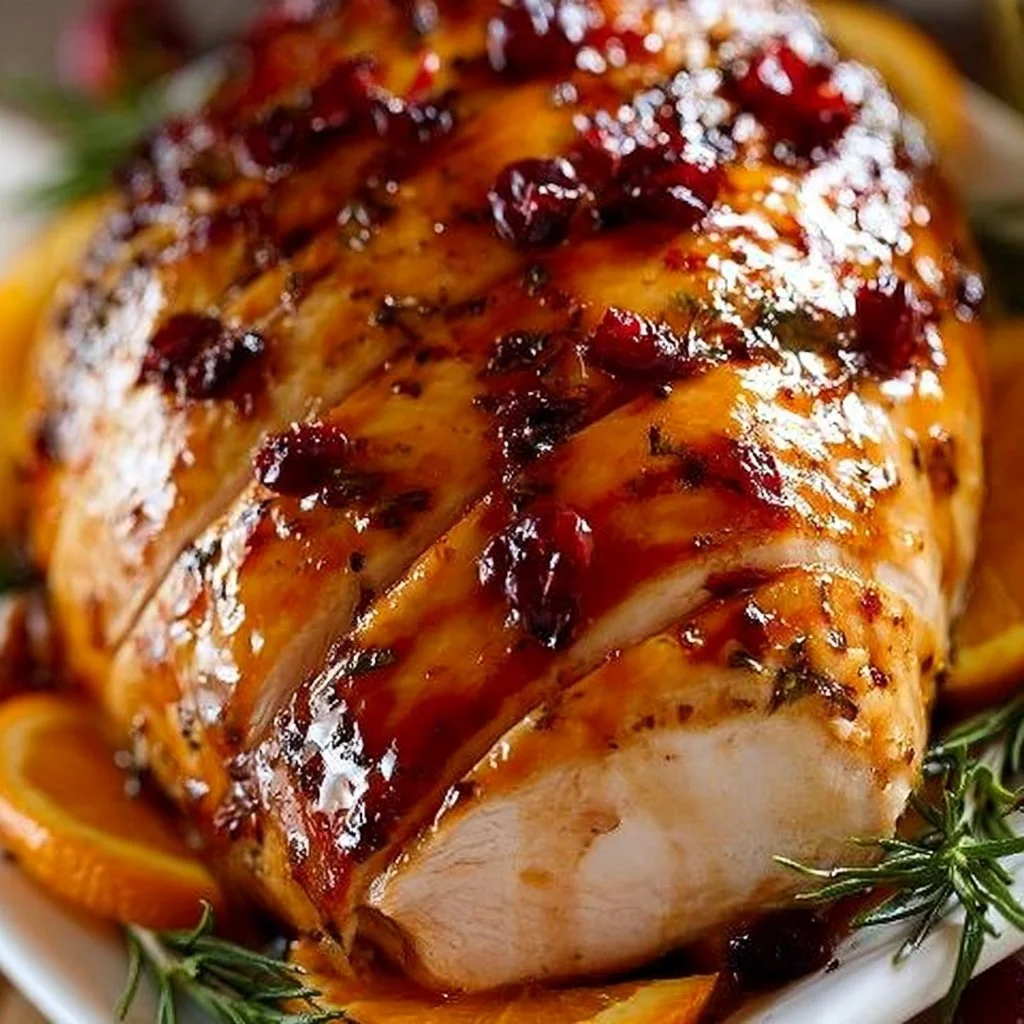
Cranberry Orange Turkey Breast
The combination of cranberry and orange is a classic pairing that evokes memories of festive gatherings and special occasions. When it comes to turkey, the introduction of these tangy yet sweet flavors can transform a traditional dish into an extraordinary centerpiece of your meal. The luscious cranberry sauce brings a burst of tartness, while the orange juice and zest provide a bright, citrusy note that cuts through the richness of the turkey. Together, they create a harmonious balance that elevates the dish and tantalizes the taste buds.
Visually, a perfectly roasted turkey breast adorned with a glossy layer of cranberry-orange glaze is a stunning sight. The deep red of the cranberry sauce contrasts beautifully with the golden skin of the turkey, making it an eye-catching dish for any dining table. The turkey itself, once carved, reveals juicy, succulent slices that promise moist bites with every forkful. The aromatic herbs included in the recipe bring an added depth of flavor, enhancing the overall eating experience.
This dish is perfect for various occasions, whether it’s a holiday feast, a special family dinner, or a casual lunch. The ease of preparation makes it a favorite that can impress guests without requiring hours in the kitchen. It’s suitable for gatherings where you want to serve something memorable, yet it’s simple enough for weekday meals when you desire something special without the stress. The delightful flavors and beautiful presentation make it a go-to choice anytime you need to impress.
With a straightforward preparation method and accessible ingredients, this Cranberry Orange Turkey Breast recipe invites both novice cooks and seasoned chefs alike to dive into the kitchen with confidence. It’s a dish that celebrates seasonal flavors and brings people together, making each bite a little slice of joy.
What Makes This Recipe Special
What sets this dish apart is the unique interplay between the sweet and tart notes of the cranberry and orange, coupled with the savory depth provided by herbs like thyme and rosemary. While many turkey recipes can often lean towards the traditional, this one breathes new life into the classic by incorporating these vibrant ingredients that enhance flavor profiles, creating a dish that feels both comforting and exciting.
The method of roasting the turkey breast allows the flavors to penetrate the meat while also creating a beautiful, crispy skin. Basting with the cranberry-orange mixture throughout the cooking process not only adds flavor but also contributes to a glossy, appetizing appearance. This technique is akin to glazing a dessert, offering a delightful texture contrast between the tender meat and the enticing crust.
Compared to other turkey preparations, this recipe offers a fresher, fruit-forward approach. While many might opt for heavy, buttery sauces or gravies, the cranberry-orange glaze is lighter and brings a refreshing zest that complements the protein rather than overpowering it. Readers may find this lightness particularly appealing, especially as they seek new flavors to incorporate within traditional holiday settings, making the turkey more enjoyable and dynamic.
Additionally, this dish performs exceptionally well in terms of meal prep and leftovers. The flavor continues to develop as the turkey rests, and the glaze can be used for sandwiches or served as a topping on salads, maximizing the meal’s utility and deliciousness. This versatility is a significant advantage for those looking to create a recipe that offers value beyond a single meal.
Ingredient Overview and Helpful Notes
Understanding the ingredients that bring this dish to life is crucial for achieving the desired flavor and texture. The primary component, turkey breast, provides a lean source of protein that is inherently moist when cooked correctly. When selecting a turkey, it’s essential to choose high-quality meat. Look for a turkey breast that feels firm and has a pinkish hue. If possible, opt for organic or free-range options, as they often have a richer flavor compared to conventionally raised turkeys.
Cranberry sauce is the star player in this recipe, offering that signature sweet-tart punch. When selecting cranberry sauce, consider whether you’d like a store-bought version or homemade. For homemade sauce, ensure you choose fresh or frozen cranberries, which are key to capturing the brightness of the fruit. If opting for store-bought, check the ingredient list for minimal additives—pure cranberry sauce will yield the best flavor.
The zesty kick of orange is achieved through fresh oranges, both the juice and the zest. The zest contributes a concentrated flavor that can brighten up dishes, while the juice will add necessary acidity and sweetness. To achieve the best results, look for firm oranges with a vibrant skin color and aromatic scent. Citrus fruits should be at room temperature for easier juicing, so take them out of the refrigerator in advance.
Honey not only sweetens the glaze but also adds a delicious floral note that perfectly complements the tart cranberries and the citrus. Choose raw or local honey for a more authentic flavor. The olive oil included in the recipe enhances moisture and helps the glaze adhere to the turkey, contributing to a lovely finish. Make sure to use quality extra virgin olive oil, as its flavor profile can greatly affect the final dish.
Lastly, the herbs—thyme and rosemary—are essential for a fragrant and savory edge. Fresh herbs are always preferable, but dried herbs can work if fresh isn’t available. If using dried, note that they tend to be more potent, so adjust the amounts accordingly. These ingredients work together seamlessly to create a glaze that is not only flavorful but a beautiful addition to the turkey’s appearance.
Nutrition & Recipe Details
Nutritional values may vary depending on ingredients, brands, portion sizes, and preparation methods.
| Item | Value |
|---|---|
| Prep time | 30 minutes |
| Cook time | 3 hours |
| Store time | Up to 3 days |
| Calories | Approximately 350 per serving |
| Protein | Approx. 50 grams |
| Carbohydrates | Approx. 20 grams |
| Fat | Approx. 12 grams |
How to Make Cranberry Orange Turkey Breast
Creating the perfect Cranberry Orange Turkey Breast involves a blend of preparation, timing, and love. Before you begin, gather all your ingredients and equipment. This will streamline the cooking process and ensure that nothing is overlooked. Having everything at your fingertips allows for a smoother experience in the kitchen, especially when combining flavors and ensuring that each step is executed flawlessly.
When it comes to equipment, a large roasting pan is essential for accommodating the turkey, allowing for even cooking and heat distribution. Additionally, having a mixing bowl for combining the glaze ingredients and a basting brush for applying the glaze will make the process easier. A meat thermometer will also be beneficial in ensuring your turkey reaches the safe recommended internal temperature without overcooking.
The initial steps require a bit of assembly, as you’ll be mixing the ingredients together before rubbing them onto the turkey. Be prepared to get your hands a little messy; coating the turkey evenly with the glaze is crucial for flavor development. Once all is ready, you’re set to bring this wonderful dish to life!
Ingredients
| Ingredient | Quantity |
|---|---|
| Turkey | 1 (12-14 lbs) |
| Cranberry sauce | 1 cup |
| Orange (juiced and zested) | 1 |
| Honey | 1/4 cup |
| Olive oil | 2 tablespoons |
| Salt | 1 teaspoon |
| Black pepper | 1 teaspoon |
| Thyme | 1 teaspoon |
| Rosemary | 1 teaspoon |
Before cooking, prepare the turkey by rinsing it under cold water and patting it dry with paper towels. Make sure to remove any giblets that might be packed inside the cavity. Then, let the turkey sit at room temperature for 30 minutes before you start seasoning and preparing it. This helps it cook more evenly.
Next, gather your glaze ingredients in a bowl. Combine the cranberry sauce, juice, and zest of the orange with the honey, olive oil, salt, black pepper, thyme, and rosemary. Mix until well combined, allowing the flavors to meld. This should create a beautiful, vibrant mixture that you will rub all over the turkey. Having everything ready will make the process blend seamlessly, leading to a stress-free cooking experience.
Step-by-Step Instructions
-
Preheat the Oven: Preheat your oven to 325°F (165°C). A well-preheated oven helps achieve even cooking and will contribute to a beautifully roasted turkey.
-
Prepare the Glaze: In a bowl, mix together the cranberry sauce, orange juice, orange zest, honey, olive oil, salt, black pepper, thyme, and rosemary. This mixture is fragrant and colorful, providing a flavorful base that enhances the natural taste of the turkey.
-
Season the Turkey: Rub the turkey skin generously with this glaze mixture, ensuring every part of the skin is coated evenly. This step is crucial as it will lock in moisture and flavor while the turkey roasts.
-
Roast the Turkey: Place the seasoned turkey in a roasting pan, breast-side up. A roasting rack is helpful but not necessary; just ensure the turkey rests securely in the pan. Place it in the preheated oven.
-
Basting: Every 30 minutes, baste the turkey with the glaze to keep the exterior moist and enhance browning. Use a spoon or a baster for this task, drizzling some of the glaze over the skin, which will caramelize beautifully.
-
Check for Doneness: Continue roasting until the internal temperature of the turkey reaches 165°F (75°C). An instant-read thermometer inserted into the thickest part of the breast will provide the most accurate reading.
-
Rest Before Carving: Once cooked, remove the turkey from the oven and let it rest for at least 20-30 minutes before carving. This resting period allows the juices to redistribute throughout the meat, ensuring that each slice is juicy and tender.
-
Serve and Enjoy: Carve the turkey and serve it with any remaining glaze drizzled on top for an added burst of flavor. This dish pairs beautifully with a variety of sides, making it a versatile addition to your meal spread.
Understanding the Flavor and Texture
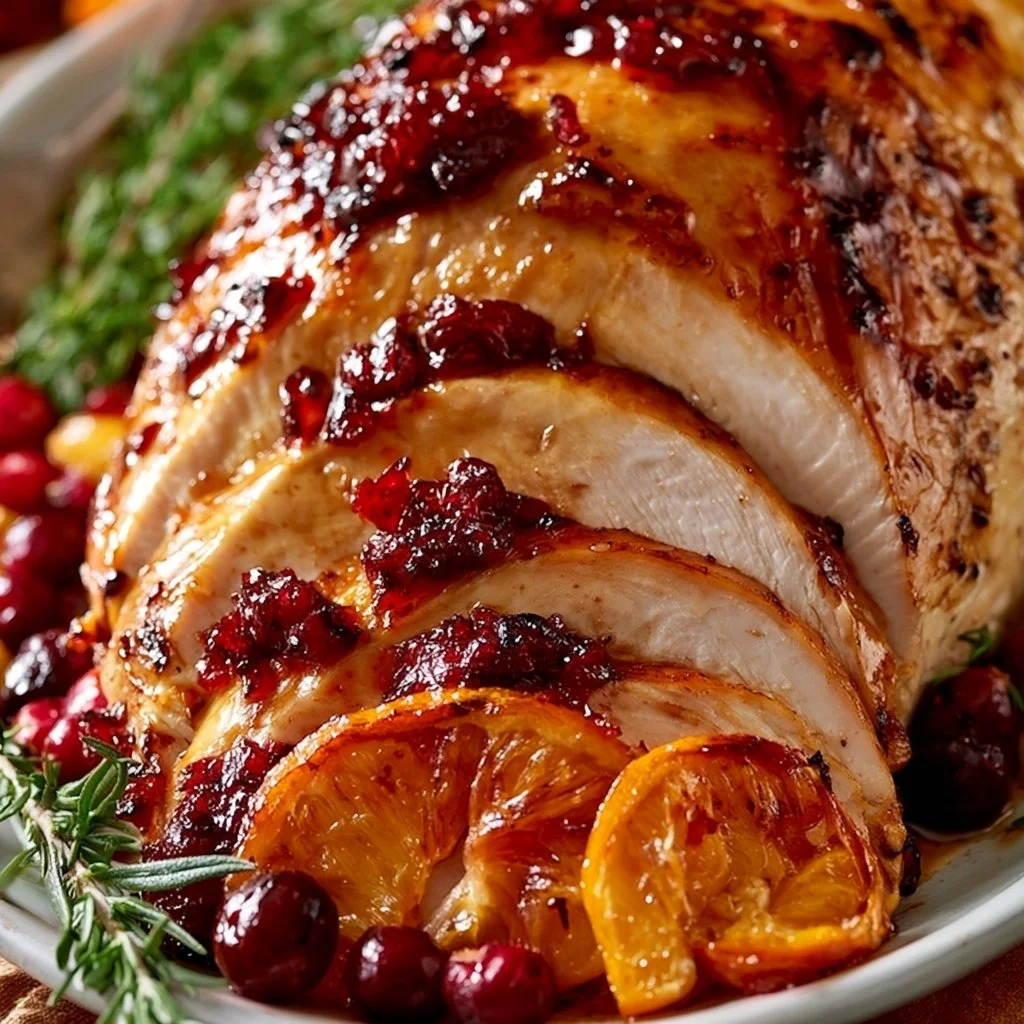
This dish is an embodiment of comfort and celebration, highlighted by its diverse flavor profile. The turkey itself, when roasted to perfection, will have a golden-brown skin that is slightly crisp yet incredibly tender on the inside. The moisture retained in the meat ensures that each bite is succulent, showcasing the care taken during the cooking process.
The flavor notes of the glaze—a harmonious blend of tart cranberries and bright oranges—merge beautifully with the turkey’s savory essence. This balance adds an exciting twist that separates it from traditional turkey fare, introducing a tangy aspect that awakens the palate. The herbs provide depth, enhancing the accompanying flavors without overpowering them.
As you slice into the turkey, you can expect to see juicy meat glistening with the sweet-tart glaze. The glaze itself transforms during cooking, thickening and becoming caramelized, which adds texture and a beautiful shine to the finished dish. A successful roast will also present visible juices when carved, an indication of your careful preparation.
The aroma that fills your kitchen throughout the roasting process is intoxicating. The blooming fragrance of herbs combined with the citrus and cranberry creates an inviting atmosphere that beckons everyone to the dinner table. The interaction of these flavors and textures results in a comforting meal meant to be savored among good company.
Pro Tips
Small adjustments in preparation can yield outstanding results, making your kitchen endeavors both enjoyable and productive.
| Tip | Description |
|---|---|
| Brining the Turkey | Consider brining the turkey prior to cooking. This step helps to enhance moisture retention and infuse flavor, leading to a juicier final product. A simple brine of water, salt, and herbs can work wonders for a few hours or overnight. |
| Check the Turkey’s Temp Early | To avoid overcooking, check the turkey’s internal temperature about 30 minutes before the suggested cooking time. This will allow you to adjust baking time as necessary and avoid dryness. |
| Let the Glaze Cool | After basting your turkey, the leftover glaze can be reduced on the stovetop for a couple of minutes. This concentrates the flavors further, creating an even more delicious accompanying sauce. |
| Use a Rack | If possible, use a roasting pan with a rack to elevate the turkey. This ensures even cooking on all sides and encourages proper airflow around the bird, contributing to that crispy skin. |
Following these tips can enhance your turkey preparation and lead to an even more delightful meal. Fine-tuning small aspects of this process will not only help you create a flavorful dish but will also bolster your confidence in the kitchen for future culinary adventures.
Why You’ll Love This Recipe
This Cranberry Orange Turkey Breast showcases a delightful interplay of flavors and is perfect for both casual dinners and special occasions, making it a versatile addition to any recipe collection. The straightforward preparation combined with the complex taste profile is appealing to cooks of all levels, from beginners to experienced home chefs.
The herbaceous and fruity glaze not only amplifies flavor but also keeps the dish moist, ensuring that every bite is enjoyable. This recipe is especially advantageous for those who enjoy cooking in bulk, as the leftovers can be transformed into sandwiches, salads, or served cold with a new twist, maximizing its use beyond just one meal.
Accessibility is another reason readers will appreciate this dish. The majority of ingredients are readily available year-round, and the technique does not require advanced culinary skills, making it approachable for anyone looking to enhance their cooking. The satisfaction derived from serving a stunning, homemade turkey that shines at the table is a joy that many will love.
Ultimately, the recipe allows for creativity while offering a comforting experience. It invites the cook to personalize the flavors further and make it their own, resulting in a dish that can become a beloved family tradition for years to come.
How to Serve Cranberry Orange Turkey Breast
Presenting your Cranberry Orange Turkey Breast in an appealing manner enhances the dining experience, making it visually stunning as well as delicious. When the turkey is ready for serving, start by placing it on a large serving platter. Carve it directly on the platter or allow guests to see the whole turkey before it’s sliced. This not only adds elegance but allows everyone to anticipate the meal.
When it comes to side dishes, consider pairing with classic holiday accompaniments such as roasted vegetables, mashed potatoes, or wild rice pilaf. A refreshing salad, such as an arugula salad tossed with citrus vinaigrette, complements the flavors of the turkey well, adding a light and vibrant element to the meal. The balance between the richness of the turkey and a fresh, crunchy salad is a delightful pairing that makes each bite enjoyable.
For presentation, consider garnishing the platter with fresh herbs or slices of orange and cranberry for color. This adds a pop of freshness against the turkey’s golden skin, enhancing the visual appeal. When plating, aim for generous portions to highlight the juiciness of the meat, and don’t forget to drizzle some of the reserved glaze over each serving for an added flavor boost.
Beverage pairings can elevate the occasion further. Consider serving white wine, cranberry juice, or even a fruity sparkling water, which can enhance the fresh vibe of the meal. These beverages work harmoniously with the turkey’s flavors while keeping things refreshing.
In summary, serving your Cranberry Orange Turkey Breast with a variety of complementary sides, elegant garnishes, and refreshing beverages will not only make for a delightful presentation but will also contribute to a memorable dining experience.
How to Store Cranberry Orange Turkey Breast
Storing leftovers properly is vital for maintaining the delicious taste and ensuring food safety. After serving, allow the remaining turkey to cool to room temperature, but do not leave it out for more than two hours to prevent bacterial growth. Once cooled, carve the turkey into slices for easier storage, ensuring that you retain some of the glaze for flavor enhancement later on.
For refrigerator storage, place the sliced turkey in an airtight container, layering with a bit of the cranberry glaze to keep it moist. Stored this way, the turkey should last for up to three days. It’s important to consume it within this timeframe to ensure both flavor and safety.
If you wish to keep the turkey for a longer period, consider freezing it. Wrap pieces tightly in plastic wrap or aluminum foil before placing them in a freezer-safe zip-top bag. Properly stored, it can last for up to three months in the freezer. When reheating, it’s best to thaw the turkey overnight in the refrigerator before warming to ensure even reheating.
Keep in mind that the texture of the turkey may change slightly after freezing and thawing, potentially becoming a bit drier than when freshly cooked. Using the remaining glaze upon reheating can help restore some moisture and flavor, ensuring a delightful eating experience similar to the first serving.
Tips to Make Cranberry Orange Turkey Breast
Improving the consistency and taste of your turkey can focus on several key aspects. First and foremost, pay close attention to the seasoning, as this will greatly impact the dish’s overall flavor. Ensure your glaze is well-balanced; if you find it overly sweet, an additional splash of orange juice or a touch of salt can significantly enhance the flavor profile.
Timing is essential in achieving the perfect roast. Keep an eye on the turkey’s internal temperature and use a thermometer to avoid the dry meat trap. Take it out of the oven proactively to make adjustments, as overcooked turkey becomes tough and less enjoyable. Learning to recognize visual cues, such as a golden-brown skin or juices running clear when poked, will serve you well.
Focus on the moisture aspect as well. If you’re cooking a larger turkey or using different ovens, there may be variations in cooking times. Basting the turkey frequently not only adds flavor but also helps maintain moisture. Alternatively, consider placing a small pan of water in the oven to create steam, which will help keep the meat tender during roasting.
Lastly, don’t underestimate the power of resting. Giving the turkey ample time to rest after cooking is crucial for maintaining juiciness, as it allows the juices to redistribute throughout the meat. Understanding these foundational tips can result in a consistently impressive dish, making every cooking experience rewarding.
Variations and Substitutions
Flexibility within the recipe allows for various adaptations that can cater to personal preferences or dietary restrictions. For those looking to create a lower-sugar version, consider using sugar-free cranberry sauce or a natural sweetener alternative, like agave nectar, in place of honey. This adjustment can maintain the flavor balance while making the dish more suitable for health-conscious eaters.
For a delightful twist, infuse a bit of heat into the glaze with crushed red pepper flakes or a dash of cayenne pepper. This spiciness will contrast beautifully with the sweetness of the sauce, creating a bold and memorable flavor profile that is perfect for those who enjoy a bit of kick in their meals.
For a vegetarian alternative, you can replicate the essence of this dish with roasted plant-based proteins such as a whole roasted cauliflower or squash, brushed with the cranberry-orange glaze. This offers a unique and significant centerpiece that aligns with the festive theme, while still being hearty and flavorful.
If you prefer to explore different herbs, consider swapping thyme and rosemary for sage and oregano. These herbs can provide a different aromatic quality to the glaze, altering the overall fragrance and flavor of the dish while still enhancing the turkey.
Lastly, if you want to limit cooking time, consider using turkey thighs instead of breasts for a more robust flavor and faster cooking. They can be equally tasty when coated in the same glaze, which will penetrate the meat and create harmony throughout the dish.
Storage and Reheating
When dealing with leftover turkey, proper storage and reheating techniques can ensure that each slice remains as delightful as when it was first served. After allowing the cooked turkey to cool, ensure it’s stored in an airtight container. If you prefer, vacuum-sealing can extend the life even further by minimizing air exposure, which can lead to freezer burn.
For reheating, avoid using the microwave if possible, as this method can dry out the turkey. Instead, opt for the oven or stovetop. Preheat your oven to a low temperature, around 300°F (150°C), and place the turkey in an oven-safe dish. Adding a splash of broth or leftover glaze before covering the dish with foil can help to steam the turkey, preserving its moisture.
If reheating on the stovetop, consider slicing the turkey and heating it in a pan with a bit of broth or glaze over medium heat. Stir occasionally until heated through, allowing the flavors to meld and rejuvenate the turkey’s taste.
For best results, always check the turkey’s internal temperature to ensure it reaches a safe level of 165°F (75°C) during any reheating method. This keeps your meal safe and delicious while allowing for optimal flavor retention.
Customization Ideas
Adapting your Cranberry Orange Turkey Breast is easier than you might think, providing endless opportunities to tailor the dish to your personal taste. If you want to ramp up the fruity aspects, consider incorporating diced apples or pears into the glaze for additional sweetness and complexity, complementing the fresh orange and cranberries beautifully.
If you have a love for garlic, you can enhance the glaze with minced garlic or roasted garlic for an extra layer of flavor. This aromatic addition will elevate the dish, harmonizing splendidly with other savory elements of the meal.
Diving deeper into seasonal flavors is another way to enjoy this dish. For a fall-themed twist, incorporating spices like allspice or cinnamon into the glaze can create a warm, inviting flavor profile that aligns perfectly with autumnal tastes.
For a more tart glaze, you could swap some of the cranberry sauce with pomegranate molasses or a mix of fresh pomegranate seeds, offering a nuanced balance of sweetness and acidity that will intrigue and excite your guests.
Lastly, if you’re feeling adventurous, try adding a nut topping, such as toasted pecans or walnuts, once the turkey is served. This can add a delightful crunch and varying texture, bringing a unique element to every bite.
Common Mistakes to Avoid
-
Overcooking the Turkey: Cooking for too long can lead to a dry turkey. Always use a meat thermometer to ensure accuracy, removing the turkey from the oven as soon as it reaches the desired internal temperature.
-
Not Resting the Turkey: Carving the turkey too soon can lead to a loss of juices, resulting in dry meat. Always let it rest for at least 20-30 minutes; this allows the juices to redistribute.
-
Ignoring the Basting Step: Skipping or forgetting to baste the turkey can result in a less flavorful and drier skin. Make it a regular part of your cooking routine every 30 minutes for best results.
-
Using Low-Quality Ingredients: The best results stem from quality ingredients. Use high-quality cranberry sauce, fresh herbs, and good olive oil for the glaze to optimize flavor.
-
Failing to Prepare Properly: Not measuring ingredients before starting can lead to uneven flavors in your glaze. Preparation is key to maintaining consistency and ensuring a delicious dish.
By avoiding these common pitfalls, you can create a perfectly juicy and flavorful Cranberry Orange Turkey Breast that will impress your family and friends.
Serving Occasions
This flavorful dish is ideal for a variety of occasions, making it incredibly versatile and appealing for different celebrations. Its festive nature makes it an excellent centerpiece for holiday meals, from Thanksgiving to Christmas, as families gather to enjoy hearty feasts together. The vibrant colors and rich flavors elevate a regular dinner into a special event, creating memorable moments around the table.
Beyond holidays, this recipe is suitable for casual family gatherings and potlucks. The straightforward preparation and adaptability allow it to shine among a spread of side dishes, making it accessible for gatherings with friends and loved ones. A lazy Sunday dinner or a small get-together also presents the perfect opportunity to showcase this dish, creating an environment full of warmth and sharing.
In corporate settings or formal events, when a touch of elegance is desired, this recipe adapts seamlessly. The inviting aroma and appealing presentation make it a conversation starter that impresses guests and brings sophistication to any meal. You can serve it in a buffet style or as part of seat service, allowing guests to appreciate the succulent turkey garnished with its flavorful glaze.
Ultimately, its ease of preparation lends itself well to busy weeknights. The quick cooking method provides versatility for meal planning throughout the week, maintaining freshness with delectable leftovers ready to be enjoyed at lunch or dinner, ensuring its functionality stretches beyond a single event.
Why Make This Recipe?
This recipe stands out as an enticing option for home cooks due to its unique combination of flavors, ease of preparation, and impressive presentation. The blend of sweet, tart, and savory notes transforms a typical turkey into something extraordinary, proving that traditional recipes can be both nostalgic and innovative. The vibrant colors make it a visually stunning discredit, allowing it to serve as a centerpiece at meals.
Aside from taste, this dish offers flexibility that appeals to various dietary needs. With adjustability in the glaze ingredients, cooks can cater to different preferences without much hassle, ensuring everyone at the table finds joy in the meal. This versatility extends to leftover usage, providing multiple ways to enjoy the turkey days after it’s initially cooked, minimizing food waste while maximizing enjoyment.
Maintaining simplicity while still achieving an unforgettable dish makes this recipe worth including in your collection. Its straightforward steps eliminate guesswork, appealing to inexperienced cooks looking for success without feeling overwhelmed. Furthermore, the combination of accessible ingredients and the potential for creativity encourages culinary exploration, making this turkey a staple for any kitchen.
By spotlighting unique aspects while ensuring consistent quality, this recipe becomes more than just a meal; it transforms into a culinary experience that your guests will remember.
Make-Ahead Preparation
Making this dish in advance can smooth out the final steps before serving while allowing flavors to develop further. One effective preparation method is to mix the glaze ahead of time—up to a few days in advance—to let the flavors meld beautifully. Store it covered in the refrigerator, and simply bring it to room temperature before using.
When it comes to the turkey itself, if you wish to brine it, this can also be done the day before. The brining process not only enhances moisture but also creates a depth of flavor that can’t be achieved overnight. After brining, you can pat the turkey dry and store it in the refrigerator until you’re ready to roast. Having this step ready will reduce day-of preparation time immensely.
For the day of cooking, you can shorten your cooking time by pulling the turkey out of the fridge up to an hour before roasting to allow it to come closer to room temperature. This step aids in even cooking and better texture, avoiding the risk of cold spots in the meat.
Ultimately, the strategy of preparing aspects in advance can ease general stress levels during busy cooking times, allowing for a peaceful kitchen environment that sets the stage for delicious outcomes.
Equipment and Kitchen Preparation
Preparing the kitchen for your Cranberry Orange Turkey Breast involves selecting the right equipment and organizing your workspace effectively. Start with a large roasting pan, preferably one with a rack. This not only provides a stable base for the turkey but allows air to circulate around it, which is essential for even browning and cooking.
A sharp carving knife and a sturdy cutting board are necessary for the later stages of meal preparation—especially for slicing the turkey efficiently without tearing the meat. Additionally, ensure you have measuring cups and spoons on hand for accurate ingredient portions while preparing the glaze.
It can also be beneficial to have an extra mixing bowl ready for preparing the glaze separately. A whisk or mixing spoon will aid in evenly blending the ingredients, creating a smooth sauce that adheres well to the turkey.
Lastly, take some time to declutter your workspace and keep only necessary tools within reach. This will not only allow for an easy flow when preparing but helps prevent mistakes or confusion as you work through each step. Preparing ahead makes the cooking process enjoyable, leading to a successful turkey dinner.
FAQs
1. How long should I cook a turkey breast?
Cooking a turkey breast usually takes about 13-15 minutes per pound at 325°F (165°C). For a 12-14 lb turkey breast, this averages around 3 hours. Always check with a meat thermometer for an internal temperature of 165°F (75°C).
2. Can I use frozen turkey breast?
Yes, you can use a frozen turkey breast, but it must be fully thawed before cooking for even heat distribution. Thawing in the refrigerator for 24 hours for every 4 to 5 pounds is recommended.
3. What can I substitute for honey?
If honey is not available or suitable, you can use maple syrup or agave syrup as a one-to-one replacement—both will provide sweetness needed in the glaze.
4. Can I make this ahead and freeze it?
Yes, you can freeze cooked turkey with glaze for future meals. Just ensure to wrap it tightly to prevent freezer burn and thaw in the refrigerator before reheating.
5. How do I prevent my turkey from drying out?
Basting every 30 minutes helps keep the skin moist, and allowing the turkey to rest after roasting will redistribute the juices, keeping the meat tender.
6. What sides pair well with this turkey?
Many sides complement the flavor profile, including roasted vegetables, stuffing, mashed potatoes, or even a fresh spinach salad. Each adds a unique texture that balances well with the turkey.
7. Can I use fresh herbs instead of dried?
Yes, fresh herbs can be used instead of dried herbs. Use three times the amount of fresh herbs as they are less concentrated in flavor.
8. What’s the best way to carve the turkey?
Start by removing the legs and thighs, followed by the breast. Make smooth, even slices against the grain for tender pieces. Using a sharp knife can make this process easier and cleaner.
Disclaimer
The nutritional information provided is approximate and may vary based on ingredient brands, substitutions, portion sizes, and preparation methods.