
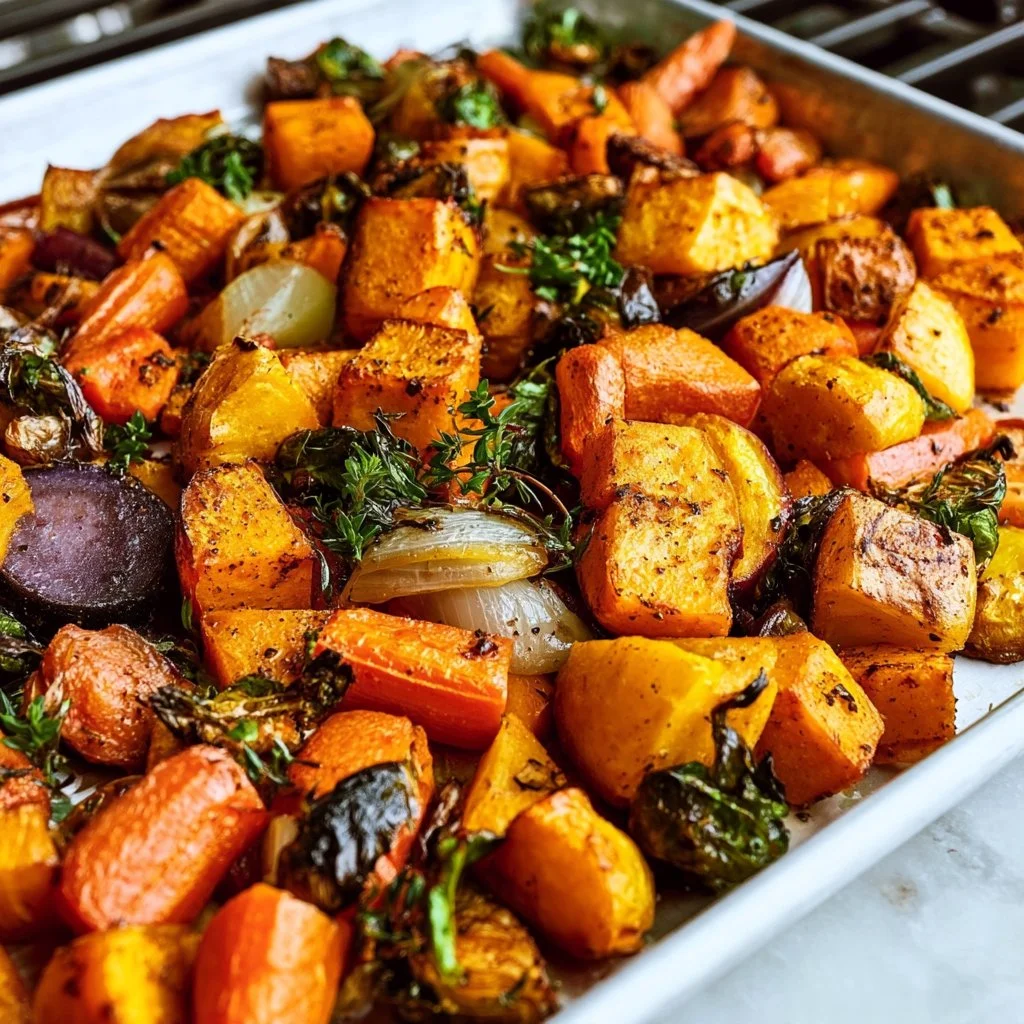
Fall Roasted Vegetables
As the leaves begin to turn and the air grows crisp, few dishes capture the essence of fall quite like a tray of roasted vegetables. This delightful medley, featuring ingredients like butternut squash, sweet potatoes, Brussels sprouts, and red onions, showcases the natural sweetness and rich flavors that come alive with a bit of heat. When roasted, these vegetables caramelize, developing beautifully rich flavors and appealing textures that make them a comforting addition to any meal.
The combination of root vegetables and seasonal produce not only provides a feast for the eyes, with vibrant oranges, yellows, and greens dancing together on the plate, but also offers a range of textures. The tenderness of the squash and sweet potatoes pairs perfectly with the slight crispness of the Brussels sprouts, while the onion adds a sweet, savory depth to the dish. Each bite delivers a warm, inviting experience that feels like a hug on a plate, making it the perfect centerpiece for family gatherings or cozy weeknight dinners.
Whether served as a robust side dish during a Thanksgiving feast, a light main course paired with grains, or even as part of a meal prep routine for healthy lunches, roasted vegetables celebrate the flavors of fall. The versatility of this dish also makes it an excellent option for those looking for a comforting vegetarian or vegan meal that doesn’t compromise on taste.
Incorporating fragrant herbs, like dried thyme, and seasonings like garlic powder enhances the flavors while making preparation simple and straightforward. With minimal effort, you can have a nutritious, flavorful dish that satisfies both hunger and the longing for seasonal comfort food.
What Makes This Recipe Special
At the heart of this dish lies a beautiful partnership of flavors and textures that captures the spirit of autumn. Each vegetable contributes its distinct taste while harmoniously blending together. Butternut squash brings a creamy sweetness that is balanced by the earthy undertones of Brussels sprouts. Sweet potatoes not only add color but also introduce an extra level of natural sweetness, while red onions infuse a touch of tanginess that enhances the overall profile of the dish.
One of the standout features of roasted vegetables is the way the cooking process transforms them. As they roast, the high heat caramelizes the natural sugars, enhancing their flavors and producing a delightful char that many home cooks find irresistible. This browning, known in culinary terms as the Maillard reaction, creates a complex depth of flavor that elevates simple vegetables into a sensational side.
Compared to similar dishes, such as steamed or boiled vegetables, roasting allows for greater flavor depth and a more pleasing texture. Instead of being soft and watery, roasted vegetables offer a satisfying combination of crispy edges and tender insides. This method is not only delicious but also forgiving; it allows for easy adjustments and personalization based on what’s in season or what you have on hand.
Moreover, this recipe highlights the beauty of seasonal ingredients. Using what’s fresh and available not only ensures peak flavor but is also a wonderful way to support local farms. Readers will appreciate the seasonal aspect of this dish, making it an excellent option for incorporating healthy, home-cooked meals into their routine.
Ingredient Overview and Helpful Notes
The essence of this dish lies in its carefully selected ingredients, each playing a crucial role in the final outcome. Let’s dive deeper into what makes each ingredient essential and how to choose the best options at the market.
Butternut Squash: Known for its sweet, nutty flavor and velvety texture, butternut squash serves as a delightful base for this dish. When selecting butternut squash, look for ones that feel heavy for their size, with firm, unblemished skins. To prepare, peel it carefully and cut it into uniform bite-sized pieces for even roasting.
Sweet Potatoes: Rich in vitamins and minerals, sweet potatoes bring a natural sweetness that complements the other vegetables. Choose firm, smooth-skinned sweet potatoes, avoiding ones with any dark spots or wrinkles. When chopped, they should be consistently sized to ensure even cooking.
Brussels Sprouts: These mini-cabbages provide a hearty element to the mix. When purchasing, look for firm, green sprouts without any brown spots or yellowing leaves. Trim the ends and slice them in half for more even roasting, which helps enhance their flavor and crispness.
Red Onion: Sweet and tangy, red onions are perfect for adding depth to the dish. Opt for onions with a smooth, papery skin and strong color. Cutting them into wedges allows for caramelization and helps release their natural sweetness during roasting.
Olive Oil: A key ingredient for achieving that golden, crispy exterior, olive oil helps to transfer heat efficiently while also enhancing the flavors of the vegetables. Use a quality extra virgin olive oil for optimal taste and health benefits.
Seasonings: The simple combination of salt, pepper, garlic powder, and dried thyme brings these roasted vegetables to life. Fresh herbs can also be substituted if available and will impart lively flavor notes. The balance of seasonings is essential—too much salt can overpower the natural sweetness, while too little may result in a bland experience.
When preparing this dish, it’s essential to ensure all vegetables are cut to similar sizes for even cooking. Prepping them in advance and tossing them in olive oil and seasonings will also aid in achieving that much-coveted caramelization without any ingredients losing their essence during the roasting process.
Nutrition & Recipe Details
It’s worth noting that nutritional values can fluctuate based on the specific brands used, the amount consumed, and modifications to the recipe. Always consider these elements while preparing your meal.
| Item | Value |
|---|---|
| Prep time | 15 minutes |
| Cook time | 30 minutes |
| Store time | 3-5 days refrigerated |
| Calories | 120 (per serving) |
| Protein | 2g |
| Carbohydrates | 25g |
| Fat | 4g |
How to Make Fall Roasted Vegetables
Creating a dish of roasted vegetables is not only straightforward but also incredibly satisfying, requiring only a handful of steps. With a few key ingredients and the right tools, you’ll be well on your way to achieving a delicious meal.
Start by preparing your workspace: gather all ingredients, a cutting board, a sharp knife for chopping, a large mixing bowl for tossing the vegetables, and a sheet pan for roasting. Having everything organized will streamline the process and keep you focused while cooking.
Ingredients
| Ingredient | Quantity |
|---|---|
| Butternut squash | 1, peeled and chopped |
| Sweet potato | 1, peeled and chopped |
| Brussels sprouts | 2 cups, halved |
| Red onion | 1, sliced into wedges |
| Olive oil | 2 tablespoons |
| Salt | to taste |
| Pepper | to taste |
| Garlic powder | 1 teaspoon |
| Dried thyme | 1 teaspoon |
Once you have gathered your ingredients and tools, wash and prepare all vegetables, ensuring to dry them properly to prevent excess moisture, which can inhibit roasting. Cut all vegetables into similarly sized pieces—about 1-inch cubes for squash and sweet potatoes and halves for Brussels sprouts to allow for an even cooking time.
As you prepare, preheat your oven to 425°F (220°C) to ensure it is at the correct temperature for roasting. Toss all the prepared vegetables in a bowl with olive oil, salt, pepper, garlic powder, and thyme until they are evenly coated. This process helps the seasonings adhere well and flavors to be evenly distributed.
Step-by-Step Instructions
-
Preheat the oven: Begin by preheating your oven to 425°F (220°C). This high temperature is essential for achieving the ideal caramelization and browning of the vegetables.
-
Prepare the vegetables: Take your butternut squash and sweet potato. Peel both and chop them into bite-sized pieces. For the Brussels sprouts, trim the ends and slice them in half, exposing the inner layers that will benefit from the roasting process. Finally, slice the red onion into wedges to add a sweet counterpart to the robust vegetables.
-
Combine the vegetables: In a large bowl, combine all the chopped vegetables. This is the time to ensure everything is mixed evenly.
-
Season: Drizzle the vegetables with olive oil, ensuring you use enough to coat them without making them too greasy. Sprinkle salt, pepper, garlic powder, and dried thyme over the vegetables.
-
Toss to coat: Using your hands or a large spatula, toss the vegetables gently to ensure that each piece is evenly coated in oil and seasonings. This even distribution is key to uniform roasting.
-
Prepare the sheet pan: Take a large sheet pan and spread the vegetables in a single layer. It is important not to overcrowd them, as this will lead to steaming instead of roasting.
-
Roast the vegetables: Place the pan in the preheated oven and roast for 25-30 minutes. During this time, stir the vegetables halfway through to ensure even cooking and browning. When done, they should be caramelized and tender with a fork.
-
Final Check and Serve: Once they’ve reached your desired tenderness and caramelization, remove them from the oven and let them cool for a moment. Serve warm as a vibrant side dish that pairs wonderfully with a variety of meals.
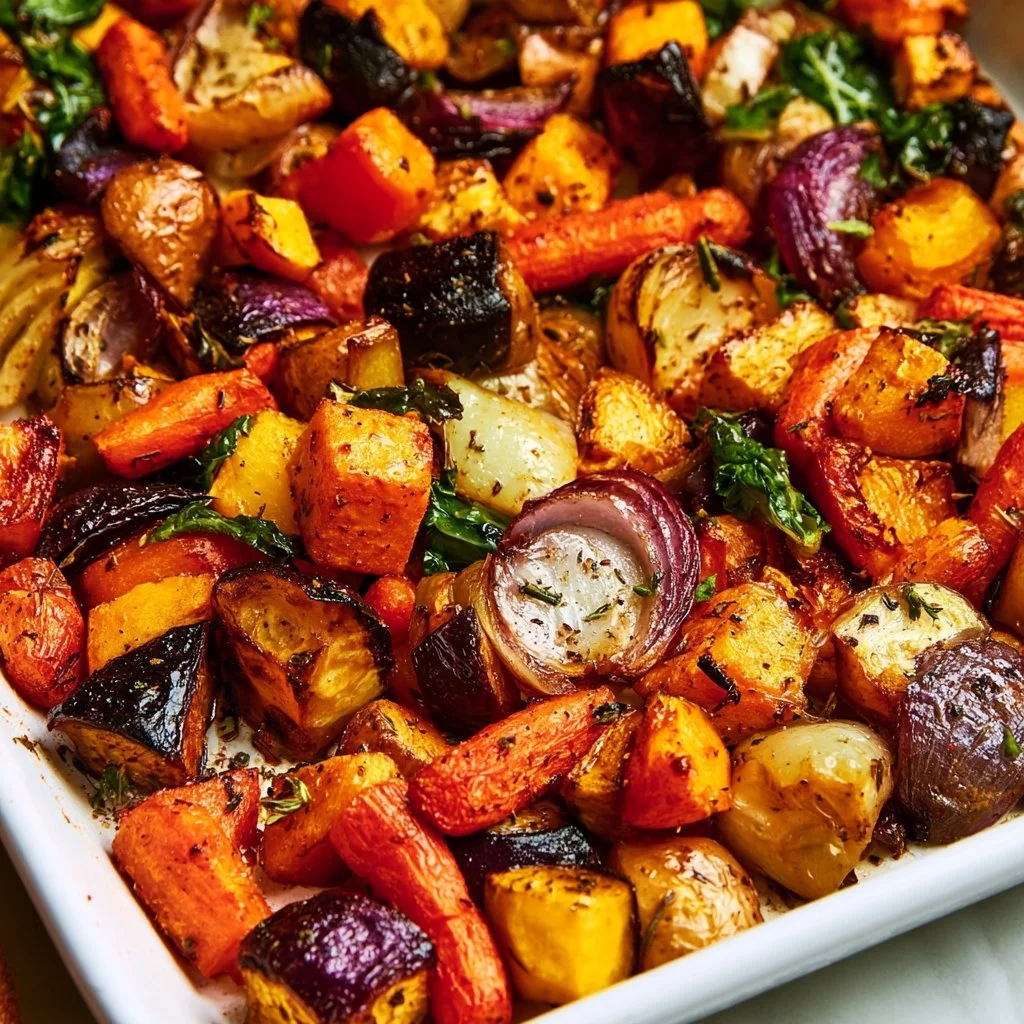
Understanding the Flavor and Texture
As you take your first bite, expect a symphony of flavors. The roasted butternut squash emerges with a deep sweetness that complements the natural sugars in sweet potatoes. The Brussels sprouts provide a hearty earthiness while the red onions, sweetened by the roasting process, add a touch of sweetness and acidity.
In terms of texture, the contrast is what makes this dish so enticing. The crispy edges of the roasted vegetables juxtapose beautifully with their creamy interiors. You might notice that the Brussels sprouts develop an appealing crunch due to browning, which is balanced by the smoothness of both the squash and sweet potatoes. The careful roasting process ensures that vegetables maintain their shape while absorbing flavors from the garlic powder and thyme.
Moreover, the layering of flavors means that every mouthful is a burst of seasonal essence—perfectly seasoned with the aromatic thyme and a hint of garlic that enhances the overall experience without overpowering the freshness of the vegetables. Recognizing these qualities will guide you toward replicating this success in your own home, ensuring each attempt is met with the same delicious outcome.
Pro Tips
Small techniques can make a significant difference in the final product. Here are some useful tips to elevate your roasted vegetable game:
| Tip | Description |
|---|---|
| Use uniform cuts | Chop all vegetables to similar sizes to ensure even cooking. Smaller pieces will caramelize more quickly, while larger pieces may need more time in the oven. |
| Don’t overcrowd the pan | Spread the vegetables out on the sheet pan. Overcrowding will trap steam and prevent browning, leading to a less flavorful dish. |
| Experiment with spices | Feel free to switch out the seasonings based on your taste preferences. Paprika, cayenne, or a dash of cinnamon can change the flavor profile entirely. |
| Check for doneness | Probe the vegetables with a fork for tenderness. Look for golden-brown edges and a tender center, which indicates they are ready to be removed from the oven. |
Consistently achieving delicious roasted vegetables comes down to practice and understanding the process. Always adjust cooking times based on your oven’s calibration and your vegetables’ size to prevent overcooking or undercooking.
Additionally, consider contributing your personal flair by introducing new ingredients or international spices. The joy of cooking is in the possibility of experimentation, allowing you to create a unique dish every time.
Why You’ll Love This Recipe
There are few recipes as versatile and accessible as roasted vegetables, appealing to both beginner and experienced cooks alike. Truly one of the quintessential fall dishes, it encapsulates comforting flavors while being hearty yet healthy. The method encourages you to embrace what is available in your local market, contributing both flavor and nutritional diversity.
The simplicity of preparation is another draw, allowing you to get the dish ready with minimal fuss while the vegetables roast away in the oven. Cleanup remains easy too; a single sheet pan is all that’s needed, keeping your kitchen organized and tidy.
Moreover, the dish’s nature makes it a great candidate for various occasions—from weekly family dinners to festive gatherings—making it a staple for many home cooks. Its robust flavor and appealing appearance will be sure to impress your guests while satiating even the pickiest of eaters.
How to Serve Fall Roasted Vegetables
Presenting your roasted vegetables attractively can enhance the dining experience significantly. First, consider plating them on a large serving platter, showcasing the colorful medley that highlights the vibrant fall hues. Garnishing with freshly chopped herbs, like parsley or additional thyme, will add a touch of freshness and elevate the visual appeal.
For those looking to complement their dish, pairing roasted vegetables with side options can elevate the meal further. A grain salad with quinoa or farro drizzled in a citrus vinaigrette provides contrasting textures and flavors. For protein, they rise to the occasion when served alongside grilled chicken or a savory chickpea salad.
Considering toppings like crumbled feta or roasted nuts can further add depth and texture to the meal. Serve with a light dipping sauce, such as a yogurt-based dip or tangy tahini, to encourage a flavorful fusion of tastes on the plate.
Finally, if you want to elevate the overall flavor profile, consider serving with a light-bodied beverage like herbal tea or flavored water infused with fresh fruit. It’s all about creating a culinary experience that engages the senses and celebrates the beauty of seasonal ingredients.
How to Store Fall Roasted Vegetables
To maximize the enjoyment of your roasted vegetables, proper storage is essential. After cooking, allow the vegetables to cool to room temperature. This step is crucial to prevent excess moisture from building up in storage, which can lead to sogginess.
Once cooled, transfer them to an airtight container. In the refrigerator, the roasted vegetables will last for about 3 to 5 days, retaining their flavors while becoming soft over time. For longer storage, consider freezing; spread them out on a baking sheet to flash-freeze before transferring to a freezer-safe container. This method prevents them from clumping together, allowing you to take out only what you need.
It’s important to note that the texture will change as the vegetables cool and freeze. While they will still be tasty, they won’t retain the same crispness as when they just came out of the oven. Therefore, utilize this dish in recipes that benefit from softer vegetables, like soups or stews.
Reheating is simple; warm them gently in the oven to preserve any remaining crispy edges. A light drizzle of olive oil can help restore some moisture as well, preventing them from drying out during the reheating process.
Tips to Make Fall Roasted Vegetables
Achieving that perfect balance of flavors and textures requires attention to detail. Here are some practical tips to ensure your roasted vegetables shine:
-
Season Generously: Don’t skimp on the seasonings—appropriate use of salt and spices is key to enhancing flavors. A light sprinkle of salt helps bring out the natural sweetness of the vegetables, while spices can provide a flavor kick that elevates the whole dish.
-
Use Quality Olive Oil: The type of olive oil you use can significantly impact the flavor of the dish. Consider using high-quality extra virgin olive oil to infuse richness and compliments to the sweetness of the vegetables.
-
Roasting Pan Choice: The choice of roasting pan can influence the cooking process. A dark, heavy-duty baking sheet tends to absorb heat better than lighter options, leading to better caramelization of the vegetables.
-
Keep an Eye on Cooking Times: Since different ovens can vary significantly, keeping watch on your vegetables as they roast is important. Look for that beautiful caramelization to know when they are ready rather than relying solely on a timer.
With these insider tricks, you’ll cultivate greater confidence in the kitchen while elevating your roasted vegetable experience. Paying attention to these details can change how your dish tastes and feels from the very first bite.
Variations and Substitutions
Exploring variations on the original recipe can add excitement and cater to personal preferences. Here are some delicious ideas to customize your roasted vegetables:
-
Add Seasonal Greens: Consider tossing in other seasonal vegetables like carrots, beets, or even cauliflower for added depth. Each of these brings its unique flavor and texture, enhancing the overall dish.
-
Spice It Up: For those who enjoy a kick, incorporating a sprinkle of red pepper flakes or a dash of Cajun seasoning can add warmth to the flavor profile. You may also play with fresh herbs like rosemary or oregano for a different aromatic effect.
-
Include Protein: To make the dish more robust, consider adding chickpeas or lentils before roasting. This not only boosts the protein content but also adds extra texture and a heartiness that complements the vegetables beautifully.
-
Experiment with Dressings: After roasting, a simple drizzle of tahini or balsamic glaze can enhance the flavor, creating a completely new dining experience. This variation can transform the vegetables from a side dish to a unique flavor-packed meal.
Each variation serves to maintain the essence of the original recipe while allowing for creativity and adaptation based on preferences or dietary needs. Remember, each adjustment may affect the cooking time slightly, so keep that in mind as you experiment.
Storage and Reheating
How you store and reheat your roasted vegetables is critical to preserving their flavor and texture. First, it’s advisable to portion any leftovers into smaller, manageable containers. This practice promotes faster cooling, preventing moisture build-up that could lead to sogginess.
For storing in the refrigerator, they can typically last 3 to 5 days. When reheating, the best method is to place them back in the oven at a moderate temperature, allowing them to regain some of that desirable crispiness. If time is of the essence, heating in the microwave will suffice, but do so in short intervals and consider covering the dish with a damp paper towel to promote even heating.
If you prefer freezing, remember that the texture may change upon thawing. However, they make an excellent addition to blends or even soups that benefit from soft vegetables.
Reheating Methods
- Oven: Preheat to 350°F (175°C) and spread them out on a baking dish. Roast for 10-15 minutes or until heated through.
- Microwave: Place a portion in a microwave-safe dish, cover loosely, and heat in 30-second bursts until warm, stirring in between.
- Skillet: A non-stick skillet can be used for reheating with a few drops of oil over medium heat, turning occasionally until warm and slightly crispy.
Each reheating method will bring back some of the essence of your roasted vegetables, although reheating in an oven or skillet will help restore more of their original texture.
Customization Ideas
The versatility of roasted vegetables allows you to make adjustments based on your family’s preferences and available ingredients. Here are a few ideas for customization:
-
Dressing Up: Once roasted, try drizzling the vegetables with a dressing made from lemon juice, olive oil, and a touch of honey for a sweet and acidic counterbalance that brightens everything.
-
Cheesy Touch: Sprinkle some grated parmesan or feta cheese over the vegetables just before serving. The cheese will melt slightly on hot vegetables, adding a creamy and savory finish.
-
Texture Play: For added crunch, consider topping your roasted vegetables with toasted nuts, such as walnuts or pecans, or seeds like pumpkin seeds. This addition not only increases texture but also the health aspects of your dish.
-
Flavor Enhancers: For a Mediterranean flair, add olives or artichokes to your mix. Their punchy flavors complement the natural sweetness of the root vegetables beautifully.
With these customization ideas, the basic recipe becomes a springboard for creativity. Adapt based on ingredients on hand, dietary restrictions, or simply the flavors your family enjoys.
Common Mistakes to Avoid
Even with a seemingly straightforward recipe, a few common pitfalls can affect the final dish. Here are five mistakes to watch out for, along with ways to avoid or remedy them:
-
Overcrowding the Pan: Attempting to roast too many vegetables together can lead to steaming rather than roasting. Always use a large enough pan or divide the batch into two to promote even cooking.
-
Inconsistent Cuts: If the vegetables are not cut to the same size, some will cook faster, leading to uneven doneness. Juice from larger pieces can result in soggy bits, affecting the texture. Aim for uniform sizes.
-
Skipping Seasoning: While the flavor of the vegetables is key, neglecting to season appropriately can result in bland outcomes. Don’t hesitate to be generous with salt, pepper, and spices to enhance the dish.
-
Ignoring Oven Temperature: Not allowing the oven to preheat can lead to uneven cooking. Make sure the oven reaches the required temperature before inserting the vegetables for optimal roasting.
-
Underestimating Cooking Time: Rushing the process can prevent the vegetables from developing their full flavor. If unsure, monitor roast time closely and taste test for desired tenderness.
By being mindful of these common mistakes, you can secure a successful outcome every time you prepare roasted vegetables.
Serving Occasions
Fall roasted vegetables are a versatile dish ideal for a variety of occasions. They stand out beautifully at family gatherings, offering a comforting side that pairs perfectly with a range of proteins or grain dishes. Their vibrant colors and warming flavors make them a hit at autumn dinners, where guests can savor the taste of the season.
For weeknight meals, they shine as an effortless addition to a busy schedule. Just a little chopping and tossing, and you can have a healthy side ready while other meats or grains cook. Even meal preppers will find this recipe helpful; roasted vegetables can be made in advance and stored for quick reheating throughout the week.
They’re also well-suited for potlucks and gatherings, where sharing the vibrant flavors of seasonal vegetables can help bring a comforting, home-cooked vibe to any table. Paired with other seasonal dishes—like a hearty salad or shepherd’s pie—they can play an essential role in a larger meal while drawing attention for their beauty.
In essence, their versatility and ease of preparation make roasted vegetables suitable for nearly any occasion, from casual meals to festive celebrations.
Why Make This Recipe?
Choosing to prepare roasted vegetables is an investment in both flavor and health. Unlike many other dishes that require complex ingredients or techniques, this recipe offers simplicity while allowing the natural flavors to shine. The natural sweetness combined with savory elements creates a balance that pleases the palate without complicated preparations.
The adaptability of this dish means it can fit into various menus, whether as part of a lavish feast or a simple weeknight dinner. Roasting maintains the nutrients present in the vegetables while adding depth through caramelization, making it a nutritious and satisfying option.
Furthermore, the ease of cooking and cleaning makes this an ideal go-to recipe for anyone looking to incorporate wholesome, flavorful meals into their routine without overwhelming their schedules. The lovely combination of colors, flavors, and nutritious content often makes roasted vegetables a crowd favorite that can transform your table and elevate any dish alongside it.
Make-Ahead Preparation
For those who like to prepare in advance, many elements of this recipe can be set up ahead of time. For instance, you can wash and chop the vegetables the night before and store them in an airtight container in the refrigerator. This will save you time the following day and ensure that everything is ready for roasting.
In addition, you can mix the olive oil and seasonings ahead of time, storing them separately to add just before roasting. This method allows for deeper penetration of the flavors, enhancing the taste in every bite. However, it’s best to avoid mixing the oil with vegetables until you’re ready to cook to prevent excess moisture during storage.
Feel free to roast the vegetables earlier in the day or even the night before—a quick reheat in the oven or microwave right before serving can bring them back to life. While freshly roasted vegetables always have the best texture, reheating is still viable for achieving overall satisfaction.
Careful planning can make this dish not just easy to enjoy, but also easy to prepare, fitting perfectly into the bustle of modern life without losing the charms of home-cooked food.
Equipment and Kitchen Preparation
While equipment needs for roasted vegetables are relatively minimal, having the right tools can greatly enhance the cooking experience. A heavy-duty baking sheet is essential for promoting even roasting, as lighter materials may lead to uneven cooking and browning. Consider using parchment paper for easy cleanup and to prevent sticking, which will help maintain the integrity of the vegetables.
A sharp knife and sturdy cutting board are crucial for efficiently chopping all vegetables to a uniform size, facilitating even cooking. A large mixing bowl is necessary for combining the vegetables with oil and seasonings; consider using one that can hold ample volume to prevent spillage.
Before starting, prep your workspace by cleaning and clearing off surfaces. This preparation not only makes the process more enjoyable but also helps maintain focus, reducing any stress associated with cooking. Having your ingredients easily accessible, organized, and prepped beforehand can streamline the overall experience, making cooking less of a chore and more of a joyful experience.
FAQs
1. Can I use different vegetables for this recipe?
Absolutely! Feel free to substitute seasonal vegetables that you enjoy, such as carrots, zucchini, or even cauliflower. Just ensure they are cut to similar sizes for even roasting.
2. How can I store leftovers?
Cool the roasted vegetables completely before placing them in an airtight container. They can be stored in the refrigerator for up to 3-5 days. For longer shelf life, consider freezing them in a freezer-safe container.
3. How do I reheat the roasted vegetables?
To reheat, spread them on a baking sheet and warm in a preheated oven at 350°F (175°C) for about 10-15 minutes until heated through. Alternatively, you can microwave them, but be cautious as they may lose some crispiness.
4. Can I roast these vegetables ahead of time?
Yes, you can roast them a few hours in advance. Just keep them at room temperature until serving. If you’re making them the day before, store them in the refrigerator and reheat before serving.
5. What should I do if the vegetables get soggy?
To prevent sogginess, ensure you don’t overcrowd the pan while roasting. If they do become soggy, a quick reheat in a hot oven can help regain some crispiness.
6. Is there a way to make the dish spicier?
Certainly! You can add a sprinkle of red pepper flakes before roasting or drizzle some hot sauce after cooking for an extra kick of heat.
7. What can I serve with roasted vegetables?
Roasted vegetables pair beautifully with a variety of dishes, including grains like quinoa or rice, proteins such as chicken or fish, or even topped on salads.
8. Can I make this recipe vegan?
Yes, the roasted vegetable recipe you see is naturally vegan. To enhance the flavor, consider adding a vegan cheese alternative or dressing to round out the meal.
Disclaimer
Nutritional information is approximate and may vary based on ingredient brands, substitutions, portion sizes, and preparation methods.
Print
Fall Roasted Vegetables
- Total Time: 45 minutes
- Yield: 4 servings 1x
- Diet: Vegan
Description
A comforting medley of roasted fall vegetables including butternut squash, sweet potatoes, Brussels sprouts, and red onions, ideal for family gatherings or cozy dinners.
Ingredients
- 1 butternut squash, peeled and chopped
- 1 sweet potato, peeled and chopped
- 2 cups Brussels sprouts, halved
- 1 red onion, sliced into wedges
- 2 tablespoons olive oil
- Salt to taste
- Pepper to taste
- 1 teaspoon garlic powder
- 1 teaspoon dried thyme
Instructions
- Preheat the oven to 425°F (220°C).
- Prepare the vegetables by chopping butternut squash and sweet potato into bite-sized pieces, halving Brussels sprouts, and slicing red onion into wedges.
- Combine all chopped vegetables in a large bowl.
- Season the vegetables with olive oil, salt, pepper, garlic powder, and thyme.
- Toss to coat evenly.
- Prepare a sheet pan by spreading the vegetable mixture in a single layer.
- Roast in the oven for 25-30 minutes, stirring halfway through, until caramelized and tender.
- Serve warm as a side dish.
Notes
Ensure vegetables are cut to similar sizes for even cooking. You can also customize with your favorite seasonal veggies or spices.
- Prep Time: 15 minutes
- Cook Time: 30 minutes
- Category: Side Dish
- Method: Roasting
- Cuisine: American
Nutrition
- Serving Size: 1 serving
- Calories: 120
- Sugar: 5g
- Sodium: 400mg
- Fat: 4g
- Saturated Fat: 1g
- Unsaturated Fat: 3g
- Trans Fat: 0g
- Carbohydrates: 25g
- Fiber: 4g
- Protein: 2g
- Cholesterol: 0mg