
Introduction
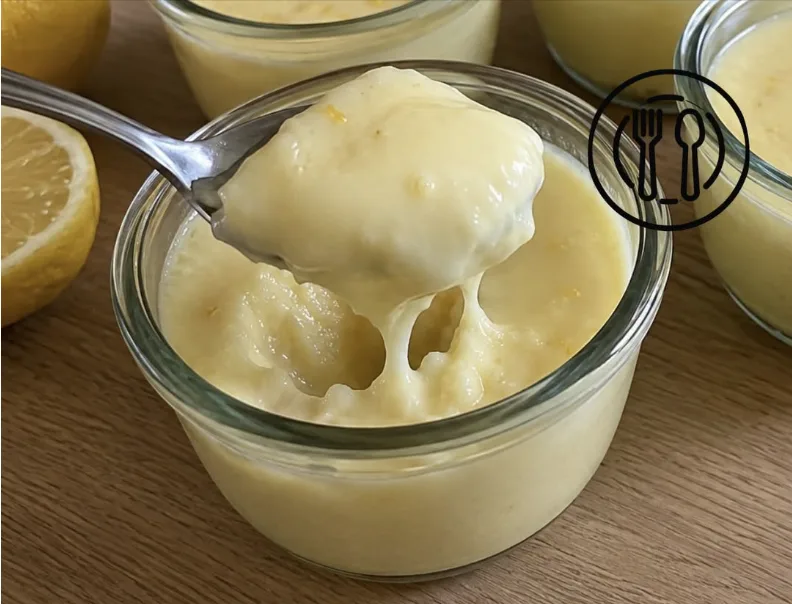
These Light and Sweet Lemon Creams are a fresh, creamy, and delicately tart dessert that is perfect when you want to finish a meal on a lighter note. Their soft and melting texture is similar to a homemade dessert cream, while the fresh lemon gives them a bright flavor that makes every spoonful refreshing.
This recipe is particularly appealing because it uses only a few everyday ingredients. Milk, eggs, sugar, Maïzena, lemon, and a little vanilla are enough to create four individual desserts with a smooth and elegant texture.
The preparation is also very accessible. The cream takes only about 10 minutes to prepare and just 5 minutes of cooking. The main waiting time comes from refrigeration, as the creams need at least 2 hours in the refrigerator before serving.
The lemon is used in two different ways. The zest gently perfumes the milk while it heats, while the fresh juice is incorporated after cooking. This method helps preserve the fresh and slightly tangy flavor of the lemon.
These little creams are ideal for a family dessert, an afternoon treat, or a make-ahead sweet for guests. Since they are divided into individual ramekins, they are also easy to portion and serve.
Each portion contains approximately 120 kcal, with an estimated 2 to 4 WW Points per serving, depending on the milk, sugar, or sweetener chosen and the WW program used.
Recipe Overview
Servings: 4
Preparation: 10 minutes
Cooking: 5 minutes
Refrigeration: 2 hours
Calories: approximately 120 kcal per serving
WW: approximately 2 to 4 Points per serving
Type of dessert: chilled lemon cream
Texture: smooth, creamy, and soft
The recipe is simple enough for beginners and does not require any complicated pastry technique.
Ingredients – 4 Servings
- 400 ml of skimmed or semi-skimmed milk
- 2 eggs
- 30 g of sugar
- 20 g of Maïzena
- 1 large untreated lemon
- 2 tablespoons of fresh lemon juice
- 1 teaspoon of vanilla extract, optional
These ingredients create a naturally creamy dessert without requiring a large amount of fat.
The 400 ml of milk forms the base of the cream.
The 2 eggs help enrich and structure the mixture.
The 20 g of Maïzena thickens the preparation during cooking, while the 30 g of sugar provides just enough sweetness to balance the acidity of the lemon.
Why Use an Untreated Lemon?
The recipe uses both the zest and the juice of the lemon.
Because the outer skin is added directly to the preparation, choosing a large untreated lemon is particularly useful.
Wash and dry it carefully before removing the zest.
Only the thin yellow part of the skin is needed.
Avoid taking too much of the white layer underneath, which can bring a more bitter flavor.
The zest perfumes the milk gently without adding additional liquid.
Preparation
Step 1: Prepare the Lemon
Gently remove the lemon zest, then squeeze the lemon to extract its juice.
Measure 2 tablespoons of fresh lemon juice for the recipe.
Keep a little additional fine zest aside if you would like to decorate the creams just before serving.
Fresh lemon juice is important here because it gives the dessert its characteristic bright and slightly tart flavor.
Step 2: Heat the Milk
Pour the 400 ml of skimmed or semi-skimmed milk into a saucepan.
Add the lemon zest.
Heat gently.
Do not allow the milk to come to a full boil.
The goal is simply to warm the milk and allow the zest to release its aroma.
Keeping the heat gentle also makes the next steps easier and reduces the risk of overheating the egg mixture later.
Step 3: Whisk the Eggs and Sugar
While the milk is heating, place the 2 eggs in a bowl.
Add the 30 g of sugar.
Whisk until the mixture becomes homogeneous.
You do not need to beat the eggs for a long time or create a very foamy texture.
A smooth and even mixture is enough.
Step 4: Add the Maïzena
Add the 20 g of Maïzena to the egg and sugar mixture.
Whisk carefully until there are no visible lumps.
The Maïzena is essential because it will thicken the cream during the short cooking period.
Take the time to mix it thoroughly before adding the hot milk.
Step 5: Add the Hot Milk Gradually
Gradually pour the hot milk over the egg mixture while whisking continuously.
Do not pour all the milk in at once.
Adding it slowly helps bring the eggs up to temperature progressively.
Continue whisking until the preparation is smooth and evenly combined.
Step 6: Return Everything to the Saucepan
Pour the entire mixture back into the saucepan.
Place it over low heat.
At this stage, the cream will still be quite fluid.
It will begin to thicken as the mixture heats.
Step 7: Thicken the Cream
Cook over low heat for 3 to 5 minutes, stirring constantly.
Do not stop stirring, especially around the bottom and sides of the saucepan.
The cream should gradually become thicker and creamier.
It should remain soft rather than becoming extremely firm.
Once it has reached a smooth dessert-cream consistency, remove the saucepan from the heat.
Why Constant Stirring Is Important
The mixture contains both eggs and Maïzena.
Without regular stirring, the cream can thicken unevenly or attach to the bottom of the saucepan.
Constant movement helps distribute the heat.
It also helps create a smoother texture without lumps.
Keep the heat low and be patient during these few minutes.
Step 8: Let the Cream Cool Slightly
Remove the saucepan from the heat.
Let the cream cool for a few minutes.
This short waiting period is important before adding the fresh lemon juice.
The cream should still be warm but no longer extremely hot.
Step 9: Add the Lemon Juice
Gradually incorporate the 2 tablespoons of fresh lemon juice.
Mix carefully.
Adding the juice slowly helps keep the texture smooth.
Taste the cream only once all the juice has been incorporated.
The result should be pleasantly lemony, fresh, and lightly tart.
Step 10: Add the Vanilla
If using it, add 1 teaspoon of vanilla extract.
Vanilla is optional.
It softens the sharpness of the lemon slightly and adds a warm aromatic background.
The lemon should still remain the dominant flavor.
Step 11: Divide Into Ramekins
Divide the cream equally between 4 small ramekins.
Try to place approximately the same quantity in each one so that the nutritional estimate remains relatively consistent.
Smooth the surface lightly if needed.
Step 12: Cool
Leave the ramekins at room temperature until they are no longer hot.
Avoid placing very hot containers directly into the refrigerator.
Once cooled sufficiently, transfer them to the refrigerator.
Step 13: Refrigerate
Chill the lemon creams for at least 2 hours.
This resting time allows the texture to become more stable and pleasant.
The lemon flavor also becomes more harmonious after chilling.
Serve the creams well chilled.
The Little Extra
Add a few very fine pieces of lemon zest just before serving.
This small finishing touch intensifies the lemon aroma without adding meaningful calories.
Use only a little zest so that the flavor remains delicate.
It also gives the individual ramekins a simple and attractive appearance.
Why Add the Lemon Juice After Cooking?
Fresh lemon juice is acidic.
Adding it after the cream has thickened allows you to preserve more of its fresh flavor.
It also gives you better control over the texture.
By allowing the cream to cool for a few minutes first and then incorporating the juice gradually, the mixture remains smooth and pleasant.
How to Get a Smooth Texture
There are several simple points to remember.
Whisk the Maïzena thoroughly before adding the milk.
Pour the hot milk gradually while whisking.
Cook over low heat.
Stir continuously during the 3 to 5 minutes of thickening.
Finally, add the lemon juice only after removing the saucepan from the heat.
These steps help create a smooth cream without lumps.
How Thick Should the Cream Be?
At the end of cooking, the cream should be visibly thicker than when it was first poured into the saucepan.
However, it should still remain soft and creamy.
It does not need to be extremely thick because it will continue to firm slightly while cooling and during the 2 hours of refrigeration.
Avoid cooking it for much longer than necessary.
Skimmed or Semi-Skimmed Milk?
The recipe allows both.
You can use:
- skimmed milk;
- semi-skimmed milk.
The final texture and nutritional values may vary slightly depending on the milk chosen.
Semi-skimmed milk may give a slightly richer mouthfeel, while skimmed milk keeps the dessert lighter.
Both options work with the quantities provided.
Sugar or Sweetener?
The original recipe contains 30 g of sugar.
For an even lighter version, part or all of the sugar can be replaced with a sweetener suitable for cooking.
If you choose a sweetener, follow the manufacturer’s recommended conversion because different products have different sweetening strengths.
The change may also affect the final calories and WW Points.
Serving Suggestions
These lemon creams are designed to be served chilled.
They are delicious on their own and do not require a heavy topping.
You can simply finish each ramekin with:
- a little fine lemon zest;
- a tiny slice of lemon for decoration;
- nothing at all for a very simple presentation.
Because the dessert is already creamy and fragrant, simplicity works particularly well.
A Good Make-Ahead Dessert
These creams are ideal when you want to prepare dessert before the meal.
They require at least 2 hours of chilling, so making them earlier in the day is practical.
Once refrigerated and well covered, they are ready to serve directly from the refrigerator.
This also makes them useful when entertaining guests because there is no last-minute cooking required.
Conservation
These little creams keep for about 2 days in the refrigerator, well covered.
Cover the ramekins individually or place them in an airtight container.
This protects the surface from drying out and prevents the creams from absorbing other refrigerator odors.
Always keep them chilled because the recipe contains eggs and milk.
Can They Be Prepared the Day Before?
Yes.
Preparing them the day before is a convenient option.
The refrigeration time gives the texture plenty of time to stabilize and allows the lemon flavor to develop.
Serve directly from the refrigerator or leave them out for just a very short time before eating.
Common Mistakes to Avoid
Boiling the Milk
Heat the milk gently with the lemon zest.
It does not need to boil.
Adding the Hot Milk Too Quickly
Pour it gradually over the egg mixture while whisking.
This helps keep the preparation smooth.
Not Stirring During Cooking
The cream needs constant stirring during the 3 to 5 minutes of thickening.
Using Too Much Heat
Low heat gives better control and reduces the risk of the mixture thickening unevenly.
Adding the Lemon Juice Immediately
Let the cream cool for a few minutes before incorporating the lemon juice gradually.
Skipping the Refrigeration
The creams need at least 2 hours in the refrigerator to reach their best texture.
Tips for Success
Use a large untreated lemon.
Remove only the fine yellow zest.
Heat the milk gently.
Whisk the eggs, sugar, and Maïzena until smooth.
Add the hot milk gradually.
Stir continuously during cooking.
Remove from the heat once the cream becomes creamy.
Wait a few minutes before adding the lemon juice.
Divide evenly into four ramekins.
Refrigerate for at least 2 hours.
Add fine lemon zest just before serving if desired.
Approximate Nutritional Information
Each serving contains approximately:
120 kcal per serving
This is an estimated value.
It can vary depending on:
- whether you use skimmed or semi-skimmed milk;
- the exact sugar used;
- whether part or all of the sugar is replaced by sweetener;
- the exact portion sizes.
Dividing the mixture evenly into 4 servings helps keep the estimate consistent.
WW Points
The estimated value is:
Approximately 2 to 4 Points per serving
This can vary depending on:
- the milk chosen;
- the sugar or sweetener;
- the brands of ingredients;
- your specific WW program.
For precise tracking, calculate the recipe using the exact products you use.
Frequently Asked Questions
How many servings does this recipe make?
The recipe makes 4 servings.
How much milk should I use?
Use 400 ml of skimmed or semi-skimmed milk.
How many eggs are needed?
Use 2 eggs.
How much sugar?
Use 30 g of sugar.
How much Maïzena?
Use 20 g of Maïzena.
How much lemon juice?
Use 2 tablespoons of fresh lemon juice.
Is vanilla necessary?
No.
The 1 teaspoon of vanilla extract is optional.
How long should the cream cook?
Let it thicken over low heat for 3 to 5 minutes while stirring constantly.
How long should the creams chill?
Refrigerate for at least 2 hours.
How long do they keep?
About 2 days in the refrigerator, well covered.
Can I replace the sugar?
Yes.
Part or all of the sugar may be replaced with a sweetener suitable for cooking.
How many calories are in each serving?
Approximately 120 kcal per serving.
How many WW Points?
Approximately 2 to 4 Points per serving, depending on the milk, sugar or sweetener, and your WW program.
Conclusion
These Light and Sweet Lemon Creams are an easy chilled dessert with a smooth, melting texture and a fresh lemon flavor.
The recipe uses 400 ml of skimmed or semi-skimmed milk, 2 eggs, 30 g of sugar, 20 g of Maïzena, 1 large untreated lemon, 2 tablespoons of fresh lemon juice, and optionally 1 teaspoon of vanilla extract.
The milk is first gently heated with the lemon zest.
The eggs are mixed with the sugar and Maïzena before the warm milk is gradually incorporated.
The mixture then returns to the saucepan and thickens over low heat for 3 to 5 minutes, with constant stirring.
After a short cooling period, the fresh lemon juice is incorporated gradually.
The cream is divided into 4 ramekins and refrigerated for at least 2 hours.
A little fine lemon zest added just before serving can enhance the aroma without adding meaningful calories.
The creams keep for about 2 days in the refrigerator, well covered.
4 servings – Preparation: 10 min – Cooking: 5 min – Refrigeration: 2 h
Approximately 120 kcal per serving
WW: approximately 2 to 4 Points per serving, depending on the milk, sugar, or sweetener chosen and the WW program used.